When Atlanta homeowners compare siding companies, price is naturally one of the first things they look at.
But comparing siding installation pricing is rarely as simple as placing two totals side by side.
One contractor may quote a lower initial price but include fewer materials, less preparation, different warranty coverage, or a narrower scope of work. Another estimate may be higher because it includes removal, structural preparation, premium siding, trim, cleanup, and other details that are not included in the lower bid.
That is why the best way to compare Dr. Roof's siding pricing with other companies is to compare exactly what each proposal includes.
There is no single flat siding price that applies to every Atlanta home. Material choice, home size, design complexity, existing siding conditions, repairs, accessories, labor, and installation requirements can all affect the final project cost.
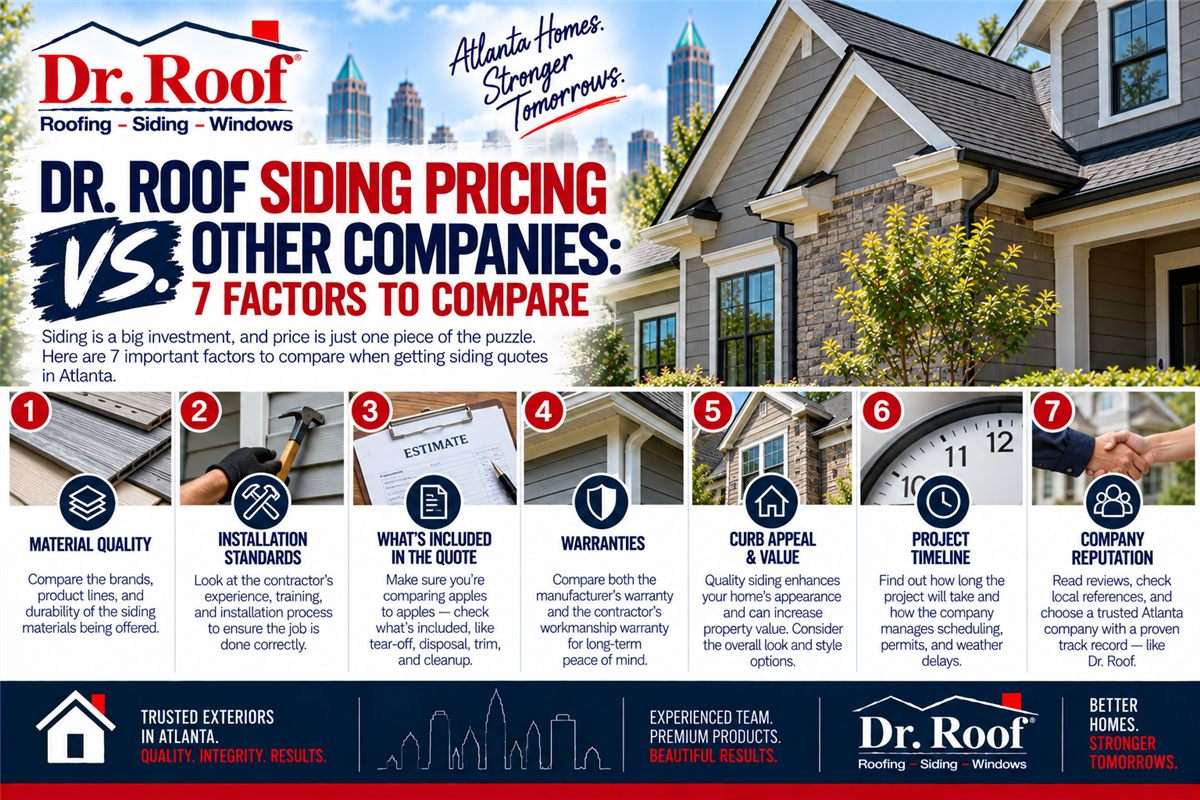
Here are seven factors Atlanta homeowners should compare before deciding which siding estimate offers the strongest overall value.
Dr. Roof Siding Pricing vs. Other Companies: The Quick Answer
Dr. Roof provides project-specific siding estimates rather than treating every house as though it will cost the same amount to complete.
That is important because two homes with similar square footage can require very different amounts of labor and material.
When comparing Dr. Roof with another siding company, homeowners should evaluate:
The siding material and exact product
Removal of existing siding
Preparation and underlying repairs
Trim and accessories
Installation credentials
Warranty coverage
Cleanup and project completion
The complete written scope
The lowest estimate is not automatically the least expensive project over the long term.
The goal should be an apples-to-apples comparison of what you are actually receiving.
1. Siding Material Can Create a Major Price Difference
The siding product itself is one of the biggest variables in any estimate.
Different materials have different manufacturing, installation, finishing, and accessory requirements.
Common residential siding options include:
Vinyl siding
Insulated vinyl siding
Fiber cement siding
Specialty siding products
Dr. Roof offers siding options from established manufacturers including James Hardie and CertainTeed.
A proposal for James Hardie fiber cement should not be compared directly with a proposal for a basic vinyl siding product as though the materials are interchangeable.
Even within one material category, individual product lines, profiles, textures, colors, and accessories can affect the overall proposal.
When reviewing siding bids, ask every contractor for the exact manufacturer and product line being quoted.
2. Home Size Is Only Part of the Calculation
Homeowners sometimes expect siding estimates to be based almost entirely on square footage.
Square footage matters, but it does not tell the entire story.
Installation complexity can be affected by:
Number of stories
Gables
Dormers
Corners
Windows and doors
Roof-to-wall transitions
Porches
Chimneys
Decorative trim
Difficult access areas
Architectural projections
A simple rectangular one-story home may require a very different installation approach than a multi-story home with numerous exterior details.
This is why price-per-square-foot comparisons can become misleading unless the complete project scope is similar.
3. Existing Siding Removal May or May Not Be Included
One proposal may include removing and disposing of the old siding.
Another may not.
That difference can make one quote appear significantly lower at first glance.
Ask whether the estimate includes:
Existing siding removal
Disposal
Jobsite protection
Removal of damaged materials
Preparation of the underlying wall surface
Homeowners should understand what happens before the new siding is installed.
The preparation stage is an important part of the project—not simply an additional line item.
4. Hidden Damage Can Change the Final Scope
Existing siding can conceal conditions that are difficult or impossible to evaluate completely from the exterior.
Once old siding is removed, the contractor may discover:
Moisture damage
Rot
Deteriorated sheathing
Failed flashing
Insect-related damage
Previous installation problems
Areas that require additional preparation
These conditions should not simply be covered with new siding.
Before hiring a contractor, ask how unforeseen repairs are handled.
Questions should include:
How will hidden damage be documented?
Will I see photos?
Will additional work require approval?
How will pricing changes be communicated?
Who decides whether the underlying surface is ready for installation?
A very low initial quote can become less attractive if important preparation or repairs were excluded from the original scope.
5. Installation Credentials Add Context to the Quote
Homeowners should compare who will actually be installing the siding—not just what material appears on the proposal.
Manufacturer credentials can indicate that a contractor has experience and training with a particular product system.
Dr. Roof is a James Hardie Elite Preferred Contractor and has served the Atlanta area since 1988.
When comparing contractors, ask about:
Manufacturer credentials
Installer training
Experience with the specific siding material
Project supervision
Quality-control procedures
Local exterior remodeling experience
Credentials do not mean homeowners should ignore price.
They simply provide additional context for understanding what is included in the contractor's value proposition.
6. Compare Warranty Coverage Carefully
Two siding estimates may include the same general material category while offering very different warranty arrangements.
There may be separate coverage associated with:
Siding materials
Finish or color
Manufacturer defects
Installation workmanship
Accessories
Specific project components
Do not assume that the word "warranty" means every contractor is offering identical protection.
Ask for the applicable warranty documents and determine:
What is covered?
Who provides the coverage?
How long does each part apply?
Are there exclusions?
Does installation workmanship have separate protection?
Is registration required?
The answers can help explain why two seemingly similar proposals are priced differently.
7. Make Sure the Estimates Include the Same Finish Work
A siding project involves more than attaching panels to exterior walls.
Depending on the home and scope, the finished project may involve:
Corner trim
Window and door trim
Caulking
Flashing
Soffit
Fascia
Housewrap or weather-resistant components
Cleanup
Debris removal
Final walkthrough
If one contractor includes these items and another does not, the two totals are not truly comparable.
Ask each siding contractor to explain exactly what is included through final completion.
Why the Cheapest Siding Quote Is Not Always the Best Value
A lower estimate is not automatically a poor choice.
Likewise, a higher estimate is not automatically better.
The important issue is whether the proposal accurately reflects the work your home needs.
Homeowners should be cautious about choosing based only on the bottom-line number without reviewing:
Material quality
Scope of work
Preparation
Installation practices
Contractor credentials
Warranty coverage
Communication
Cleanup
A siding system performs as a combination of materials and installation.
The quote should reflect that complete system.
How to Compare Siding Estimates Apples to Apples
Before selecting a contractor, place the estimates next to each other and compare each category.
Ask:
Are both contractors quoting the same siding material?
Are the exact product lines comparable?
Is tear-off included?
Is disposal included?
Is underlying preparation included?
How are hidden repairs handled?
What trim and accessories are included?
What warranty applies?
Is cleanup included?
Is a final inspection or walkthrough included?
If one proposal does not clearly answer these questions, ask for clarification before making a decision.
Should You Compare Siding Contractors Based on Price Per Square Foot?
Price per square foot can be useful as one reference point, but it should not be the only comparison.
The figure can mean different things from one contractor to another.
One company may calculate only siding material and basic installation.
Another may include tear-off, disposal, trim, preparation, accessories, project management, and cleanup.
Always ask what is included in the number.
Why Atlanta Homes Need Project-Specific Siding Estimates
Atlanta-area homes vary widely in architecture, age, exterior materials, and existing conditions.
The metro area includes everything from single-story ranch homes to multi-level traditional, Craftsman, Colonial, contemporary, and custom properties.
That makes standardized pricing difficult.
A professional siding evaluation allows the contractor to assess the actual house instead of basing the estimate on a generic average.
What Should Be Included in a Good Siding Proposal?
A useful siding proposal should make it easy to understand what you are purchasing.
Look for information about:
Manufacturer
Product line
Material type
Color or profile
Removal requirements
Preparation
Trim
Flashing
Accessories
Repairs
Installation
Cleanup
Warranty information
Project scope
The more complete the proposal, the easier it becomes to compare contractors fairly.
Comparing Dr. Roof Siding Pricing With Other Atlanta Companies
The most useful comparison is not simply:
"Which contractor has the lowest number?"
Instead, ask:
"What am I receiving for this number?"
Dr. Roof has served Atlanta-area homeowners since 1988 and provides siding installation using options that include James Hardie and CertainTeed products.
When comparing Dr. Roof with another siding contractor, review the materials, installation scope, preparation, contractor credentials, warranties, and final project responsibilities.
A clear comparison can help you identify which proposal provides the right combination of product, workmanship, service, and overall value for your Atlanta home.
Does Dr. Roof have a standard price for siding installation?
Siding projects should be evaluated individually because pricing can depend on material selection, home size, architectural complexity, existing conditions, removal requirements, trim, accessories, and necessary repairs. A project-specific estimate provides a more useful comparison than a generic flat price.
Why can two siding contractors give very different estimates?
Contractors may be quoting different materials, installation scopes, removal work, preparation, trim, warranties, or repair allowances. Homeowners should compare exactly what is included in each proposal rather than comparing only the final totals.
Is the lowest siding estimate always the best deal?
No. A lower estimate may be appropriate, but homeowners should confirm that important items such as preparation, removal, flashing, trim, cleanup, warranties, and necessary repairs have not been excluded.
Does siding material affect installation pricing?
Yes. Vinyl, insulated vinyl, fiber cement, and other siding products have different material, accessory, handling, and installation requirements. The exact manufacturer and product line should be considered when comparing estimates.
What should I ask before accepting a siding estimate?
Ask which materials are included, whether old siding removal and disposal are included, how hidden damage is handled, what trim and accessories are part of the scope, what warranties apply, and whether cleanup and final review are included.
Why should Atlanta homeowners get a project-specific siding estimate?
Atlanta homes vary in size, architecture, number of stories, exterior details, and underlying conditions. A project-specific inspection allows the estimate to reflect the actual work required for the property.
Subscribe to Dr. Roof's Blog






Comments