When significant roof damage occurs, homeowners may suddenly find themselves facing a situation they weren't expecting: the possibility of replacing their entire roof sooner than planned.
A severe storm may damage large sections of shingles. A fallen tree can compromise roofing materials or structural components. Recurring leaks may reveal that an existing roofing system is no longer serviceable.
Whatever the circumstances, the immediate concern is protecting the home while determining the appropriate solution.
For Atlanta homeowners, understanding how to find professional roof replacement services during an urgent situation can help make the next steps more manageable.
If your roof has extensive damage or serious water intrusion, prioritize safety, arrange appropriate temporary protection when necessary, and request a professional roofing assessment. Urgent replacement may be appropriate when the roofing system cannot be repaired reliably, but not every emergency requires a complete new roof.
A professional contractor should evaluate the actual condition before recommending replacement.
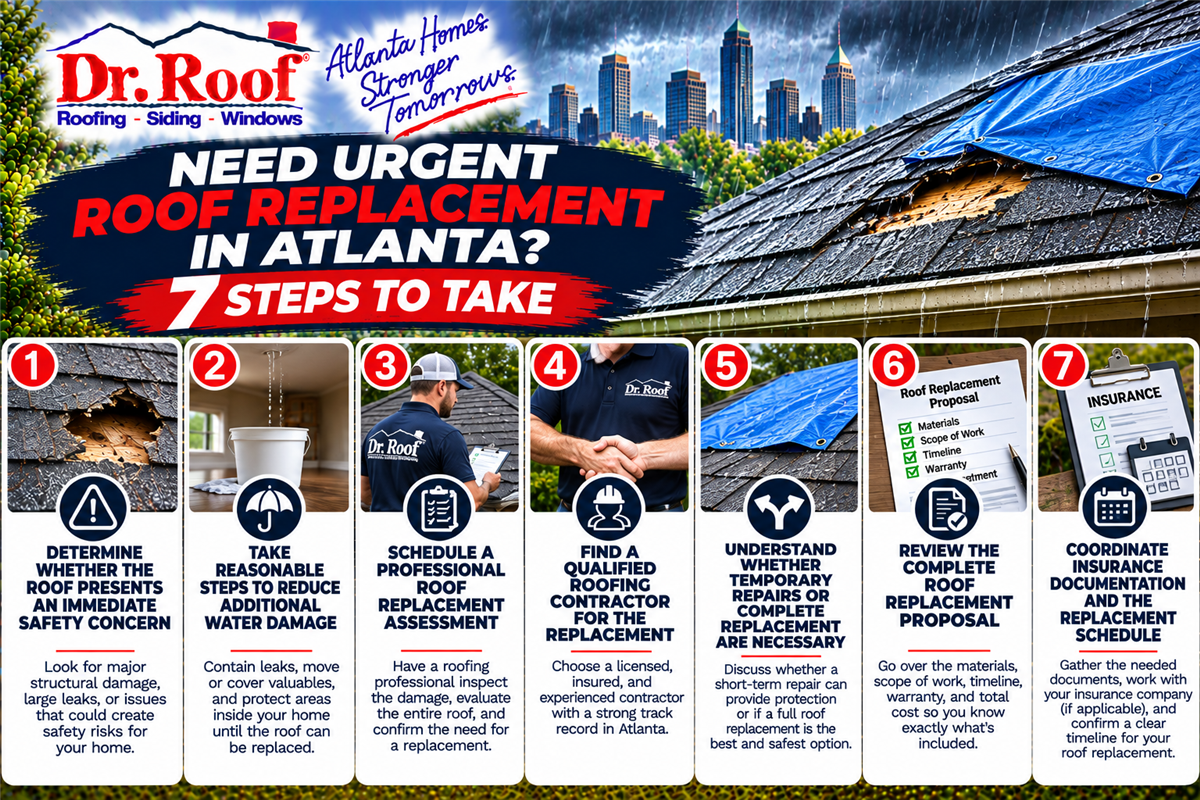
Here are seven steps to follow when significant roof damage creates an urgent need for roofing assistance.
1. Determine Whether the Roof Presents an Immediate Safety Concern
The first priority after discovering significant roof damage is protecting the people inside the home.
Some roofing problems involve water intrusion without creating an immediate structural emergency.
Others may involve damaged framing, large roof openings, fallen trees, or electrical hazards.
What Roofing Conditions May Require Urgent Attention?
Potential warning signs include:
Large sections of missing roofing materials
Significant water entering the home
A tree or large branch striking the roof
Visible structural damage
Significant roof sagging
Exposed roof decking
Damaged framing
Ceiling collapse concerns
Water near electrical fixtures or equipment
These conditions should not be treated as routine roofing maintenance concerns.
What Should You Do if Structural Damage Is Suspected?
Avoid the affected area.
Do not enter rooms beneath visibly unstable roofing or ceiling components.
If the home appears unsafe to occupy, leave the affected area and seek appropriate emergency or structural assistance.
A roofing contractor may need additional professional evaluation before repair or replacement work can begin.
Should You Climb Onto the Roof to Inspect the Damage?
No.
A damaged roof may contain weakened materials, loose shingles, unstable decking, or other hazards.
Wet surfaces also create significant fall risks.
Observe visible damage from a safe location and leave rooftop inspections to qualified professionals.
2. Take Reasonable Steps to Reduce Additional Water Damage
When the roof covering has been compromised, rainwater may reach the underlying materials.
The immediate objective is limiting additional exposure while a permanent solution is being planned.
What Can Homeowners Do Inside the Home?
When conditions are safe:
Move belongings away from water intrusion.
Protect important documents and valuables.
Place containers beneath accessible drips.
Avoid electrical equipment exposed to water.
Photograph visible damage.
Keep people away from unstable ceilings.
Avoid entering unsafe attic areas.
These measures may help protect the interior, but they do not repair the roofing system.
What Is Temporary Roof Protection?
Temporary roof protection refers to measures intended to reduce weather exposure before permanent roofing work is completed.
Depending on the damage, a contractor may recommend:
Professional roof tarping
Temporary covering of an exposed area
Appropriate stabilization
Other protective measures suitable for the conditions
The specific method depends on the damage, roofing system, and safety considerations.
Can a Tarp Protect a Roof Until Replacement?
A professionally installed tarp may help reduce additional water intrusion.
However, tarping is temporary.
GAF's storm-damage guidance explains that roof tarps can provide short-term protection while homeowners arrange appropriate permanent repairs.
A tarp should not be considered a substitute for restoring the roofing system.
Can Homeowners Install Their Own Roof Tarps?
Roof tarping involves working at height, often on damaged or wet surfaces.
Homeowners should avoid attempting this work themselves.
A qualified contractor can determine whether professional tarping is appropriate and whether the roof can be accessed safely.
3. Schedule a Professional Roof Replacement Assessment
Even when the damage appears severe, a complete replacement recommendation should be supported by the condition of the roofing system.
A professional assessment helps determine what was damaged and whether repairs remain practical.
What Should the Roofing Contractor Inspect?
Depending on the circumstances, the evaluation may include:
Asphalt shingles
Ridge components
Flashing
Roof penetrations
Roof valleys
Exposed decking
Visible structural concerns
Signs of water intrusion
Previous repair areas
Surrounding roofing materials
The contractor should identify which areas have confirmed damage and whether additional evaluation is necessary.
Does Severe Storm Damage Always Require Roof Replacement?
No.
Some storm-related damage can be corrected through localized repairs.
For example, a limited number of missing shingles may be replaceable when the surrounding materials remain serviceable.
However, extensive damage can make localized repairs impractical.
When Might Urgent Replacement Be Appropriate?
Replacement may deserve consideration when:
Extensive roofing areas are compromised
Numerous roof sections have significant damage
Existing shingles are no longer serviceable
Major repairs cannot be integrated reliably
Significant underlying deterioration is present
The roofing system cannot provide its intended protection without substantial work
The contractor should explain why replacement is recommended instead of repair.
Does an Active Leak Automatically Mean You Need a New Roof?
No.
An active leak requires attention, but it does not automatically establish that the entire roofing system needs replacement.
A localized flashing or shingle defect may still be repairable.
The appropriate decision depends on the cause and extent of the problem.
4. Find a Qualified Roofing Contractor for the Replacement
When a roof is significantly damaged, homeowners may feel pressure to hire the first contractor who offers assistance.
However, contractor qualifications remain important even when the project is urgent.
How Can You Find Roof Replacement Services Near You?
Start by researching established roofing contractors serving your area.
Consider:
Residential roof replacement experience
Appropriate insurance coverage
Applicable contractor credentials
Manufacturer certifications
Local business history
Customer reviews
Written project proposals
Experience with the selected roofing materials
A contractor should be able to explain the recommended work and discuss realistic scheduling expectations.
Why Is Local Experience Useful?
Atlanta-area homes include a variety of roof designs, from straightforward gable roofs to properties with multiple valleys, dormers, and steep sections.
Heavy rainfall, thunderstorms, and strong winds can also create roofing concerns.
A contractor familiar with local residential roofing conditions may be better prepared to evaluate these features.
However, local experience does not replace the need for appropriate materials and installation practices.
Should You Trust Contractors Who Promise Immediate Replacement?
Be cautious about unsupported promises.
The Federal Trade Commission warns that scammers sometimes approach homeowners after severe weather and pressure them to approve repairs immediately.
A legitimate contractor should explain the scope, provide appropriate documentation, and clarify scheduling.
Homeowners should avoid signing incomplete agreements or making large payments without understanding the terms.
Does Dr. Roof Provide Roof Replacement Services in Atlanta?
Yes.
Dr. Roof provides residential roofing inspections, repairs, and replacement services for Atlanta-area homeowners.
The company has served the region since 1988 and holds GAF Master Elite and CertainTeed SELECT ShingleMaster credentials.
Homeowners can contact Dr. Roof to request a professional assessment and discuss their roofing needs.
Actual inspection and installation availability should be confirmed directly with the company.
5. Understand Whether Temporary Repairs or Complete Replacement Are Necessary
An urgent roofing situation may involve several stages of work.
The first stage may focus on reducing immediate exposure.
The permanent solution may involve localized repair or complete replacement, depending on the findings.
What Is the Difference Between Emergency Roof Repair and Replacement?
Emergency roof repair generally addresses immediate damage or water intrusion.
This may involve temporary stabilization or permanent correction of a localized defect.
Roof replacement involves installing a new roofing system over the approved project area.
A full replacement usually requires more extensive planning, materials, and installation work.
Can Temporary Repairs Be Completed Before Replacement?
Yes, when appropriate.
For example, professional temporary protection may help reduce water intrusion while replacement materials are ordered or other project arrangements are completed.
However, not every situation requires the same approach.
The contractor should identify which temporary measures are necessary and explain their limitations.
Why Might Permanent Replacement Be Delayed?
Even when replacement is recommended, several factors can affect scheduling.
These may include:
Weather conditions
Material availability
Structural safety concerns
Required permits
Contractor scheduling
Roof accessibility
Additional evaluation needs
Roofing work must be performed under suitable conditions.
A contractor should explain the anticipated schedule and how the property will be protected while arrangements are underway.
6. Review the Complete Roof Replacement Proposal
Before authorizing permanent replacement, request a written explanation of the proposed work.
An urgent situation does not eliminate the importance of understanding the agreement.
What Should an Urgent Roof Replacement Estimate Include?
Depending on the project, the proposal may address:
Existing roofing damage
Areas requiring replacement
Removal of damaged materials
Roof measurements
Roof decking evaluation
Underlayment
Leak-protection materials
Flashing
Starter components
Main roofing materials
Ridge components
Ventilation work when appropriate
Labor
Cleanup
Project scheduling
Applicable warranty information
The exact scope depends on the roof's condition.
Why Should Hidden Damage Be Discussed?
Some roofing problems remain concealed until existing materials are removed.
For example, a contractor may discover deteriorated decking beneath an area affected by water intrusion.
Additional repairs may be necessary before installing the new roofing system.
Homeowners should ask how unexpected damage will be documented, priced, and approved.
Should You Compare More Than One Contractor?
When circumstances allow, comparing written estimates can help homeowners evaluate their options.
However, immediate safety concerns should receive appropriate attention rather than being delayed unnecessarily.
Temporary protection may be useful while permanent replacement proposals are reviewed.
The Federal Trade Commission recommends evaluating contractor qualifications and written agreements instead of choosing solely by price.
Does a Higher Price Guarantee Better Roofing Work?
No.
The total price depends on materials, roof design, labor, accessibility, and project scope.
Homeowners should compare the complete roofing systems being proposed.
A detailed written estimate provides a clearer basis for making that decision.
7. Coordinate Insurance Documentation and the Replacement Schedule
Some urgent roof replacement projects follow significant storm damage.
When homeowners insurance may be involved, documentation and communication become particularly important.
What Should Homeowners Document?
Useful records may include:
The approximate date of the damage
Photographs of visible roofing problems
Interior water damage
Professional inspection findings
Written repair or replacement estimates
Temporary protection expenses
Contractor communications
Insurance claim correspondence
Keep records of the work completed and any related payments.
Should You Contact Your Insurance Company?
If you believe the damage may qualify for coverage, contact your insurer and review the policy's claim procedures.
The Georgia Office of the Commissioner of Insurance and Safety Fire recommends documenting property damage, notifying the insurer promptly, retaining receipts, and avoiding significant permanent repairs before appropriate claim evaluation when possible.
The policy may also require homeowners to take reasonable steps to prevent additional damage.
Does Insurance Automatically Cover Emergency Roof Replacement?
No.
Insurance coverage depends on the policy, cause of damage, exclusions, deductibles, and individual claim.
A roofing contractor may recommend replacement based on the physical condition of the roof.
However, the insurer determines whether the loss is covered and what payment, if any, is available.
A roofing contractor cannot guarantee claim approval.
When Can Replacement Be Scheduled?
Scheduling depends on the approved project scope, materials, contractor availability, weather, and applicable requirements.
If an insurance claim is involved, homeowners should also understand the insurer's inspection and documentation procedures.
The contractor should explain the anticipated next steps without making unsupported guarantees about installation timing.
How Quickly Can an Urgent Roof Replacement Be Completed?
There is no universal timeframe for every urgent roof replacement.
A straightforward roof may require different planning from a property with complex rooflines or significant structural damage.
Factors influencing the schedule include:
Roof size
Roof pitch
Number of roof sections
Material availability
Weather
Permitting requirements
Existing damage
Contractor availability
An urgent need for replacement does not necessarily mean safe permanent installation can begin immediately.
What If Heavy Rain Is Forecast?
Weather can affect roofing installation.
A contractor should determine whether conditions are suitable for the proposed work.
If installation must be delayed, ask whether temporary professional protection is appropriate.
Can You Stay in Your Home During Roof Replacement?
Many homeowners remain in their homes during conventional roof replacement projects.
However, significant structural damage or other unsafe conditions may require different arrangements.
A contractor should not determine occupancy safety beyond the scope of their qualifications.
When the building's structural integrity is in question, appropriate professional evaluation is necessary.
What Are Signs That Roof Replacement Should Not Be Delayed?
Some roofing concerns justify prompt professional evaluation because the building may be exposed to additional damage.
These include:
Large exposed roof sections
Significant recurring water intrusion
Extensive missing roofing materials
Serious impact damage
Substantial roof decking deterioration
Suspected structural damage
However, these conditions do not automatically establish that a complete replacement is the only solution.
The contractor should determine whether repairs remain practical.
What About a Roof With Several Small Leaks?
Multiple leaks may indicate problems affecting different roofing components.
They may also reflect broader deterioration.
A professional inspection can help determine whether targeted repairs are still appropriate.
Repeated leaks should not automatically be treated as proof that the entire roof needs replacement.
How Can Homeowners Avoid Roofing Scams During an Urgent Situation?
Significant roof damage can create pressure to make decisions quickly.
Unfortunately, the Federal Trade Commission warns that fraudulent contractors may take advantage of homeowners after severe weather.
What Warning Signs Should You Watch For?
Be cautious when a contractor:
Demands immediate payment in full
Refuses to provide a written agreement
Pressures you to sign before reviewing the scope
Cannot provide appropriate business information
Makes unsupported insurance promises
Uses high-pressure sales tactics
Refuses to explain the proposed roofing materials
Asks you to sign incomplete documents
Homeowners should verify relevant qualifications and understand the agreement before authorizing permanent work.
Should You Sign Over an Insurance Check?
Do not assume that a contractor should receive control over your insurance payment.
Review the insurer's instructions and your contractual obligations.
The FTC advises homeowners to avoid signing over insurance payments without understanding the arrangement.
What Should an Atlanta Homeowner Ask Before Hiring an Urgent Roof Replacement Contractor?
Even when the situation is time-sensitive, several questions can help clarify the project.
Consider asking:
What damage did the inspection identify?
Can any affected areas be repaired?
Why is complete replacement recommended?
Is temporary protection necessary?
What roofing materials will be installed?
How will damaged decking be handled?
What is included in the written estimate?
Are permits or additional approvals required?
How will weather affect scheduling?
What warranty coverage applies?
How will unexpected work be approved?
Who should I contact if concerns develop?
A professional contractor should explain the recommended work and provide appropriate project documentation.
Why Urgent Roof Replacement Requires Careful Planning in Atlanta
Atlanta-area homes can experience severe thunderstorms, strong winds, heavy rainfall, and falling tree debris.
These conditions may cause roofing damage that requires prompt attention.
However, replacing a roofing system involves more than installing new shingles.
The contractor must evaluate the roof design, decking condition, flashing, underlayment, and other components.
When significant damage occurs, temporary protection and permanent replacement may need to be coordinated.
The goal is restoring the roofing system appropriately without overlooking safety, material requirements, or project details.
How Dr. Roof Helps Atlanta Homeowners With Roof Replacement
Dr. Roof has served Atlanta-area homeowners since 1988, providing professional roofing inspections, repairs, replacement, and storm-damage documentation support.
Dr. Roof is a GAF Master Elite Certified Contractor and CertainTeed SELECT ShingleMaster.
A professional roof evaluation can help determine whether damage is localized or whether a larger replacement project should be considered.
Depending on the circumstances, Dr. Roof may provide photographs, written findings, and repair or replacement recommendations.
Homeowners can discuss:
Existing roof damage
Repairability
Replacement materials
Roof decking
Flashing
Underlayment
Project scope
Scheduling considerations
Applicable warranty options
For storm-related concerns, documentation may also help explain the physical condition of the roof during the insurance claim process.
Insurance coverage decisions remain the responsibility of the insurer.
Homeowners in Atlanta, Marietta, Alpharetta, Roswell, Smyrna, and surrounding communities can contact Dr. Roof to request a professional roofing consultation.
Actual inspection and installation availability should be confirmed directly.
Take the Right Steps When Roof Replacement Becomes Urgent
Significant roof damage can create an urgent need for professional attention, but the decision to replace the entire roof should still be based on its condition.
The most important steps are protecting people and belongings, arranging appropriate temporary measures when necessary, and obtaining a professional assessment.
From there, homeowners can review the recommended scope, understand material and scheduling requirements, and coordinate permanent roofing work.
For Atlanta homeowners, choosing a qualified contractor and obtaining clear documentation can help make an unexpected replacement project more manageable.
If your roof has sustained significant damage or you believe a complete replacement may be necessary, contact Dr. Roof to request a professional evaluation and discuss the next steps for your home.
How do I find urgent roof replacement services in Atlanta?
Contact established residential roofing contractors serving your area and explain the damage. Ask about inspection availability, temporary protection options, contractor qualifications, and replacement scheduling. A professional assessment should determine whether complete replacement is necessary.
Does severe roof damage always require immediate replacement?
No. Some significant roofing problems may be repairable, depending on the damage and surrounding materials. Replacement may be appropriate when extensive deterioration or damage prevents reliable repairs. A professional evaluation should determine the recommended scope.
Can a roof be temporarily protected while waiting for replacement?
Yes. Professional roof tarping or other suitable temporary measures may help reduce additional weather exposure. Temporary protection does not replace the need for permanent roofing repairs or replacement.
How quickly can an urgent roof replacement be completed?
The schedule depends on damage severity, roof design, material availability, weather, permits, and contractor scheduling. Homeowners should confirm realistic inspection and installation availability directly with the roofing company.
Does homeowners insurance cover urgent roof replacement?
Coverage depends on the homeowner's insurance policy, cause of damage, exclusions, deductibles, and individual claim. Some sudden storm-related losses may qualify, but the insurance company determines coverage and payment.
What should I look for when hiring an urgent roof replacement contractor?
Review the contractor's roofing experience, appropriate insurance, applicable credentials, written proposal, material specifications, warranty information, and scheduling expectations. Avoid high-pressure sales tactics, unsupported insurance promises, and demands for full payment before work begins.
Subscribe to Dr. Roof's Blog



Comments