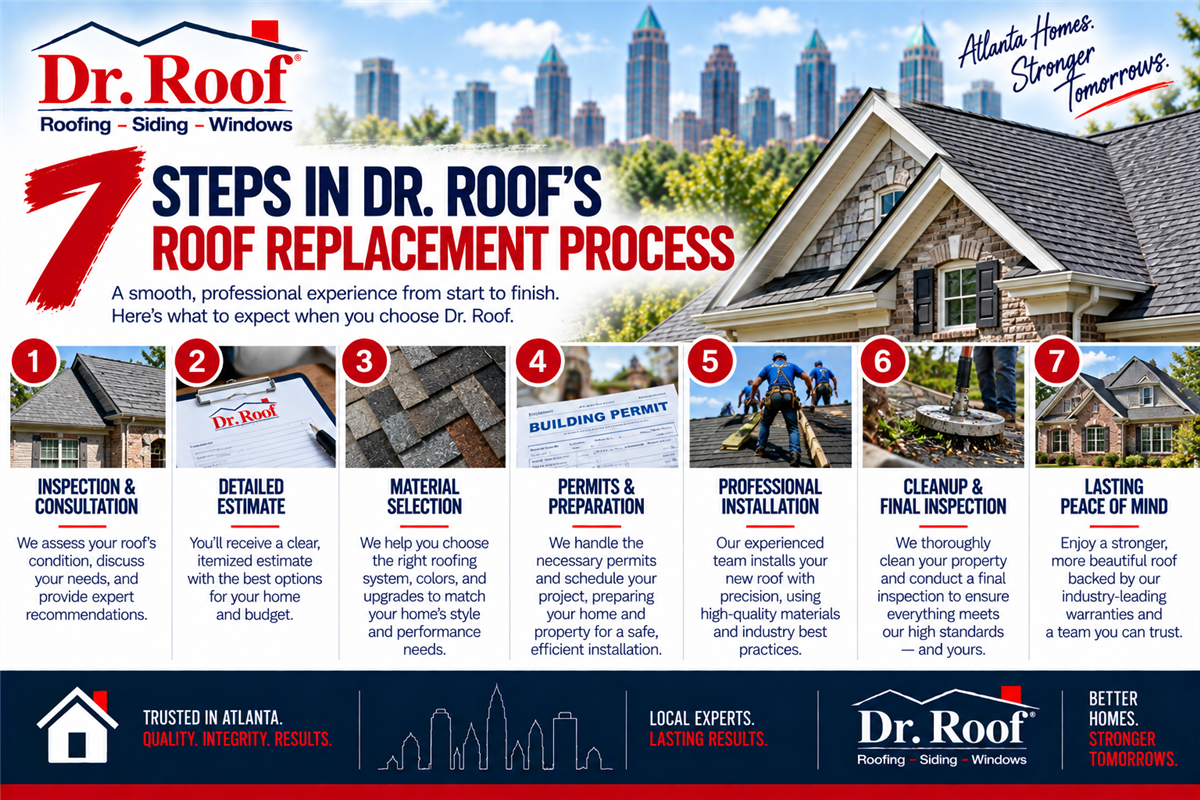
Replacing a roof is a major home improvement project, but the process should not feel mysterious. For Atlanta homeowners, knowing what happens between the first inspection and the final cleanup can make it much easier to plan for the project and understand what quality roof replacement work involves.
Dr. Roof has served the Atlanta area since 1988. Its roof replacement process is designed to evaluate the complete roofing system—not simply the visible shingles—and move through the project in an organized sequence from inspection to final review.
While every home and roofing project is different, the process generally includes seven important stages.
1. Start With a Professional Roof Inspection
A roof replacement should begin by understanding the condition of the existing roofing system.
During an inspection, the contractor evaluates visible roofing components and looks for issues that may influence whether repair or replacement is appropriate. Depending on the home and accessible areas, that evaluation may include shingles, flashing, valleys, penetrations, ventilation, gutters, signs of moisture intrusion, and other roofing components.
The goal is to answer an important question before work begins:
What does this particular roof actually need?
Not every damaged roof requires replacement. A professional evaluation helps determine whether localized repair remains reasonable or whether deterioration is extensive enough to consider a new roofing system.
For storm-related concerns, Dr. Roof may also document visible conditions with photographs, written findings, and repair or replacement recommendations.
2. Review the Scope and Choose Roofing Materials
Once the roof has been evaluated, the next step is understanding the recommended scope of work.
A roof replacement is more than choosing a shingle color. Homeowners should understand how the proposed roofing system addresses components such as:
Roofing material
Underlayment
Flashing
Roof penetrations
Starter components
Ridge or hip protection
Ventilation
Decking conditions
Applicable warranty options
This is also the point where homeowners can compare roofing products and appearance.
Dr. Roof is a GAF Master Elite Certified Contractor and a CertainTeed SELECT ShingleMaster. The company also offers additional roofing options, including DaVinci products, when appropriate for the home and project.
Manufacturer certifications can be useful because they demonstrate specific contractor training and may affect which manufacturer-backed warranty options are available for qualifying installations. Homeowners should review the warranty that applies to their particular roofing system rather than assuming every project receives identical coverage.
3. Prepare the Home and Property
Roof replacement involves material delivery, debris removal, equipment, crew movement, and considerable activity around the home.
A little preparation can make installation day easier.
Before work begins, homeowners may be asked to:
Move vehicles away from the work area
Remove fragile outdoor items near the house
Secure patio furniture or decorations
Make sure gates and access points are available
Protect delicate items stored in the attic
Remove fragile wall decorations that could be affected by vibration
Make plans for pets that may be sensitive to noise
Exact preparation instructions should come from the contractor because every property is different.
The purpose is straightforward: create a safer, more accessible work area while helping protect the home and surrounding property.
4. Remove the Existing Roofing and Inspect the Decking
Once the installation begins, the existing roofing materials included in the replacement scope are removed so the underlying roof deck can be evaluated.
This is an important stage because the decking is the structural surface supporting the roofing system.
Some decking conditions cannot be fully evaluated until the old roofing material has been removed.
Installers may discover areas affected by issues such as:
Moisture deterioration
Rot
Delamination
Soft or weakened sections
Previous repairs
Damaged sheathing
If compromised decking is discovered, it should be addressed appropriately before the new roofing system is installed.
Covering deteriorated decking with new shingles would not correct the underlying problem.
5. Install the Protective Roofing Layers
The visible roof covering is only one part of a complete roofing system.
Before the primary roofing material goes down, the contractor installs the protective components specified for the project. Depending on roof design and manufacturer requirements, those components can include underlayment, drip edge, flashing, and additional protection at vulnerable transitions or penetrations.
These layers help manage water and create a properly prepared surface for the roofing material above them.
Flashing deserves particular attention because it protects areas where the roof changes direction or meets another surface, such as around chimneys, walls, vents, skylights, and other penetrations.
Small details in these areas can have a significant effect on the performance of the finished roof.
6. Install the New Roofing System
After the deck and protective layers are ready, installation of the new roofing system begins.
For an asphalt-shingle project, this typically involves coordinated installation of the starter components, field shingles, ridge or hip materials, flashing, and ventilation components required by the roof design.
Installation should follow applicable manufacturer instructions and project specifications.
That matters because even a high-quality roofing product depends on correct installation.
Fastening, alignment, flashing details, ventilation, transitions, and penetrations all work together. A roof should therefore be viewed as a system rather than simply a layer of new shingles.
For Atlanta homeowners, this system approach is especially important because roofs must handle sun exposure, heat, humidity, heavy rain, wind, and periodic severe weather.
7. Complete Cleanup and a Final Review
Roof replacement is not finished when the final shingle is installed.
The work area should be cleaned, roofing debris should be removed, and the completed project should receive a final review.
Homeowners should also receive information about applicable warranties and any maintenance recommendations associated with the new roof.
This is a good time to ask questions such as:
Were any unexpected decking conditions discovered?
Were changes made to the original scope?
What roofing and ventilation components were installed?
What warranties apply?
What records should I keep?
Are there maintenance recommendations for the new roof?
Keep the project documentation with other important home records.
How Long Does the Roof Replacement Process Take?
There is no single project timeline that applies to every Atlanta home.
The schedule can be affected by roof size, pitch, architectural complexity, roofing material, weather, decking repairs, material availability, and the overall scope of work.
A straightforward asphalt-shingle project may progress differently from a large, steep, highly complex roof or a specialty roofing installation.
Rather than relying on a generic timeline, homeowners should ask for a project-specific schedule once the contractor has evaluated the roof and confirmed the scope.
What Happens if Storm Damage Is Involved?
Storm-related roof replacement can include additional documentation steps.
Dr. Roof may provide photographs, written findings, and recommendations describing observed roofing conditions. That information can help a homeowner communicate with an insurance company when a claim is involved.
The roofing contractor can document physical conditions and explain the proposed repair or replacement work, but the contractor does not determine whether an insurance policy covers the loss.
Coverage decisions are made by the insurance company according to the policy and the individual claim.
What Should Atlanta Homeowners Look for in a Roof Replacement Process?
A strong process should provide clarity at each stage.
Homeowners should understand:
Why replacement is being recommended
What materials and components are included
How the property will be prepared and protected
How decking problems will be handled
What ventilation and flashing work is included
What happens during cleanup
What warranties apply
Who to contact if questions arise after completion
The best roof replacement experience is not simply about getting new shingles onto the house. It is about understanding how the complete system is evaluated, prepared, installed, and reviewed.
Start With the Condition of Your Roof
If your Atlanta-area roof is aging, leaking, showing signs of deterioration, or has recently been through severe weather, the first step is determining what condition it is actually in.
Dr. Roof provides roof inspections, roof repair, roof replacement, and storm-damage documentation support throughout the Atlanta metropolitan area.
A professional inspection can help determine whether your roof needs a targeted repair or whether it is time to begin planning for replacement—and give you a clearer understanding of what the process will involve from start to finish.
What is the first step in Dr. Roof’s roof replacement process?
The process begins with a professional roof inspection to evaluate the condition of the existing roofing system and determine whether repair or replacement is appropriate.
What happens to the roof decking during replacement?
After the existing roofing materials included in the project scope are removed, the exposed decking can be evaluated for deterioration, moisture damage, weak areas, or other conditions that may need to be addressed before the new roofing system is installed.
How long does a roof replacement take in Atlanta?
The timeline depends on factors such as roof size, pitch, complexity, roofing material, weather, decking conditions, and project scope. Homeowners should ask for a project-specific schedule after the roof has been inspected.
Does Dr. Roof help with storm-damage documentation?
Dr. Roof may provide photographs, written findings, and repair or replacement recommendations for storm-related roofing concerns. If an insurance claim is involved, the insurance company determines coverage according to the policy and individual claim.
Why do contractor certifications matter during roof replacement?
Manufacturer certifications can indicate specialized product and installation training and may affect access to certain manufacturer-backed warranty options for qualifying roofing systems. Dr. Roof is a GAF Master Elite Certified Contractor and CertainTeed SELECT ShingleMaster.
Subscribe to Dr. Roof's Blog





Comments