Brick homes are a familiar part of the Atlanta landscape, from traditional red-brick Colonials to painted brick, warm tan masonry, and newer homes that combine brick with siding, stone, or dark exterior trim.
When it is time to replace the roof, the shingle color can noticeably change how all of those exterior elements work together.
There is no single “best” roof color for every brick home. The right choice depends on the brick’s undertone, trim, shutters, siding, roof size, architectural style, surrounding homes, and the homeowner’s personal preferences.
Still, several color families pair especially well with brick and are widely represented in current roofing collections.
Here are five worth considering for an Atlanta roof replacement.
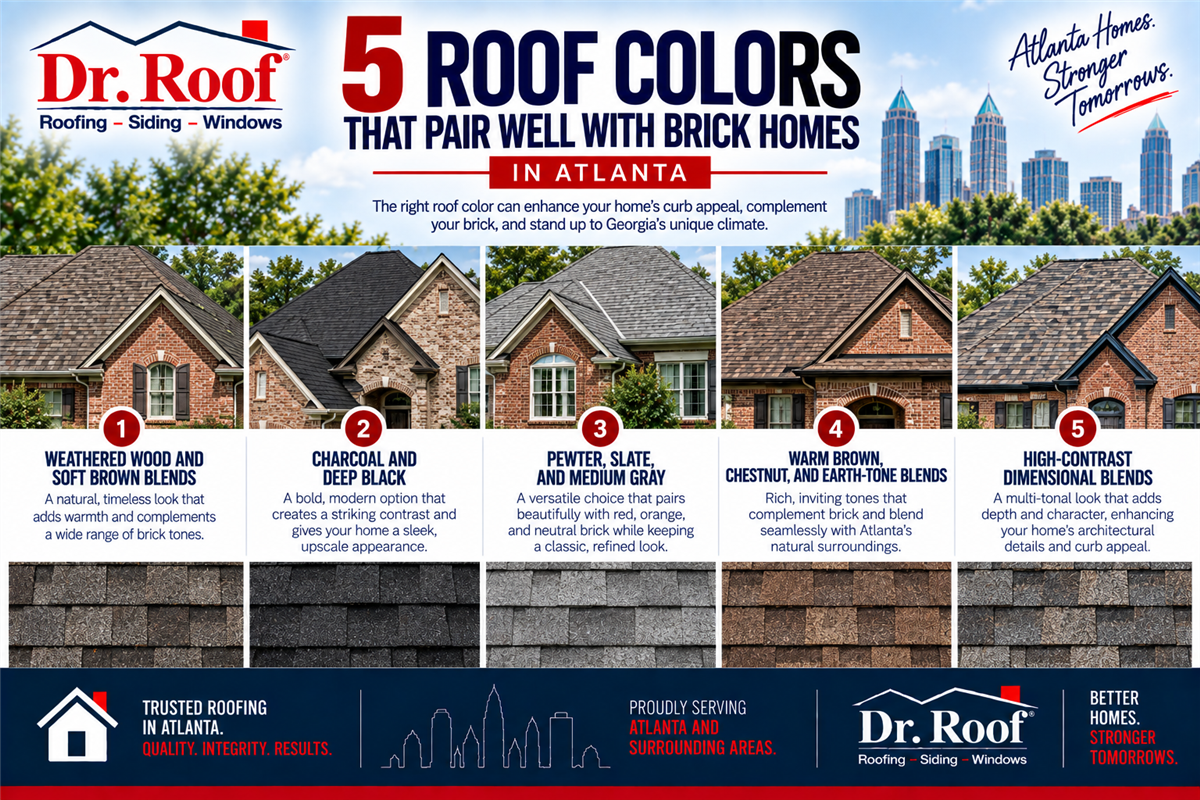
1. Weathered Wood and Soft Brown Blends
Weathered wood is popular for a reason: it combines multiple neutral tones rather than presenting as one solid brown.
Current GAF color guidance identifies Weathered Wood as one of its most popular Timberline HDZ colors and shows the blend used with brick exteriors. GAF describes it as having rich tones and neutral highlights designed to create a dimensional wood-shake appearance.
For brick homes, that versatility can be useful.
Weathered wood and similar blends can work particularly well with:
Traditional red brick
Warm tan brick
Brown brick
Cream trim
Bronze or brown gutters
Natural wood accents
Instead of strongly contrasting with the brick, these colors often create a more blended transition between the roof and walls.
That can be especially appealing on traditional Atlanta homes where the brick itself already contains several shades of red, brown, tan, or charcoal.
2. Charcoal and Deep Black
Dark roofing can create a very different look.
Charcoal and black provide stronger contrast, which can make the roofline more visually defined.
GAF's current color guide describes black as a formal, sophisticated roof color that can contrast with a wide range of brick, siding, and paint colors. Charcoal also remains among GAF's most popular Timberline HDZ color selections.
Dark shingles can work particularly well when a brick home already uses black exterior details such as:
Window frames
Shutters
Entry doors
Gutters
Lighting fixtures
Porch railings
A charcoal roof can tie those features together without competing with the brick.
This approach is often especially effective when the homeowner wants a more defined or updated appearance while keeping the original masonry.
3. Pewter, Slate, and Medium Gray
Gray roofing is one of the most flexible choices because it can sit between strong contrast and warm blending.
Pewter and slate-colored shingles can pair naturally with brick that contains cooler undertones, gray mortar, stone accents, or painted exterior elements.
GAF currently identifies Pewter Gray among its popular Timberline HDZ colors and specifically presents Pewter Gray and Slate as options that can complement brick facades.
Medium gray may be worth considering for:
Red brick with gray mortar
Painted white or limewashed brick
Brick combined with gray siding
Homes with stone containing gray undertones
Exteriors with black-and-gray trim schemes
The key is paying attention to undertones.
A cool blue-gray roof can look quite different beside warm orange-red brick than a softer greige or neutral gray.
That is why physical samples matter.
4. Warm Brown, Chestnut, and Earth-Tone Blends
For homeowners who want the roof to feel closely connected to the brick, deeper earth tones can be a strong option.
Browns, chestnuts, and warm mixed blends can complement masonry containing rust, tan, terracotta, beige, or dark brown undertones.
GAF expanded its Timberline HDZ color offerings in January 2026 with a new Bold Definition collection that includes Chestnut Valley, Sierra Sand, Cliffside, and Midnight Mesa. The collection was developed around popular existing color families while adding stronger tonal contrast and definition.
Chestnut and warm brown families can be particularly attractive on homes with:
Rustic red brick
Tan or buff brick
Natural wood doors
Copper accents
Brown or bronze trim
Earth-toned stone
These colors can create depth without making the roof feel disconnected from the rest of the exterior.
5. High-Contrast Dimensional Blends
Not every homeowner wants the roof to quietly blend into the background.
A dimensional roof with stronger color variation can become a more noticeable architectural feature.
Current GAF Timberline HDZ Bold Definition colors were introduced in 2026 specifically to provide richer tones and stronger contrast than traditional color blends. Examples include Midnight Mesa, Cliffside, Sierra Sand, and Chestnut Valley.
For brick homes, a higher-contrast blend may work particularly well when the rest of the exterior is relatively simple.
A roof with visible dimension can add interest to:
Large roof surfaces
Steep roof pitches
Gables
Dormers
Traditional homes with simple brick facades
Homes using a limited exterior color palette
The important part is making sure the roof does not compete with an already busy combination of brick, stone, siding, shutters, and trim.
Should the Roof Match the Brick?
Usually, exact matching is not necessary.
In fact, selecting a roof that is too close to the brick color can sometimes cause the entire exterior to visually blend together.
A more useful approach is to identify the brick’s undertones.
Stand several feet from the house and look for the secondary colors within the brick.
You may notice:
Deep brown
Rust
Burgundy
Orange
Tan
Gray
Cream
Charcoal
Then look at the mortar, trim, shutters, doors, gutters, and any siding or stone.
The best roof color often connects several of those elements rather than matching only one.
How Does Brick Color Affect the Roof Choice?
Different types of brick tend to create different design opportunities.
Red Brick
Traditional red brick can work with warm browns, weathered wood, charcoal, black, or certain grays.
The deciding factor is often whether the homeowner wants the roof to blend with the brick or contrast against it.
Tan or Buff Brick
Tan brick frequently works well with weathered wood, brown, chestnut, taupe, or medium gray.
These homes often already have a warm neutral palette, giving homeowners several roof-color directions.
Painted White Brick
White-painted brick opens the door to stronger contrast.
Charcoal, black, slate, and dark dimensional blends can create a crisp look, particularly when the home also uses black windows, shutters, doors, or gutters.
Gray or Limewashed Brick
Gray or limewashed brick may pair naturally with pewter, slate, charcoal, weathered neutral blends, and certain cooler roof colors.
Again, trim and stone should be considered before making a final selection.
Should You Choose a Roof Color From a Phone Screen?
Not by itself.
Roofing colors can look very different on a screen than they do outdoors.
GAF specifically advises homeowners to view actual shingle samples because computer and smartphone screens may reproduce roofing colors differently.
Lighting also matters.
A color viewed in bright afternoon sun may appear different under overcast conditions or in morning shade.
Before finalizing a roof color, consider viewing:
Full-size shingle samples
Multiple shingles placed together
Samples against the home's brick
Samples in both sun and shade
Completed homes using the same color, when possible
That gives you a more realistic sense of how the finished roof may look.
Use Visualization Tools as a Starting Point
Digital visualization tools can be helpful during the early stages of the decision.
GAF offers a roofing visualizer, while CertainTeed's current ColorView tool allows homeowners to upload an image of the home and explore different roofing and exterior combinations. CertainTeed also allows users to filter product choices by location because product and color availability can vary.
These tools can help narrow a large color selection into a manageable shortlist.
They should complement—not replace—physical samples.
Don't Forget the Roof's Size and Visibility
The same shingle can look different on two houses.
A one-story ranch with a large visible roof may make the shingle color a dominant part of the exterior.
A two-story brick home with a low roof pitch may show much less roofing from the street.
That means homeowners should consider how much of the roof is actually visible.
The larger and steeper the visible roof planes, the more influence the roof color may have on the overall appearance.
Think Beyond Today's Paint Color
Exterior paint is relatively easy to change compared with a roofing system.
If you are planning to repaint trim, replace gutters, install new windows, or change siding in the next few years, think about how the roof color will work with those future updates.
A highly specific roof color may look perfect with the current shutters but become difficult to coordinate if the rest of the exterior changes later.
Neutral roof colors often give homeowners greater flexibility, while bolder choices can create more architectural personality.
Neither approach is automatically better.
What About HOA Requirements?
Some Atlanta-area neighborhoods have architectural review requirements or homeowner association rules that affect acceptable roofing materials or colors.
Before ordering shingles, homeowners should confirm whether approval is required.
The roofing manufacturer may offer dozens of colors nationally, while a particular community or product line may provide a smaller set of practical options.
Product availability can also vary by region.
Checking those details before final selection can prevent unnecessary changes later.
GAF or CertainTeed: Which Has Better Colors?
Color preference is subjective.
Both manufacturers offer multiple architectural shingle lines and color palettes.
Rather than asking which brand has the universally "best" colors, compare which specific products offer the appearance you want while also meeting the performance, roofing-system, and warranty priorities for your home.
Dr. Roof is both a GAF Master Elite Certified Contractor and a CertainTeed SELECT ShingleMaster, which gives Atlanta homeowners the opportunity to discuss qualifying roofing systems from both manufacturers.
For homeowners looking beyond traditional asphalt shingles, Dr. Roof can also discuss available DaVinci roofing options when appropriate for the property and design goals.
Choose the Roof Color With the Whole House in Mind
A new roof covers a large portion of a home's exterior, so color deserves more thought than simply selecting the first sample that looks attractive.
For Atlanta brick homes, weathered wood, charcoal, gray, warm brown, and dimensional high-contrast blends can all work well under the right circumstances.
The most successful choice is usually the one that considers the brick, mortar, trim, doors, gutters, siding, stone, roof shape, neighborhood, and personal style together.
Dr. Roof has served Atlanta since 1988 and can help homeowners compare roofing materials, colors, and complete roof-system options before replacement.
If you are planning a new roof, start by narrowing the color families you like and then compare physical samples against the actual brick on your home. That simple step can make the final decision much easier.
Q: What roof color looks best with red brick?
A: Red brick can work with several roof colors, including weathered wood, charcoal, black, medium gray, and warm brown blends. The best choice depends on the brick's undertones, mortar, trim, shutters, and other exterior materials.
Q: Does a gray roof work with a brick house?
A: Yes. Pewter, slate, and medium-gray roofing can pair well with many brick exteriors, especially when the brick, mortar, stone, trim, or siding contains cooler gray undertones.
Q: Should my roof color match my brick exactly?
A: No. An exact match is usually unnecessary. A roof color can instead complement one or more undertones in the brick while coordinating with the home's trim, shutters, gutters, siding, and stone.
Q: Should I choose a roof color from an online photo?
A: Online visualizers are useful for narrowing choices, but homeowners should also view physical shingle samples. Screens, lighting, roof size, and surrounding exterior colors can all affect how a roofing color appears.
Q: Do roofing shingle colors vary by location?
A: Yes. Product lines and colors can vary by manufacturer, roofing product, and region. Homeowners should confirm current local availability before making a final color selection.
Subscribe to Dr. Roof's Blog



Comments