When investing in a new roof, most homeowners want a roofing system that will provide dependable protection for years to come.
However, the durability of a roof replacement depends on much more than the shingles selected.
Roofing materials must be appropriate for the home's design, installed over suitable decking, and integrated with underlayment, flashing, fastening, and other important components.
For Atlanta homeowners, understanding these details can help make roof replacement decisions more informed.
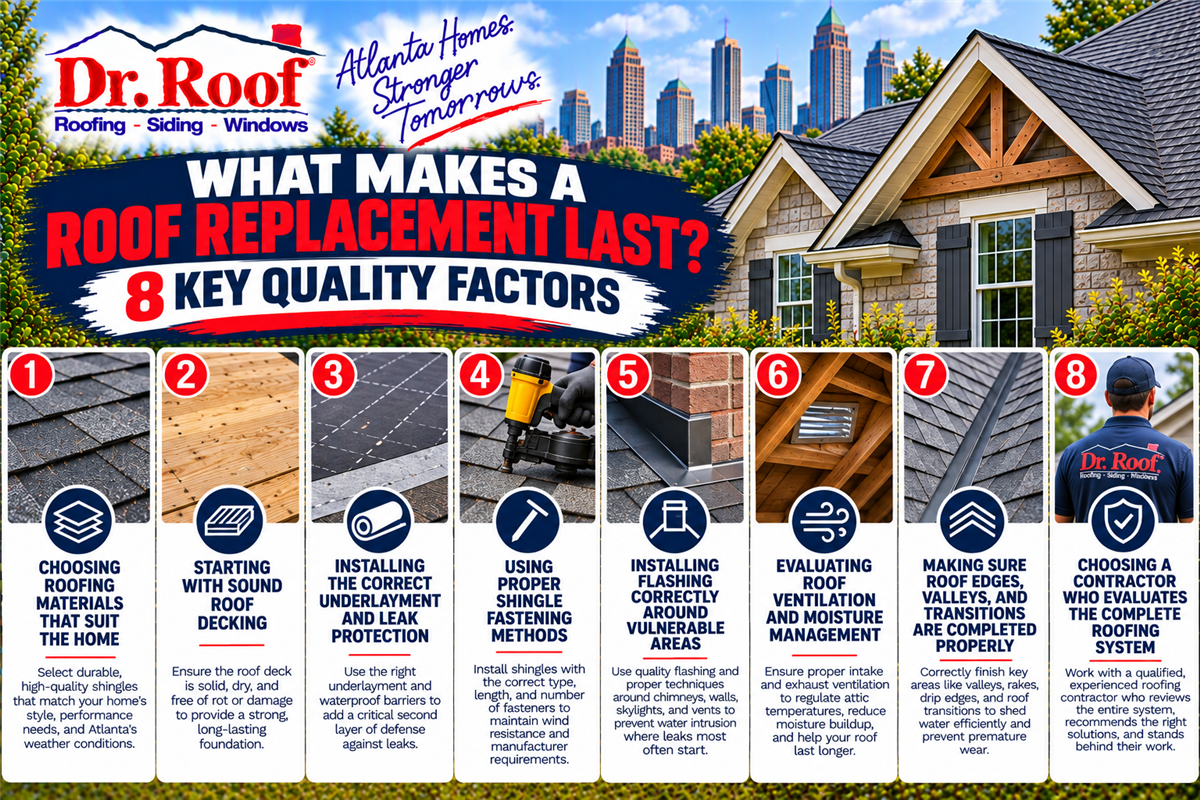
A durable roof replacement depends on selecting suitable roofing materials, preparing the roof deck, following manufacturer installation instructions, installing proper water-management components, and accounting for the home's roof design and environmental conditions.
No roofing system can guarantee a specific service life or complete protection from every storm.
However, appropriate material selection and installation practices help the finished roof perform as intended.
Here are eight important factors that contribute to a durable residential roof replacement.
1. Choosing Roofing Materials That Suit the Home
The first step toward a durable roof replacement is selecting materials appropriate for the property.
Residential roofing materials are available in several categories, each with different characteristics and installation requirements.
Common options include:
Traditional asphalt shingles
Architectural asphalt shingles
Designer asphalt shingles
Certain composite roofing products
Metal roofing systems
The appropriate material depends on the roof's design, pitch, supporting structure, and the homeowner's priorities.
Do More Expensive Shingles Automatically Last Longer?
Not necessarily.
Higher-priced products may offer different construction characteristics, appearance options, or published performance specifications.
However, price alone does not establish how long a roofing system will remain serviceable.
Installation quality, environmental exposure, and roof design also matter.
Why Should Homeowners Compare Specific Products?
Roofing manufacturers offer multiple product lines.
For example, GAF and CertainTeed manufacture various asphalt-shingle products with different characteristics and warranty provisions.
Homeowners should compare the actual product specifications rather than assuming every architectural shingle performs identically.
What Should You Ask Before Choosing Materials?
Consider asking:
Is this roofing material appropriate for my roof pitch?
What installation requirements apply?
What roofing accessories are recommended?
What published performance characteristics does the product have?
What warranty coverage is available?
Are there special requirements for my roof design?
A contractor should explain why the proposed roofing material is suitable for the home.
2. Starting With Sound Roof Decking
The roof decking provides the supporting surface beneath the roofing materials.
Common residential decking products include plywood and oriented strand board.
The decking must be structurally suitable for the selected roofing system.
Why Is Roof Decking Important?
Roof decking supports the roofing materials and provides the surface into which many roofing fasteners are installed.
If the decking is severely deteriorated or damaged, it may not provide the intended support.
Potential problems include:
Wood rot
Delaminated panels
Holes
Deteriorated materials
Unsupported areas
Previous moisture damage
A roof replacement should address unsuitable decking before new roofing materials are installed.
Does Every Roof Replacement Require New Decking?
No.
Existing decking may remain suitable when it meets the requirements for the new roofing system.
However, damaged or structurally unsuitable areas may need replacement.
A roofing contractor should evaluate the exposed decking during the replacement process.
Why Does Decking Condition Affect Long-Term Performance?
Roofing components rely on an appropriate supporting surface.
For example, correctly selected shingles and fasteners cannot compensate for severely deteriorated decking.
A complete roof replacement should therefore address the condition of the underlying structure rather than focusing exclusively on the visible roof covering.
3. Installing the Correct Underlayment and Leak Protection
Underlayment is installed beneath many residential roof coverings.
For conventional asphalt-shingle systems, it provides secondary protection over the roof decking.
Different underlayment products have different characteristics.
Common categories include:
Asphalt-saturated felt
Synthetic underlayment
Self-adhered leak-protection membranes
These materials are not necessarily interchangeable.
Why Does Underlayment Matter?
Asphalt shingles are designed primarily to shed water.
However, under certain conditions, moisture may reach beneath the shingles.
Properly installed underlayment provides an additional layer that helps protect the decking.
This is especially relevant when wind-driven rain reaches vulnerable roofing details.
Is Synthetic Underlayment Always Better?
Not automatically.
Synthetic products may offer useful characteristics such as tear resistance or other product-specific features.
However, the appropriate underlayment depends on the roofing system, manufacturer requirements, roof pitch, and installation conditions.
The contractor should explain why a particular product is recommended.
What Is a Roof Leak Barrier?
Certain self-adhered membranes provide additional water protection in vulnerable areas.
Depending on the roof design and applicable requirements, these materials may be used around:
Roof valleys
Eaves
Roof penetrations
Certain transitions
Other vulnerable locations
The exact placement depends on the selected product and roofing system.
Does Roof Pitch Affect Underlayment Requirements?
Yes.
Lower-sloped roof sections can require different underlayment arrangements than steeper sections.
For example, certain asphalt-shingle applications between 2:12 and less than 4:12 require enhanced underlayment methods.
The contractor should follow the specific manufacturer's instructions and applicable building requirements.
4. Using Proper Shingle Fastening Methods
Roofing nails are relatively small components, but their installation is important to the performance of an asphalt-shingle roof.
Fasteners secure shingles to the supporting roof decking.
Their type, placement, number, and driving depth must follow applicable requirements.
Why Does Nail Placement Matter?
Asphalt-shingle manufacturers identify specific areas where fasteners should be installed.
These fastening zones are designed for the selected roofing product.
Incorrect placement can contribute to:
Loose shingles
Raised tabs
Shingle distortion
Exposed fasteners
Installation defects
Increased vulnerability to wind
The exact requirements vary by product.
How Many Nails Should Be Used per Shingle?
The appropriate number depends on the manufacturer's instructions and installation conditions.
Many conventional asphalt-shingle applications use a four-nail pattern, while certain products or conditions require additional fasteners.
Homeowners should not assume that one fastening pattern applies to every shingle.
Why Does Nail Depth Matter?
Roofing nails should be driven so the nail head bears appropriately against the shingle surface.
Underdriven nails may interfere with overlapping roofing materials.
Overdriven nails can damage the shingle.
Incorrectly installed fasteners should be corrected using appropriate procedures.
Can Homeowners Inspect Nail Placement After Installation?
Most roofing fasteners are concealed once the shingles are installed.
For this reason, homeowners generally cannot verify proper nailing from the ground.
Ask the roofing contractor about the selected product's fastening requirements and available installation documentation.
A professional evaluation may be appropriate if workmanship concerns develop.
5. Installing Flashing Correctly Around Vulnerable Areas
Roof flashing is one of the most important parts of a complete roofing system.
It helps direct water away from locations where roofing materials meet other building components.
Common flashing areas include:
Chimneys
Skylights
Plumbing vents
Roof valleys
Dormers
Roof-to-wall intersections
These areas can create water-entry points when flashing is damaged or improperly installed.
Why Does Flashing Affect Roof Durability?
A roof can have properly installed shingles and still develop leaks around defective flashing.
For example, water entering through a chimney transition may affect decking or other concealed materials.
Proper flashing installation helps direct water away from vulnerable areas.
Should Old Flashing Be Replaced During Roof Replacement?
The appropriate decision depends on the condition of the existing flashing and the new roofing system.
GAF recommends replacing metal flashing whenever practical.
Some existing metal flashing may be suitable for reuse when it remains in appropriate condition and is compatible with the replacement materials.
However, damaged, deteriorated, or incompatible flashing should be addressed.
What Should Homeowners Ask?
Before approving a roof replacement, ask:
Which flashing components will be replaced?
Will any existing flashing be reused?
How will chimney transitions be addressed?
What work is included around plumbing vents?
How will roof valleys be protected?
Are all necessary flashing materials included in the estimate?
A clear proposal should explain these important installation details.
6. Evaluating Roof Ventilation and Moisture Management
Roof replacement provides an opportunity to evaluate existing roof ventilation and certain attic conditions.
However, not every home uses the same attic design.
Some homes have traditionally vented attics.
Others use conditioned or unvented attic assemblies.
The appropriate approach depends on the building.
Why Does Attic Moisture Matter?
Excessive moisture can affect wood framing, roof sheathing, insulation, and other building materials.
Potential consequences include:
Wood deterioration
Damp insulation
Condensation
Staining
Mold growth
Damage to interior finishes
Moisture may enter through roof leaks, but it can also result from indoor air leakage, plumbing problems, or other conditions.
How Does Ventilation Help?
In a properly designed vented attic, intake and exhaust ventilation can help manage moisture and air movement.
The appropriate arrangement depends on the home's construction and applicable requirements.
Should Every Roof Replacement Include More Vents?
No.
Adding ventilation without evaluating the complete attic design may not address the actual condition.
For example, a home with a properly designed unvented attic requires a different approach from a conventionally vented attic.
A qualified contractor should evaluate the existing system before recommending changes.
Why Should Ventilation Be Discussed Before Installation?
Once the roofing materials are installed, changes to ventilation components may require additional roofing work.
Reviewing the attic and roof design during replacement planning can help determine whether modifications are appropriate.
7. Making Sure Roof Edges, Valleys, and Transitions Are Completed Properly
Some roofing areas require additional attention because of their location or function.
These include roof edges, valleys, hips, ridges, and transitions between different roof sections.
The appropriate installation details depend on the selected roofing system.
Why Are Roof Edges Important?
Roof edges are exposed to wind and weather.
Asphalt-shingle systems commonly use starter materials along specified perimeter locations.
These components help support the intended installation and sealing arrangement.
What About Ridge and Hip Shingles?
Ridge and hip materials complete the roofing system along particular roof transitions.
They may have different fastening and installation requirements from the main roofing shingles.
The contractor should follow the selected product's instructions.
Why Do Roof Valleys Require Careful Installation?
Valleys collect runoff from adjoining roof slopes.
During heavy rainfall, concentrated water flows through these areas.
Proper underlayment, flashing, and roofing material integration are important to water management.
What If the Home Has Multiple Roof Pitches?
A house may have several roof slopes.
For example, the main roof may be moderately steep while an adjoining porch has a shallow pitch.
The same roofing material may not be suitable for every section.
A contractor should evaluate the slope of each relevant area and select appropriate installation methods.
8. Choosing a Contractor Who Evaluates the Complete Roofing System
A durable roof replacement involves more than selecting quality materials.
The contractor must understand how those materials work together.
A complete roofing evaluation should consider:
Existing roof condition
Decking
Roofing material selection
Roof pitch
Underlayment
Flashing
Fastening
Roof penetrations
Ventilation
Roof edges and ridges
Why Does Contractor Experience Matter?
Different roofs require different installation details.
A straightforward gable roof may be less complicated than a home with several dormers, chimneys, valleys, and low-slope sections.
A contractor should evaluate the actual roof rather than assume the same installation approach applies to every property.
Are Manufacturer Certifications Important?
Manufacturer certifications can provide information about contractor qualifications.
For example, GAF and CertainTeed maintain programs with requirements involving experience, training, and other business qualifications.
Certain credentials may also affect eligibility for enhanced manufacturer warranty options.
However, certifications do not guarantee that every roofing project will have the same outcome.
The proposed materials, installation practices, and written warranty terms remain important.
What Should You Ask Before Hiring a Roof Replacement Contractor?
Consider asking:
Which roofing materials are proposed?
How will the existing decking be evaluated?
What underlayment and leak barriers will be installed?
How will flashing be handled?
What fastening requirements apply?
Are ventilation changes necessary?
Which roofing accessories are included?
What warranty coverage is available?
How will unexpected damage be documented?
What final project review will be completed?
Clear answers can help homeowners understand the complete roofing system.
Does a More Expensive Roof Automatically Last Longer?
No.
The total price of a roofing project depends on many factors, including materials, roof size, labor, accessibility, and installation complexity.
A premium roofing product may have different specifications or appearance characteristics.
However, material price alone does not determine the completed roof's service life.
Installation quality and roof design are also important.
What Should Homeowners Compare Instead?
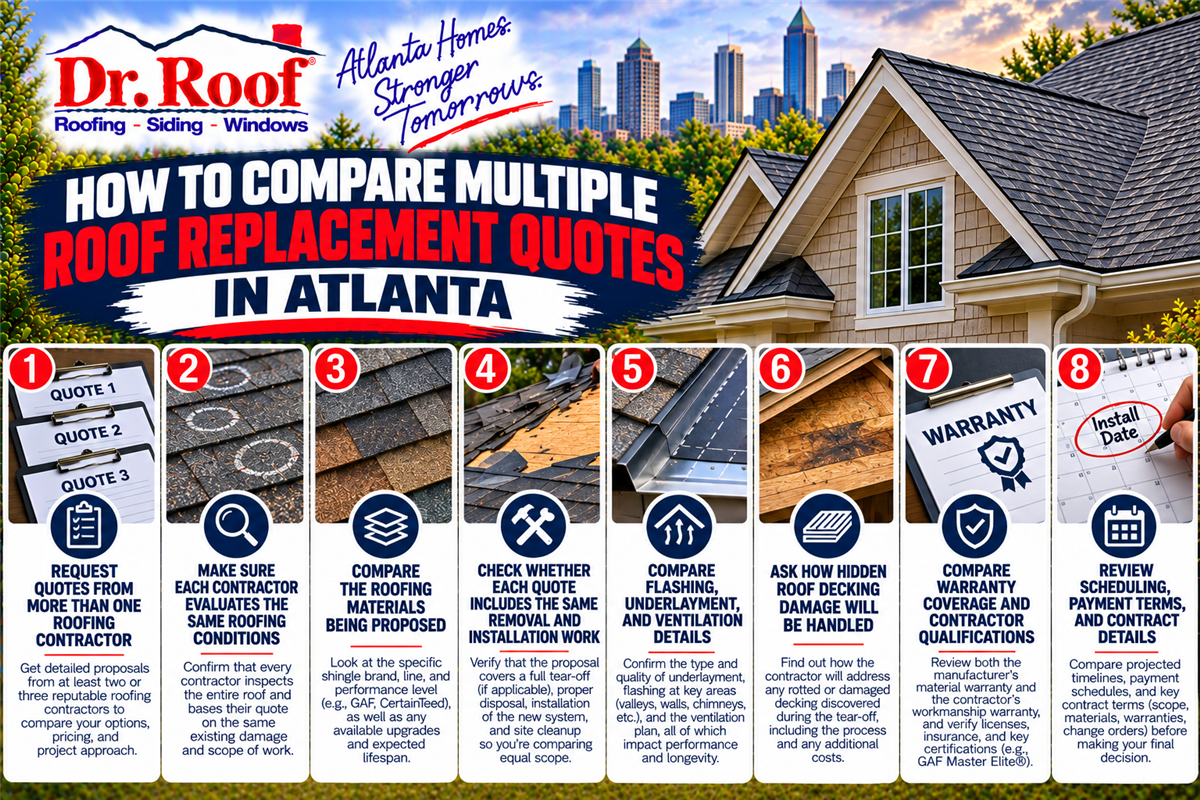
When evaluating roof replacement estimates, compare:
Specific roofing products
Underlayment
Flashing
Roof-edge components
Ventilation
Decking procedures
Installation requirements
Warranty information
Contractor qualifications
A clear written scope is more useful than relying on the price or product name alone.
What Is the Difference Between a Durable Roof and a Long Warranty?
Roof durability and warranty coverage are related considerations, but they are not identical.
Durability involves the roofing system's ability to remain serviceable under its actual conditions.
Warranty coverage is determined by a written agreement.
Does a Lifetime Shingle Warranty Mean the Roof Will Last Forever?
No.
The term "lifetime" has a specific meaning within certain manufacturer warranty documents.
It should not be interpreted as a guarantee that roofing materials will never deteriorate or experience storm damage.
Homeowners should review the actual warranty terms, including exclusions, eligibility, and available remedies.
Does an Enhanced Warranty Guarantee Better Installation?
Not automatically.
Some enhanced warranty programs include contractor or roofing-system eligibility requirements.
However, the appropriate installation of the complete roofing system remains essential.
Homeowners should verify the selected materials and warranty coverage before approving the project.
What Makes a Roof Replacement Suitable for Atlanta Weather?
Atlanta-area homes experience heavy rainfall, strong thunderstorms, periods of high humidity, and occasional hail.
These conditions make proper water management and appropriate roofing material selection important.
What Should Homeowners Consider?
A roof replacement evaluation should consider:
Rainfall: Flashing, valleys, and roof penetrations must direct water appropriately.
Wind: Shingle fastening, starter materials, and other components should meet applicable requirements.
Humidity: Attic moisture management and appropriate roof assembly design deserve attention.
Storm exposure: Roofing materials should be selected with an understanding of the home's design and environmental conditions.
No roofing system is immune to every type of severe weather.
The goal is selecting and installing a system that is appropriate for the property.
How Long Should a Properly Installed Roof Last?
There is no universal lifespan that applies to every residential roofing system.
Actual service life depends on several factors, including:
Roofing material
Installation quality
Roof design
Weather exposure
Maintenance
Moisture conditions
Storm damage
Other environmental factors
Different products have different specifications and warranty terms.
Homeowners should avoid treating an advertised warranty period as a guaranteed prediction of service life.
Can a New Roof Fail Prematurely?
Yes.
Problems may develop when materials are unsuitable, installation requirements are not followed, or significant damage occurs.
Examples include:
Improper fastening
Defective flashing
Unsuitable decking
Incorrect underlayment installation
Poorly integrated roof transitions
Significant storm damage
The actual cause of a problem requires professional evaluation.
What Should a Durable Roof Replacement Estimate Include?
A complete roofing proposal should identify the major components of the new system.
Depending on the project, these may include:
Removal of existing roofing materials
Decking evaluation
Procedures for replacing damaged decking
Selected roofing materials
Underlayment
Leak-protection materials
Starter components
Main roofing shingles
Flashing
Ridge and hip materials
Ventilation
Labor and cleanup
Applicable warranty information
The contractor should also explain how unexpected damage will be handled.
Why Is the Written Scope Important?
Two contractors may propose the same shingles but different installation components.
For example, one estimate may include replacing certain flashing assemblies while another assumes existing flashing can remain.
The difference can affect both project cost and the roofing system being installed.
Homeowners should compare the complete scope rather than the shingles alone.
How Dr. Roof Helps Atlanta Homeowners Plan Durable Roof Replacement
Dr. Roof has served Atlanta-area homeowners since 1988, providing professional roofing inspections, repairs, and replacement services.
Dr. Roof is a GAF Master Elite Certified Contractor and CertainTeed SELECT ShingleMaster.
During a roof replacement consultation, homeowners can discuss the components appropriate for their property.
These may include:
Asphalt shingle options
Roof decking
Underlayment
Flashing
Roof penetrations
Ventilation
Ridge components
Other roofing accessories
A professional evaluation can help determine which materials and installation methods are suitable for the home's roof design and existing conditions.
Homeowners should also review the proposed scope and applicable warranty documents before approving the project.
A Durable Roof Replacement Is More Than New Shingles
A successful roof replacement depends on the complete roofing system.
Suitable materials, sound decking, proper underlayment, correct fastening, flashing, roof-edge details, and appropriate moisture management all contribute to the finished roof's performance.
For Atlanta homeowners, understanding these components makes it easier to compare roofing proposals and ask informed questions.
The goal should not simply be purchasing a product with an attractive appearance or a long advertised warranty.
It should be selecting a roofing system appropriate for the home and ensuring it is installed according to applicable requirements.
If you're planning a roof replacement in Atlanta or the surrounding communities, contact Dr. Roof to schedule a professional roofing evaluation and discuss your replacement options.
What makes a roof replacement durable and long-lasting?
A durable roof replacement depends on suitable roofing materials, sound roof decking, correct underlayment, proper fastening, well-installed flashing, appropriate ventilation, and installation that follows manufacturer requirements. Actual service life also depends on weather exposure and maintenance.
Does choosing premium shingles guarantee a longer-lasting roof?
No. Premium shingles may offer different construction characteristics or published specifications, but price alone does not determine roof lifespan. Installation quality, roof design, material suitability, and environmental conditions also influence performance.
Why is roof decking important during replacement?
Roof decking provides the supporting surface for the roofing materials and their fasteners. Damaged or unsuitable decking can affect the integrity of the installation. A contractor should evaluate the decking and address areas that require repair.
How does proper shingle fastening affect roof durability?
Correct fasteners, nail placement, driving depth, and fastening patterns help secure shingles according to manufacturer requirements. Improper fastening can contribute to loose shingles, raised tabs, installation defects, and increased vulnerability to wind.
Does roof ventilation affect the performance of a new roof?
It can. Appropriate ventilation in a traditionally vented attic helps manage moisture and airflow. However, ventilation requirements depend on the building design, and unvented attic systems require different considerations.
Does a longer roofing warranty guarantee a longer roof lifespan?
No. Warranty coverage is governed by the manufacturer's or contractor's written terms. A longer warranty does not guarantee that the roof will remain serviceable for a specific number of years or remain free from storm damage.
Subscribe to Dr. Roof's Blog



Comments