Installing a new roof is an important investment in your home's protection, appearance, and long-term condition.
Once the installation is complete, many homeowners assume their roofing responsibilities are finished.
However, even a newly replaced roof benefits from appropriate maintenance and periodic observation.
Atlanta-area roofing systems experience heavy rainfall, thunderstorms, strong winds, humidity, and changing temperatures throughout the year.
Although modern roofing materials are designed to withstand normal weather exposure when properly installed, maintenance helps homeowners identify damage and address developing problems.
The best ways to help a new roof last longer include following the manufacturer's maintenance recommendations, monitoring the roofing system, keeping drainage areas clear, limiting unnecessary foot traffic, and arranging professional inspections when concerns appear.
These practices can help preserve the condition of a newly installed roofing system, although no maintenance routine can guarantee a specific lifespan.
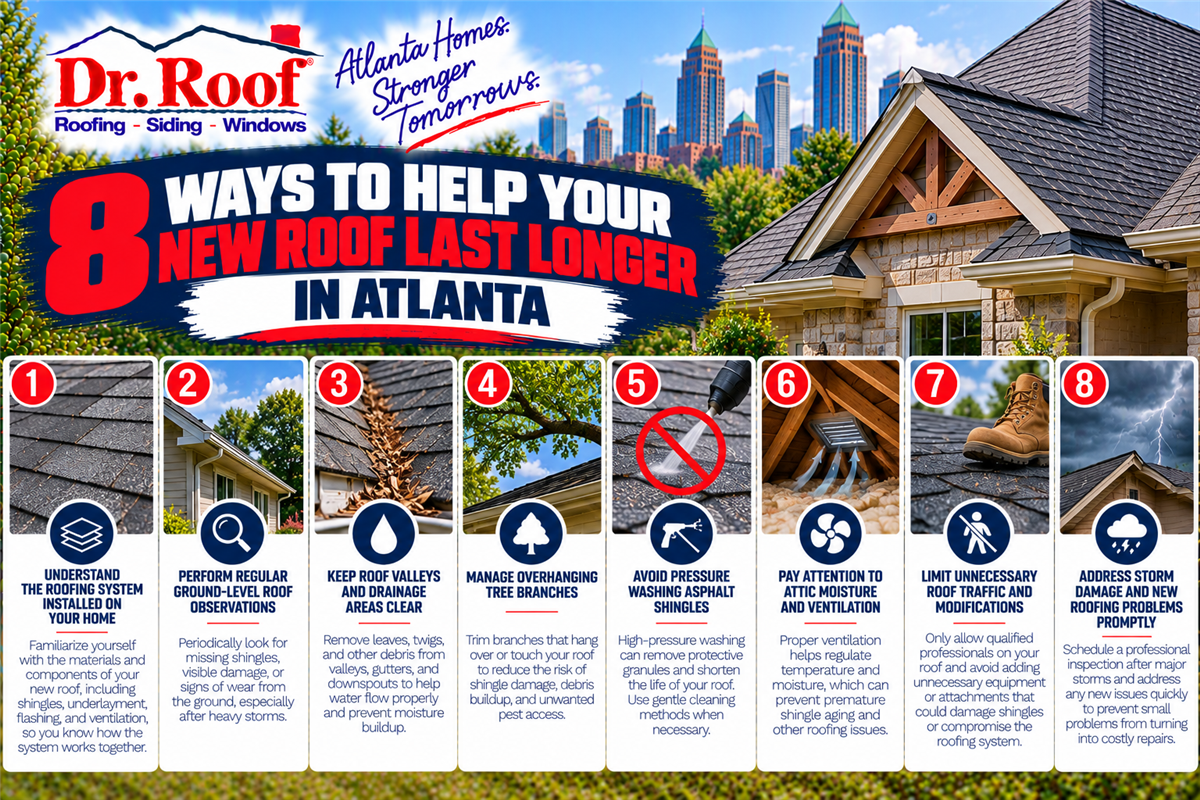
Here are eight ways Atlanta homeowners can care for their roofs after replacement.
1. Understand the Roofing System Installed on Your Home
One of the first steps toward maintaining a new roof is understanding what materials were installed.
A residential roof replacement involves more than shingles.
Depending on the selected system, components may include:
Roof decking
Underlayment
Leak-protection materials
Starter shingles
Main roofing shingles
Flashing
Ridge cap shingles
Ventilation components
Each component serves a different purpose.
For example, shingles form the primary water-shedding roof covering, while underlayment provides secondary protection beneath them.
Flashing helps manage water around roof penetrations and transitions.
Why Does Material Information Matter?
Different roofing products have different maintenance recommendations.
For example, asphalt shingles require different care from certain metal or composite roofing systems.
Homeowners should understand which materials are installed before selecting cleaning methods or performing other maintenance activities.
What Documents Should You Keep?
After replacement, retain copies of:
The roofing contract
Final invoice
Shingle manufacturer and product information
Roofing material color
Applicable warranty documents
Available installation photographs
Records of additional decking repairs
Contractor contact information
These records can be useful if a concern develops later.
They also help future roofing professionals identify the existing roofing system.
2. Perform Regular Ground-Level Roof Observations
A new roof should not require homeowners to climb onto it for routine observation.
Many visible concerns can be recognized safely from the ground.
The Asphalt Roofing Manufacturers Association recommends regular roofing inspections, including seasonal evaluations and additional attention after severe weather.
Homeowners can perform basic visual observations and arrange professional inspections when appropriate.
What Should You Look For?
Walk around your property and examine visible roof sections.
Look for:
Lifted roofing materials
Damaged ridge components
Visible flashing problems
Fallen branches
Unusual debris accumulation
Changes in the roofline
Other visible damage
Binoculars or a camera with zoom may help you observe areas that are difficult to see from the driveway.
How Often Should You Check Your Roof?
A practical approach is to look at the visible roofing system during spring and fall.
Additional observations may be appropriate after significant thunderstorms, hail, or high winds.
Professional inspection frequency depends on the roofing material, condition, manufacturer recommendations, and any developing concerns.
Why Does Monitoring Matter on a New Roof?
A recently installed roof is not immune to damage.
Strong winds, falling branches, or other events may affect roofing materials regardless of their installation date.
Recognizing visible changes can help homeowners arrange an appropriate evaluation before additional exposure occurs.
3. Keep Roof Valleys and Drainage Areas Clear
A roofing system is designed to direct water away from vulnerable areas.
For asphalt-shingle roofs, overlapping shingles help shed rainfall toward the roof edges.
Roof valleys collect runoff from adjoining roof slopes.
When debris accumulates in these areas, it may interfere with proper drainage.
Why Are Roof Valleys Important?
Valleys can carry significant amounts of water during heavy rainfall.
Atlanta-area homes with multiple roof slopes may have several valley sections.
Leaves, pine needles, twigs, and other debris can collect in these locations.
Debris may trap moisture or interfere with water movement.
How Does Debris Affect Roofing Materials?
When wet debris remains against roofing materials, it can create conditions that contribute to deterioration.
Moss growth and other organic accumulation may also interfere with the intended water-shedding process.
Keeping the roofing surface clear of unnecessary debris helps support the system's normal function.
Should Homeowners Clean Roof Valleys Themselves?
Only if the work can be completed safely without climbing onto the roof or using unsafe access methods.
For elevated or difficult-to-reach areas, hire a qualified professional.
Avoid scraping the roofing materials or using methods that could damage the shingle surface.
The objective is to maintain proper drainage without creating new roofing problems.
4. Manage Overhanging Tree Branches
Mature trees are common throughout Atlanta-area neighborhoods.
They provide shade and contribute to the appearance of residential properties.
However, branches extending over or contacting the roof can create maintenance concerns.
How Can Trees Affect a New Roof?
Potential problems include:
Falling branches during storms
Leaves accumulating in valleys
Twigs collecting on the roof
Branches scraping roofing materials
Increased debris accumulation
Shaded areas that remain damp longer
Not every tree near a home creates a roofing problem.
The concern depends on the condition and location of the branches.
Should You Trim Trees Near Your Roof?
Branches that scrape against roofing materials or create an obvious risk may require attention.
A qualified tree professional can evaluate and perform appropriate pruning.
Homeowners should not attempt to remove large or elevated branches near the roof themselves.
Does Tree Maintenance Guarantee Protection From Storm Damage?
No.
Even properly maintained trees can lose branches during severe weather.
However, addressing obvious hazards can help reduce certain avoidable risks.
For homeowners with newly installed roofs, tree maintenance is one part of a broader property protection plan.
5. Avoid Pressure Washing Asphalt Shingles
Some homeowners notice dark streaks, algae, or other discoloration on their roofs and consider using a pressure washer.
However, high-pressure washing can damage asphalt shingles.
The Asphalt Roofing Manufacturers Association specifically advises against pressure washing asphalt roofing materials.
Why Is Pressure Washing a Problem?
Asphalt shingles have protective surface granules.
High-pressure water can dislodge these granules or damage the roofing material.
This can reduce the protective surface of the shingle.
Pressure washing may also create problems around vulnerable roof details.
What Causes Dark Streaks on Roof Shingles?
Certain dark roof stains are associated with blue-green algae.
These stains may be more noticeable in shaded or humid environments.
However, not every discoloration has the same cause.
A professional should determine whether the appearance is cosmetic or associated with roofing damage.
How Should Asphalt Shingles Be Cleaned?
Homeowners should follow the roofing manufacturer's published cleaning instructions.
Some products may permit specific cleaning methods or solutions.
However, the appropriate method depends on the roofing material.
Because roof cleaning involves fall hazards and potential material damage, professional assistance is generally advisable.
Avoid using aggressive chemicals, abrasive brushes, or pressure-washing equipment without manufacturer approval.
6. Pay Attention to Attic Moisture and Ventilation
A newly installed roof works together with the rest of the building.
Attic conditions can influence moisture management and the performance of roofing-related components.
However, not every home uses the same attic design.
Some homes have traditionally vented attics.
Others use conditioned or unvented attic assemblies.
The appropriate approach depends on the building.
Why Does Attic Moisture Matter?
Excessive moisture can affect building materials.
Depending on the source and severity, moisture may contribute to:
Wet insulation
Wood deterioration
Staining
Mold growth
Damage to interior finishes
Moisture can enter through a roof leak, but it may also develop from condensation or other building conditions.
Does Every Attic Moisture Problem Mean the New Roof Is Leaking?
No.
For example, moisture may result from:
Plumbing leaks
HVAC condensation
Indoor air leakage
Improperly routed exhaust
Other building-envelope conditions
A professional evaluation may be necessary to determine the cause.
What Should Homeowners Monitor?
If your attic has a safe access area, pay attention to visible changes such as:
New water stains
Wet insulation
Damp wood
Unusual odors
Visible moisture around roof penetrations
Do not walk on exposed ceiling framing or enter unsafe attic areas.
If you suspect a roofing leak, contact a qualified professional.
Should You Add More Roof Vents?
Not automatically.
The correct ventilation arrangement depends on the home's attic design and building requirements.
Adding vents without evaluating the complete system may not solve the underlying problem.
A qualified contractor should assess ventilation concerns before recommending modifications.
7. Limit Unnecessary Roof Traffic and Modifications
A newly installed roof is designed to protect the home, not serve as a regularly accessible walking surface.
Unnecessary foot traffic can create safety hazards and may damage roofing materials.
This is especially important when the roof is wet, steep, or exposed to extreme temperatures.
Why Should Homeowners Avoid Walking on a New Roof?
Walking on roofing materials can contribute to:
Shingle damage
Surface abrasion
Disturbed materials
Damage near roof edges
Problems around penetrations
The actual risk depends on the roofing product and conditions.
More importantly, working at height presents serious fall hazards.
Professional roofing contractors have the training and equipment necessary for appropriate roof access.
What About Installing Equipment on the Roof?
Some homeowners install equipment after roof replacement.
Depending on the project, this may involve:
Satellite equipment
Solar equipment
Other rooftop attachments
Installing equipment can introduce new attachment points or penetrations.
These areas must be designed and sealed appropriately.
Can Roof Modifications Affect Warranty Coverage?
They may.
Warranty terms sometimes address damage caused by alterations, additional equipment, or work performed by others.
Before modifying a newly installed roofing system, review the applicable warranty and consult the appropriate professionals.
Do not assume that every rooftop modification is covered by the original roof replacement agreement.
8. Address Storm Damage and New Roofing Problems Promptly
Even a professionally installed new roof can experience damage from severe weather.
Atlanta homeowners may encounter thunderstorms, strong winds, falling debris, and occasional hail.
The roofing system's performance depends on several components working together.
These include:
Roofing material
Fastening
Underlayment
Flashing
Starter materials
Ridge components
Roof decking
Proper installation is important, but no roofing system is guaranteed to withstand every storm without damage.
What Should You Do After Severe Weather?
Once conditions are safe, observe the roof from the ground.
Look for obvious changes such as missing shingles, displaced materials, fallen branches, or visible flashing damage.
Check the interior for new moisture stains.
If significant damage is suspected, contact a roofing professional.
Can Small Storm Damage Affect a New Roof?
Yes.
A single damaged shingle or flashing component may create a vulnerable area.
However, not every minor mark requires repair.
The contractor should determine whether the damage affects the roofing system's performance.
Why Is Prompt Repair Important?
Correcting a confirmed roofing defect can help reduce continued exposure to water or other weather conditions.
For example, replacing wind-damaged shingles may help protect the underlayment and decking beneath them.
The appropriate scope depends on the condition of the affected area.
Does a New Roof Require Annual Professional Inspections?
The need for professional inspections depends on the roofing system, its condition, and the applicable maintenance recommendations.
The Asphalt Roofing Manufacturers Association recommends regular professional evaluations as part of roof care.
Homeowners can also perform periodic ground-level observations.
A professional inspection may be particularly useful after:
Significant storms
Falling debris
New interior water stains
Visible shingle damage
Flashing problems
Other suspected roofing concerns
The contractor should explain whether the roof requires additional maintenance or repairs.
Homeowners should not climb onto the roof to perform their own inspections.
Can Proper Maintenance Extend the Life of a New Roof?
Maintenance can help preserve roofing materials and identify problems that might otherwise remain unnoticed.
However, it cannot guarantee a specific roof lifespan.
The service life of a roofing system depends on several factors.
These may include:
Roofing material
Roof design
Installation quality
Weather exposure
Ventilation and moisture conditions
Maintenance
Storm damage
Other environmental factors
A well-maintained roof may still experience unexpected damage.
The purpose of maintenance is to support the roofing system's intended performance and address developing concerns appropriately.
How Long Should a New Asphalt-Shingle Roof Last?
There is no single lifespan that applies to every asphalt-shingle roof.
Different products have different specifications, warranty terms, and expected performance characteristics.
Actual service life also depends on installation quality and environmental conditions.
Does a Lifetime Warranty Mean a Roof Will Last Forever?
No.
The term "lifetime" has a specific meaning within certain manufacturer warranty documents.
For example, GAF defines lifetime coverage according to the ownership and eligibility conditions stated in its applicable limited warranties.
It does not mean that roofing materials are guaranteed to remain free from all forms of damage indefinitely.
Homeowners should review the actual warranty documents rather than treating marketing terms as guaranteed service-life predictions.
Does a New Roof Need Maintenance During the Warranty Period?
Yes.
A roof's warranty period does not eliminate the need for appropriate care.
Warranty coverage is subject to the manufacturer's and contractor's written terms.
Some forms of damage may be excluded.
Examples may include certain storm-related conditions, improper modifications, or other circumstances identified in the agreement.
What Should You Keep for Warranty Purposes?
Maintain records of:
The original installation
Roofing materials
Warranty documents
Professional inspections
Repairs
Reported concerns
Relevant photographs
These records may be useful when reporting a problem or discussing coverage.
Should You Report Problems to the Original Roofing Contractor?
If a concern develops after installation, contacting the original contractor is a reasonable starting point.
Provide the project information and describe the issue.
An inspection may be necessary to determine the cause and whether the condition qualifies for warranty service.
What Should Atlanta Homeowners Avoid Doing to a New Roof?
Several common practices can create unnecessary risks.
Avoid:
Walking on the roof without appropriate professional training and equipment
Pressure washing asphalt shingles
Using abrasive cleaning methods
Ignoring new water stains
Allowing debris to accumulate in roof valleys
Installing rooftop equipment without appropriate waterproofing
Attempting repairs without understanding the roofing system
Assuming the warranty covers every future problem
The appropriate maintenance method depends on the selected roofing materials.
When uncertain, consult the manufacturer's instructions or a qualified roofing contractor.
How Can You Create a Simple New Roof Maintenance Plan?
A practical maintenance approach does not need to be complicated.
Homeowners can organize roof care around seasonal observations and professional evaluations when appropriate.
Spring
Observe the roof from the ground for visible damage or changes.
Pay attention to areas where winter weather, fallen branches, or debris may have affected the roofing materials.
If you notice concerns, request a professional evaluation.
Summer
Watch for debris accumulation and changes around roof valleys or other vulnerable sections.
Avoid unnecessary roof traffic.
If discoloration develops, review the manufacturer's cleaning recommendations before authorizing treatment.
Fall
Check for visible roofing concerns and debris from nearby trees.
Arrange appropriate professional maintenance when elevated areas require attention.
After Significant Storms
Look for missing shingles, damaged ridge materials, fallen branches, and interior signs of water intrusion.
Contact a roofing professional when damage is suspected.
This general approach should be adjusted to the roof's condition, materials, and manufacturer recommendations.
Why New Roof Maintenance Matters in Atlanta
Atlanta-area homes experience a combination of heavy rainfall, humidity, strong thunderstorms, and periods of intense sunshine.
These conditions make it important to monitor roofing materials and water-management components.
For homes with complex rooflines, particular attention may be needed around valleys, chimneys, dormers, and other transitions.
Homes surrounded by mature trees may also experience additional debris accumulation.
A maintenance plan should reflect the actual roof design rather than assume every property has identical needs.
How Dr. Roof Helps Atlanta Homeowners Care for Their New Roofs
Dr. Roof has served Atlanta-area homeowners since 1988, providing professional roofing inspections, repairs, and roof replacement services.
Dr. Roof is a GAF Master Elite Certified Contractor and CertainTeed SELECT ShingleMaster.
During a roof replacement consultation, homeowners can discuss the materials being installed, applicable warranty coverage, and recommended care practices.
After installation, retaining project documentation and understanding the roofing system can help homeowners recognize when professional attention is appropriate.
If a new roofing concern develops, Dr. Roof can evaluate the reported condition and discuss the appropriate next steps.
Protect Your New Roof With Consistent, Appropriate Care
A new roof provides an important layer of protection for your home, but the work does not end when the installation crew leaves.
Regular observations, appropriate cleaning, clear drainage paths, limited roof traffic, and prompt attention to damage can help maintain the roofing system.
The most effective approach is to follow the manufacturer's recommendations and arrange professional evaluation when problems appear.
For Atlanta homeowners, maintaining a newly replaced roof is about protecting the materials already installed and recognizing concerns before they become more extensive.
If you have questions about maintaining your new roof or notice signs of damage, contact Dr. Roof to discuss a professional roofing evaluation.
How can homeowners help a new roof last longer?
Homeowners can help preserve a new roof by following manufacturer maintenance recommendations, performing periodic ground-level observations, keeping roof drainage areas clear, limiting foot traffic, and arranging professional inspections when concerns develop.
How often should a new roof be inspected?
Regular seasonal observations are useful, with additional attention after significant storms. Professional inspection frequency depends on the roofing material, roof condition, manufacturer recommendations, and any visible concerns.
Can pressure washing damage new asphalt shingles?
Yes. High-pressure washing can dislodge protective granules and damage asphalt roofing materials. The Asphalt Roofing Manufacturers Association advises against pressure washing asphalt shingles. Homeowners should follow manufacturer-approved cleaning methods.
Does a new roof still need maintenance during its warranty period?
Yes. A warranty does not eliminate the need for appropriate roof maintenance. Homeowners should follow manufacturer recommendations, monitor for damage, retain documentation, and review the written warranty terms.
Can tree branches damage a newly replaced roof?
Yes. Branches may scrape roofing materials or fall during storms. Leaves and other debris can also accumulate in roof valleys. Qualified tree professionals can evaluate and address branches that present concerns.
Does regular maintenance guarantee that a new roof will last longer?
No. Maintenance can help preserve roofing materials and identify developing issues, but it cannot guarantee a specific lifespan. Weather exposure, installation quality, product characteristics, and unexpected damage also affect roofing-system performance.
Subscribe to Dr. Roof's Blog




Comments