Deciding to replace your roof is a significant step toward protecting your home. However, once you've determined that a new roof may be necessary, another question comes up: How do you actually get the project scheduled?
Booking a complete roof replacement involves more than choosing an installation date.
Homeowners need to understand the proposed roofing system, confirm the scope of work, review the agreement, and coordinate the details that must be addressed before installation begins.
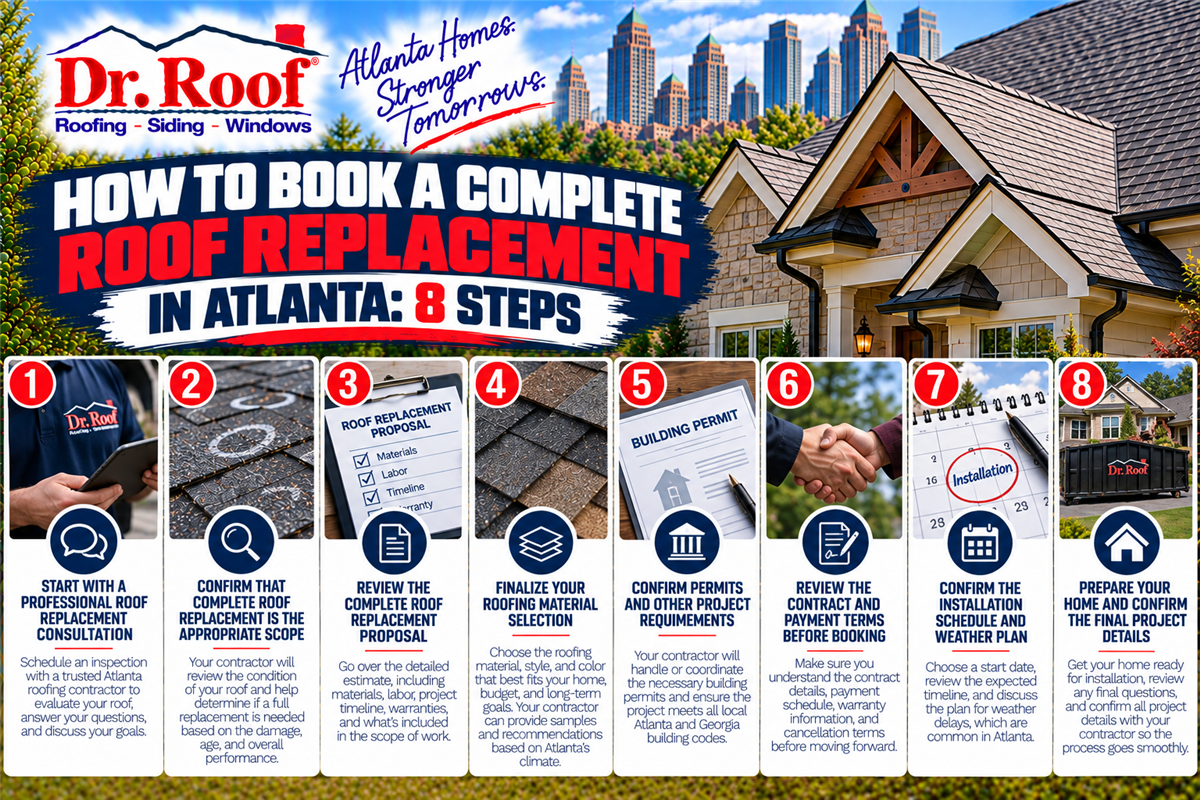
To book a complete roof replacement in Atlanta, start with a professional roofing consultation, review the written replacement proposal, select suitable materials, confirm the project terms, and coordinate an installation schedule with the contractor.
The specific process depends on the home's condition, roofing materials, contractor availability, and applicable project requirements.
For Atlanta homeowners, knowing what to expect before committing to a replacement can help make the scheduling process more organized.
Here are eight steps to follow when preparing to book a complete residential roof replacement.
1. Start With a Professional Roof Replacement Consultation
The first step is contacting a qualified roofing contractor to discuss your property.
Even when homeowners believe a complete roof replacement is necessary, a professional evaluation helps establish the appropriate scope.
The contractor may ask about:
The property's location
The existing roofing material
Known roof leaks
Storm damage
Previous roofing repairs
Approximate roof age
The type of replacement material being considered
Any scheduling concerns
These details can help prepare for the initial inspection.
What Happens During a Roof Replacement Consultation?
A roofing professional may evaluate the existing roofing system and discuss the homeowner's priorities.
The inspection may include:
Asphalt shingles
Roof flashing
Roof penetrations
Roof valleys
Ridge materials
Ventilation
Visible decking concerns
Signs of water intrusion
The purpose is to understand what work is needed before developing the project proposal.
Can You Request a Consultation From Dr. Roof?
Yes.
Dr. Roof offers residential roof replacement consultations for Atlanta-area homeowners.
You can contact the company by phone or use its online consultation form to request an appointment.
The team can discuss the property and the next steps for evaluating the roofing system.
2. Confirm That Complete Roof Replacement Is the Appropriate Scope
Before scheduling installation, homeowners should understand why a complete replacement is recommended.
A roofing contractor should explain the conditions supporting the proposed work.
For example, replacement may be considered when the existing roofing system has widespread deterioration, significant damage, or conditions that cannot be corrected reliably through localized repairs.
What Is a Complete Roof Replacement?
A complete residential roof replacement generally involves removing the existing roofing materials included in the approved scope and installing a new roofing system.
Depending on the property, the work may include:
Removing the existing roof covering
Evaluating exposed decking
Repairing damaged decking
Installing underlayment
Installing appropriate flashing
Installing starter materials
Installing new shingles or another roofing material
Completing ridge components
Addressing ventilation requirements
Cleanup and final review
The exact work should be identified in the written proposal.
Does Every Replacement Require New Decking?
No.
Existing roof decking may remain suitable when it meets applicable structural and installation requirements.
However, deteriorated or damaged areas may require corrective work.
The contractor should explain how hidden decking problems will be handled if discovered during installation.
3. Review the Complete Roof Replacement Proposal
Before booking the project, request a detailed written proposal.
The document should describe the roofing work and identify the major materials and components included.
This is important because two contractors may provide different scopes even when both recommend replacing the entire roof.
What Should the Written Proposal Include?
Depending on the project, a complete estimate may identify:
Roof measurements
Selected roofing materials
Existing-roof removal
Underlayment
Leak-protection components
Flashing
Starter shingles
Main roofing materials
Ridge materials
Ventilation components
Labor
Cleanup and disposal
Known decking repairs
Procedures for unexpected damage
Warranty information
The proposal should make it clear what homeowners are purchasing.
Why Does the Scope Matter Before Scheduling?
Suppose a homeowner approves a proposal that does not clearly identify whether chimney flashing will be replaced.
That uncertainty may create questions once the existing roofing materials are removed.
Confirming important details before booking helps establish expectations.
What If Two Estimates Include Different Work?
Ask each contractor to explain the differences.
A lower price may reflect a smaller scope or different materials.
A higher price may include additional roofing components or work.
The appropriate decision should be based on the complete proposal rather than price alone.
4. Finalize Your Roofing Material Selection
Roofing material selection is an important part of scheduling.
Different roofing products have different availability, installation requirements, and appearance characteristics.
Common residential replacement options include:
Traditional asphalt shingles
Architectural asphalt shingles
Designer asphalt shingles
Certain composite roofing systems
Metal roofing
The best option depends on the roof design, homeowner preferences, and selected product specifications.
Why Should You Select Materials Before Booking?
Contractors may need to order roofing products and accessories before installation.
Material availability can influence the project schedule.
For example, a commonly stocked asphalt shingle may have different ordering requirements from a specialty roofing product.
Confirming the selection helps the contractor plan the project.
What Details Should You Finalize?
Before approving the installation schedule, ask about:
Roofing manufacturer
Product line
Shingle or roofing material color
Underlayment
Starter materials
Ridge components
Flashing
Applicable warranty options
The contractor should verify that the selected materials are suitable for the home's roof design.
Can You Change Materials After Booking?
Possibly.
However, changes may affect pricing, material orders, and scheduling.
Homeowners should discuss requested changes with the contractor before assuming that the original agreement or installation date will remain unchanged.
5. Confirm Permits and Other Project Requirements
Roof replacement projects may involve building permits, inspections, or other approvals.
The requirements depend on the property's location and the work being performed.
Atlanta-area homeowners may fall under different municipal or county jurisdictions.
Does Roof Replacement Require a Permit in Atlanta?
The City of Atlanta identifies roofing and reroofing among the construction activities addressed through its permitting process.
Certain repairs may qualify for exemptions, but a complete replacement can involve different requirements.
Homeowners should confirm the applicable rules for their property and project scope.
What If You Live Outside Atlanta City Limits?
Requirements may differ in nearby communities.
For example, homes with Atlanta-area mailing addresses may be located within another municipality or an unincorporated county.
The appropriate local building department should determine which requirements apply.
Who Handles the Permit?
Before scheduling the project, ask:
Is a permit required?
Who is responsible for obtaining it?
Are applicable fees included in the proposal?
Will inspections be necessary?
Could approvals affect the installation schedule?
The written agreement should clarify these responsibilities.
What About Homeowners Association Requirements?
Some homeowners associations have architectural guidelines that affect exterior improvements.
These may involve roofing color, material type, or other appearance considerations.
If your property is subject to an association, review the applicable requirements before finalizing the project.
Homeowners should not assume that contractor scheduling automatically satisfies association approval requirements.
6. Review the Contract and Payment Terms Before Booking
Once the project scope and materials are established, homeowners should review the agreement carefully.
The Federal Trade Commission recommends obtaining written contractor agreements that clearly describe the work, pricing, payment arrangements, and project expectations.
What Should a Roof Replacement Contract Explain?
A written agreement may include:
Contractor information
Project address
Scope of work
Selected materials
Total contract price
Payment terms
Estimated scheduling
Procedures for changes
Warranty information
Other relevant project conditions
Homeowners should understand their obligations before signing.
Should You Pay the Entire Price Before Installation?
Be cautious of requests for full payment before work begins.
Payment arrangements vary, but the terms should be clear and reasonable.
The FTC advises consumers to review payment schedules, avoid high-pressure demands, and retain copies of agreements and receipts.
What If the Contractor Discovers Hidden Damage?
Roofing materials can conceal deteriorated decking or other problems.
A contract should explain how additional work will be documented, priced, and approved.
For example, replacing unsuitable decking may require materials and labor beyond the original estimate.
The contractor should communicate the findings before expanding the approved scope.
Why Should You Understand Change Orders?
A change order is a documented modification to the agreed work.
It may address additional repairs, material changes, or other project adjustments.
Homeowners should understand how these changes affect cost and scheduling.
Clear procedures help reduce misunderstandings once the project begins.
7. Confirm the Installation Schedule and Weather Plan
After the project is approved, the contractor can coordinate the installation schedule.
The anticipated start date depends on several factors.
These may include:
Material availability
Contractor scheduling
Roof size
Roof pitch
Installation complexity
Required approvals
Weather conditions
Additional project needs
Is the Installation Date Guaranteed?
Not necessarily.
Roofing is weather-dependent work.
Rain, strong winds, or other unsafe conditions may require changes to the schedule.
Some roofing materials also have installation requirements related to weather and temperature.
The contractor should determine when conditions are appropriate.
Can Roof Replacement Be Scheduled During Fall or Winter?
Yes, roofing projects may be scheduled during different seasons when weather and product requirements allow.
However, the actual installation conditions matter.
For example, asphalt-shingle installation may involve temperature-related considerations for adhesive sealing.
A roofing contractor should follow the selected manufacturer's instructions.
What Should You Confirm Before Installation Day?
Ask the contractor:
What is the anticipated start date?
How will material delivery be coordinated?
What is the expected installation duration?
What happens if rain is forecast?
Who communicates schedule changes?
What happens if additional repairs are discovered?
When will the final review occur?
These questions help establish practical expectations.
Does Booking Early Guarantee Faster Installation?
No.
Scheduling depends on contractor availability, materials, project requirements, and weather.
However, beginning the consultation process before the roof develops an urgent problem may provide more flexibility for planning.
8. Prepare Your Home and Confirm the Final Project Details
Once the installation schedule is established, the homeowner can prepare the property.
Roof replacement involves material deliveries, equipment, debris removal, and construction activity.
What Should Homeowners Do Before Installation?
Depending on the property, preparation may include:
Moving vehicles away from work areas
Clearing access to the driveway
Moving outdoor furniture
Securing fragile decorations
Protecting valuable belongings
Making arrangements for pets
Keeping children away from construction areas
Discussing landscaping concerns
The contractor should provide instructions appropriate for the specific project.
What Should You Expect During Installation?
Roof replacement can involve substantial noise and activity.
The crew may remove existing roofing materials, inspect the roof decking, install the new roofing system, and complete cleanup.
The actual sequence depends on the approved scope.
Homeowners should know whom to contact if questions arise during the project.
What Happens When Installation Is Finished?
A final project review may address:
Completed roofing materials
Flashing
Ridge components
Ventilation
Decking repairs
Cleanup
Warranty documents
Remaining questions
Homeowners should retain their contract, invoice, applicable warranty documents, and available project records.
How Far in Advance Should You Book a Roof Replacement?
There is no universal booking window for every Atlanta roofing project.
The appropriate timing depends on the condition of the roof and the contractor's availability.
If the existing roof is significantly deteriorated or leaking, a prompt professional evaluation is important.
If the replacement is planned rather than urgent, homeowners may have more flexibility to compare options and coordinate scheduling.
What Can Delay the Project?
Potential delays include:
Weather
Specialty material orders
Permit or approval requirements
Access limitations
Unanticipated decking damage
Additional structural concerns
Ask the contractor which factors are most relevant to your property.
Can You Book Roof Replacement While an Insurance Claim Is Pending?
Some homeowners pursue roof replacement after storm damage.
If an insurance claim is involved, the timing may require additional consideration.
A roofing contractor may inspect the roof, document physical damage, and provide repair or replacement recommendations.
However, the insurance company determines coverage under the policy.
Should You Sign a Contract Before the Claim Decision?
Review your contractual obligations carefully.
Ask the insurer about its procedures, documentation requirements, and the timing of permanent repairs.
Temporary protective measures may be necessary to reduce additional damage.
A roofing contractor cannot guarantee that the insurance company will approve or pay for the proposed replacement.
Homeowners should understand their financial responsibilities before authorizing work.
What Is the Difference Between Booking an Inspection and Booking Installation?
These are two different stages.
Booking an Inspection
An inspection is the initial evaluation of the existing roof.
The contractor examines relevant roofing conditions and discusses possible solutions.
Booking Installation
Installation scheduling generally follows agreement on the project scope, materials, price, and other necessary arrangements.
The contractor then coordinates the work according to availability and project requirements.
Can You Book Installation Immediately After an Inspection?
Sometimes, the scheduling process can begin promptly once the scope is approved.
However, the actual installation date depends on materials, approvals, weather, and contractor availability.
Homeowners should request a confirmed schedule rather than assume that approving the proposal guarantees an immediate start.
How Do You Know You're Ready to Book Your Roof Replacement?
Before committing to the project, make sure you understand the major details.
You should be able to answer these questions:
What roofing system is being installed?
The materials and major components should be identified.
What work is included?
The scope should explain removal, installation, flashing, and known repairs.
What is the total proposed price?
The agreement should explain the payment arrangement and potential changes.
What warranty coverage applies?
You should understand the written manufacturer and workmanship terms.
What happens if additional damage is discovered?
The contractor should explain the approval process.
When is the work expected to begin?
The scheduling plan should be communicated clearly.
Who is responsible for permits and approvals?
These responsibilities should be established before installation.
When these details are clear, homeowners can make a more informed commitment.
Why Booking a Complete Roof Replacement Requires Careful Planning
A new roof is more than a collection of shingles.
It is a system of components that must be appropriate for the building and installed correctly.
Scheduling the project should therefore involve confirming both the technical scope and practical arrangements.
The selected materials, existing roof condition, installation requirements, and contractor's responsibilities all matter.
For Atlanta homeowners, planning these details before installation can make the project easier to understand and manage.
How Dr. Roof Helps Atlanta Homeowners Schedule Roof Replacement
Dr. Roof has served Atlanta-area homeowners since 1988, providing professional roofing inspections, repairs, and replacement services.
The company offers roof replacement consultations to help homeowners evaluate their existing roofing systems and discuss available options.
During the consultation process, homeowners can review:
Existing roof conditions
Suitable roofing materials
Proposed replacement components
Decking concerns
Flashing
Ventilation
Project scope
Scheduling considerations
Applicable warranty information
Dr. Roof is a GAF Master Elite Certified Contractor and CertainTeed SELECT ShingleMaster.
These credentials may be relevant when discussing qualifying roofing systems and manufacturer warranty options.
Homeowners can contact Dr. Roof by phone or through its online form to request a roof replacement consultation.
Actual appointment and installation availability should be confirmed directly with the company.
Book Your Roof Replacement With a Clear Plan
Scheduling a complete roof replacement is an important decision, but the process does not have to be confusing.
The essential steps include obtaining a professional evaluation, reviewing the complete proposal, selecting appropriate roofing materials, understanding the contract, and confirming the installation arrangements.
For Atlanta homeowners, careful planning helps establish expectations before the project begins.
A clear scope of work and realistic scheduling plan can also help avoid confusion when materials, weather, or unexpected repairs affect the process.
If you're ready to begin planning a new roof, contact Dr. Roof to request a professional roof replacement consultation and discuss the next steps for your home.
How do I book a complete roof replacement in Atlanta?
Start by contacting a qualified roofing contractor for a professional consultation. After the roof is evaluated, review the written proposal, select suitable materials, confirm the contract terms, and coordinate the installation schedule.
Can I schedule a roof replacement consultation with Dr. Roof?
Yes. Dr. Roof offers roof replacement consultations for Atlanta-area homeowners. You can contact the company by phone or use its online form to request an appointment. Actual scheduling availability should be confirmed directly.
Do I need an inspection before booking roof replacement?
A professional inspection helps establish the condition of the existing roof and determine the appropriate replacement scope. It also provides information needed for material selection, project planning, and a detailed estimate.
How far in advance should I book my roof replacement?
There is no universal booking window. Scheduling depends on contractor availability, material lead times, weather, roof complexity, and applicable approvals. Homeowners planning a nonurgent replacement may benefit from starting the consultation process early.
What should I confirm before signing a roof replacement contract?
Confirm the roofing materials, complete scope of work, total price, payment terms, scheduling expectations, warranty information, permit responsibilities, and procedures for unexpected damage or project changes.
Can weather delay a scheduled roof replacement?
Yes. Rain, strong winds, unsafe roof conditions, and certain temperature-related installation requirements can affect scheduling. The contractor should explain how weather delays will be communicated and how the project will be rescheduled.
Subscribe to Dr. Roof's Blog







Comments