Discovering a roof leak can leave homeowners with two immediate questions: Where is the water coming from, and how much will it cost to fix?
A small ceiling stain might indicate a damaged shingle, deteriorated pipe boot, or leaking flashing. However, the visible problem does not always reveal the full extent of the damage.
For Atlanta homeowners, understanding what influences roof leak repair pricing can help make the process less confusing.
The cost to fix a leaking asphalt-shingle roof depends on the source of the leak, the size of the damaged area, the roofing materials involved, roof accessibility, and whether water has affected the underlayment or decking.
A localized repair may involve replacing a limited number of shingles or a damaged flashing component. More extensive problems can require additional materials, labor, and repairs beneath the roof covering.
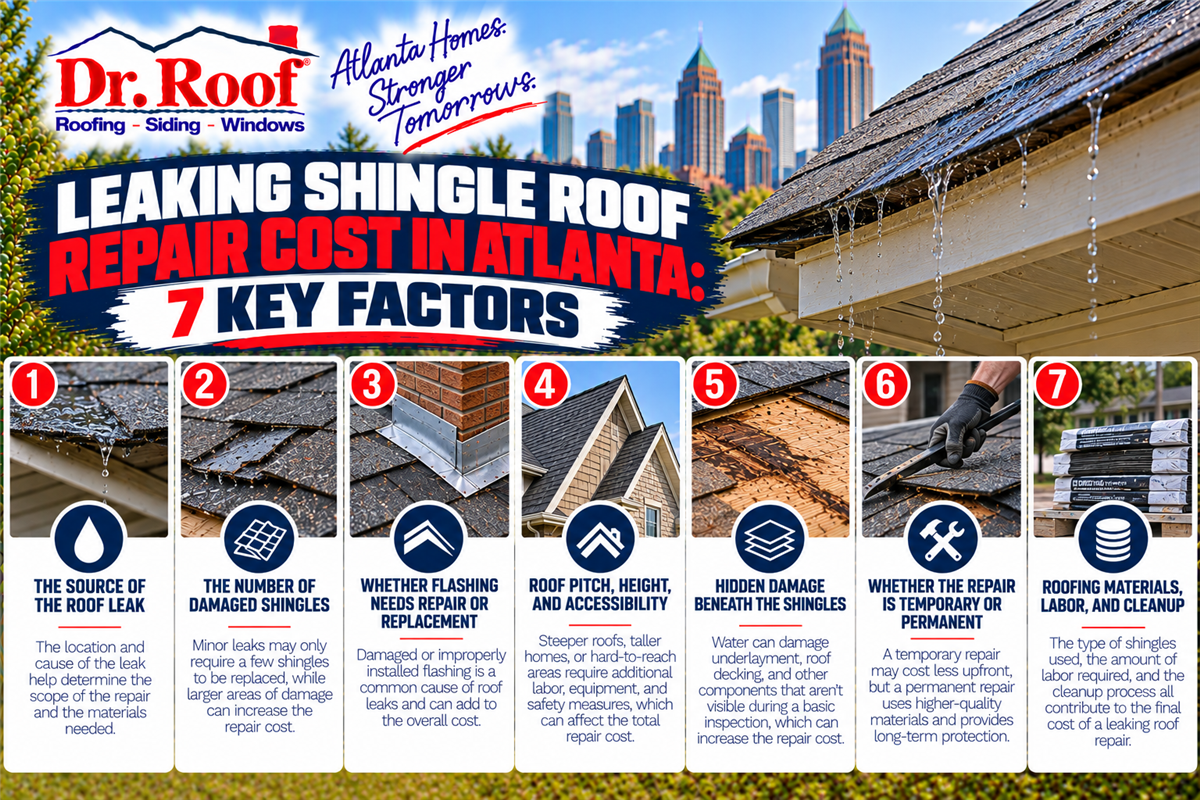
Here are seven factors that influence the cost of repairing a leaking asphalt-shingle roof.
How Much Does It Cost to Repair a Leaking Asphalt-Shingle Roof?
There is no universal price for every roof leak.
A small repair involving a deteriorated plumbing vent boot requires a different scope of work than rebuilding chimney flashing or replacing moisture-damaged roof decking.
The total price depends on the specific conditions found during the roofing inspection.
Important pricing considerations include:
The source of the leak
The size of the damaged area
The roofing materials requiring replacement
Roof pitch and accessibility
Hidden water damage
The complexity of the repair
Labor and cleanup requirements
For the most accurate pricing, homeowners should request a professional inspection and written estimate.
A quote should explain the recommended repair rather than simply provide a total price without identifying the problem.
1. The Source of the Roof Leak
The first factor affecting repair cost is identifying where the water enters the roofing system.
Not every roof leak originates from damaged shingles.
Potential causes include:
Missing asphalt shingles
Cracked or torn shingles
Loose roofing materials
Deteriorated pipe boot flashing
Damaged chimney flashing
Roof valley defects
Improper roof-to-wall transitions
Previously repaired areas
Each problem requires a different approach.
How Does the Leak Source Affect Pricing?
Consider two common situations.
A homeowner discovers that several shingles have been damaged by wind. If the surrounding materials remain serviceable, the contractor may be able to replace the affected shingles.
Another homeowner notices water stains near a chimney. The inspection reveals that the flashing assembly is deteriorated and needs reconstruction.
Both homes have roof leaks, but the necessary materials and labor differ.
This is why identifying the actual source is essential before estimating the repair.
Can You Tell Where a Roof Leak Starts From the Ceiling Stain?
Not always.
Water can travel along the roof decking, framing, or other materials before appearing inside the home.
A stain near a bathroom ceiling does not automatically mean the roofing materials directly above that location are damaged.
Professional diagnosis helps determine which roofing component requires attention.
2. The Number of Damaged Shingles
The size of the affected area can influence the repair price.
A small number of damaged shingles may require less work than a larger section affected by wind, impact, or deterioration.
Can Individual Asphalt Shingles Be Replaced?
Often, yes.
Individual shingles may be replaceable when:
The damage is localized
Surrounding materials remain serviceable
Compatible replacement shingles are available
The supporting decking is suitable
The repair can be properly integrated with the existing roof
A contractor may need to carefully remove adjacent shingles to access and replace the damaged materials.
The condition of those surrounding shingles matters.
What If the Existing Shingles Are Brittle?
Older or deteriorated shingles may be difficult to lift without causing additional damage.
If surrounding materials crack during removal, the contractor may need to replace a larger section.
The repair recommendation should account for whether the existing roofing materials can be handled and restored reliably.
Does More Shingle Damage Always Mean Roof Replacement?
No.
The decision depends on the extent of damage and the condition of the remaining roofing system.
Localized damage may be repairable.
Widespread deterioration, extensive damage, or materials that cannot be repaired reliably may justify considering replacement.
3. Whether Flashing Needs Repair or Replacement
Roof flashing helps direct water away from vulnerable transitions.
Common locations include:
Chimneys
Skylights
Plumbing vents
Dormers
Roof valleys
Roof-to-wall intersections
Flashing problems can allow water to enter even when the surrounding shingles appear intact.
How Does Flashing Affect Repair Cost?
Different flashing assemblies require different amounts of work.
A damaged pipe boot may be relatively localized.
Chimney flashing can involve several components that must work together, including step flashing and counterflashing.
Repairing these assemblies may require removing roofing materials and accessing adjoining building components.
Is Applying Roof Sealant a Less Expensive Solution?
Applying sealant may be appropriate for certain limited applications, but it is not automatically a suitable permanent repair.
For example, an incorrectly installed chimney flashing assembly may need to be reconstructed.
Applying sealant over the visible opening might not correct the underlying defect.
Homeowners should ask whether the proposed repair addresses the actual source of water intrusion.
Can Flashing Be Replaced Without Replacing the Entire Roof?
Often, yes.
Localized flashing replacement may be possible when the surrounding roofing system remains suitable.
A professional inspection can determine the appropriate scope.
4. Roof Pitch, Height, and Accessibility
The location of the damaged area affects how the contractor performs the repair.
A leak on an accessible roof slope presents different challenges from a leak near the chimney of a steep, multi-story home.
Why Does Roof Pitch Matter?
Roof pitch describes how steep the roof is.
Steeper roofs may require additional safety equipment, access procedures, and material handling.
These factors can influence labor requirements.
What Other Conditions Affect Accessibility?
Important considerations may include:
Building height
Multiple roof levels
Steep slopes
Complex rooflines
Narrow access areas
Landscaping
Equipment placement
The location of chimneys or dormers
A repair involving the same roofing material can require different amounts of labor depending on where the damage is located.
Does a Steep Roof Always Cost More to Repair?
Not necessarily in every situation.
The actual price depends on the complete scope of work.
However, difficult access and additional safety requirements can influence labor and equipment costs.
5. Hidden Damage Beneath the Shingles
Some roof leaks affect materials that are not visible from the ground.
If water has entered the roofing system repeatedly, the contractor may need to evaluate the components beneath the shingles.
Potential concerns include:
Damaged underlayment
Deteriorated roof decking
Wood rot
Moisture-damaged framing
Wet insulation
Interior water damage
What Is Roof Decking?
Roof decking, also called roof sheathing, provides the structural surface supporting the roofing materials.
Common residential decking products include plywood and oriented strand board.
The decking must remain suitable for the roofing system installed above it.
What Happens If Decking Is Damaged?
If the contractor discovers deteriorated or structurally unsuitable decking, the affected area may require repair or replacement.
The amount of additional work depends on the condition and location of the damage.
Not every previously wet panel requires replacement.
The material should be evaluated to determine whether it remains suitable.
Can Hidden Damage Increase the Repair Price?
Yes.
A repair originally expected to involve a small section of shingles may require additional work if damaged decking is discovered.
Homeowners should ask how unexpected conditions will be documented and priced.
The contractor should explain necessary changes before expanding the approved scope.
6. Whether the Repair Is Temporary or Permanent
Another important pricing distinction involves temporary stabilization versus permanent repairs.
If a roof is actively leaking during severe weather, the contractor may recommend temporary protection.
Depending on the circumstances, this could involve professional roof tarping or another appropriate stabilization method.
What Is the Purpose of Temporary Roof Protection?
Temporary protection is intended to help reduce additional water exposure until permanent repairs can be completed.
It may be useful when:
Weather prevents permanent work
Replacement materials are unavailable
Structural damage requires further evaluation
A larger repair must be scheduled
Temporary protection should not be confused with correcting the underlying roofing problem.
Is a Temporary Patch Cheaper Than Permanent Repair?
The work may involve different materials and labor, but comparing prices alone can be misleading.
A temporary patch may address immediate exposure without completing the permanent repair.
Homeowners should understand whether the proposed price includes only stabilization or the full repair.
Can a Permanent Repair Be Completed Immediately?
Sometimes.
The answer depends on the damage, weather conditions, material availability, and safe access.
A roofing contractor should determine when the work can be completed appropriately.
7. Roofing Materials, Labor, and Cleanup
The final repair price depends on the materials and labor required to complete the work.
Common repair materials may include:
Asphalt shingles
Underlayment
Flashing
Pipe boots
Fasteners
Roof decking
Leak-protection components
The contractor must also account for removing damaged materials and restoring the affected roofing area.
Why Does Material Compatibility Matter?
Replacement materials should be appropriate for the existing roofing system.
For example, shingles must be integrated with the surrounding roof covering.
Flashing must direct water appropriately around roof transitions.
Improper material selection can create additional installation problems.
Should Cleanup Be Included in the Estimate?
Homeowners should ask whether the proposed price includes removing debris and disposing of damaged roofing materials.
A complete repair should also include reviewing the finished work and explaining what was completed.
These details help clarify the total scope.
Small Roof Leak vs. Major Roof Leak: What's the Difference?
The amount of water appearing inside the home does not always reveal how extensive the roofing problem is.
A small interior drip may originate from a damaged flashing assembly that requires significant work.
A larger visible leak might result from an opening that is relatively straightforward to repair.
The contractor should evaluate both the cause and extent of the damage.
When Is a Roof Leak Considered Localized?
A localized leak generally involves a limited affected area.
Examples may include:
One damaged pipe boot
Several missing shingles
Limited flashing deterioration
A small, repairable roof section
The surrounding roofing materials must still be evaluated.
When Might Repairs Become More Extensive?
A larger project may be necessary when water has affected multiple components or when the existing roofing system is significantly deteriorated.
The final recommendation should be based on the roof's condition rather than the size of the ceiling stain alone.
Is It Cheaper to Repair a Roof Leak or Replace the Roof?
A localized repair generally involves less work than a complete roof replacement.
However, the most appropriate solution depends on the actual condition of the roofing system.
When Roof Repair May Make Sense
Repair may be appropriate when:
Damage is limited to one area
The surrounding shingles remain serviceable
Flashing can be corrected
Decking remains suitable
Replacement materials are available
The repair can be completed reliably
When Replacement May Be Worth Considering
Replacement may deserve consideration when:
Multiple leaks continue developing
Shingles are deteriorating across large areas
Repairs repeatedly fail
Decking damage is extensive
The existing materials cannot be repaired reliably
A roofing contractor should explain the factors supporting the recommendation.
Roof age alone does not automatically determine whether repair or replacement is necessary.
Does Homeowners Insurance Cover Leaking Shingle Roof Repairs?
Coverage depends on the cause of the damage and the homeowner's insurance policy.
Some sudden storm-related damage may qualify for coverage.
Other conditions, such as ordinary deterioration or maintenance-related problems, may be treated differently.
The insurer determines coverage and payment according to the policy and individual claim.
What If the Leak Started After a Storm?
Document visible damage from safe locations.
Keep records of:
The approximate storm date
When the leak appeared
Interior water stains
Visible roofing damage
Inspection findings
Repair estimates
Temporary protection expenses
A roofing contractor may provide documentation describing the physical condition of the roof.
However, the contractor cannot guarantee insurance claim approval.
How Can You Avoid Paying for an Unnecessary Roof Repair?
Start with a professional diagnosis.
A contractor should explain the observed damage and the recommended solution.
Before approving work, consider asking:
What is causing the leak?
Which roofing components are damaged?
Can the problem be repaired locally?
Will surrounding shingles need replacement?
Is there evidence of hidden water damage?
What materials will be used?
Does the estimate include labor and cleanup?
How will unexpected damage be handled?
What warranty applies?
These questions help homeowners understand what they are purchasing.
A lower estimate is not automatically the best option if it excludes necessary work.
Similarly, a higher estimate should be supported by a clear explanation of the proposed scope.
Can You Get a Roof Leak Repair Price Without an Inspection?
An initial phone conversation or photographs may help a contractor understand the general concern.
However, a detailed estimate often requires examining the roofing system.
A ceiling stain does not necessarily identify the exact water-entry point.
Likewise, missing shingles may conceal damage to the underlying materials.
For these reasons, a professional inspection provides a more reliable basis for repair pricing.
What Should Atlanta Homeowners Do When a Roof Starts Leaking?
If water is entering your home, prioritize safety.
Move belongings away from the affected area when it is safe.
Avoid electrical equipment and fixtures exposed to water.
Document visible conditions and contact a qualified roofing professional.
Do not climb onto a wet or damaged roof.
Atlanta-area homes can experience heavy rainfall, strong thunderstorms, and wind-driven rain, making timely evaluation important when roofing problems appear.
How Dr. Roof Helps Atlanta Homeowners With Roof Leaks
Dr. Roof has served Atlanta-area homeowners since 1988, providing professional roofing inspections, repairs, replacement, and storm-damage documentation support.
A roofing evaluation can help determine whether a leak involves:
Damaged asphalt shingles
Roof flashing
Plumbing vent penetrations
Roof valleys
Underlayment
Roof decking
Other roofing components
For storm-related concerns, Dr. Roof may provide photographs, written findings, and repair or replacement recommendations.
Homeowners can contact Dr. Roof to request an evaluation and discuss the appropriate repair scope.
Get a Roof Leak Repair Price Based on the Actual Problem
The cost to fix a leaking asphalt-shingle roof depends on what is damaged and how much work is required.
A localized shingle repair is different from replacing deteriorated flashing or correcting damage beneath the roofing materials.
For Atlanta homeowners, the most useful estimate is one that identifies the leak source, explains the necessary work, and provides clear pricing for the proposed repair.
If your roof is leaking, contact Dr. Roof to schedule a professional evaluation and discuss your repair options.
How much does it cost to fix a leaking asphalt-shingle roof?
The cost depends on the leak source, damaged area, roofing materials, labor, accessibility, and whether underlayment or decking also needs repair. A professional inspection is necessary to provide an accurate price for a specific roof.
Can a leaking asphalt-shingle roof be repaired without replacing it?
Yes. Localized leaks may be repairable when surrounding shingles remain serviceable and the damaged components can be properly replaced. Widespread deterioration or extensive damage may require a broader solution.
What is the cheapest way to fix a roof leak?
The most economical appropriate repair depends on the actual cause. Replacing a damaged pipe boot or several shingles may involve less work than rebuilding flashing, but a temporary patch is not necessarily a suitable permanent solution.
Does the size of a ceiling stain determine roof repair cost?
No. Water can travel through roofing and building materials before becoming visible indoors. A small ceiling stain may originate from a more complicated roofing defect, while a larger stain does not automatically indicate extensive roof damage.
Can hidden decking damage increase roof leak repair costs?
Yes. If a contractor discovers deteriorated or unsuitable decking beneath the shingles, additional repairs may be necessary. The contractor should document the condition and explain any changes to the approved scope.
Does homeowners insurance pay for asphalt-shingle roof leaks?
Coverage depends on the cause of the damage, policy terms, and individual claim. Certain sudden storm-related losses may qualify, while ordinary deterioration or maintenance-related leaks may be excluded. The insurer determines coverage.
Subscribe to Dr. Roof's Blog






Comments