When your roof develops a leak, shingles begin lifting, or storm damage becomes visible, deciding what to do next can feel overwhelming.
Some homeowners assume that any roofing problem means they need an entirely new roof. Others believe a small patch will solve every leak or that professional roof repairs are unnecessary until water starts dripping inside the home.
Unfortunately, these misconceptions can make it harder to determine which roofing services are actually needed.
Professional roof repair can correct many localized problems without requiring a complete roof replacement. However, the right solution depends on the cause of the damage, the condition of the surrounding materials, and whether the repair can be completed reliably.
For Atlanta homeowners, understanding the difference between common roofing myths and actual repair requirements can help prevent unnecessary work, identify developing problems, and support more informed decisions.
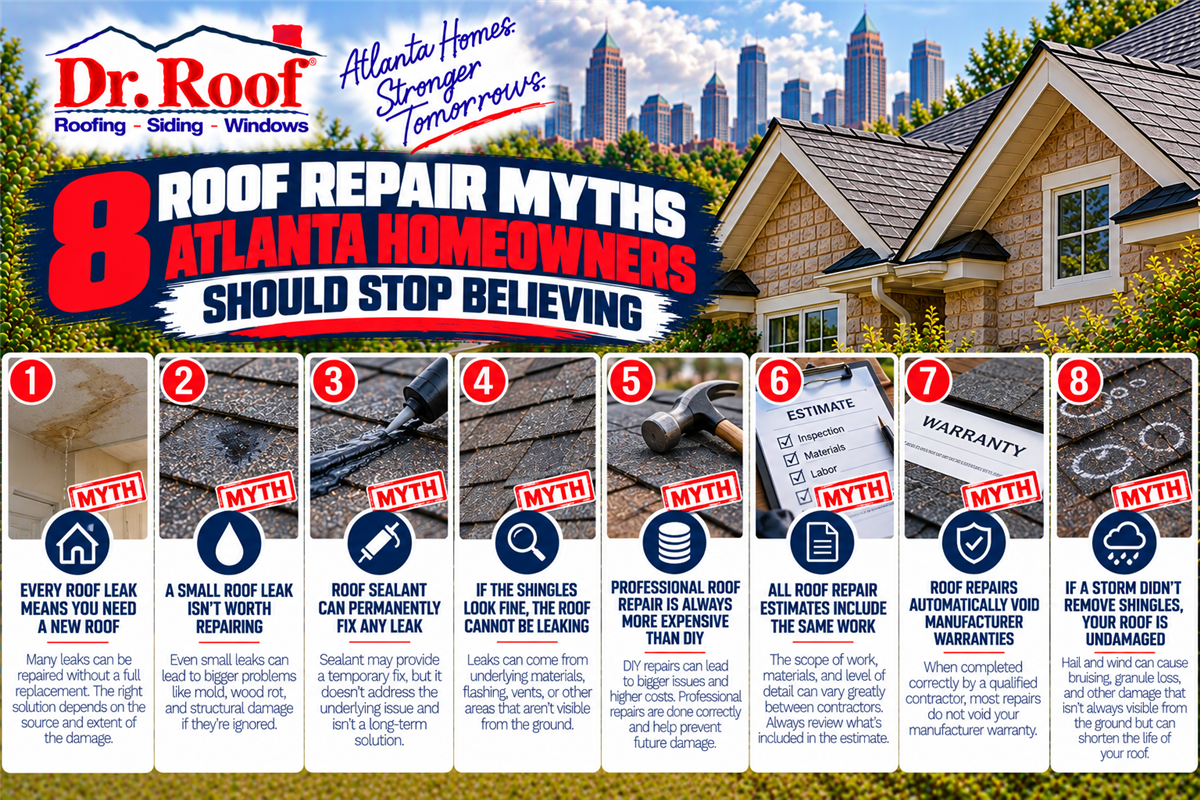
Here are eight common misconceptions about professional roof repair services.
Myth 1: Every Roof Leak Means You Need a New Roof
One of the most common roofing misconceptions is that discovering a leak automatically means the entire roof needs replacement.
Fortunately, that is not always the case.
Roof leaks can develop for several reasons, and some involve relatively localized defects.
Potential causes include:
Damaged asphalt shingles
Deteriorated pipe boots
Loose chimney flashing
Roof valley problems
Damaged roof penetrations
Localized storm damage
Previously repaired areas
When the problem is limited and the surrounding roofing system remains serviceable, a professional repair may be appropriate.
When Can a Roof Leak Be Repaired?
A localized repair may make sense when the damaged materials can be removed and replaced without compromising the surrounding roofing system.
For example, a deteriorated plumbing vent boot may be replaceable without removing the entire roof covering.
Similarly, damaged flashing around a chimney may be repairable when the adjacent shingles remain suitable.
However, the contractor should inspect the relevant components before recommending a solution.
When Might Replacement Be Necessary?
Roof replacement may deserve consideration when:
Multiple areas are leaking
Shingles are deteriorating across large sections
Previous repairs repeatedly fail
Extensive decking damage is present
Surrounding materials cannot be repaired reliably
Widespread damage has compromised the roofing system
The important point is that a leak does not automatically establish the need for replacement.
The recommendation should reflect the actual condition of the roof.
Myth 2: A Small Roof Leak Isn't Worth Repairing
A small ceiling stain may not seem serious, especially when water only appears during heavy rainfall.
However, the size of an interior stain does not necessarily reflect the extent of the roofing problem.
Water can travel along decking, framing, and other building components before becoming visible inside the home.
Why Can a Small Leak Become a Larger Problem?
Continued water intrusion may eventually affect:
Roof decking
Attic insulation
Wood framing
Ceiling drywall
Interior paint
Other building materials
Not every small leak will cause extensive damage.
However, allowing moisture to enter repeatedly can increase the amount of material requiring evaluation or repair.
What Should You Do When a Small Leak Appears?
Document the location of the stain and note when water becomes visible.
If the problem occurs during rain, record that information for the roofing contractor.
Avoid climbing onto the roof to identify the source.
A professional inspection can help determine whether the issue involves a small roofing defect or a more complicated problem.
Addressing the cause promptly is generally preferable to waiting for additional damage.
Myth 3: Roof Sealant Can Permanently Fix Any Leak
Roofing sealants have legitimate uses, but they are not suitable solutions for every roofing problem.
Homeowners sometimes assume that applying sealant over a visible opening will permanently stop water intrusion.
Unfortunately, that approach may only conceal the underlying defect.
Why Doesn't Sealant Fix Every Roof Leak?
Consider a chimney with improperly installed flashing.
The problem may involve how water moves between the chimney, flashing, and surrounding shingles.
Applying sealant to an exposed seam may temporarily reduce water intrusion without correcting the flashing assembly.
Similarly, sealant cannot restore the structural condition of deteriorated roof decking.
What Is the Difference Between Patching and Permanent Repair?
A temporary patch is intended to provide limited protection until the underlying problem can be corrected.
A permanent repair should address the identified defect using appropriate roofing materials and installation methods.
Depending on the problem, permanent work may involve:
Replacing damaged shingles
Installing new flashing
Replacing a pipe boot
Correcting roof valley details
Replacing damaged underlayment
Repairing unsuitable decking
The contractor should explain whether the proposed work is temporary protection or a completed repair.
Myth 4: If the Shingles Look Fine, the Roof Cannot Be Leaking
Asphalt shingles are important roofing components, but they are only one part of the system.
A roof can develop leaks even when most of the visible shingles appear intact.
Water may enter through vulnerable areas such as:
Chimney transitions
Skylight flashing
Plumbing vent penetrations
Roof-to-wall intersections
Valleys
Damaged roof accessories
Some of these components are difficult to inspect from the ground.
Why Can Flashing Cause a Leak?
Flashing helps direct water away from areas where roofing materials meet other building components.
When flashing is damaged, deteriorated, or improperly integrated with surrounding materials, water may reach the underlying roof assembly.
A homeowner might see an interior ceiling stain while the shingles above it appear perfectly normal.
How Does a Roofer Find the Actual Problem?
A professional roof evaluation may include examining several possible water-entry points.
The contractor should consider the location of the interior moisture, nearby roofing details, previous repairs, and other relevant conditions.
The visible stain does not always identify the exact point where water entered.
This is one reason professional diagnosis matters.
Myth 5: Professional Roof Repair Is Always More Expensive Than DIY
Some homeowners consider repairing roofing problems themselves to avoid hiring a contractor.
However, roof repair involves more than replacing visible shingles.
It can require knowledge of:
Roofing material compatibility
Flashing installation
Underlayment
Fastening requirements
Roof pitch
Water drainage
Safe access procedures
Incorrect work can leave the original problem unresolved or create additional roofing defects.
Why Is DIY Roof Repair Risky?
Working on a roof presents significant fall hazards.
Wet shingles, steep slopes, loose materials, and concealed structural deterioration can create dangerous conditions.
The National Roofing Contractors Association recommends that homeowners inspect storm-damaged roofs from the ground and leave elevated inspections and repairs to qualified professionals.
Does Professional Repair Guarantee a Better Outcome?
No contractor can guarantee that every future roofing problem will be prevented.
However, a qualified professional can evaluate the roofing system and recommend a repair based on the identified damage.
The contractor should also explain the scope, materials, pricing, and applicable warranty terms.
Homeowners should compare the value of the complete repair rather than focusing only on the initial expense.
Myth 6: All Roof Repair Estimates Include the Same Work
Two roofing contractors may inspect the same home and provide different estimates.
That does not necessarily mean one contractor is overcharging.
The proposed work may differ significantly.
For example, one contractor might recommend replacing deteriorated chimney flashing.
Another might propose applying temporary sealant to the visible opening.
Although both estimates address the same complaint, they may not describe equivalent repairs.
What Should a Roof Repair Estimate Include?
A useful written estimate should explain:
The identified roofing problem
Location of the damage
Recommended repair
Materials requiring replacement
Labor and cleanup
Potential hidden damage
Expected scheduling
Total proposed pricing
Applicable warranty information
Homeowners should understand what work will be performed before approving the estimate.
Is the Lowest Roof Repair Quote Always the Best?
Not necessarily.
A lower estimate may exclude materials or work included in another proposal.
Likewise, a higher price does not automatically mean the proposed repair is better.
The most useful comparison involves the actual scope and whether it appropriately addresses the roofing problem.
Myth 7: Roof Repairs Automatically Void Manufacturer Warranties
Homeowners sometimes worry that repairing one section of their roof will automatically eliminate existing manufacturer warranty coverage.
That is not necessarily true.
However, repairs can raise important warranty questions.
Manufacturer coverage depends on the applicable written terms, the roofing products involved, and the circumstances of the work.
Can Roof Repairs Affect Warranty Coverage?
They may.
For example, using unsuitable materials or performing work contrary to manufacturer requirements can create warranty concerns.
However, homeowners should not assume that every professional repair cancels the existing roof warranty.
What Should You Ask Before Approving Repairs?
Consider asking:
Are the replacement materials compatible with my existing roof?
Does the manufacturer specify particular repair procedures?
Will any existing warranty provisions be affected?
Does the repair include separate workmanship coverage?
What documentation will I receive?
A roofing contractor should explain the proposed materials and work.
If questions remain about an existing manufacturer warranty, homeowners can contact the manufacturer directly.
Does a Repair Restart the Original Warranty?
Generally, homeowners should not assume that a localized repair restarts the warranty period for the entire roofing system.
Existing materials may remain subject to their original coverage, while newly installed materials may have separate terms.
The actual documents determine the applicable protection.
Myth 8: If a Storm Didn't Remove Shingles, Your Roof Is Undamaged
Missing shingles are an obvious sign of possible storm damage.
However, they are not the only concern.
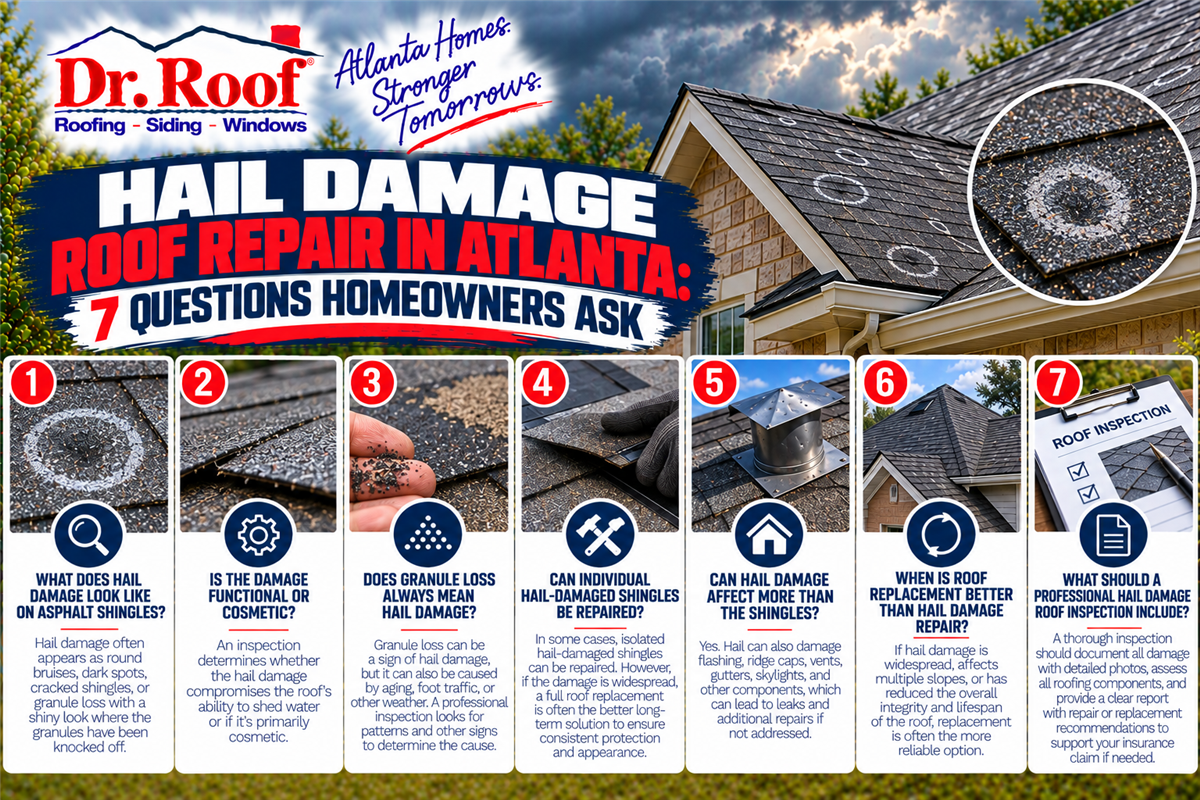
Strong winds can lift or crease shingles without removing them completely.
Hail can create localized impact damage that may not be visible from the driveway.
Falling branches may also affect flashing or other roofing components.
What Should You Look for After Severe Weather?
From the ground, homeowners can look for:
Missing shingles
Displaced ridge materials
Roofing debris
Fallen branches
Visible flashing damage
Changes in the roofline
New interior water stains
Not every storm creates roof damage.
However, a lack of obvious missing shingles does not establish that every roofing component is intact.
When Should You Request a Professional Inspection?
Consider an assessment when significant weather has affected the property and roofing damage is suspected.
Active water intrusion, exposed roofing materials, or suspected structural damage deserve prompt attention.
Homeowners should avoid climbing onto wet or damaged roofs.
What Is the Difference Between a Temporary Roof Patch and a Professional Repair?
Temporary protection and permanent roof repair serve different purposes.
A temporary measure may help reduce water intrusion until conditions allow permanent work.
For example, professional roof tarping may be appropriate when storm damage exposes part of the roofing system.
A permanent repair should address the underlying damage.
Why Does the Difference Matter?
A homeowner may believe that an emergency patch completed the entire repair.
However, temporary materials can deteriorate or become displaced.
The contractor should explain whether additional work is required and when the permanent repair should be completed.
Never assume that temporary protection eliminates the need for further evaluation.
Can You Repair an Older Roof Instead of Replacing It?
Sometimes.
The age of a roof is one consideration, but it does not automatically determine whether repair is possible.
A contractor should evaluate the actual condition of the roofing system.
For example, an older roof may have localized flashing damage while the surrounding materials remain serviceable.
In another situation, widespread shingle deterioration may make a limited repair impractical.
The appropriate recommendation depends on:
Material condition
Damage extent
Repair history
Roof design
Compatible material availability
Decking condition
Reliability of the proposed repair
A professional evaluation should explain why repair or replacement is recommended.
Does Homeowners Insurance Cover Every Roof Repair?
No.
Insurance coverage depends on the cause of the damage and the homeowner's policy.
Certain sudden storm-related losses may qualify for coverage.
Ordinary wear, deterioration, and maintenance-related problems may be treated differently.
The insurance company determines coverage and claim payment according to the policy and individual circumstances.
A roofing contractor may document physical damage and provide repair recommendations, but cannot guarantee insurance approval.
What Should Atlanta Homeowners Expect From Professional Roof Repair?
A professional roofing evaluation should help identify the actual problem.
Depending on the circumstances, the contractor may inspect:
Asphalt shingles
Flashing
Roof penetrations
Valleys
Ridge materials
Visible decking concerns
Previous repairs
Signs of moisture intrusion
The contractor should explain the findings and recommend work appropriate to the condition.
Homeowners may also request photographs or written documentation.
A clear repair proposal helps establish what is being corrected and what work is included.
How Dr. Roof Helps Atlanta Homeowners Make Informed Repair Decisions
Dr. Roof has served Atlanta-area homeowners since 1988, providing professional roofing inspections, repairs, replacement, and storm-damage documentation support.
A roofing evaluation can help determine whether a problem involves damaged shingles, flashing, roof penetrations, decking, or another component.
When appropriate, Dr. Roof may provide photographs, written findings, and recommendations for repair or replacement.
Homeowners can discuss the proposed scope and determine whether a targeted repair is suitable for the existing roofing system.
Don't Let Roof Repair Myths Determine Your Next Move
Roof repairs are not automatically temporary solutions, and discovering a leak does not always mean the entire roof needs replacement.
Likewise, a small stain should not be dismissed simply because the damage appears minor.
The most useful approach is identifying the roofing problem, understanding the available solutions, and reviewing the recommended work.
For Atlanta homeowners, informed decisions begin with a professional assessment rather than assumptions about what roof repair can or cannot accomplish.
If your roof is leaking or showing signs of damage, contact Dr. Roof to schedule a professional evaluation and discuss your repair options.
Does every roof leak require a full roof replacement?
No. Many localized roof leaks can be repaired when the surrounding roofing materials remain serviceable. Problems involving damaged shingles, flashing, or roof penetrations may be correctable without replacing the entire roof.
Can a small roof leak cause significant damage?
Yes. Continued water intrusion may eventually affect decking, insulation, framing, drywall, or other building materials. The size of an interior stain does not necessarily indicate the full extent of the problem.
Can roof sealant permanently fix every leak?
No. Sealant may be appropriate for certain limited applications, but it cannot correct every roofing defect. Damaged flashing, deteriorated decking, or unsuitable roofing materials may require more extensive repairs.
Are professional roof repairs always more expensive than DIY?
Not necessarily when the complete scope and potential consequences are considered. DIY repairs may create safety risks or leave roofing defects unresolved. Professional repair provides an opportunity for proper diagnosis and appropriate installation.
Do roof repairs automatically void manufacturer warranties?
No. Warranty effects depend on the manufacturer's written terms, materials, and repair methods. Homeowners should verify compatibility and applicable requirements before approving work.
Can a roof have storm damage without missing shingles?
Yes. Wind may lift or crease shingles, while hail can create localized impact damage. Flashing and other roofing components may also sustain damage that is difficult to identify from the ground.
Subscribe to Dr. Roof's Blog



Comments