Replacing your roof is a major home improvement project, and comparing estimates is one of the most important steps before choosing a roofing contractor.
However, homeowners often discover that roof replacement quotes can vary significantly.
One company may recommend standard architectural shingles, while another proposes premium materials. One estimate may include additional flashing work, while another assumes certain existing components can remain in place.
These differences make it difficult to determine which proposal offers the most appropriate solution.
To compare multiple roof replacement quotes, request detailed written estimates from qualified roofing contractors, review the complete scope of work, compare equivalent materials and installation components, and evaluate warranties, scheduling, and potential additional costs.
For Atlanta homeowners, the goal should not simply be finding the lowest price.
It should be understanding what each roofing contractor proposes and whether the complete roofing system is appropriate for the home.
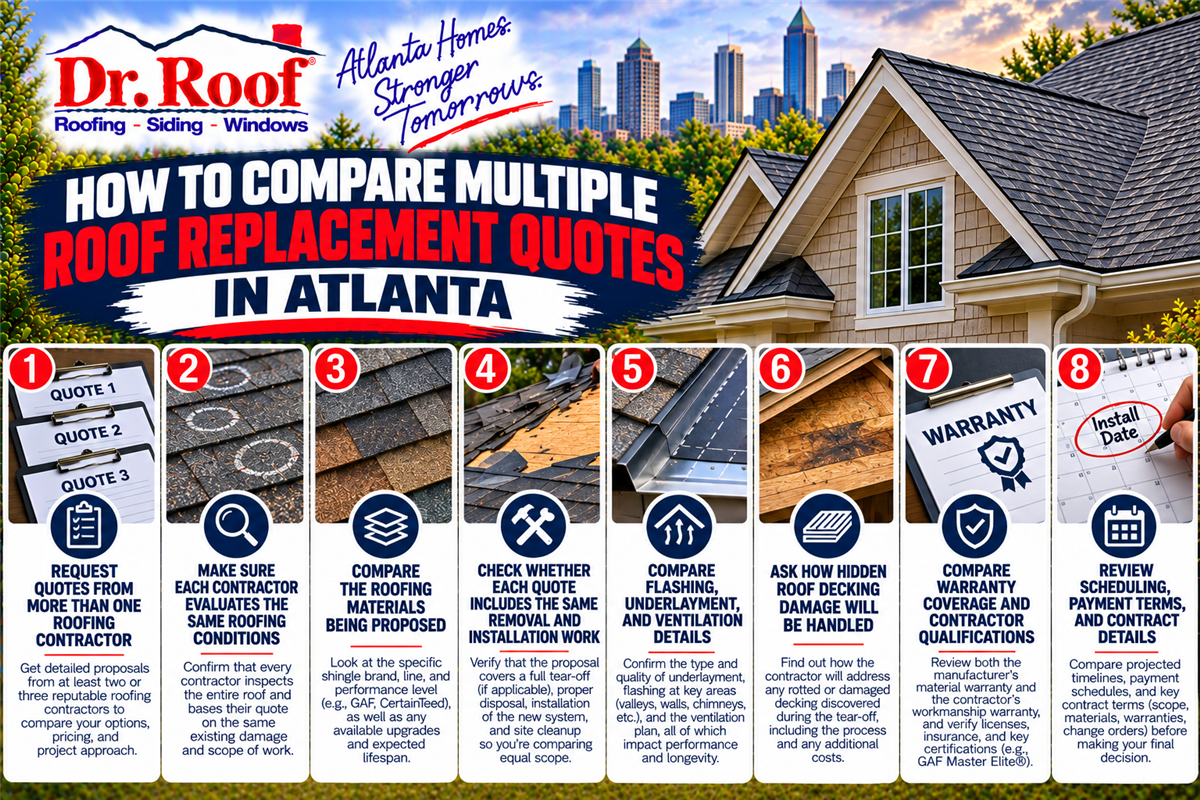
Here are eight steps to help you compare roof replacement quotes more confidently.
1. Request Quotes From More Than One Roofing Contractor
Obtaining multiple estimates provides an opportunity to compare different recommendations.
The Federal Trade Commission advises homeowners to obtain written estimates and ask questions when contractors provide significantly different prices.
GAF also recommends contacting more than one contractor when planning roof replacement.
How Many Roof Replacement Quotes Should You Get?
There is no universal number required for every project.
Obtaining at least two detailed estimates can provide a useful basis for comparison.
Some homeowners may prefer additional proposals, particularly when the project is complex or the contractors recommend substantially different approaches.
The important point is ensuring the estimates contain enough information to compare the work.
Should You Compare Contractors Based on Price Alone?
No.
Roof replacement involves materials, installation methods, labor, and other components.
The least expensive proposal may include a different roofing system or exclude work included in another estimate.
Before comparing final prices, determine whether the proposals describe equivalent projects.
2. Make Sure Each Contractor Evaluates the Same Roofing Conditions
A meaningful comparison begins with accurate information about the roof.
Roofing contractors may use digital measurement tools, property information, and professional inspections to establish the project scope.
However, different estimates can reflect different assumptions.
What Should Each Contractor Evaluate?
Depending on the property, the assessment may consider:
Existing roofing materials
Roof measurements
Roof pitch
Number of roof sections
Chimneys
Dormers
Roof valleys
Flashing
Roof penetrations
Visible decking concerns
Previous repairs
Signs of water intrusion
The contractor should explain the conditions that influence the proposed replacement.
Why Do Roof Measurements Matter?
Roof replacement materials are generally estimated using the actual roof surface area rather than the home's interior square footage.
A roofing square represents 100 square feet of roof area.
The roof's pitch, overhangs, and multiple sections can make its surface area different from the home's living area.
If two estimates use substantially different roof measurements, ask each contractor to explain the calculation.
What If One Contractor Recommends More Work?
The difference may reflect a legitimate roofing concern.
For example, one contractor may identify deteriorated flashing that another proposal does not address.
Ask for an explanation of the observed condition and why the additional work is recommended.
Do not assume every difference is unnecessary or incorrect.
3. Compare the Roofing Materials Being Proposed
Roofing material selection can significantly influence the total replacement price.
Different manufacturers offer multiple product lines with different appearance and performance characteristics.
For example, asphalt roofing products are available in traditional, architectural, and designer categories.
Other residential roofing options may include certain composite and metal systems.
Why Should You Compare Specific Products?
A quote identifying only "architectural shingles" may not provide enough detail.
Ask the contractor to identify:
Roofing manufacturer
Product line
Shingle style
Selected color
Underlayment
Starter materials
Ridge components
Other specified roofing accessories
The complete product selection matters.
Can Two Architectural Shingle Quotes Be Different?
Yes.
Architectural shingles can vary by manufacturer, product construction, available colors, published specifications, and warranty terms.
Different installation components can also influence the complete proposal.
Homeowners should compare the specific products rather than treating all architectural shingles as identical.
Should You Ask About Material Alternatives?
Yes, when appropriate.
A contractor may be able to explain different material options that are suitable for the roof.
For example, homeowners might compare an architectural asphalt-shingle system with a premium designer option.
However, the alternatives should be evaluated as complete roofing systems.
The most expensive product is not automatically the best fit for every home.
4. Check Whether Each Quote Includes the Same Removal and Installation Work
A complete roof replacement involves more than installing new shingles.
The contractor may need to remove existing materials, evaluate the roof decking, install protective components, and complete detailed work around vulnerable roof areas.
What Should Be Included in the Replacement Scope?
Depending on the selected roofing system, the proposal may identify:
Removal of existing roof covering
Disposal of removed materials
Decking evaluation
Underlayment
Leak-protection components
Starter materials
Main roofing materials
Flashing
Ridge and hip components
Ventilation
Labor
Cleanup
Not every roof requires exactly the same components or work.
However, the proposal should explain what is included.
Why Does Tear-Off Matter?
Removing existing roofing materials allows the contractor to evaluate the exposed roof decking more directly.
It also creates an opportunity to address concealed conditions before installing the new roofing system.
If one contractor proposes removing the existing roof and another proposes a different approach, ask why.
The appropriate installation method depends on the roofing system, existing conditions, manufacturer requirements, and applicable building rules.
What About Cleanup and Disposal?
Ask whether removal of construction debris and disposal of old roofing materials are included in the estimate.
These responsibilities should be established before work begins.
A proposal that does not clearly address cleanup may require additional clarification.
5. Compare Flashing, Underlayment, and Ventilation Details
Some of the most important roofing components are not visible once installation is complete.
These details can also create meaningful differences between estimates.
Underlayment
Underlayment provides secondary protection beneath many roofing systems.
Different underlayment products have different characteristics and installation requirements.
Ask which material each contractor proposes.
Flashing
Flashing helps manage water around vulnerable roof transitions.
Common locations include:
Chimneys
Roof-to-wall intersections
Valleys
Plumbing vents
Ask which existing flashing components will be replaced, repaired, or reused.
Ventilation
The appropriate roof ventilation arrangement depends on the home's attic and roof design.
Some replacement projects may involve changes to ridge ventilation or other components.
Ask whether ventilation modifications are included and why they are recommended.
Why Do These Details Matter?
Two proposals may include the same visible shingles but different materials beneath or around them.
Those proposals may not represent equivalent roofing systems.
A detailed comparison should account for these differences.
6. Ask How Hidden Roof Decking Damage Will Be Handled
Roof decking provides the supporting surface beneath the roofing materials.
Common residential decking products include plywood and oriented strand board.
The condition of the decking is important because the new roofing system must be installed over a suitable supporting surface.
Can Decking Damage Be Hidden?
Yes.
Some problems are not visible until existing shingles and underlayment are removed.
Potential conditions include:
Wood rot
Delaminated panels
Holes
Deteriorated materials
Previous moisture damage
Other structural concerns
Not every roof replacement requires completely new decking.
The contractor should evaluate the existing material and determine whether it remains suitable.
How Can Decking Affect the Final Price?
If damaged or unsuitable decking is discovered, additional repairs may be necessary.
That work may involve materials and labor beyond the initial proposal.
What Should You Ask Before Signing?
Consider asking:
Is any decking replacement included?
How will damaged decking be identified?
Will photographs be provided?
How will additional work be priced?
Will approval be required before the scope changes?
How could decking repairs affect scheduling?
The answers should be reflected in the project's change-order process.
Why Is This Important When Comparing Quotes?
One contractor may include an allowance for certain decking repairs.
Another may price decking work separately if needed.
These approaches can produce different initial totals.
Understanding the assumptions helps homeowners compare the proposals more accurately.
7. Compare Warranty Coverage and Contractor Qualifications
Roof replacement warranties vary by manufacturer, selected materials, contractor, and installation circumstances.
Homeowners should distinguish between manufacturer material coverage and workmanship-related protection.
What Is a Manufacturer Warranty?
A manufacturer warranty generally addresses qualifying product defects according to the written terms.
Some enhanced roofing-system warranties may involve additional eligibility requirements.
What Is a Workmanship Warranty?
Workmanship coverage addresses qualifying installation-related concerns under the applicable agreement.
The duration, exclusions, and available remedies depend on the warranty.
Does Every Roof Replacement Qualify for the Same Warranty?
No.
Warranty options may depend on:
Roofing manufacturer
Selected shingles
Qualifying accessories
Contractor credentials
Installation requirements
Registration conditions
Other written terms
A particular contractor certification does not automatically mean every installed roof qualifies for the same coverage.
What Should You Compare?
Ask each contractor to explain:
Manufacturer coverage
Workmanship coverage
Coverage duration
Important exclusions
Registration requirements
Procedures for reporting problems
Review the actual warranty documents.
A longer advertised warranty is not automatically more comprehensive than another agreement.
Should Contractor Qualifications Matter?
Yes.
Consider the company's experience, appropriate insurance, applicable credentials, and familiarity with the roofing materials being installed.
Manufacturer certifications can provide useful information about contractor qualifications.
However, they should be considered alongside the actual proposal and installation practices.
8. Review Scheduling, Payment Terms, and Contract Details
The final comparison should include how the project will be managed.
Roof replacement involves scheduling, materials, construction activity, and potential changes to the agreed work.
What Scheduling Information Should You Request?
Ask about:
Anticipated project start
Expected installation duration
Material availability
Weather-related delays
Cleanup procedures
Final project review
Communication during installation
A contractor should explain the scheduling expectations without making unsupported guarantees.
Why Does Weather Matter?
Roofing work is affected by rainfall, wind, temperature, and other installation conditions.
Certain materials have manufacturer-specific installation requirements.
Unsafe weather may require the contractor to adjust the schedule.
What Should the Contract Include?
A written agreement should clearly identify:
Contractor information
Project address
Scope of work
Roofing materials
Total price
Payment terms
Scheduling expectations
Change-order procedures
Applicable warranty information
The Federal Trade Commission recommends reviewing agreements carefully and avoiding contracts with blank or unclear sections.
Should You Pay the Full Amount Before Work Begins?
Be cautious about requests for full payment before the project begins.
Payment arrangements vary, but homeowners should understand the schedule and retain appropriate documentation.
Review the terms before signing.
How Can You Compare Roof Replacement Quotes Side by Side?
A simple comparison worksheet can make the process easier.
For each roofing contractor, record the following:
Roof measurements: Are the estimated roofing areas comparable?
Roofing materials: Which manufacturer and product line are proposed?
Existing-roof removal: What tear-off work is included?
Decking: How will existing and unexpected damage be handled?
Underlayment: What protective materials will be installed?
Flashing: Which components will be replaced or reused?
Ventilation: Are changes included?
Cleanup: What debris removal responsibilities are covered?
Warranty: What written manufacturer and workmanship protection applies?
Project terms: What scheduling, payment, and change-order procedures are included?
Total price: What does the complete proposed project cost?
This approach helps homeowners identify differences that may not be obvious from the final price alone.
Why Can Roof Replacement Quotes Be So Different?
Several factors may explain why contractors provide different prices for the same property.
Different Roofing Materials
One contractor may recommend a standard architectural shingle, while another proposes a premium product.
Different Installation Components
The proposals may include different underlayment, flashing, or ventilation work.
Different Labor Requirements
Roof pitch, height, accessibility, and complexity influence how the project is performed.
Different Assumptions About Existing Conditions
One contractor may include known repairs that another has not identified.
Different Warranty Options
Enhanced warranty programs may have different eligibility requirements and associated costs.
Different Project Scopes
One contractor may propose additional roofing work that changes the total price.
A written explanation of these differences is more useful than assuming that the least expensive contractor is automatically offering the best value.
Should You Always Choose the Lowest Roof Replacement Quote?
Not necessarily.
The lowest price may represent a suitable proposal, but it should be evaluated against the full scope of work.
For example, a lower quote might exclude flashing replacement that another contractor considers necessary.
Alternatively, a higher quote might include optional material upgrades that are not essential for the homeowner's priorities.
The appropriate choice depends on the roof's condition and the proposed installation.
What If One Quote Is Much Lower Than the Others?
Ask the contractor to explain:
The roofing products
The removal scope
Included accessories
Flashing details
Decking assumptions
Labor
Cleanup
Warranty provisions
A clear explanation can help determine whether the difference reflects a legitimate cost advantage or a different scope of work.
Can You Obtain Roof Replacement Quotes Without an Inspection?
Some contractors use aerial measurements and other digital tools to prepare preliminary estimates.
These tools can provide useful information about roof dimensions and complexity.
However, they may not reveal every existing roofing condition.
For example, concealed decking deterioration may remain unknown until the old materials are removed.
An accurate final proposal should account for the available information and clearly explain any assumptions.
Are Online Roof Replacement Calculators Useful?
Online calculators can provide preliminary pricing information.
However, they should not be treated as a substitute for understanding the complete installation scope.
A detailed contractor proposal is more useful when comparing materials, labor, and other project requirements.
What Questions Should You Ask Before Accepting a Roof Replacement Quote?
Before choosing a contractor, consider these questions:
What roofing system is being installed?
Are roof measurements included?
Will the existing roof covering be removed?
Which underlayment products are specified?
What flashing work is included?
How will damaged decking be handled?
Are ventilation changes necessary?
What cleanup is included?
Which warranties apply?
How are unexpected changes approved?
What payment terms are required?
What scheduling expectations should I understand?
These questions help establish whether the proposal reflects the work needed for the property.
Why Local Experience Matters When Comparing Atlanta Roofers
Atlanta-area homes have varied roof designs.
Some contain straightforward gable roofs, while others include multiple valleys, dormers, chimneys, and steep sections.
These features can affect material quantities, installation methods, and labor requirements.
Atlanta also experiences heavy rainfall and strong thunderstorms, making appropriate flashing and roofing-system installation important.
A contractor should evaluate the property's actual design and recommend materials suitable for the roof.
Local experience can be useful, but it should not replace careful review of qualifications and written proposals.
How Dr. Roof Helps Atlanta Homeowners Evaluate Roof Replacement Options
Dr. Roof has served Atlanta-area homeowners since 1988, providing professional roofing inspections, repairs, and replacement services.
Dr. Roof is a GAF Master Elite Certified Contractor and CertainTeed SELECT ShingleMaster.
During a roof replacement consultation, homeowners can discuss:
Existing roof condition
Suitable roofing materials
Roof measurements
Underlayment
Flashing
Decking concerns
Installation requirements
Warranty options
Project scope
A written proposal can help explain the recommended work and provide a basis for comparison with other estimates.
Homeowners should review the complete scope and applicable warranty terms before approving the project.
Compare the Complete Roof, Not Just the Price
Obtaining multiple roof replacement quotes is an important step toward making an informed decision.
However, comparing prices without examining the proposed work can lead to misunderstandings.
The roofing materials, underlayment, flashing, decking procedures, warranties, labor, and cleanup all deserve attention.
For Atlanta homeowners, the most useful quote is one that clearly explains what will be installed and how the project will be completed.
Before selecting a contractor, review each proposal carefully and ask questions about differences.
If you're planning a roof replacement in Atlanta, Marietta, Roswell, Alpharetta, or surrounding communities, contact Dr. Roof to request a professional roof replacement consultation and discuss the options available for your home.
How many roof replacement quotes should I get?
Obtaining at least two detailed written estimates provides a useful basis for comparison. Additional quotes may help when the project is complex or contractors recommend different materials or scopes. The important factor is comparing equivalent work.
What should multiple roof replacement quotes include?
Quotes should identify roof measurements, proposed roofing materials, removal of existing materials, underlayment, flashing, decking repair procedures, labor, cleanup, pricing, scheduling expectations, and applicable warranty information. The exact scope depends on the roofing system.
Why do roof replacement contractors provide different prices?
Prices may differ because contractors propose different materials, installation components, flashing work, decking allowances, warranties, labor requirements, or cleanup procedures. Homeowners should compare the complete scope before evaluating the final totals.
Can online roof replacement estimates replace professional inspections?
Online tools can provide preliminary measurements and pricing information, but they may not identify concealed damage or every roofing condition. A professional evaluation and detailed proposal help establish the actual project scope.
Should I choose the lowest roof replacement estimate?
Not automatically. The lowest estimate may represent different materials or a more limited installation scope. Compare the roofing system, contractor qualifications, warranty terms, and included work before deciding.
What should I ask about hidden decking damage when comparing quotes?
Ask whether decking repairs are included, how damaged areas will be documented, how additional materials and labor will be priced, and whether approval is required before expanding the scope. These details can affect the final project cost.
Subscribe to Dr. Roof's Blog




Comments