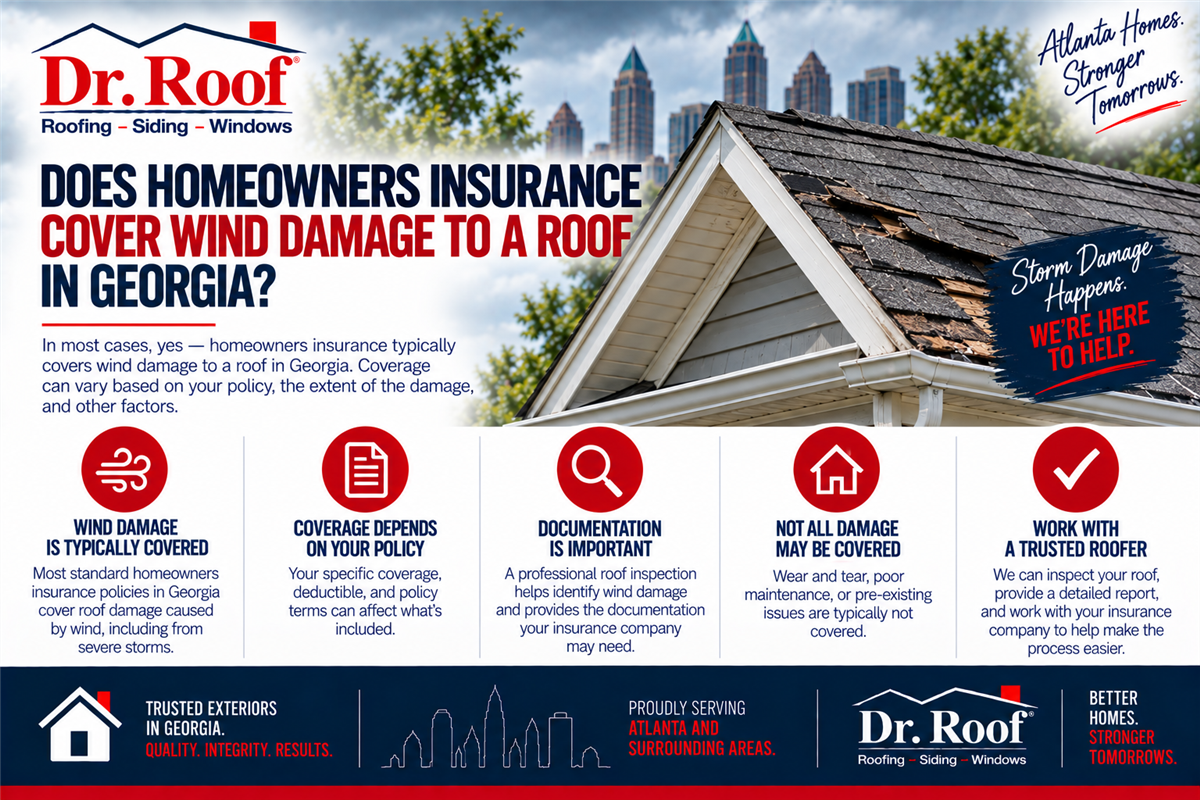
A strong storm moves through Metro Atlanta. The next morning, you notice shingles in the yard, a section of the roof looks different from the ground, or a new water stain appears on the ceiling.
One of the first questions many homeowners ask is: Will homeowners insurance cover the roof damage?
In Georgia, wind damage is commonly included among the perils covered by standard homeowners insurance policies. The Georgia Office of the Commissioner of Insurance and Safety Fire states that standard homeowners policies generally cover damage from high winds and tornadoes. However, that does not mean every damaged roof automatically qualifies for payment under every policy. Coverage depends on the specific policy, deductible, exclusions, endorsements, condition of the roof, cause of the damage, and the insurance company’s claim determination.
For Atlanta-area homeowners, the most useful approach is to understand what the insurer will evaluate and what you can do after a storm to document the condition of the roof properly.
Does Homeowners Insurance Usually Cover Wind Damage?
Windstorm is a commonly covered cause of loss under homeowners insurance.
The Georgia Department of Insurance lists windstorm among examples of events included in home insurance coverage packages and advises homeowners to review their policies for coverage involving wind, fallen trees, and related storm losses.
That distinction matters because insurance generally responds to a covered event, not simply to the fact that a roof needs work.
For example, sudden damage caused by strong wind may be evaluated very differently from deterioration that developed gradually over many years.
The insurance company ultimately determines whether the reported damage is covered under the terms of the policy and claim.
5 Factors That Can Affect a Wind-Damage Roof Claim
Two Atlanta homes on the same street can experience the same storm and still have different claim outcomes.
Here are five important reasons why.
1. What Actually Caused the Damage?
The first question is usually the cause of loss.
Was the roof damaged by wind?
Did a tree or branch strike the roof?
Was water intrusion the result of a storm-created opening?
Or was the condition related primarily to age, maintenance, installation, or long-term deterioration?
A professional roofing inspection can help document the physical condition of the roof, but the insurer determines whether those findings meet the policy requirements for coverage.
That is why distinguishing storm-related conditions from ordinary wear is so important.
2. What Does Your Policy Actually Cover?
Homeowners insurance policies are contracts.
The Georgia Office of the Commissioner of Insurance and Safety Fire specifically encourages homeowners to read their policies carefully because the policy defines the rights and responsibilities of both the homeowner and insurer.
Important provisions may include:
Covered causes of loss
Exclusions
Wind or hurricane deductibles
Roof-specific endorsements
Settlement provisions
Duties after a loss
Time requirements for reporting damage
Do not assume that a neighbor’s claim experience applies to your home.
Two policies issued by different companies—or even two policies from the same insurer—can contain different terms.
3. What Deductible Applies?
A deductible is the amount the homeowner is responsible for before applicable insurance benefits are calculated according to the policy.
Georgia insurance officials specifically advise homeowners to determine whether their policy includes a separate deductible for hurricane or wind losses.
That means homeowners should review the declarations page and policy documents rather than assuming the standard deductible applies to every storm claim.
If you are unsure how a deductible applies, your insurance agent or carrier is the appropriate source for interpreting the policy.
4. Does the Policy Use Replacement Cost or Actual Cash Value?
The method used to value covered damage can also make a significant difference.
The Georgia Department of Insurance explains that replacement cost generally reflects the amount needed to repair or replace damaged property with materials of similar kind and quality without subtracting depreciation, while actual cash value reflects replacement or repair cost after depreciation.
Roof-specific settlement provisions can be more complicated than a general description, so homeowners should review the policy language that applies specifically to the dwelling and roof.
If you see terms such as replacement cost, actual cash value, depreciation, or roof surfacing endorsement, ask the insurer or agent how those provisions apply to your claim.
5. What Documentation Is Available?
Storm damage is easier to evaluate when there is clear documentation of what happened.
Georgia insurance officials recommend photographing property damage and contacting the insurance company promptly after a loss. They also advise homeowners to keep receipts and document temporary measures taken to prevent additional damage.
Roofing documentation may include:
Exterior photographs
Close-up photographs of affected roofing materials
Notes identifying damaged areas
Interior photographs if water intrusion occurred
Written inspection findings
Repair or replacement recommendations
Photos of temporary protective measures
Documentation does not guarantee that a claim will be approved. It provides information the insurance company can consider when evaluating the loss.
What Does Wind Damage Look Like on a Roof?
Wind damage does not always mean an entire section of shingles disappears.
Possible signs can include shingles that are missing, lifted, loosened, creased, displaced, or damaged around vulnerable roof edges and penetrations.
Homeowners may also notice debris on the roof, damaged flashing, shingles in the yard, exposed roofing materials, or interior water staining after a storm.
Some conditions are difficult to evaluate safely from the ground.
Avoid climbing onto a storm-damaged roof. Wet surfaces, loose shingles, debris, compromised decking, and damaged tree limbs can create serious hazards.
A professional roof inspection can provide a closer look without requiring the homeowner to access the roof.
Should You File a Claim Before Having the Roof Inspected?
There is no universal sequence that applies to every policy or every loss.
If you believe your home has sustained storm damage, contact your insurance company or agent promptly and follow the reporting instructions in your policy.
A roofing inspection can also help establish what is physically happening on the roof.
The roles are different:
A roofing contractor evaluates the roof and can document roofing conditions.
The insurance company evaluates the claim and determines coverage according to the policy.
Keeping those roles clear helps homeowners avoid confusion during the process.
What Should You Do Immediately After Wind Damage?
Safety comes first.
If there are downed power lines, unstable trees, severe structural damage, or dangerous conditions around the home, stay away from the area and contact the appropriate emergency professionals.
Once it is safe, document visible damage from the ground and inside the home.
The Georgia Department of Insurance advises homeowners to notify the insurance company promptly and, when appropriate, take temporary measures to protect the property from additional damage. It also advises against beginning significant permanent repairs before communicating with the insurer.
Temporary protection might include professionally securing an exposed area or using a tarp when appropriate and safe.
Keep receipts and photographs of temporary work.
What Can Dr. Roof Provide After a Storm?
Dr. Roof provides roofing inspections and storm-damage documentation support for Atlanta-area homeowners.
Depending on the condition found, that may include photographs, written findings, and recommendations regarding roofing repairs or replacement.
That information can help create a clearer record of the roof’s condition after a storm.
Dr. Roof does not determine whether an insurance company must cover the damage. Insurance coverage decisions are made by the insurer according to the policy and claim.
This distinction is important because a contractor’s job is to evaluate and explain the roofing condition—not to promise an insurance outcome.
What If the Insurer and Contractor See the Roof Differently?
Differences can occur because contractors and insurance companies perform different functions.
A roofer may identify physical conditions that should be repaired.
The insurer must determine whether those conditions resulted from a covered loss and how the policy applies.
If questions arise, homeowners can provide additional photographs, inspection documentation, written findings, or other requested information to the insurer.
If a Georgia homeowner cannot resolve a dispute with an insurance company, the Georgia Office of the Commissioner of Insurance and Safety Fire provides a Consumer Services Division and insurance complaint process.
Is Flood Damage the Same as Wind Damage?
No.
This distinction becomes especially important when a severe storm produces both high winds and heavy rain.
Georgia insurance officials state that standard homeowners insurance generally covers damage from high winds and tornadoes but does not provide flood coverage. Flood insurance is separate.
A roof leak caused by a covered wind event and rising surface water entering a home are different insurance issues.
The insurer must determine which cause or causes contributed to the damage and which policy provisions apply.
Should You Have the Roof Checked Even If It Looks Fine From the Ground?
After significant wind, a ground-level look is useful, but it may not reveal every roofing concern.
Shingles can remain on the roof while still requiring closer evaluation. Flashing, edges, penetrations, vents, and other components can also be affected.
That does not mean every storm damages every roof.
It means homeowners who have a reason to suspect damage—such as nearby storm damage, debris impact, missing shingles, interior moisture, or visible changes to the roof—may benefit from a professional inspection.
Know What the Roof Needs Before Making Decisions
The question “Does insurance cover wind damage?” has a simple starting point but a policy-specific answer.
Wind is commonly a covered cause of loss under homeowners insurance in Georgia, but actual coverage depends on the language of the policy and the insurance company’s evaluation of the individual claim.
Homeowners can help the process by documenting what happened, reporting damage promptly, protecting the property from additional damage when it is safe to do so, and obtaining a professional roofing evaluation when needed.
Dr. Roof has served Atlanta-area homeowners since 1988 and provides roof inspections, repairs, roof replacement, and storm-damage documentation support.
If strong winds have moved through your area and you are concerned about the condition of your roof, Dr. Roof can inspect the roofing system, document relevant findings, and explain what repair or replacement work may be appropriate based on the condition found.
Q: Does homeowners insurance cover wind damage to a roof in Georgia?
A: Wind damage is commonly included among the covered causes of loss in standard Georgia homeowners insurance policies. However, actual coverage depends on the specific policy, deductible, exclusions, endorsements, condition of the roof, cause of the damage, and the insurance company's claim determination.
Q: Does homeowners insurance cover an old roof damaged by wind?
A: It may, but roof age and condition can affect how a claim is evaluated and settled. Some policies also contain roof-specific provisions or endorsements. The insurance company determines coverage according to the individual policy and claim.
Q: Should I call a roofer or my insurance company first after wind damage?
A: If you believe your property has sustained storm damage, follow the reporting requirements in your insurance policy and contact the insurer or agent promptly. A roofing inspection can separately document the physical condition of the roof and provide repair or replacement recommendations.
Q: Can Dr. Roof tell me whether my insurance claim will be approved?
A: No. Dr. Roof can inspect the roof and may provide photographs, written findings, and repair or replacement recommendations. Insurance coverage and claim decisions are made by the insurance company according to the policy and claim.
Q: Is flood damage covered by standard homeowners insurance in Georgia?
A: Standard homeowners insurance generally does not cover flooding. Flood insurance is separate. Wind-related damage and flood damage are different coverage issues, and the insurance company determines how the policy applies to a particular loss.
Subscribe to Dr. Roof's Blog




Comments