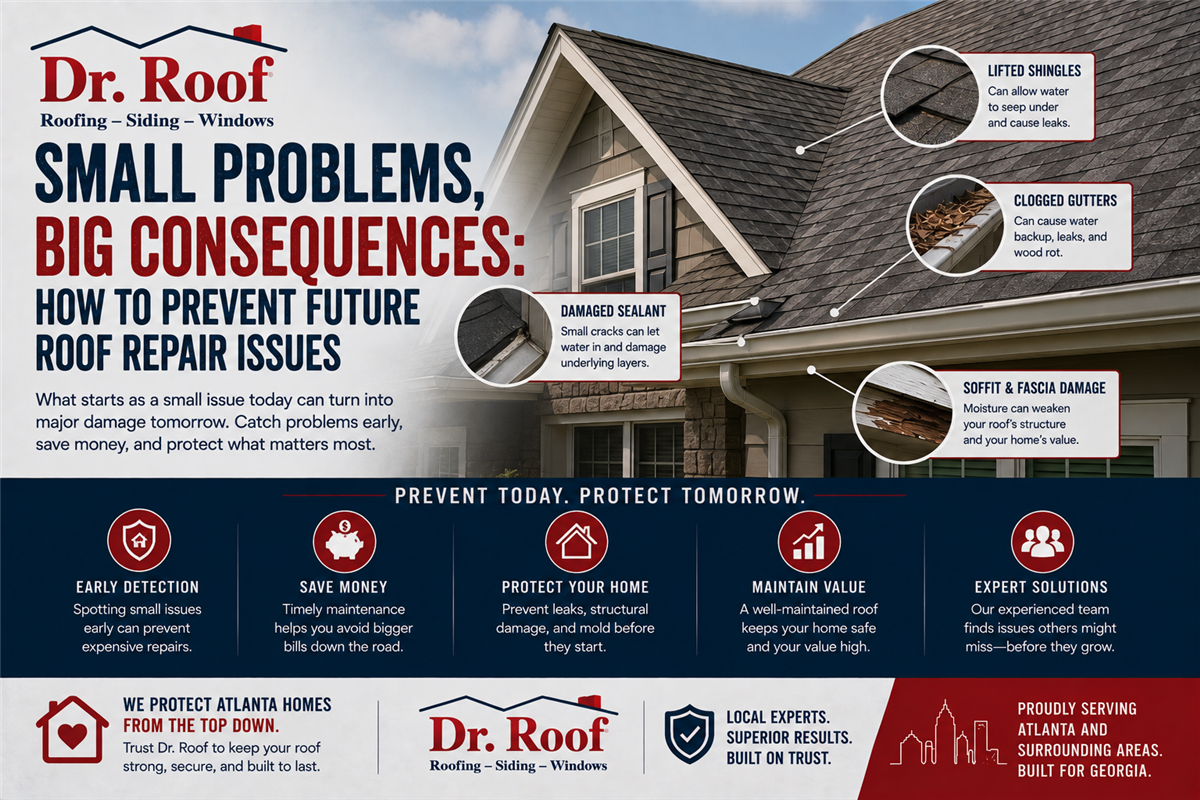
This article gives Atlanta homeowners practical guidance for preventing future roof repair issues. It challenges the common belief that minor roof problems can be ignored until they become visible leaks, missing shingles, or emergency repairs.
With expert insight from Dr. Roof, homeowners can better understand the value of preventative roof maintenance, early inspections, asphalt shingle care, and working with an experienced Georgia roofing company to protect their home and avoid more extensive repair needs.
Executive Summary: The Peril of Delay and Proactive Solutions
Many homeowners operate under a costly misconception: a small roof issue is not a real problem until it becomes obvious.
That “fix it later” mindset can allow minor concerns to turn into larger roof repair needs. A loose shingle, worn flashing, clogged gutter, or small area of granule loss may not seem urgent at first, but those issues can worsen over time.
At Dr. Roof, we have served Atlanta-area homeowners since 1988, and we have seen how small roofing concerns can grow when they are not addressed early.
A proactive approach is one of the best ways to protect your home. Regular inspections, seasonal maintenance, and timely roof repair can help reduce the risk of leaks, decking damage, attic moisture, and emergency repairs.
Background: The Misguided “Fix It Later” Mentality
It is easy to delay roof maintenance when there is no active leak.
Many homeowners assume that if water is not dripping from the ceiling, the roof is still performing properly. Unfortunately, roof damage often begins long before it becomes visible inside the home.
Asphalt shingles may lose granules, flashing may loosen, pipe boots may crack, and gutters may back up during heavy rain. These problems can allow moisture to enter slowly, affecting insulation, roof decking, drywall, or attic spaces over time.
Waiting for visible signs of damage may mean the issue has already spread.
Preventing future roof repair problems starts with recognizing that small roof concerns deserve attention before they become major disruptions.
The Challenge: Busting the Myth of Maintenance-Free Roofs
Another common misconception is that roofs are maintenance-free once they are installed or repaired.
Even a well-installed roofing system needs regular attention. Georgia weather can be hard on roofs, especially with heat, humidity, heavy rain, wind, hail, falling branches, and seasonal storms.
Over time, these conditions can affect asphalt shingles, flashing, gutters, vents, sealants, and roof penetrations.
A roof is a system, and every part of that system plays a role in protecting the home.
Preventative maintenance helps homeowners identify small issues early, including:
Missing or lifted asphalt shingles
Granule loss
Cracked pipe boots
Damaged flashing
Clogged gutters
Loose ridge caps
Moss or algae growth
Soft spots or sagging areas
Attic moisture
Storm damage
Drainage problems
A trusted Georgia roofing company can help homeowners understand which issues need immediate attention and which areas should be monitored.
The Approach: Dr. Roof's Proactive Health Strategy
Dr. Roof encourages homeowners to think about roof care as ongoing protection, not just emergency response.
Preventing future roof repair issues does not mean worrying about the roof every day. It means staying aware, scheduling professional inspections, and responding promptly when warning signs appear.
Our approach focuses on identifying the source of a problem, not just the visible symptom.
For example, a water stain may come from damaged flashing, worn asphalt shingles, a cracked pipe boot, clogged gutters, or ventilation-related condensation. The right solution depends on the cause.
As a GAF Master Elite Certified Contractor, Dr. Roof brings professional training, installation knowledge, and decades of Atlanta-area roofing experience to roof inspections, roof repair, and roof replacement recommendations.
Implementation: The Roswell Client Case Study
Consider a homeowner in Roswell who noticed a small sag near the chimney after a season of heavy rain.
At first, the issue seemed minor. There was no active leak inside the home, so the homeowner decided to wait and monitor it.
Over time, additional rain made the problem worse. What started as a small concern near the chimney later revealed damaged flashing, moisture intrusion, and localized decking issues.
This type of situation is common because chimney flashing, valleys, roof penetrations, and gutter lines are vulnerable areas. If water begins entering around those points, the damage may not be obvious right away.
A professional inspection earlier in the process could have helped identify the issue before it became more involved.
Results: The Real Cost of Delayed Action
Delaying roof repair can turn a manageable issue into a more expensive project.
A small flashing repair, pipe boot replacement, or asphalt shingle repair may be relatively straightforward when caught early. But if moisture spreads, homeowners may also face damaged decking, attic insulation problems, drywall stains, mold or mildew concerns, or more extensive roof repair needs.
The cost of waiting is not always limited to the roof itself.
Delayed roof repair can affect:
Attic insulation
Ceilings and drywall
Roof decking
Fascia and soffits
Gutters and drainage
Interior finishes
Structural components
Home value
Curb appeal
Long-term roof performance
Preventative roof maintenance helps homeowners reduce the risk of these larger problems by addressing vulnerabilities before they spread.
Key Takeaways: Lessons for Long-Term Roof Integrity
The belief that a roof is fine until it visibly fails can be costly.
A healthy roofing system depends on regular care, timely inspections, and fast attention to small problems.
Homeowners should remember:
Small roof issues can grow over time
Asphalt shingles should be checked for lifting, cracking, and granule loss
Flashing is a common source of leaks
Clogged gutters can create roof and fascia damage
Attic moisture may signal ventilation or leak concerns
Storm damage may not be visible from the ground
Annual inspections can help identify hidden issues
Timely roof repair can help protect the full roofing system
A proactive plan helps extend the life of the roof, protect the home’s structure, and reduce the stress of unexpected repair needs.
How to Apply: Your Actionable Prevention Plan
For homeowners who want to prevent future roof repair problems, a simple maintenance plan can make a meaningful difference.
Conduct Seasonal Visual Inspections. Look at your roof from the ground after major weather changes. Check for missing asphalt shingles, lifted shingles, sagging areas, damaged flashing, debris buildup, or visible storm damage. Use binoculars if needed, but do not climb onto the roof.
Keep Gutters Clear. Clean leaves, pine needles, twigs, and debris from gutters and downspouts. Clogged gutters can cause water to back up near the roofline, damaging fascia, soffits, decking, and nearby roofing materials.
Trim Overhanging Branches. Branches that touch or hang over the roof can scrape asphalt shingles, drop debris, and increase the risk of damage during storms. Trimming them back can help protect the roof surface.
Watch for Interior Warning Signs. Check the attic and upper ceilings for water stains, musty odors, damp insulation, dark spots on decking, or signs of moisture. These clues may point to roof repair needs before a larger leak develops.
Schedule Annual Professional Inspections. A professional roofing inspection can identify hidden problems that may not be visible from the ground. Dr. Roof evaluates asphalt shingles, flashing, vents, gutters, pipe boots, drainage, attic conditions, and other important roofing system components.
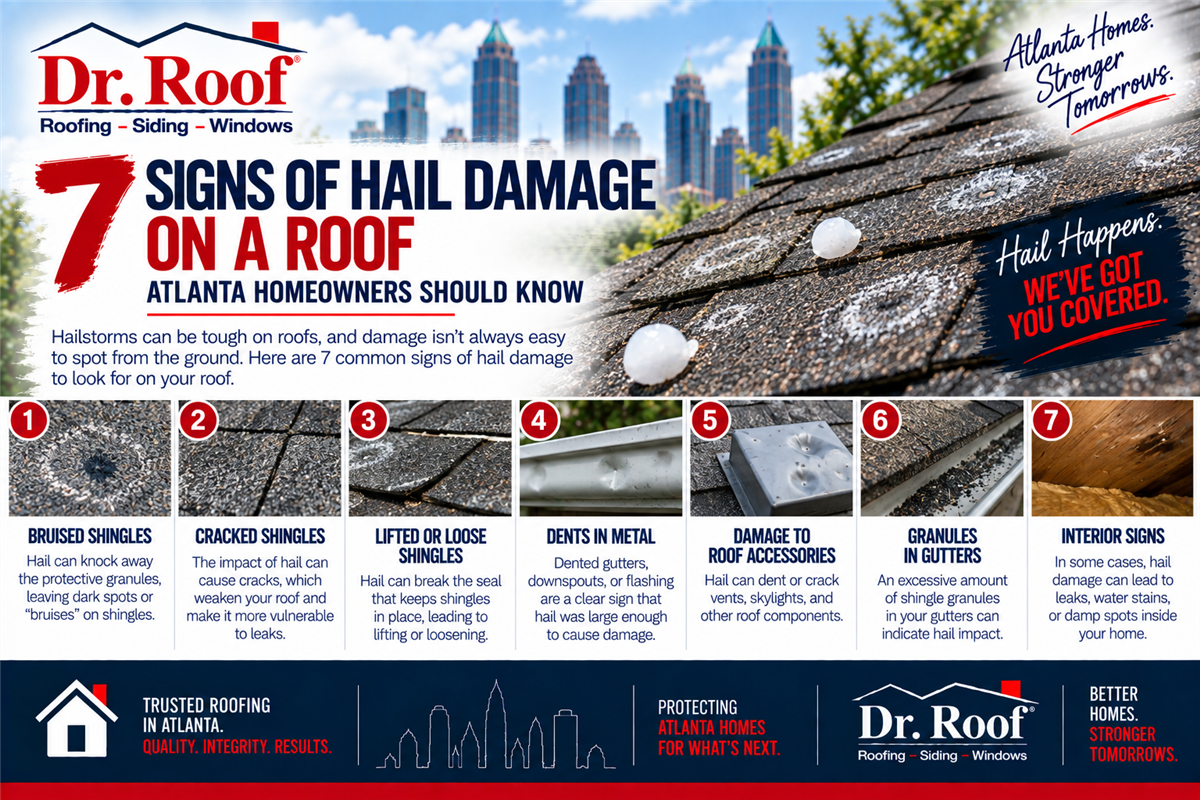
Act Quickly After Storms. After hail, strong winds, or heavy rain, schedule a roof inspection if you notice missing shingles, granules near downspouts, dented gutters, fallen limbs, or new leaks. Dr. Roof can provide photos, written findings, and repair or replacement recommendations to help support the insurance claim process when storm damage may be involved.
Preventing future roof repair issues starts with early awareness and the right professional guidance.
Dr. Roof has served Atlanta-area homeowners since 1988, providing roof inspections, roof repair, roof replacement, storm damage documentation support, and exterior home services.
As an experienced Georgia roofing company, Dr. Roof understands how local weather affects asphalt shingles and full roofing systems. Our team helps homeowners identify problems early, make informed decisions, and protect their homes with quality workmanship.
If you want to stay ahead of roof repair issues, contact Dr. Roof to schedule a professional roof inspection and get clear guidance on your home’s roofing needs.
Frequently Asked Questions
Does delaying a small roof leak really lead to bigger problems?
Yes, absolutely. A small leak is a symptom of an underlying issue, like a compromised shingle or flashing. If left unaddressed, water can penetrate deeper into your roof decking, insulation, and even your home's interior, leading to mold growth, structural damage, and significantly more expensive repairs. Proactive fixes are crucial for preventing future roof repair disasters.
Is professional roof maintenance necessary if my roof is relatively new?
Even new roofs benefit from professional maintenance. While a new roof has a long lifespan, environmental factors like storms, debris accumulation, and UV exposure can still cause minor wear and tear. Regular inspections help identify and address these small issues before they become major concerns, crucial for preventing future roof repair needs and maximizing your roof's warranty.
What's the most common myth about preventing future roof repair?
One of the most common myths is believing that a roof only needs attention when there's obvious, visible damage like a leak or missing shingles. The reality is that many issues, such as worn flashing, granule loss, or minor shingle damage, are subtle but progressive. Ignoring these small signs is a primary reason for costly emergency repairs later on.
How often should I have my roof professionally inspected to prevent issues?
For optimal proactive care, we recommend a professional roof inspection at least once a year. This allows experts to identify subtle damage, assess the overall condition, and recommend timely interventions. After severe weather events, an additional inspection is highly advisable to catch any storm-related damage early.
What role do GAF Master Elite contractors play in preventing future roof repair?
GAF Master Elite contractors, like Dr. Roof, bring a higher level of expertise, training, and quality assurance. Our certification means we follow best practices for installation and repair, and we understand the nuances of various roofing systems. This expert knowledge is invaluable in identifying potential vulnerabilities and implementing solutions that effectively prevent future roof repair issues, backed by superior warranties.
Subscribe to Dr. Roof's Blog







Comments