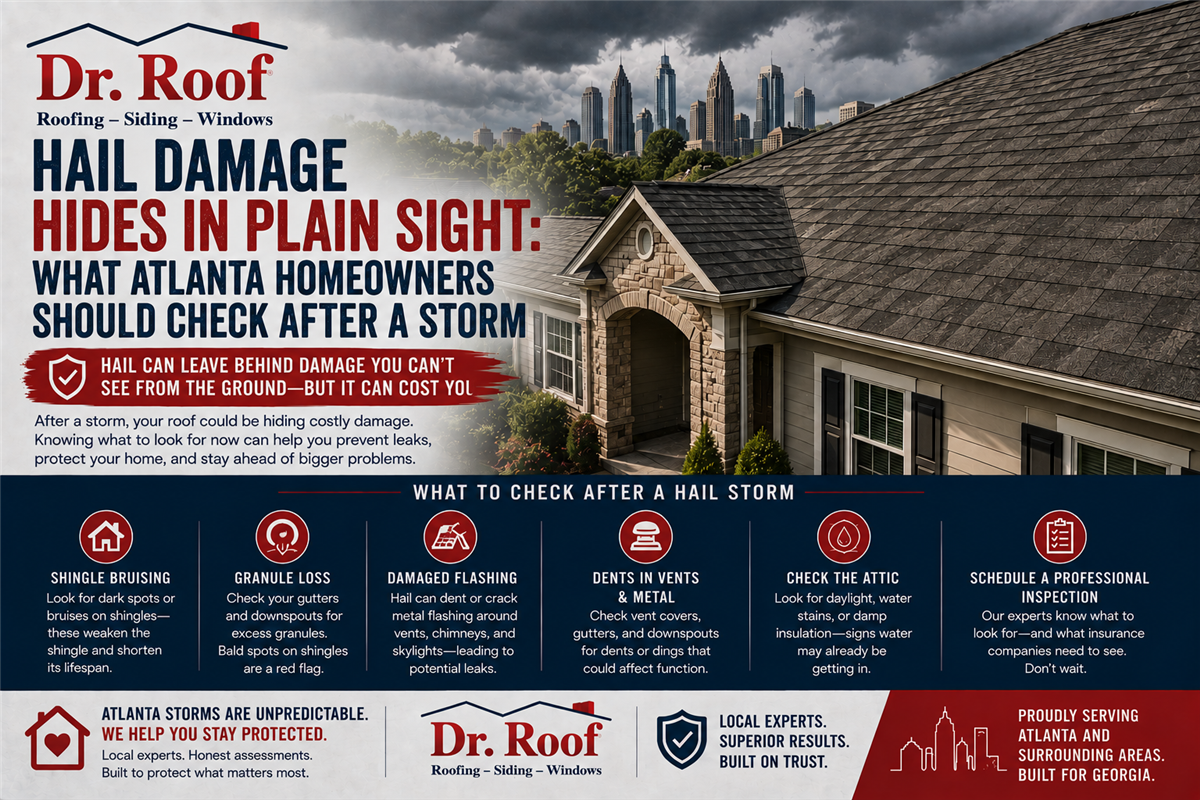
This guide challenges the common belief that hail damage is always obvious. For Atlanta homeowners, it explains how hail can affect asphalt shingles, gutters, siding, windows, and other exterior components in ways that may not be visible from the ground.
It is designed for homeowners seeking expert guidance after severe weather, including how to recognize common signs of hail damage on roofs, when to schedule a professional inspection, and why working with an experienced Georgia roofing company like Dr. Roof can help protect the home through timely storm restoration and roof repair recommendations.
Unmasking the Hidden Threat: What You'll Discover
After a strong storm moves through the Atlanta metropolitan area, many homeowners look outside, see no obvious missing shingles, and assume their roof is fine.
That is one of the most common misconceptions about hail damage.
Hail damage on roofs is not always dramatic. It does not always leave large holes, broken shingles, or obvious damage that can be seen from the yard.
In many cases, hail affects asphalt shingles in subtle ways. It may loosen granules, bruise the shingle mat, weaken protective layers, or create impact marks that are difficult to identify without a close inspection.
As a GAF Master Elite Certified Contractor serving Atlanta-area homeowners since 1988, Dr. Roof understands how hail, wind, and severe weather can affect roofing systems over time.
A professional inspection can help identify damage early before it leads to leaks, water intrusion, or more extensive roof repair needs.
Essential Preparations for Post-Storm Roof Assessment
Many homeowners believe that if their roof looks intact from the ground, it has not been damaged.
Unfortunately, that is not always true.
Hail can strike asphalt shingles with enough force to compromise their protective surface without immediately creating a leak. The roof may appear normal at first, but the damaged areas can weaken over time as they are exposed to sun, rain, humidity, and future storms.
Understanding how hail affects roofing materials is an important part of protecting your home.
The severity of hail damage can depend on:
Hail size
Wind speed
Storm direction
Roof age
Asphalt shingle condition
Roof slope
Tree coverage
Prior roof wear
Material type
Duration of the storm
Even smaller hail can cause problems when paired with strong winds or older asphalt shingles.
That is why a post-storm roof inspection is one of the best ways to understand the true condition of the roofing system.
Identifying the Silent Signs of Hail Damage
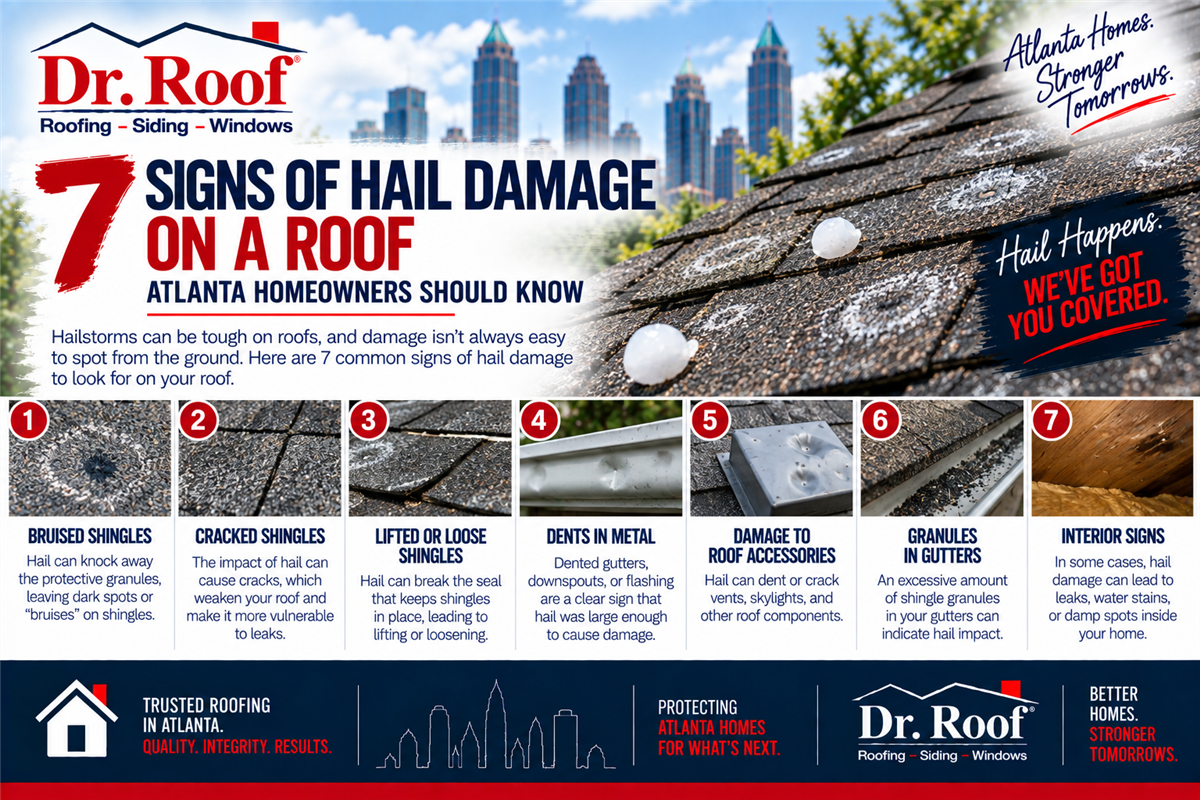
One of the most common signs of hail damage on asphalt shingles is granule loss.
Granules protect shingles from sunlight, weather exposure, and daily wear. When hail knocks granules loose, the exposed areas may appear as dark spots, shiny marks, or uneven patches on the shingle surface.
While granule loss may seem minor, it can reduce the shingle’s protective function and shorten the life of the roof.
Another sign of hail damage is bruising. A bruised shingle may feel soft or weakened in the impact area. This means the mat beneath the surface may have been damaged, even if the shingle has not fully cracked.
Other signs of hail damage on roofs may include:
Dark impact marks on asphalt shingles
Missing or loosened granules
Soft spots or bruising
Cracked shingles
Lifted or weakened shingles
Exposed asphalt matting
Dented ridge caps
Damaged vents or roof accessories
Bent or dented flashing
New leaks after a storm
Granules collecting in gutters or downspouts
These signs are not always easy to spot from the ground. A trained roofing professional can safely inspect the roof surface and identify whether the damage is cosmetic, functional, or potentially serious.
Beyond the Roof: Other Affected Areas
Hail does not only affect the roof surface.
Gutters and downspouts are often hit during a hail storm and may show dents, dings, or damage. If gutters are bent, loosened, or misaligned, they may not drain properly, which can create additional water problems around the home.
Siding can also show signs of hail impact. Homeowners may notice cracks, chips, dents, paint damage, or small impact marks.
Windows, window screens, trim, fascia, soffits, outdoor light fixtures, HVAC units, decks, fences, and exterior paint may also show signs of storm damage.
These areas can help indicate how severe the hail storm was and whether the roof should be inspected more closely.
Common exterior signs to check after a hail storm include:
Dented gutters
Dented downspouts
Granules near downspout exits
Damaged window screens
Cracked or chipped siding
Impact marks on painted surfaces
Dented roof vents
Damaged metal flashing
Dents on outdoor HVAC units
Broken or damaged exterior fixtures
If multiple exterior areas show damage, the roof may have been affected as well.
Key Insights from Real-World Impact
Many homeowners do not realize hail damage is present until a professional inspection reveals it.
A homeowner may see no missing shingles, no active leaks, and no major exterior damage. But once the roof is inspected closely, the contractor may find bruised asphalt shingles, granule loss, damaged ridge caps, or dented vents.
Without early detection, those weakened areas may continue to deteriorate. Over time, the roof can become more vulnerable to leaks, moisture intrusion, and additional storm restoration needs.
This is why Dr. Roof encourages homeowners to schedule a professional inspection after significant hail, especially if neighboring homes are being repaired or if dents and impact marks are visible on gutters, siding, or other exterior surfaces.
A detailed inspection helps homeowners understand whether their roof needs repair, replacement, or continued monitoring.
Don't Fall for These Post-Storm Misconceptions
One of the most common post-storm mistakes is assuming hail damage must be obvious.
Another mistake is waiting too long to schedule a roof inspection.
Some homeowners believe minor hail damage can wait because there is no active leak. But small impact areas can weaken asphalt shingles and expose the roof to future problems.
Common misconceptions include:
“If I do not see missing shingles, my roof is fine.”
“Hail damage always causes an immediate leak.”
“Small hail cannot damage asphalt shingles.”
“I can inspect the roof accurately from the ground.”
“Dented gutters do not matter.”
“Storm damage can wait until there is a leak.”
“All hail damage looks the same.”
The safest approach is to document what you can see from the ground and call a professional Georgia roofing company for a roof inspection.
Homeowners should never climb onto a roof after a storm. Wet surfaces, loose granules, damaged shingles, and unstable areas can create serious safety risks.
Proactive Steps for Effective Storm Restoration
When hail damage may be involved, choosing the right storm restoration partner matters.
Dr. Roof’s GAF Master Elite certification reflects professional training, installation standards, and a commitment to quality workmanship. Our team understands how Georgia storms affect asphalt shingles and full roofing systems.
Here is a practical step-by-step process for homeowners after a hail storm:
Document Visible Damage Safely. Take photos or videos from the ground of dented gutters, damaged siding, broken screens, granules near downspouts, or visible roof concerns. Do not climb onto the roof.
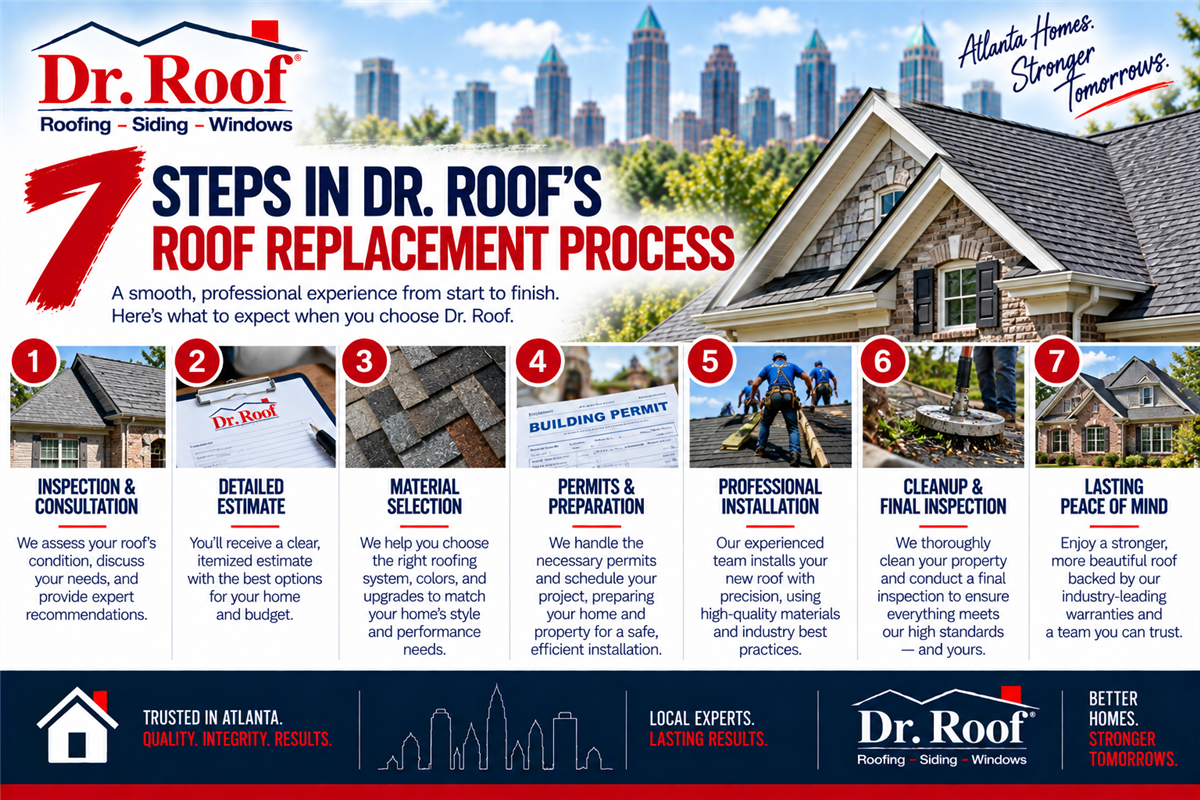
Schedule a Professional Roof Inspection. Dr. Roof can inspect the roofing system, including asphalt shingles, ridge caps, flashing, vents, gutters, and signs of water intrusion.
Review the Findings. After the inspection, homeowners should receive clear information about what was found, what it means, and whether roof repair, roof replacement, or monitoring may be recommended.
Request Storm Damage Documentation. If storm damage is present, Dr. Roof can provide photos, written findings, and repair or replacement recommendations to help support the insurance claim process.
Plan the Next Step. Every roof and every insurance claim is different. The goal is to understand the roof’s condition and make an informed decision based on professional findings.
Storm restoration should be handled with care, documentation, and clear communication. A rushed or incomplete assessment can miss damage that may become more serious later.
Protecting Your Home: Your Next Steps
Do not let hidden hail damage put your home at risk.
Even when the roof looks fine from the ground, hail may have affected asphalt shingles, flashing, vents, gutters, or other exterior components. Identifying damage early can help reduce the risk of leaks, water intrusion, and more extensive roof repair needs.
Dr. Roof has served Atlanta-area homeowners since 1988, providing professional roof inspections, roof repair, roof replacement, storm damage documentation support, and exterior home services.
As an experienced Georgia roofing company, Dr. Roof understands how local weather affects roofing systems and how to identify common signs of hail damage on roofs.
If your home was recently hit by hail, contact Dr. Roof to schedule a professional roof inspection and get clear guidance on the best next step for protecting your home.
Frequently Asked Questions
Is hail damage on roofs Atlanta always obvious to the naked eye?
No, this is a common misconception. While large hailstones can cause visible dents or missing shingles, many signs of hail damage on roofs, such as granule loss, shingle bruising, or minor cracks, are subtle and require a professional, up-close inspection to identify accurately. Relying solely on a ground-level view can lead to overlooked damage.
Can minor hail damage truly lead to major roof problems?
Absolutely. Even seemingly minor hail damage, like granule loss or bruising, compromises the integrity of your roofing materials. Over time, these weakened areas can allow UV rays to degrade the asphalt, lead to water infiltration, and accelerate the aging process of your roof, eventually resulting in leaks, mold, and costly structural damage if not addressed through timely storm restoration.
Is waiting to inspect hail damage a safe approach?
Waiting to inspect potential hail damage is not recommended. Hail damage can worsen with subsequent weather events, and delaying an inspection can make it harder to process insurance claims. Many policies have time limits for filing claims, so prompt assessment by a qualified expert ensures you meet deadlines and prevent further deterioration of your roof's condition.
Does hail damage only affect asphalt shingles?
Another myth debunked: hail can damage a wide range of roofing materials, not just asphalt shingles. Metal roofs can suffer dents and chipped coatings, while tile roofs can crack or chip. Furthermore, hail often impacts other exterior elements such as gutters, siding, windows, and even air conditioning units, requiring comprehensive assessment for complete storm restoration.
Can I accurately assess hail damage myself from the ground?
While you can certainly look for obvious signs like large dents on metal or missing shingles from the ground, accurately assessing the full extent of hail damage on roofs, especially the subtle and hidden forms, is best left to trained professionals. Experts have the experience, tools, and safety protocols to conduct a thorough roof inspection, ensuring all compromised areas are identified and properly documented for storm restoration.
Subscribe to Dr. Roof's Blog






Comments