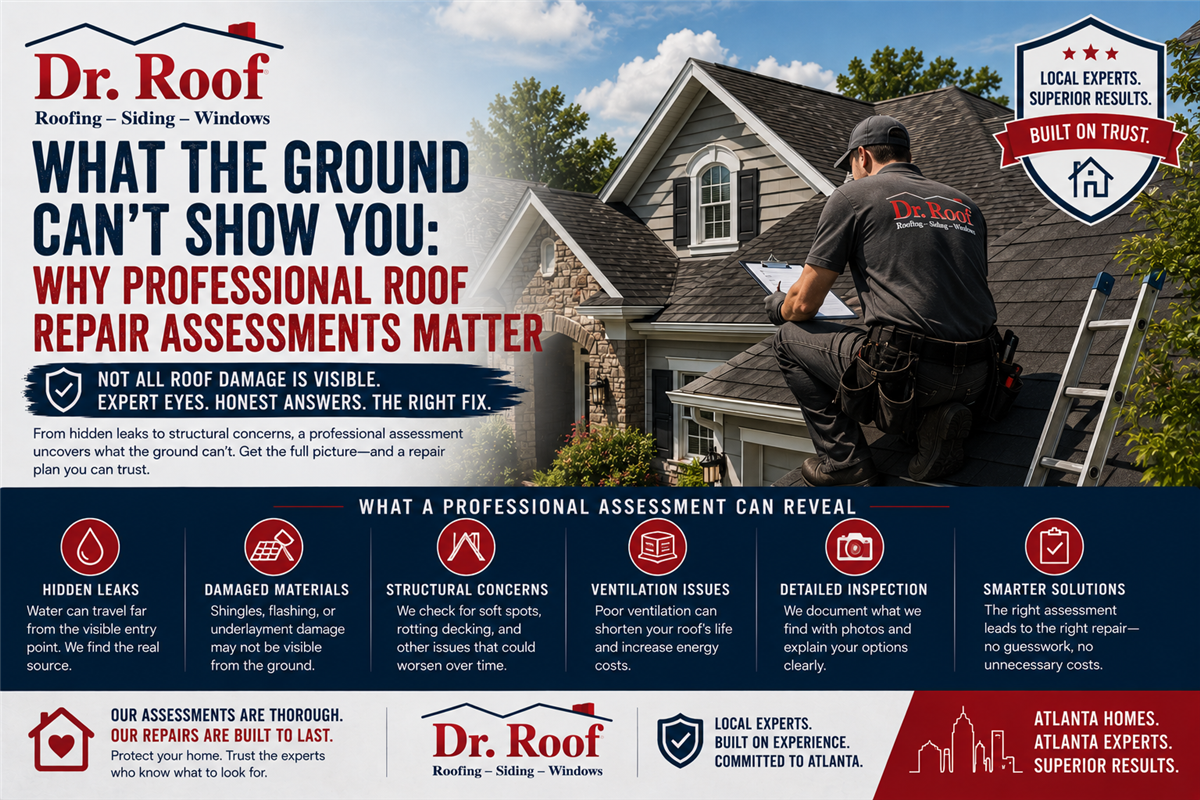
This article challenges the common belief that homeowners can accurately assess roof repair needs on their own. For Atlanta homeowners, it explains why a quick visual check from the ground may miss hidden damage, especially on asphalt shingles, flashing, gutters, and roof penetrations. With insight from Dr. Roof, homeowners can better understand why working with an experienced Georgia roofing company is essential for identifying damage early and protecting the home with timely, effective roof repair.
The Widespread Myth of DIY Roof Checks
Many homeowners in the Atlanta metropolitan area believe a quick look from the yard is enough to determine whether their roof needs repair.
While a ground-level check can sometimes reveal obvious concerns, such as missing shingles or visible storm debris, it does not provide a complete picture of the roof’s condition.
Roofing systems are more complex than they appear. Asphalt shingles, underlayment, flashing, vents, gutters, pipe boots, valleys, decking, and attic ventilation all work together to protect the home.
A problem in one area can affect the entire system.
Relying only on what can be seen from the ground may allow hidden damage to go unnoticed. Over time, small concerns can turn into roof leaks, damaged decking, attic moisture, interior stains, or more extensive roof repair needs.
For homeowners wondering how to assess a roof for necessary repairs, the most important answer is this: a professional roof inspection goes much deeper than a visual glance.
From Minor Stain to Major Discovery
Homeowners often assume their roof is in good condition until a visible leak appears.
But roof damage can begin long before water drips into the living space.
For example, a homeowner may notice a small stain on an attic ceiling after heavy rain and assume it is minor condensation. From inside the home, the issue may not seem urgent.
However, a professional roof repair assessment may reveal something more serious, such as deteriorated flashing around a chimney, lifted asphalt shingles, cracked pipe boots, or subtle hail damage that cannot be seen from the ground.
These issues can allow water to enter slowly over time. If left unaddressed, the damage may spread to insulation, decking, drywall, and structural materials.
That is why early evaluation matters.
A trained roofing professional can inspect both the roof surface and the attic to understand where the moisture is coming from and what type of roof repair may be needed.
Uncovering the Unseen: Critical Roof Issues
The common myth is that roof problems are always obvious.
Many homeowners look for missing shingles, a large hole, or an active leak before calling a contractor. But many roof repair needs are far more subtle.
Common issues that may be missed during a DIY roof check include:
Lifted or creased asphalt shingles
Granule loss
Cracked shingles
Soft or weakened roof decking
Damaged flashing
Worn pipe boots
Cracked sealant around roof penetrations
Hail impact marks
Loose ridge caps
Blocked gutters
Poor attic ventilation
Moisture stains in the attic
Algae, moss, or fungal growth
Signs of previous improper repairs
Even something as simple as granule loss can be meaningful. Granules help protect asphalt shingles from sun exposure and weather. When they begin collecting heavily in gutters or at the base of downspouts, it may indicate aging or damaged shingles.
A professional roof repair assessment helps identify these issues early, before they become larger and more expensive problems.
Beyond the Obvious: The Professional Inspection Advantage
A professional roof inspection is a structured process designed to evaluate the entire roofing system.
Instead of relying on one visible symptom, an experienced Georgia roofing company looks at how every part of the roof is performing.
This is especially important in the Atlanta area, where roofs are exposed to heat, humidity, heavy rain, hail, wind, tree debris, and seasonal storms.
Storm damage is not always immediately visible. Hail may bruise asphalt shingles without creating a hole. Wind may lift shingles and weaken seals without fully removing them. Water may enter near flashing and travel before showing up as a stain inside the home.
A professional inspection helps connect those clues and determine the real source of the problem.
That makes the difference between a temporary patch and a roof repair that addresses the actual issue.
Dr. Roof's Systematic Approach to Assessment
Dr. Roof begins each roof repair assessment by looking at the full roofing system, not just one visible area.
Our process may include a ground-level review, roof surface inspection, attic evaluation, gutter check, and documentation of any visible concerns.
Ground-Level and Perimeter Review
The assessment may begin by checking the property for signs of roof wear or storm damage.
This can include loose asphalt shingle pieces, granules near downspouts, displaced flashing, fallen debris, or signs that gutters are not draining properly.
While this step is helpful, it is only the beginning.
Attic Inspection
Inside the attic, roofing professionals look for signs of water intrusion, staining, damp insulation, mold or mildew concerns, dark spots on decking, and ventilation problems.
An attic inspection can help identify whether moisture is coming from an exterior leak or from condensation caused by poor airflow.
This distinction matters because the right solution depends on the true cause.
Roof Surface Examination
On the roof, trained inspectors look closely at asphalt shingles, ridge caps, valleys, flashing, pipe boots, vents, skylights, chimneys, and other penetrations.
This is where many hidden roof repair needs are found.
Lifted shingles, small cracks, exposed fasteners, damaged sealant, loose flashing, or soft areas in the decking may not be visible from the ground, but they can create serious problems if ignored.
Flashing and Penetration Check
Flashing is one of the most important components of a roofing system.
It helps direct water away from vulnerable areas such as chimneys, skylights, walls, valleys, and vents. When flashing is cracked, loose, corroded, or improperly sealed, water can enter beneath the roof surface.
Pipe boots and roof penetrations are also common leak sources. Over time, rubber seals can crack or separate, creating an opening for water.
Gutter and Drainage Review
Gutters and downspouts play a major role in roof performance.
When gutters are clogged, loose, or misaligned, water may back up near the roof edge or overflow into areas where it can damage fascia, soffits, decking, or foundation areas.
A professional assessment considers how water is moving off the roof, not just whether the shingles look intact.
Clear Findings and Recommendations
After the inspection, homeowners should receive clear findings and practical recommendations.
Dr. Roof may provide photos, written notes, and repair or replacement recommendations based on the condition of the roof.
The goal is to help homeowners understand what was found, why it matters, and what next step makes the most sense.
As a GAF Master Elite Certified Contractor, Dr. Roof brings professional training, installation knowledge, and decades of Atlanta-area experience to every roof repair assessment.
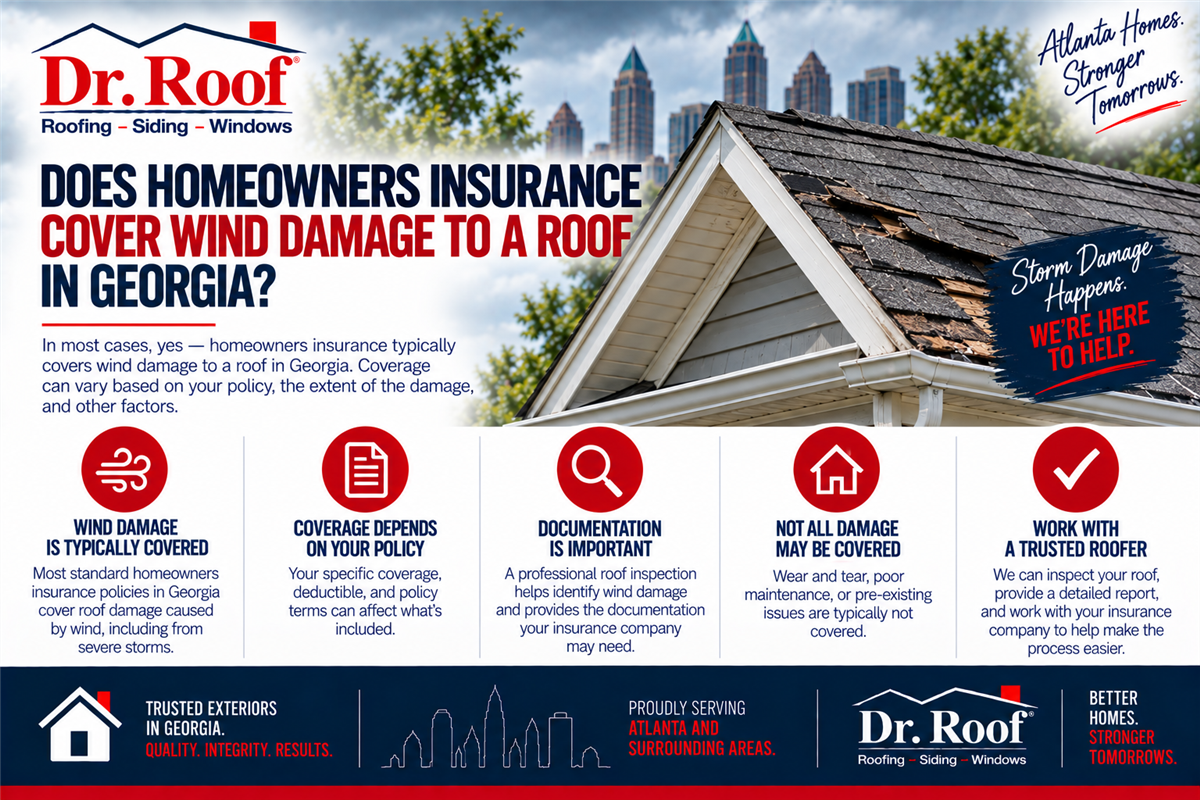
When storm damage is suspected, Dr. Roof can also provide photos, written findings, and repair or replacement recommendations to help support the insurance claim process. Every policy and claim is different, but clear documentation can help homeowners better understand their roof’s condition.
Secure Your Home, Protect Your Investment
A quick glance from the ground can be helpful, but it is not enough to fully assess a roof for necessary repairs.
Hidden damage to asphalt shingles, flashing, pipe boots, gutters, decking, or attic spaces can worsen over time if it is not identified early.
Dr. Roof has served Atlanta-area homeowners since 1988, providing professional roof inspections, roof repair, roof replacement, storm damage documentation support, and exterior home services.
As an experienced Georgia roofing company, Dr. Roof understands how Georgia weather affects asphalt shingles and full roofing systems. Our team helps homeowners identify roof repair needs early and make informed decisions about protecting their homes.
If you are unsure whether your roof needs repair, contact Dr. Roof to schedule a professional roof inspection and get clear guidance based on your home’s actual condition.
Frequently Asked Questions
Why can't I rely on a ground-level inspection for a full roof repair assessment?
A ground-level inspection primarily reveals obvious damage like missing shingles, but it misses many critical issues. Hidden problems such as granular loss, subtle hail damage, or cracked flashing around vents are often only visible through a thorough, on-roof inspection by a trained professional.
Relying solely on a ground view leaves your home vulnerable to unseen damage that can escalate into expensive roof repair.
Are small roof issues truly urgent if they aren't leaking yet?
Absolutely. Small, seemingly insignificant roof issues, even if not actively leaking, can quickly worsen, especially after exposure to harsh weather cycles.
A minor crack in flashing or a lifted shingle allows water to penetrate gradually, leading to rot, mold, and structural damage over time. Addressing these minor concerns promptly through a professional roof repair assessment can prevent extensive, more costly repairs down the line.
How does a professional's roof damage inspection differ from a homeowner's?
A professional's roof damage inspection involves a systematic, multi-point evaluation that includes both exterior and interior attic checks. Experts look for specific indicators of wear, damage, and improper installation, such as subtle shingle defects, flashing integrity, and proper ventilation.
They use their training and experience to identify issues homeowners typically overlook. This detailed process leads to a far more accurate and comprehensive understanding of your roof's condition, crucial for effective roof repair.
What common problems are often missed during a homeowner's roof repair assessment?
Homeowners frequently miss issues like compromised flashing around chimneys and skylights, subtle hail or wind damage that causes granular loss but no visible holes, soft spots indicating rotted decking, and improper attic ventilation.
These often-overlooked problems can significantly compromise your roof's lifespan and lead to hidden leaks or structural damage that only a professional roof repair assessment can uncover. Catching these early saves significant future expense.
Does a professional roof repair assessment always mean I need a new roof?
Not at all. The primary goal of a professional roof repair assessment is to accurately diagnose the extent of any damage and recommend the most appropriate solution.
Often, with timely identification, minor repairs or targeted section replacements are sufficient to extend your roof's life and restore its protective function. A reputable contractor will always prioritize repair options if they are truly viable and cost-effective, before recommending a full replacement.
Subscribe to Dr. Roof's Blog




Comments