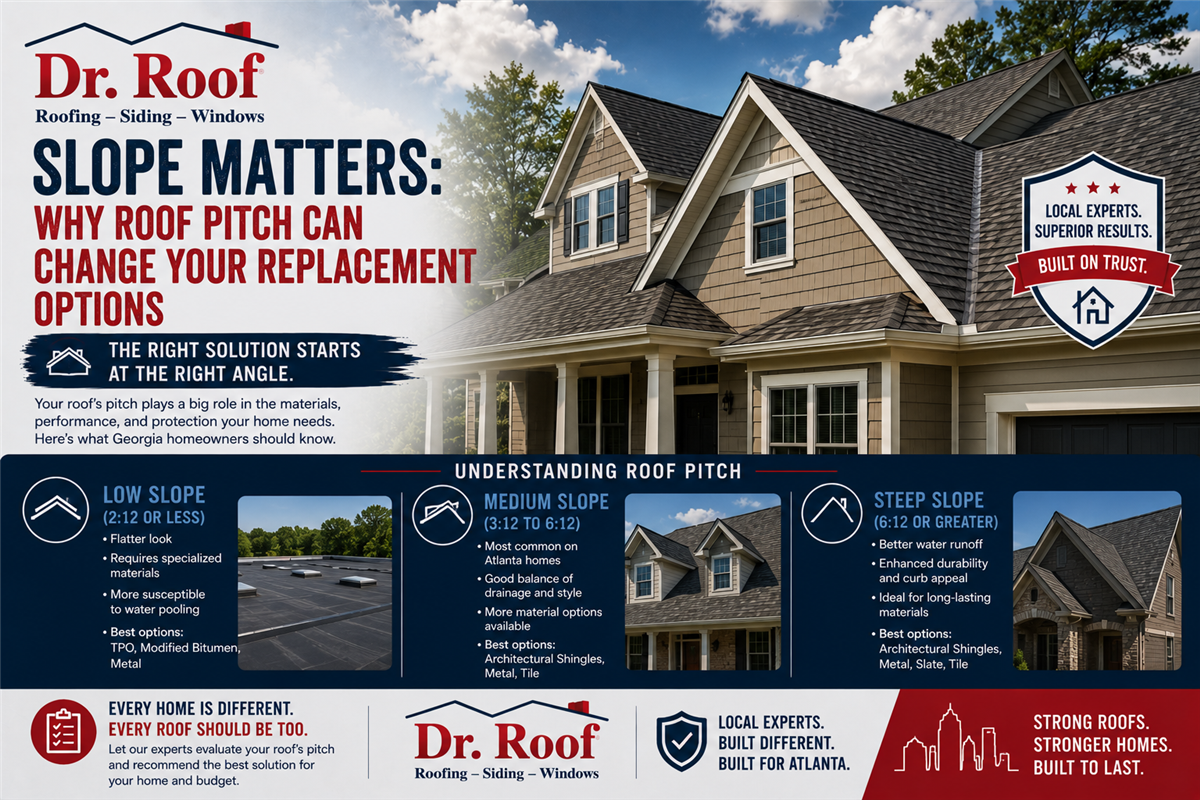
For Atlanta homeowners considering a roof replacement, this article explains why roof pitch is more than a technical detail. It challenges the common belief that all roofs can use the same materials and installation methods, and it highlights how roof slope affects asphalt shingles, drainage, installation requirements, warranty considerations, and long-term home protection. With guidance from Dr. Roof, homeowners can better understand how an experienced Georgia roofing company evaluates roof pitch before recommending replacement options.
The Persistent Myth of Universal Roof Pitch
When homeowners begin planning a roof replacement, they often focus on shingle color, material style, cost, and curb appeal. Those are important decisions, but one key factor is often overlooked: roof pitch.
Roof pitch refers to the slope or angle of the roof. It affects how water drains, which roofing materials can be used, how the roof should be installed, and how the finished system will perform over time.
A common misconception is that roof replacement simply means removing the old roofing materials and installing new ones in the same general way, regardless of slope.
In reality, roof pitch plays a major role in determining the right replacement approach.
For Atlanta homeowners, understanding roof pitch requirements can help prevent material mismatches, drainage issues, leaks, and premature roof problems.
Unpacking the True Role of Roof Pitch
Roof pitch influences the way rainwater, debris, and moisture move across the roof.
A steeper roof sheds water more quickly, while a low-slope roof drains more slowly. This matters because some materials, including many asphalt shingles, are designed to perform best within certain pitch ranges.
If the wrong material is installed on the wrong roof slope, the roof may not drain properly. Water can linger, back up, or work beneath the roofing materials, increasing the risk of leaks and damage.
Roof pitch can also affect:
Asphalt shingle suitability
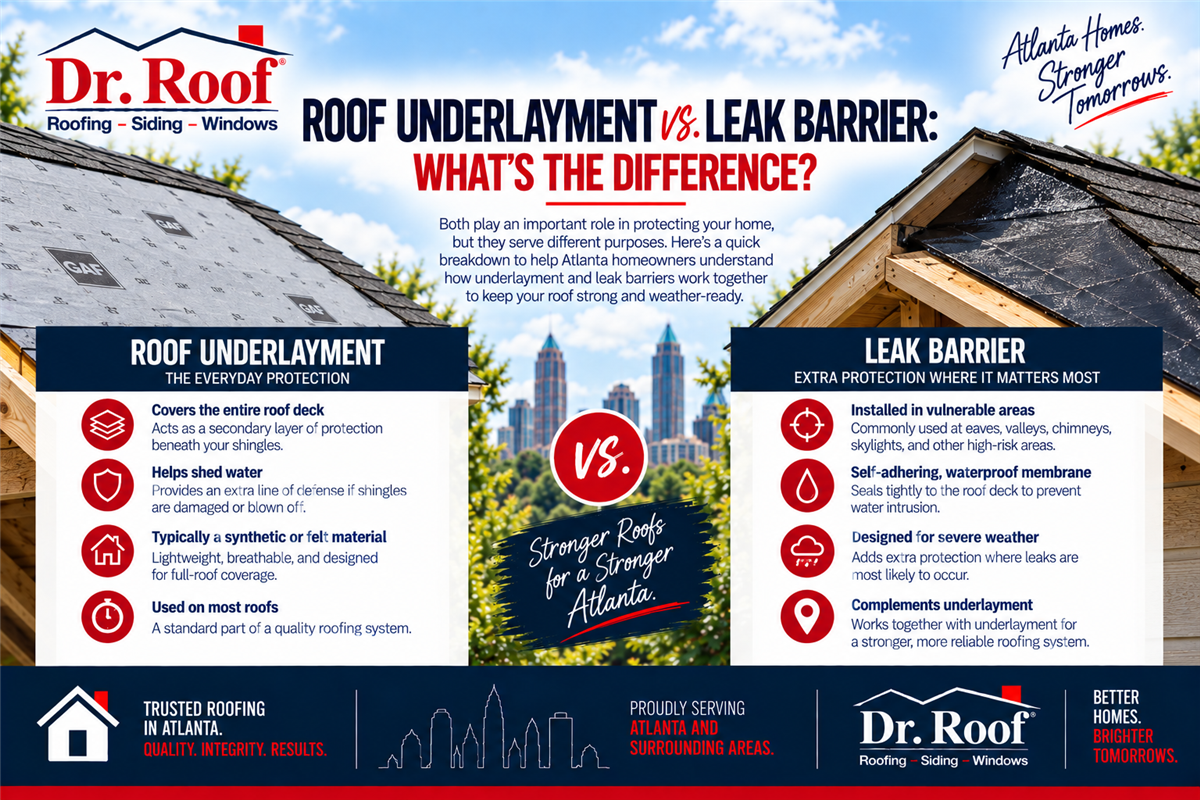
Underlayment requirements
Drainage performance
Installation methods
Labor and safety needs
Warranty considerations
Roof repair access
Long-term maintenance
Overall roof replacement cost
A trusted Georgia roofing company should evaluate roof pitch before recommending materials or finalizing a roof replacement plan.
A Real-World Lesson: The Alpharetta Homeowner's Dilemma
Consider a homeowner in Alpharetta planning a roof replacement. They may love the appearance of architectural asphalt shingles and assume the same product can work on every section of their home.
However, during a professional inspection, the contractor may find that part of the roof has a very low slope.
That detail matters.
Standard asphalt shingles may not be the right fit for certain low-slope areas because they rely on proper water shedding to perform as intended. If installed where the pitch is too low, water may not move away quickly enough, increasing the risk of moisture intrusion and premature failure.
In that situation, the better recommendation may involve a roofing solution designed specifically for lower-slope conditions.
This example shows why roof pitch should never be ignored during roof replacement planning. The best material is not only the one that looks good. It is the one that fits the structure and performs properly for the home.
Navigating Material Mismatches and Warranty Risks
Different roofing materials have different pitch requirements.
Asphalt shingles are one of the most common roof replacement materials for Atlanta homes because they offer strong value, design flexibility, and reliable protection when installed correctly. However, they are not appropriate for every roof slope.
Low-slope areas may require special underlayment, different installation methods, or alternative roofing systems depending on the structure and project details.
Installing asphalt shingles outside recommended pitch guidelines can create problems such as:
Water backing up beneath shingles
Premature material wear
Roof leaks
Decking damage
Mold or mildew concerns
Warranty complications
Repeated roof repair needs
Homeowners may be surprised to learn that manufacturer warranty coverage can depend on proper material selection and installation. If a product is installed in a way that does not meet requirements, warranty protection may be affected.
That is why Dr. Roof evaluates roof pitch, material compatibility, ventilation, flashing, and installation needs before recommending a replacement system.
Crucial Insights for Long-Term Roof Performance
Roof pitch affects more than material selection. It can also influence the complexity of the roof replacement project.
A steep roof may require additional safety precautions, specialized equipment, and more careful installation planning. A low-slope roof may require different waterproofing details and drainage considerations.
Roof design also matters. Homes with multiple rooflines, valleys, dormers, skylights, chimneys, or additions may have different pitch conditions across different sections of the roof.
This is why a professional inspection is so important.
A roof replacement should be designed for the actual structure, not based on assumptions. The contractor should understand how water moves across the roof, where vulnerable areas exist, and which materials are appropriate for each section.
For asphalt shingles to perform properly, they must be paired with the right pitch, underlayment, flashing, ventilation, and installation practices.
A strong roofing system is built from all of these details working together.
The Unseen Impact of Pitch on Your Home's Integrity
Roof pitch has a direct impact on your home’s protection.
When pitch and material are properly matched, the roof can shed water more effectively, reduce the risk of moisture intrusion, and support the long-term performance of the roofing system.
When they are mismatched, the home may become more vulnerable to leaks, rot, damaged decking, attic moisture, and repeated roof repair needs.
Dr. Roof approaches roof replacement with the full system in mind. As a GAF Master Elite Certified Contractor, our team evaluates more than the visible surface. We consider roof pitch, asphalt shingles, underlayment, flashing, ventilation, roof penetrations, drainage, and the overall condition of the home’s roofing system.
This helps homeowners receive recommendations that fit their home, not a generic solution.
As an experienced Georgia roofing company serving the Atlanta area since 1988, Dr. Roof understands how Georgia weather affects roofing systems and why proper pitch evaluation is essential for lasting protection.
Making Informed Decisions for Your Roof Replacement
Roof pitch is not just a technical measurement. It is a key factor in choosing the right roof replacement material and installation approach.
Before selecting asphalt shingles or another roofing option, homeowners should understand how their roof slope affects drainage, performance, warranty guidance, and long-term durability.
A professional roof inspection can help identify the roof’s pitch, evaluate existing conditions, and determine which replacement options make the most sense.
Dr. Roof helps Atlanta homeowners compare roof replacement options with clear guidance, quality workmanship, and decades of local roofing experience.
If you are planning a roof replacement, contact Dr. Roof to schedule a professional inspection and learn which roofing solution fits your home’s pitch, style, and long-term protection needs.
Frequently Asked Questions
Is a low-pitch roof always cheaper for a roof replacement?
Many believe low-pitch roofs are always cheaper due to less visible material, but this is often a myth. While they might use less material visually, low-pitch roofs require specialized, often more expensive, membrane systems like TPO or modified bitumen. These materials and their installation demand specific expertise, which can sometimes result in a higher overall cost compared to a conventional shingle roof on a moderate pitch.
Can I change my roof pitch for replacement to suit new materials?
Changing your roof pitch during a roof replacement is technically possible, but it's a significant and costly structural modification. It involves re-framing the roof, which adds substantial labor and material expenses, extends the project timeline, and often requires new architectural plans and permits. It's rarely a practical option simply to accommodate a preferred roofing material, so choosing materials suitable for your existing pitch is usually more feasible.
Do all roofing materials work for any roof pitch for replacement projects?
No, this is a common misconception. Every roofing material has specific minimum pitch requirements to ensure proper water drainage and prevent leaks. Installing a material like standard asphalt shingles on a pitch that is too low will lead to water pooling and premature failure. Selecting the correct material compatible with your roof's unique slope is crucial for the performance and warranty validity of your new roof.
What's the biggest myth about flat roofs versus low-slope roofs?
A prevalent myth is that flat roofs are truly flat and don't need pitch, or that low-slope roofs are just slightly pitched flat roofs. In reality, all roofs, even those appearing flat, require a minimum pitch for drainage, typically at least 1/4 inch per foot, to prevent water from pooling. The distinction is crucial for selecting appropriate membrane systems for a successful roof pitch for replacement.
How does improper roof pitch for replacement affect long-term durability?
Improper roof pitch for replacement severely compromises long-term durability by hindering effective water shedding, leading to standing water, premature material degradation, and potential leaks. This can cause rot in the underlying structure, mold growth, and void material warranties, ultimately shortening the lifespan of your roof and requiring earlier, more expensive repairs.
Subscribe to Dr. Roof's Blog





Comments