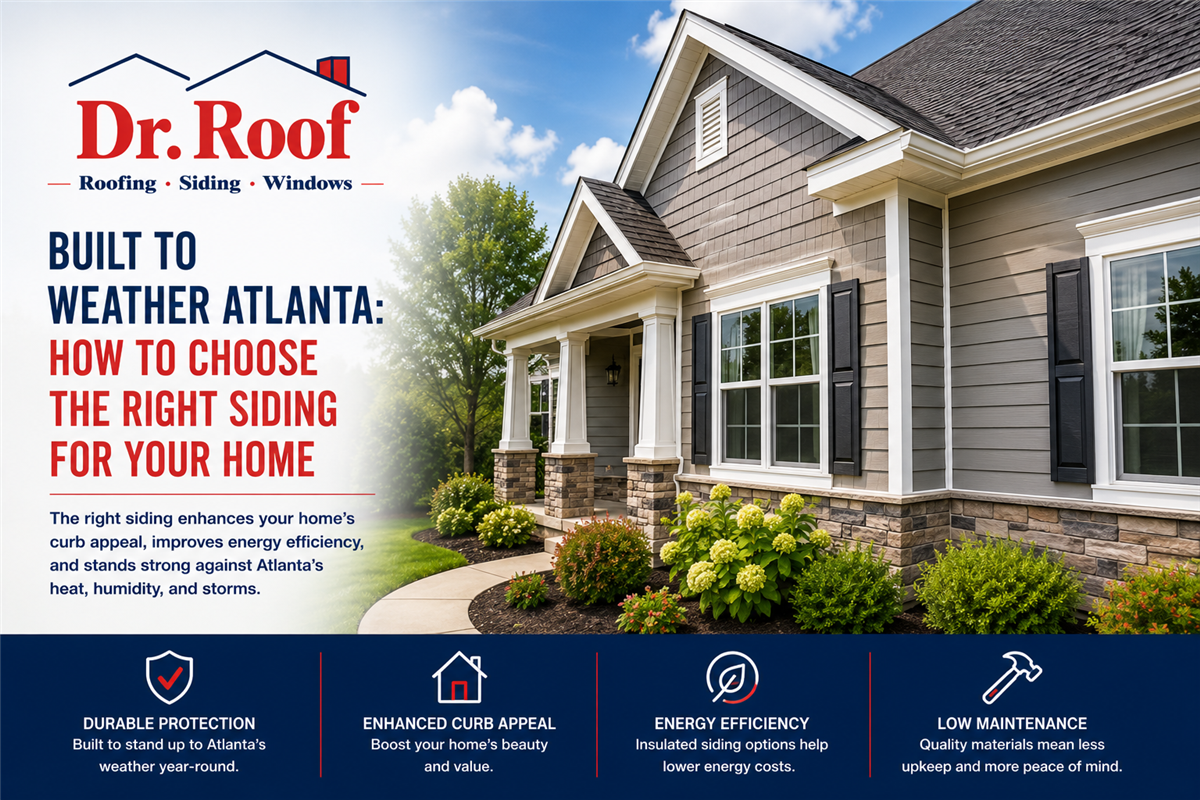
Choosing Siding Is About More Than Curb Appeal
New siding can completely change the look of your home, but appearance is only one part of the decision. The best siding material should also protect your home from weather, moisture, pests, heat, and daily wear.
For Atlanta homeowners, siding needs to stand up to humidity, heavy rain, strong sun, seasonal storms, and changing temperatures. That means the right choice is not always the cheapest option or the most expensive one.
The best siding material is the one that fits your home’s style, your maintenance preferences, your budget, and your long-term goals.
The Myth: The Cheapest Siding Is the Best Value
It is easy to focus on upfront cost when comparing siding materials. However, the lowest price does not always mean the best long-term value.
A cheaper siding option may require more maintenance, show wear sooner, or provide less protection against moisture and impact. Over time, those issues can lead to repair costs, reduced curb appeal, and a shorter lifespan.
True siding value comes from balancing cost with durability, performance, maintenance, and installation quality.
Why Siding Material Matters
Siding is one of your home’s first lines of defense. It helps protect the structure from rain, wind, pests, and moisture intrusion while also improving the home’s overall appearance.
Quality siding can help:
Protect against water damage
Improve curb appeal
Reduce exterior maintenance
Support energy efficiency
Help shield the home from pests
Increase long-term home value
Improve comfort inside the home
Refresh an aging exterior
Choosing the right siding material helps your home look better and perform better.
Popular Siding Material Options
There are several siding materials homeowners may consider. Each comes with its own benefits, maintenance needs, and design possibilities.
Fiber Cement Siding
Fiber cement siding is a popular choice for homeowners who want durability, style, and long-term performance. It is designed to resist rot, pests, weather exposure, and everyday wear.
Fiber cement can also mimic the look of wood without the same level of maintenance. It comes in a variety of styles, colors, and profiles, making it a strong option for homeowners who want both protection and curb appeal.
Benefits of fiber cement siding include:
Strong durability
Resistance to rot and pests
Attractive design options
Lower maintenance than natural wood
Good performance in humid climates
Long-lasting curb appeal
Vinyl Siding
Vinyl siding is often chosen for its affordability, low maintenance, and wide range of color options. Modern vinyl siding has improved in appearance and durability compared to older versions.
It can be a practical option for homeowners looking for a cost-conscious exterior upgrade. However, quality, thickness, installation, and climate exposure can all affect performance over time.
Benefits of vinyl siding include:
Budget-friendly options
Low maintenance
Many colors and styles
No painting required
Easy exterior refresh
Engineered Wood Siding
Engineered wood siding offers a wood-like appearance with improved durability compared to traditional wood. It can provide warmth and character while requiring less maintenance than natural wood siding.
This option may appeal to homeowners who want the look of wood without some of the upkeep concerns associated with traditional wood materials.
Benefits of engineered wood siding include:
Natural-looking appearance
Strong curb appeal
Improved durability over traditional wood
Variety of styles and finishes
Less maintenance than natural wood
Traditional Wood Siding
Wood siding offers classic beauty and timeless charm. However, it also requires regular maintenance, including painting, staining, sealing, and monitoring for moisture or pest issues.
In humid climates like Atlanta, homeowners should carefully consider the ongoing care required before choosing natural wood siding.
Benefits of wood siding include:
Classic appearance
Natural texture
Customizable finishes
Strong architectural character
Factors to Consider Before Choosing Siding
The best siding material depends on more than appearance. Before making a decision, homeowners should consider several important factors.
Climate
Atlanta’s humidity, rain, heat, and storms can affect siding performance. Choose a material that can handle local weather conditions.
Maintenance
Some siding materials require regular painting, sealing, or repairs. Others are designed for lower maintenance. Be honest about how much upkeep you want to manage.
Durability
Think about how well the material resists moisture, pests, impact, fading, and daily wear.
Energy Efficiency
Siding can contribute to your home’s overall energy performance, especially when paired with proper insulation and professional installation.
Curb Appeal
Siding should complement your home’s architecture, neighborhood style, and personal preferences.
Long-Term Value
Look beyond the upfront price. Consider lifespan, maintenance needs, repair costs, and warranty options.
Why Professional Installation Is Just as Important as Material Choice
Even the best siding material can underperform if it is not installed correctly.
Proper siding installation helps prevent moisture intrusion, gaps, warping, poor alignment, and premature wear. A professional contractor understands how to prepare the surface, install the material correctly, seal vulnerable areas, and protect the home’s exterior system.
Dr. Roof helps Atlanta homeowners choose siding materials and installation solutions that fit their home’s needs and long-term goals.
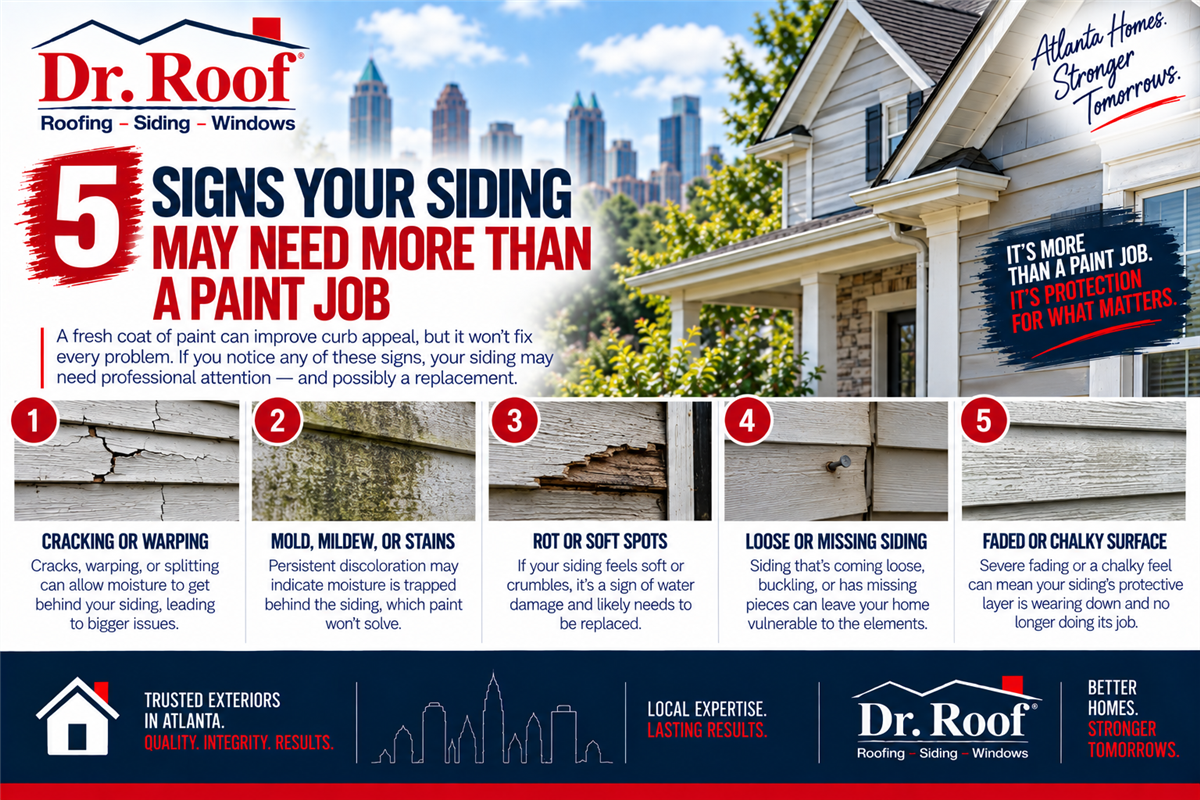
Signs It May Be Time to Replace Your Siding
You may want to consider siding replacement if you notice:
Cracked or warped siding
Loose or missing panels
Faded or worn appearance
Peeling paint or frequent repainting
Rot or soft spots
Moisture stains
Mold or mildew growth
Higher energy bills
Pest damage
Storm damage
Reduced curb appeal
If your siding is no longer protecting your home properly, a professional assessment can help you determine whether repair or replacement is the better option.
Why Atlanta Homeowners Choose Dr. Roof
Dr. Roof has served the Atlanta area since 1988, helping homeowners protect and improve their homes with roofing, siding, gutters, windows, and other exterior services.
Our team understands how Georgia weather affects home exteriors and why proper installation matters. We focus on clear recommendations, quality workmanship, and siding solutions designed to protect your home for the long term.
Homeowners choose Dr. Roof for:
Decades of Atlanta-area experience
Professional siding assessments
Clear material guidance
Quality siding installation
Exterior home improvement expertise
Strong warranty options
Storm damage documentation support
Honest communication
A commitment to doing the job right
Make a Siding Choice That Lasts
Choosing the best siding material is about finding the right balance of beauty, durability, maintenance, performance, and value.
Do not choose based on price alone. The right siding should protect your home, improve curb appeal, and support long-term comfort and confidence.
If you are considering new siding for your Atlanta home, contact Dr. Roof to schedule a professional consultation and explore the siding options that best fit your home.
Frequently Asked Questions
Is the cheapest siding material always the best long-term value for my home?
No, the cheapest upfront cost for siding material often doesn't equate to the best long-term value. While attractive initially, less expensive materials may require more frequent maintenance, repairs, or earlier replacement.
This leads to higher overall costs over time. It's crucial to consider durability, energy efficiency, and warranty when choosing the best siding material for lasting value.
Do all siding materials offer similar protection against weather and pests?
No, different siding materials vary significantly in their ability to protect against weather elements like moisture, wind, and impact, as well as pests. For example, fiber cement and metal sidings offer superior resistance to rot, insects, and fire compared to some other options.
Understanding these protective qualities is key to successful siding installation.
Can choosing the best siding material truly impact my home's energy efficiency?
Absolutely. The right siding material, combined with proper siding installation, can significantly enhance your home's insulation and energy efficiency. Materials with higher R-values or those installed with an insulating layer can help reduce heat transfer.
This leads to more stable indoor temperatures and lower heating and cooling costs.
Is a DIY siding installation a reliable way to save money on my home's exterior?
While a DIY siding installation might seem like a cost-saving measure, it often leads to significant problems. Improper installation can compromise your home's weather protection, void warranties, and necessitate costly professional repairs down the line.
For critical components like siding, professional expertise ensures durability and performance.
How can I identify a reputable contractor for quality siding installation?
Identifying a reputable contractor for your siding installation involves checking for certifications like GAF Master Elite, verifying extensive local experience, and reviewing their customer satisfaction guarantees. Ask for references and examples of past projects.
This ensures their craftsmanship and commitment to quality align with your expectations for choosing the best siding material.
Subscribe to Dr. Roof's Blog



Comments