A sudden roof leak, missing shingles, or damage from a severe storm can leave homeowners searching for professional roofing assistance as quickly as possible.
When water is entering your home, waiting to understand the problem may feel overwhelming. You want to protect your belongings, prevent additional damage, and find a roofing contractor who can evaluate the situation.
However, requesting fast roof repair service does not always mean the entire problem can be corrected immediately.
Some roofing issues can be repaired through localized work. Others may require temporary protection, additional materials, or more extensive evaluation.
If you need urgent roof repair in Atlanta, prioritize safety, document the damage from a safe location, and contact an experienced roofing contractor to explain the situation. The contractor can assess the urgency, confirm available service options, and determine whether temporary protection or permanent repairs are appropriate.
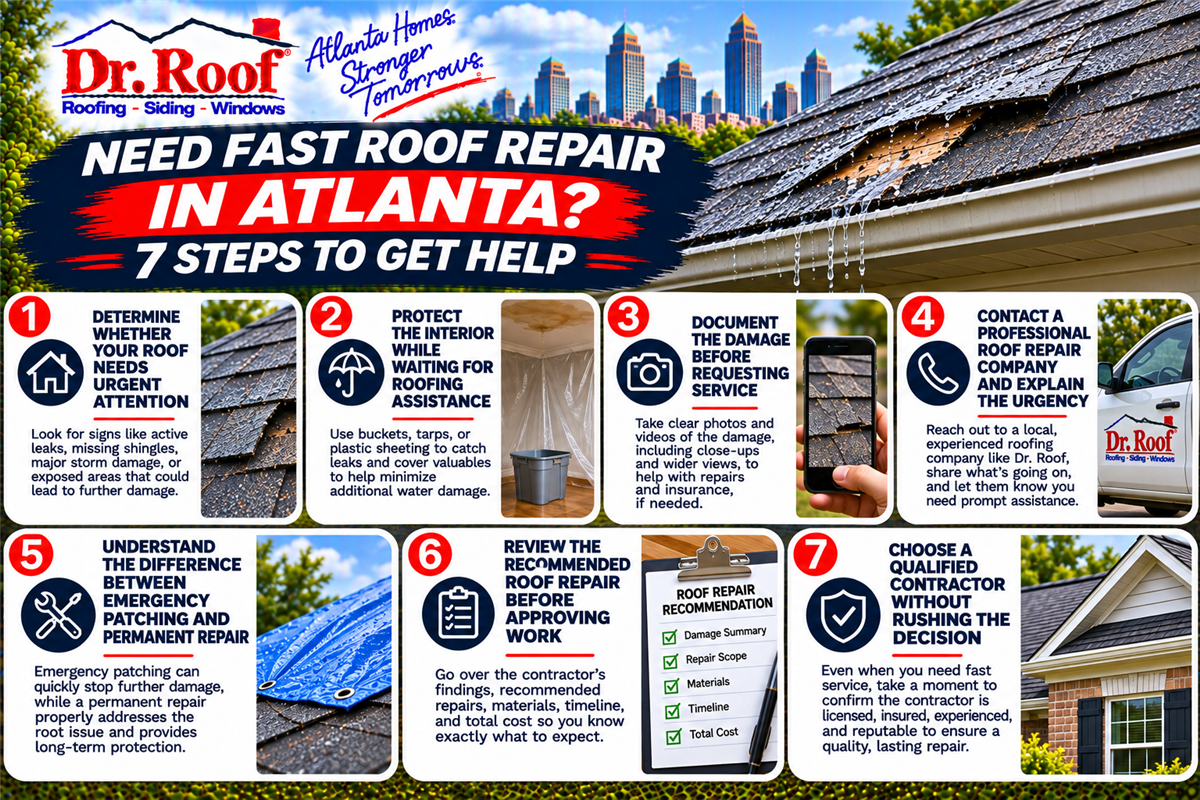
Here are seven practical steps Atlanta homeowners can take when they need prompt roof repair assistance.
1. Determine Whether Your Roof Needs Urgent Attention
Not every roofing problem requires emergency service.
A few aging shingles may justify scheduling a professional inspection, while active water intrusion or significant storm damage may require more immediate attention.
Understanding the difference can help you communicate the situation to a roofing contractor.
What Roofing Problems May Require Urgent Repair?
Examples include:
Water actively entering the home
Large sections of missing shingles
Roof damage caused by a fallen branch
Exposed roof decking
Significant flashing damage
Newly developed leaks after a storm
Openings that leave roofing materials exposed to weather
These conditions may increase the risk of additional water intrusion.
However, the severity of the damage must be evaluated before recommending a particular repair.
Does Every Roof Leak Count as an Emergency?
Not necessarily.
A small, intermittent leak may not involve the same immediate risk as water pouring through an exposed roof opening.
However, even minor water intrusion deserves attention because the underlying problem may remain unresolved after the rain stops.
A qualified roofing contractor can help determine how quickly the condition should be evaluated.
What if the Roof Appears Structurally Unsafe?
Stay away from areas beneath visibly damaged or sagging roofing structures.
If significant structural damage, electrical hazards, or other immediate dangers are suspected, leave the affected area and seek appropriate emergency assistance.
Do not attempt to investigate structural damage by climbing onto the roof or entering unsafe attic spaces.
2. Protect the Interior While Waiting for Roofing Assistance
When a roof begins leaking, homeowners may be able to take limited precautions before a professional arrives.
The goal is reducing additional exposure without creating new safety risks.
What Should You Do if Water Is Coming Through the Ceiling?
When conditions are safe:
Move furniture and valuables away from the affected area.
Place a container beneath an accessible drip.
Photograph visible water damage.
Keep children and pets away from the affected space.
Avoid electrical fixtures or equipment exposed to moisture.
Stay away from swollen or sagging ceilings.
These steps may help protect the interior, but they do not correct the source of the leak.
Should You Climb Onto the Roof to Stop the Leak?
No.
Wet roofing materials create serious fall hazards.
Storm-damaged roofs may also contain loose shingles, weakened decking, or concealed structural problems.
A professional roofing contractor should determine whether rooftop access is safe and what work is appropriate.
Should You Put a Tarp on the Roof Yourself?
Homeowners should avoid attempting roof tarping without appropriate professional training and equipment.
Installing a tarp often requires working on elevated, damaged, or slippery surfaces.
A qualified contractor can determine whether temporary professional protection is necessary.
3. Document the Damage Before Requesting Service
One of the most useful things homeowners can do is record what they have observed.
You do not need to diagnose the roofing problem yourself.
Instead, focus on providing accurate information about the symptoms and circumstances.
What Information Should You Gather?
Useful details include:
When the damage or leak was first noticed
Whether water is actively entering the home
Which rooms are affected
Whether a recent storm occurred
Whether shingles are visibly missing
Whether branches or debris struck the roof
Whether the roof has been repaired previously
Whether an interior stain has grown
Photographs taken from safe locations can provide helpful context.
Why Does the Timing Matter?
Some roof leaks occur only during heavy rainfall.
Others may become noticeable during wind-driven storms or prolonged periods of wet weather.
For example, damaged flashing around a roof penetration may allow water inside under particular weather conditions.
Sharing this information can help the roofing contractor investigate possible water-entry points.
However, the weather pattern alone does not establish the exact cause.
Can You Send Photographs to the Contractor?
Many contractors accept photographs or descriptions when homeowners request service.
Ask whether photos would help with the initial evaluation.
Pictures may clarify the visible damage, but a professional inspection may still be necessary to determine the complete repair scope.
4. Contact a Professional Roof Repair Company and Explain the Urgency
When requesting fast roof repair, communication matters.
A roofing contractor needs to understand whether the problem involves active water intrusion, visible storm damage, or another condition.
What Should You Say When Calling a Roofer?
Provide a clear description of the issue.
For example:
"My roof started leaking during the storm, and water is coming through the ceiling in one bedroom. I need to know whether emergency roof repair or temporary protection is available."
You can also explain whether shingles are missing or a branch has damaged the roof.
What Should You Ask About Availability?
Consider asking:
Do you provide emergency roof repair services?
When can the roof be evaluated?
Can you assess active water intrusion?
Is temporary protection available if necessary?
Do you repair residential asphalt-shingle roofs?
How will the repair estimate be provided?
The company should explain its current availability and the next steps.
Does Emergency Service Mean a Same-Day Repair?
Not necessarily.
Emergency roofing service may involve promptly assessing a problem, providing temporary protection, or arranging permanent repairs.
The work that can be completed depends on the damage, weather, materials, accessibility, and contractor availability.
A professional company should distinguish between responding to a request and completing the permanent repair.
5. Understand the Difference Between Emergency Patching and Permanent Repair
When a roofing system is exposed to weather, temporary protection may be necessary before permanent work begins.
However, homeowners should understand what each service accomplishes.
What Is Temporary Roof Protection?
Temporary protection may involve professionally installed roof tarping or another appropriate method designed to reduce additional weather exposure.
For example, a contractor may recommend temporary covering when a storm has removed a substantial area of roofing materials.
The protective measure may remain in place while the permanent repair is planned.
Is Roof Tarping a Permanent Repair?
No.
Tarping is intended to provide temporary protection.
It does not replace damaged shingles, flashing, underlayment, or decking.
A permanent repair should address the actual roofing defect using suitable materials and installation procedures.
What Repairs Might Be Completed During an Initial Visit?
Depending on the conditions and available materials, a contractor may be able to address certain localized problems.
Examples might include:
Replacing damaged shingles
Correcting certain flashing defects
Replacing a deteriorated pipe boot
Securing appropriate temporary protection
Evaluating exposed roofing materials
However, not every problem can be permanently corrected during the first visit.
The contractor should explain which work has been completed and whether additional repairs are necessary.
6. Review the Recommended Roof Repair Before Approving Work
Even when the situation is urgent, homeowners should understand the proposed solution.
A professional roofing assessment should help identify the actual problem.
What Does a Roofer Look for During an Urgent Inspection?
Depending on the damage, the contractor may evaluate:
Missing or damaged shingles
Loose ridge materials
Flashing around chimneys
Plumbing vent penetrations
Roof valleys
Previous repair areas
Exposed underlayment
Visible decking concerns
Signs of water intrusion
Some damage may remain concealed until roofing materials are removed.
The contractor should explain any inspection limitations.
Can Roof Leaks Be Repaired Without Replacing the Entire Roof?
Often, yes.
Localized problems involving damaged shingles, flashing, or roof penetrations may be repairable when surrounding materials remain serviceable.
For example, replacing a damaged plumbing vent boot may correct a leak without requiring complete roof replacement.
However, extensive deterioration or widespread damage may require a more comprehensive solution.
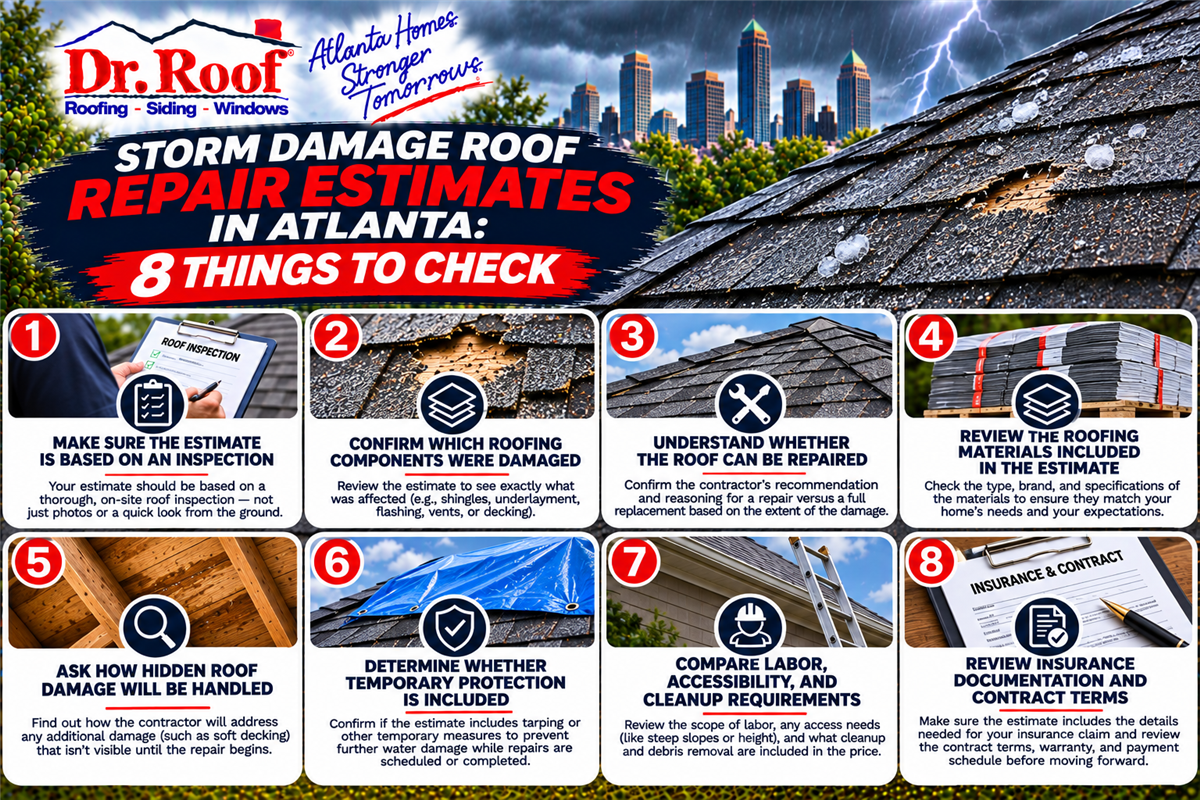
What Should a Repair Estimate Include?
Depending on the scope, a written proposal should identify:
The roofing problem
Recommended repairs
Materials to be replaced
Labor
Cleanup
Proposed pricing
Potential hidden damage
Additional work procedures
Applicable warranty terms
A clear estimate helps homeowners understand what they are approving.
7. Choose a Qualified Contractor Without Rushing the Decision
Urgent roofing problems can create pressure to hire the first available contractor.
However, professional qualifications remain important.
The Federal Trade Commission advises homeowners to verify contractors, review written agreements, and avoid high-pressure sales tactics.
What Should You Look for in a Roof Repair Contractor?
Consider:
Residential roofing experience
Appropriate insurance coverage
Applicable contractor credentials
Experience with the roofing material
Clear inspection findings
Written repair proposals
Customer reviews
Applicable workmanship warranties
The contractor should be able to explain why the recommended repair is appropriate.
What Are Warning Signs During an Emergency?
Be cautious if a contractor:
Demands immediate payment in full
Refuses to provide a written agreement
Cannot explain the roofing damage
Makes unsupported promises about insurance coverage
Pressures you to approve extensive work immediately
Cannot provide appropriate business information
Safety-related temporary work may require prompt decisions, but homeowners should still understand the proposed services and payment terms.
Why Is Local Roofing Experience Useful?
Atlanta-area homes experience thunderstorms, heavy rainfall, strong winds, and occasional hail.
Residential roof designs also vary considerably, with some properties containing steep slopes, multiple valleys, dormers, and chimneys.
A contractor familiar with these conditions can evaluate the home's specific roofing system and recommend appropriate work.
What If Your Roof Stops Leaking Before the Contractor Arrives?
A leak that stops after the rain ends may still indicate an unresolved roofing problem.
For example, deteriorated flashing may allow water inside only during wind-driven rain.
The roofing defect can remain even when the interior appears dry.
If the source has not been identified, keeping the inspection appointment is generally advisable.
Provide the contractor with photographs and details about when the leak occurred.
How Much Does Urgent Roof Repair Cost in Atlanta?
There is no universal price for urgent roof repair.
The cost depends on the damage and the work required.
Important factors include:
Type of roof damage
Extent of affected materials
Roof pitch
Accessibility
Replacement shingles
Flashing work
Underlayment condition
Decking repairs
Temporary protection
Labor and cleanup
The contractor should explain whether emergency stabilization and permanent repairs are priced separately.
A professional estimate provides a more reliable basis for understanding project costs than assuming all roof leaks require the same work.
Does Homeowners Insurance Cover Emergency Roof Repairs?
Some homeowners insurance policies provide coverage for qualifying sudden damage, including certain storm-related losses.
However, coverage depends on the policy and individual circumstances.
Ordinary deterioration and maintenance-related problems may be treated differently.
A roofing contractor may provide photographs, written findings, and repair recommendations.
The insurance company determines coverage and claim payment.
Homeowners should contact their insurer for information about claim procedures and documentation requirements.
How Dr. Roof Helps Atlanta Homeowners With Urgent Roofing Concerns
Dr. Roof has served Atlanta-area homeowners since 1988, providing professional roofing inspections, repairs, replacement, and storm-damage documentation support.
A professional evaluation can help determine whether the problem involves:
Damaged shingles
Roof flashing
Roof penetrations
Exposed roofing materials
Roof decking
Storm-related water intrusion
Depending on the situation, Dr. Roof may provide photographs, written findings, and repair or replacement recommendations.
Homeowners in Atlanta, Marietta, Roswell, Alpharetta, Smyrna, and surrounding communities can contact Dr. Roof to request assistance.
Actual service availability and repair scheduling should be confirmed directly.
Get Professional Roof Repair Help Without Unnecessary Delays
A sudden roofing problem deserves prompt attention, especially when the home is exposed to additional rainfall or water is entering the interior.
The most important steps are protecting people and belongings, documenting visible damage, and contacting a qualified roofing professional.
Emergency service may involve temporary protection, localized repairs, or a more extensive assessment.
For Atlanta homeowners, understanding these possibilities can make an unexpected roofing problem easier to manage.
If your roof is leaking or has sustained significant damage, contact Dr. Roof to discuss roof repair options and request a professional evaluation.
How can I get fast roof repair service in Atlanta?
Contact an experienced residential roofing contractor and explain whether your roof is actively leaking, has missing shingles, or sustained storm damage. Ask about emergency response availability, temporary protection, and the process for scheduling permanent repairs.
Does emergency roof repair mean the roof will be fixed the same day?
Not necessarily. Emergency service may involve an inspection, temporary protection, or certain localized repairs. Permanent repair timing depends on weather, material availability, accessibility, the damage, and contractor scheduling.
What should I do while waiting for emergency roof repair?
Protect belongings when safe, document visible water damage, avoid electrical hazards, and stay away from unstable ceilings. Do not climb onto a damaged or wet roof. Ask a qualified contractor whether professional temporary protection is necessary.
Can a leaking roof be repaired without replacing the entire roof?
Often, yes. Localized damage involving shingles, flashing, or roof penetrations may be repairable when surrounding roofing materials remain serviceable. A professional inspection should determine the appropriate scope.
Is emergency roof tarping considered a permanent repair?
No. Professional roof tarping is a temporary protective measure intended to reduce additional weather exposure. Permanent repair should address the underlying roofing damage with appropriate materials and installation methods.
Subscribe to Dr. Roof's Blog




Comments