As your roof gets older, deciding whether to repair damaged areas or invest in a complete replacement can become more complicated.
A few missing shingles may appear easy to repair, but recurring leaks, brittle materials, or widespread deterioration can raise questions about whether additional repairs are worthwhile.
For Atlanta homeowners, the challenge is understanding when an older roof can continue providing reliable protection and when replacement becomes the more appropriate option.
An older roof may be worth repairing when damage is localized, surrounding materials remain serviceable, and the problem can be corrected reliably. Complete replacement may be more appropriate when deterioration is widespread, multiple roofing components are failing, or repairs can no longer restore the roofing system effectively.
Roof age is an important consideration, but it should not be the only factor.
The decision should reflect the actual condition of the roofing materials, previous repair history, underlying structure, and proposed scope of work.
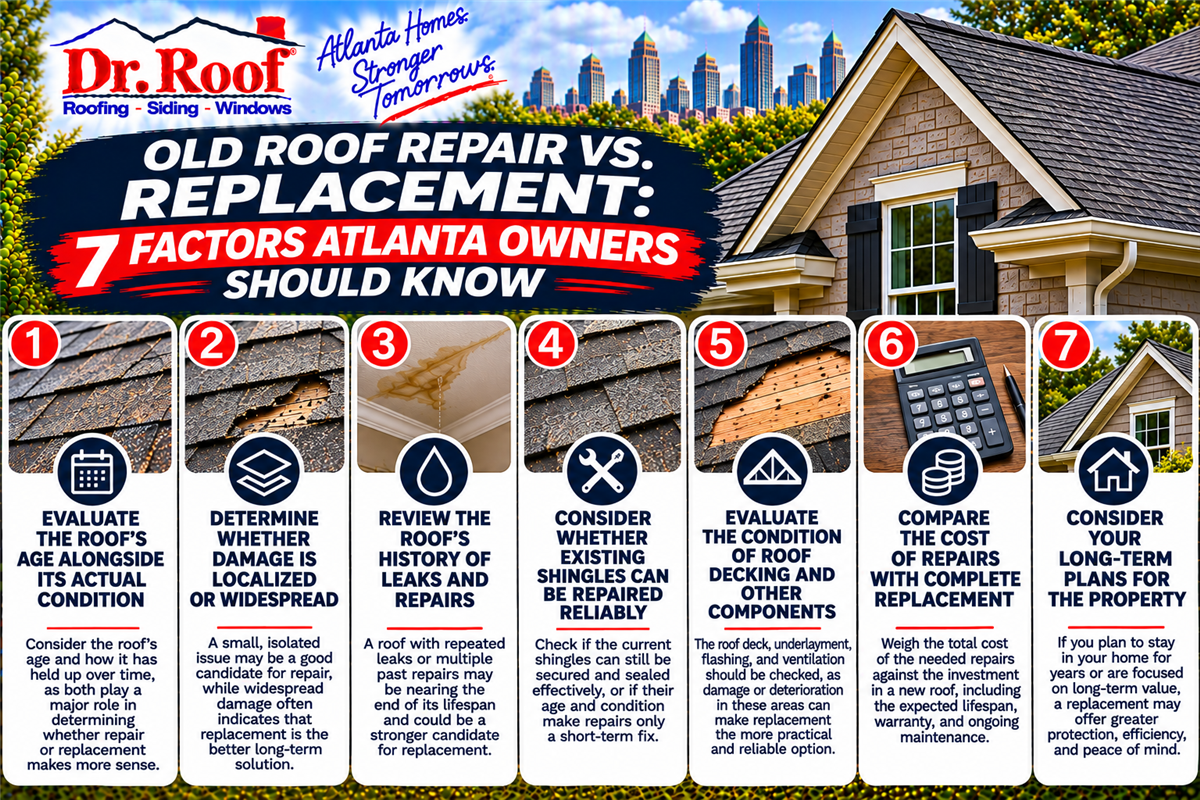
Here are seven factors to consider when deciding whether an old roof should be repaired or replaced.
1. Evaluate the Roof's Age Alongside Its Actual Condition
One of the first questions homeowners ask is how old a roof must be before replacement becomes necessary.
Unfortunately, there is no universal age that applies to every roofing system.
Different roofing materials have different performance characteristics, and their actual service life depends on several conditions.
Does an Old Roof Automatically Need Replacement?
No.
An older roof may still have serviceable materials and only require a localized repair.
For example, a deteriorated plumbing vent boot may be replaceable without removing an otherwise suitable roofing system.
However, older roofing materials can become more difficult to repair as deterioration progresses.
Why Does Roof Age Matter?
Age provides useful context about the roofing system.
Over time, roofing materials experience exposure to:
Sunlight
Rainfall
Wind
Temperature changes
Storms
Normal weathering
These conditions can contribute to changes in material flexibility, surface protection, and overall condition.
However, age does not establish that every shingle or roofing component has failed.
Should You Replace a Roof Based on Its Warranty Period?
Not automatically.
A manufacturer's warranty is a written agreement that provides specific coverage under defined conditions.
It should not be treated as a guaranteed prediction of roof lifespan.
A roofing system may remain serviceable beyond certain coverage periods or require attention while warranty coverage remains in effect.
A professional inspection should evaluate the actual condition.
2. Determine Whether Damage Is Localized or Widespread
The extent of roofing damage is one of the most important factors when comparing repair and replacement.
Some roofing problems affect a small area.
Others involve deterioration across multiple roof slopes.
What Is Localized Roof Damage?
Localized damage generally involves a limited portion of the roofing system.
Examples include:
Several missing shingles
One damaged pipe boot
A limited flashing defect
A small repairable roof section
A localized impact from falling debris
When surrounding roofing materials remain serviceable, targeted repairs may be appropriate.
What Is Widespread Roof Deterioration?
Widespread deterioration affects substantial portions of the roofing system.
Potential examples include:
Extensive cracking across multiple slopes
Significant shingle deterioration
Numerous damaged roofing areas
Repeated problems across different roof sections
Large areas of compromised materials
These conditions may make localized repair less practical.
Why Does the Extent of Damage Matter?
A small damaged area can often be corrected without disturbing the rest of the roof.
However, when surrounding materials are also deteriorated, replacing one section may not address the larger problem.
The contractor should evaluate the complete roofing system before recommending replacement.
Does Widespread Damage Always Require Replacement?
Not automatically.
The appropriate recommendation depends on the roofing material, severity of the damage, and whether reliable repairs remain possible.
However, extensive damage is an important reason to consider a complete replacement evaluation.
3. Review the Roof's History of Leaks and Repairs
An older roof with one isolated leak presents a different situation from a roof that repeatedly develops problems in several locations.
The repair history can help determine whether the roofing system remains a practical candidate for additional work.
Does One Roof Leak Mean Replacement Is Necessary?
No.
A single leak may result from a localized problem such as:
Deteriorated chimney flashing
Damaged plumbing vent flashing
Missing shingles
A roof valley defect
A compromised roof penetration
These problems may be repairable without replacing the entire roof.
What If the Roof Has Multiple Leaks?
Multiple leaks deserve a broader evaluation.
They may indicate that different roofing components are deteriorating or that the roof has experienced extensive damage.
However, multiple leaks do not automatically prove that replacement is the only appropriate solution.
The contractor should identify the cause of each problem.
Why Does Previous Repair History Matter?
Consider two situations.
One homeowner has an older roof that has required a single localized repair over several years.
Another homeowner has experienced repeated leaks, multiple shingle repairs, and ongoing problems across different roof sections.
The second situation may justify a more comprehensive replacement discussion.
Repeated repairs can also create ongoing expenses.
Should You Keep Records of Previous Repairs?
Yes.
Useful information includes:
Repair dates
Locations of previous leaks
Materials replaced
Written estimates
Photographs
Warranty information
Invoices
These records can help a contractor understand the roofing system's history.
4. Consider Whether Existing Shingles Can Be Repaired Reliably
Asphalt shingles are designed so that individual components can often be replaced without removing the entire roof.
However, the condition of the surrounding shingles matters.
Why Can Older Shingles Be Harder to Repair?
Asphalt shingles may become less flexible as they weather.
Some older materials can crack when a contractor attempts to lift them or separate their adhesive bonds.
This may make localized replacement more difficult.
Can Individual Shingles Still Be Replaced on an Older Roof?
Sometimes.
The Asphalt Roofing Manufacturers Association explains that asphalt-shingle roofs are generally repairable because individual shingles and other components can be separated and replaced.
However, the roofing professional must determine whether the existing materials remain suitable.
What If the Shingles Are Too Brittle?
If surrounding shingles crack during removal, the repair area may need to expand.
In some situations, the remaining roofing materials may be too deteriorated to restore reliably through localized work.
That may support considering replacement.
What About Matching Existing Shingles?
Replacement materials should be compatible with the existing roofing system.
However, older shingle colors or product lines may no longer be available.
Even when similar materials are used, new shingles may not match the appearance of weathered materials exactly.
Homeowners should understand these limitations before approving repairs.
Does a Color Difference Mean Replacement Is Required?
No.
An appearance difference alone does not automatically mean the entire roof needs replacement.
The contractor should evaluate material compatibility, installation requirements, and the condition of the surrounding shingles.
5. Evaluate the Condition of Roof Decking and Other Components
The visible roofing material is only one part of the complete system.
Roof decking, underlayment, flashing, and roof penetrations also influence the roof's condition.
What Is Roof Decking?
Roof decking provides the supporting surface beneath the roofing materials.
Common residential decking products include plywood and oriented strand board.
The decking must remain suitable for the roofing system installed above it.
Can Damaged Decking Be Repaired?
Yes, depending on the extent and location of the damage.
A contractor may be able to replace a localized section of deteriorated decking.
However, extensive structural deterioration may require a more comprehensive project.
Does Every Older Roof Have Damaged Decking?
No.
Roof age alone does not establish that the decking is deteriorated.
Some older roofs have suitable supporting materials.
Other roofs may experience damage from prolonged water intrusion, impact, or different conditions.
The decking should be evaluated based on its actual condition.
Why Does Flashing Matter?
Flashing helps direct water away from roof penetrations and transitions.
An older roof may develop a localized flashing problem even when the surrounding shingles remain serviceable.
In that situation, repairing the flashing may be appropriate.
However, widespread deterioration involving multiple roofing components may justify a broader replacement evaluation.
Can Hidden Damage Affect the Decision?
Yes.
Some conditions remain concealed until shingles and underlayment are removed.
A contractor should explain what can be evaluated during the initial inspection and what may only become visible during the project.
6. Compare the Cost of Repairs With Complete Replacement
Cost is an important consideration, but it should not be the only factor.
A localized roof repair generally involves less work than replacing the entire roofing system.
However, repeated repairs can create additional expenses over time.
When Does Repairing an Older Roof Make Financial Sense?
Repair may be practical when:
Damage is localized
The surrounding roof remains serviceable
The repair can be completed reliably
Additional work is limited
The roofing system does not show widespread deterioration
For example, replacing one damaged pipe boot may involve substantially less work than a complete roof replacement.
When Might Replacement Be Worth Considering?
Replacement may deserve consideration when:
Repairs are becoming increasingly frequent
Multiple roof sections require work
Materials are extensively deteriorated
Large repairs cannot be integrated reliably
Significant additional damage is present
In these situations, homeowners should compare the complete scope of the proposed repairs with the replacement option.
Is There a Percentage That Determines When to Replace a Roof?
No universal percentage determines the correct decision for every roofing system.
The answer depends on the roof's condition, proposed materials, repair reliability, and other factors.
A contractor should not rely solely on a simple price comparison without evaluating the underlying roofing system.
What Should You Compare?
Consider:
Current repair cost: What work is necessary now?
Extent of damage: Is the problem limited or widespread?
Existing materials: Are the remaining shingles serviceable?
Repair history: Have similar problems occurred repeatedly?
Potential hidden damage: Could additional work be necessary?
Replacement scope: What materials and installation work are proposed?
These factors can help homeowners evaluate the available options.
7. Consider Your Long-Term Plans for the Property
Homeowners may have different priorities depending on how long they expect to remain in the property.
However, plans to sell or remain in the home should not replace an assessment of the roof's condition.
What If You Plan to Stay in Your Home?
If you expect to remain in your home, consider how the proposed repair or replacement addresses the current roofing problems.
A localized repair may be appropriate when the existing roof remains serviceable.
If extensive deterioration is present, replacement may provide a more comprehensive solution.
No roofing project can guarantee that future damage will never occur.
What If You Plan to Sell Soon?
Roof condition may become part of a prospective buyer's evaluation.
Buyers may consider visible damage, inspection findings, repair history, and anticipated roofing expenses.
Addressing confirmed problems can help clarify the property's condition.
However, roof replacement does not guarantee a particular increase in resale value.
Should You Replace a Roof Just to Improve Curb Appeal?
Not necessarily.
A new roof can change a home's appearance, but the decision should account for material condition, cost, and the actual needs of the property.
If the roof remains serviceable, replacement may be optional rather than necessary.
Why Should Homeowners Review Warranty Terms?
When comparing repair and replacement, understand the applicable warranty coverage.
A localized repair may have different workmanship provisions from a complete replacement.
A new roof may qualify for certain manufacturer warranty options, depending on the materials and installation requirements.
Homeowners should review the written documents rather than assume every replacement includes identical protection.
Roof Repair vs. Replacement: How Do You Compare the Options?
For homeowners with aging roofs, the most useful comparison involves the actual roofing conditions.
Repair May Be Appropriate When:
Damage is limited to one or a few areas.
Surrounding shingles remain serviceable.
Compatible materials are available.
Flashing problems can be corrected.
Decking remains suitable.
The repair can be completed reliably.
Replacement May Be More Appropriate When:
Deterioration affects substantial roof areas.
Multiple roofing components are failing.
Repeated leaks continue developing.
Existing materials cannot be repaired reliably.
Significant underlying damage is present.
A comprehensive replacement is necessary to restore the roofing system appropriately.
These are considerations rather than automatic rules.
A professional inspection should determine which conditions apply.
What Are Signs That an Older Roof May Need Replacement?
Several conditions may justify a replacement evaluation.
Widespread Shingle Deterioration
Extensive cracking, curling, or other material deterioration may indicate that the existing shingles are no longer suitable.
Recurring Roof Leaks
Leaks occurring repeatedly in different roof sections may indicate broader roofing problems.
Significant Damage Across Multiple Slopes
Widespread storm damage or other physical deterioration may require more extensive work than a localized repair.
Unsuitable Roof Decking
Significant decking deterioration or structural concerns may affect the project scope.
Repairs That Cannot Be Completed Reliably
When the surrounding materials are too deteriorated to restore through localized work, replacement may be appropriate.
No single condition automatically determines the outcome.
The contractor should explain the physical evidence supporting the recommendation.
Can You Replace Only Part of an Older Roof?
Sometimes.
Partial replacement may be possible when the affected area can be addressed independently and the remaining roofing system stays serviceable.
However, this approach is not suitable for every roof.
When Might Partial Replacement Work?
A contractor may consider it when:
Damage affects a distinct roof section.
The remaining materials are suitable.
Appropriate materials are available.
The new work can integrate properly with existing components.
The roof design allows a reliable transition.
What Are the Limitations?
Differences in roofing materials, appearance, installation requirements, or existing conditions may complicate the work.
The contractor should explain whether partial replacement can provide an appropriate solution.
Is Partial Replacement Always Cheaper?
Not necessarily.
The total cost depends on the project scope and installation requirements.
Homeowners should compare the actual proposals rather than assume partial replacement is automatically the best financial option.
How Should You Compare Repair and Replacement Estimates?
When deciding what to do with an older roof, a detailed professional evaluation is important.
Ask the contractor to explain both the observed damage and the recommended work.
What Should a Repair Estimate Include?
Depending on the project:
Identified damage
Repair location
Materials requiring replacement
Labor
Cleanup
Potential hidden damage
Applicable warranty terms
What Should a Replacement Estimate Include?
A complete roof replacement proposal may identify:
Removal of existing roofing materials
Roof measurements
Decking evaluation
Underlayment
Flashing
Starter materials
Main roofing materials
Ridge components
Ventilation work when appropriate
Labor and cleanup
Warranty information
The exact scope depends on the property.
Should You Request Both Options?
When both repair and replacement are technically reasonable, asking for estimates for each can help homeowners understand the alternatives.
However, if the roof is unsuitable for reliable repair, the contractor should explain why.
The recommendation should reflect the roofing system's actual condition.
Does Homeowners Insurance Cover Replacement of an Older Roof?
Homeowners insurance coverage depends on the cause of damage and the policy terms.
Some sudden storm-related losses may qualify for coverage.
Ordinary deterioration and maintenance-related conditions may be treated differently.
Does Roof Age Affect Insurance Coverage?
It can, depending on the policy.
Some policies contain provisions that affect how roofing losses are evaluated or paid.
Homeowners should review their policy and contact their insurer with questions.
Will Insurance Pay for a New Roof Because the Existing Roof Is Old?
Homeowners should not assume that age alone creates coverage for replacement.
Insurance is generally intended to address covered losses rather than ordinary maintenance or deterioration.
The insurer determines coverage and payment under the policy and individual claim.
A roofing contractor may document physical damage but cannot guarantee insurance approval.
How Does Atlanta Weather Affect Older Roofing Systems?
Atlanta-area homes experience heavy rainfall, thunderstorms, strong winds, humidity, and occasional hail.
These conditions can affect roofing materials over time.
For example, strong wind may damage shingles, while heavy rainfall can expose weaknesses in deteriorated flashing.
However, normal weather exposure does not automatically mean an older roof needs replacement.
Are Older Roofs More Vulnerable to Damage?
The answer depends on the condition of the materials.
A severely deteriorated roofing system may be less suitable for certain repairs.
However, a well-maintained older roof may remain serviceable.
The contractor should evaluate the actual shingles, flashing, decking, and other relevant components.
Why Does Roof Design Matter?
Atlanta homes have varied roof configurations.
Some contain multiple valleys, dormers, chimneys, and different roof pitches.
These features may affect repair complexity and replacement planning.
The appropriate recommendation should account for the home's design.
What Questions Should You Ask Before Replacing an Older Roof?
Before approving a complete replacement, consider asking:
What is the current condition of the roofing system?
Is the damage localized or widespread?
Can the existing shingles be repaired reliably?
Are compatible replacement materials available?
Is there evidence of decking deterioration?
Are repeated leaks caused by separate problems?
What would a targeted repair involve?
What would complete replacement include?
How will hidden damage be handled?
What warranty coverage applies?
These questions can help homeowners understand whether the recommendation is supported by the roof's condition.
How Dr. Roof Helps Atlanta Homeowners Decide Between Repair and Replacement
Dr. Roof has served Atlanta-area homeowners since 1988, providing professional roofing inspections, repairs, and replacement services.
Dr. Roof is a GAF Master Elite Certified Contractor and CertainTeed SELECT ShingleMaster.
A professional roofing evaluation can help identify concerns involving:
Aging asphalt shingles
Damaged roofing materials
Roof flashing
Roof penetrations
Roof valleys
Underlayment
Roof decking
Signs of water intrusion
Depending on the circumstances, Dr. Roof may provide photographs, written findings, and repair or replacement recommendations.
Homeowners can discuss whether localized repairs remain appropriate or whether a complete replacement should be considered.
A written proposal can help explain the recommended work and the materials involved.
Make the Right Decision for Your Aging Roof
An old roof does not automatically need replacement, and discovering a leak does not always mean the entire roofing system has failed.
The most important considerations are the extent of damage, condition of the remaining materials, previous repair history, and whether a reliable repair is possible.
For Atlanta homeowners, a professional inspection provides the information needed to compare repair and replacement options.
When damage is localized, targeted repairs may remain appropriate.
When deterioration is extensive or repairs can no longer restore the roofing system reliably, complete replacement may be the better solution.
If you're unsure whether your aging roof should be repaired or replaced, contact Dr. Roof to schedule a professional roofing evaluation and discuss the options available for your home.
When should an older roof be replaced instead of repaired?
Replacement may be appropriate when deterioration is widespread, multiple roof sections are compromised, recurring leaks continue developing, or existing materials cannot be repaired reliably. A professional inspection should determine whether the roofing system remains serviceable.
Does an old roof automatically need complete replacement?
No. Roof age is only one factor. An older roof may still be repairable when damage is localized and surrounding materials remain suitable. The actual condition of the shingles, flashing, decking, and other components should guide the decision.
Is it worth repairing a roof that has leaked several times?
It depends on the causes and extent of the leaks. Separate localized problems may be repairable, while recurring leaks associated with widespread deterioration may justify replacement. A contractor should identify the underlying conditions before recommending work.
Can brittle asphalt shingles make roof repairs difficult?
Yes. Deteriorated shingles may crack when lifted or separated during repairs. If surrounding materials cannot be handled and restored reliably, the contractor may recommend a larger repair or complete replacement.
Is roof repair always cheaper than replacement?
A localized repair generally involves less work than complete replacement, but the best option depends on the roofing system's condition. Repeated repairs, extensive damage, or unsuitable materials can affect the long-term value of continued repairs.
Can only one section of an older roof be replaced?
Sometimes. Partial replacement may be appropriate when damage is limited to a distinct section and the remaining roofing system is serviceable. Material compatibility, roof design, and installation requirements determine whether the approach is suitable.
Subscribe to Dr. Roof's Blog




Comments