Most homeowners don't think about their roofs until something goes wrong. A missing shingle, ceiling stain, or unexpected leak often becomes the first indication that roofing repairs may be necessary.
However, not every roofing problem creates immediate signs inside the home.
Damaged flashing, loose shingles, deteriorating roof penetrations, and other roofing defects may develop before water intrusion becomes noticeable.
For Atlanta homeowners, regular professional roof inspections provide an opportunity to identify these conditions and determine whether repairs are appropriate.
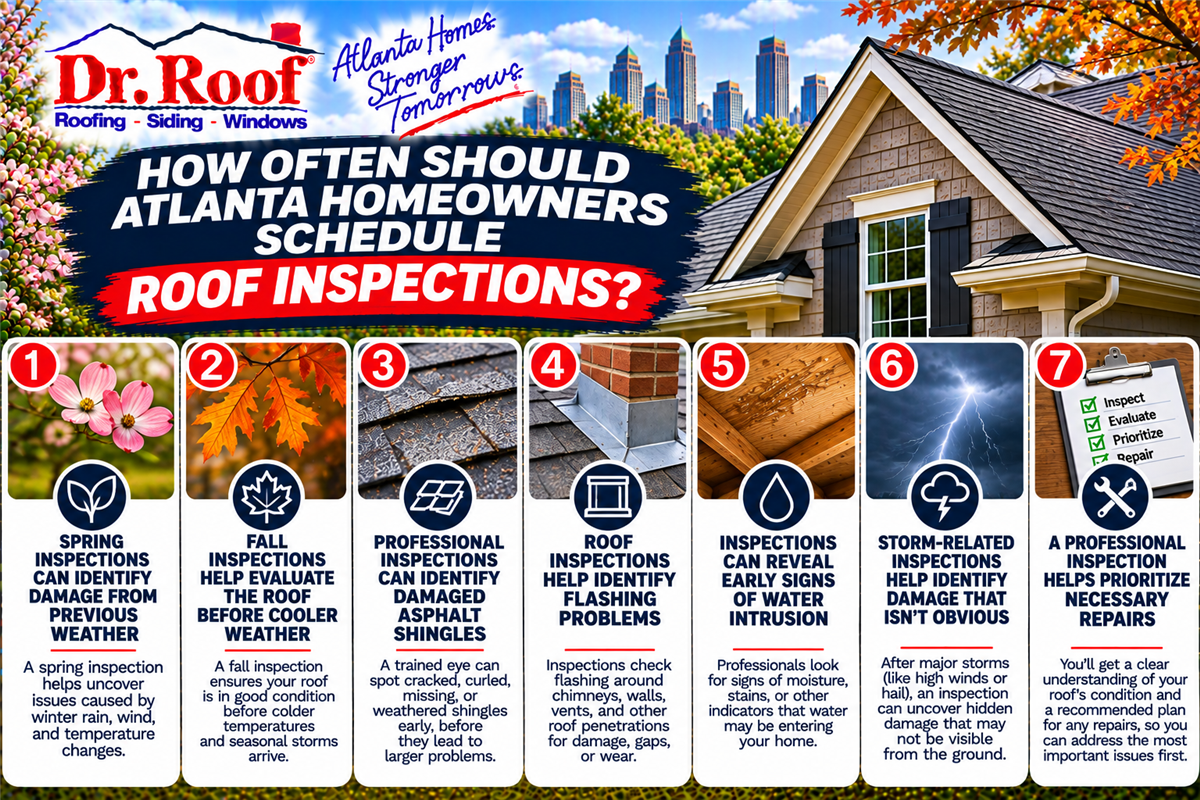
The National Roofing Contractors Association recommends roof inspections at least twice a year, preferably in spring and fall, with additional evaluations after significant weather events. Professional inspections can help identify damaged materials, deteriorated flashing, and other problems before they cause more extensive water intrusion.
The appropriate inspection schedule depends on the roof's condition, materials, age, and exposure to weather.
Here is what Atlanta homeowners should know about scheduling inspections and identifying necessary roof repairs.
Why Are Regular Roof Inspections Important?
A residential roofing system contains several components that work together to protect the home.
On a typical asphalt-shingle roof, these include:
Asphalt shingles
Underlayment
Roof flashing
Roof penetrations
Ridge materials
Fasteners
Roof decking
When one component becomes damaged, the surrounding roofing materials may experience additional exposure.
For example, a missing shingle can expose the underlayment beneath it.
Similarly, deteriorated flashing around a chimney may allow water to enter even when the surrounding shingles appear intact.
A professional inspection can help identify these conditions before homeowners assume that the entire roof needs replacement.
Can a Roof Have Problems Without Visible Leaks?
Yes.
Some roofing defects do not immediately create noticeable interior water damage.
A shingle may become loose during a storm without being completely removed.
Flashing may begin deteriorating before water reaches an interior ceiling.
Roofing materials may also experience physical damage that is difficult to recognize from the driveway.
The absence of a ceiling stain does not automatically mean every roofing component remains in suitable condition.
1. Spring Inspections Can Identify Damage From Previous Weather
Spring is a practical time to evaluate the condition of a residential roof.
After cooler months and seasonal weather changes, homeowners may discover roofing materials that need attention.
The Asphalt Roofing Manufacturers Association recommends spring inspections as part of responsible roofing maintenance.
What Should a Spring Roof Inspection Check?
Depending on the roofing system, a professional may evaluate:
Missing or damaged shingles
Loose ridge materials
Deteriorated flashing
Roof penetrations
Previous repair areas
Visible signs of moisture
Other roofing components requiring attention
The contractor should identify actual damage rather than recommend repairs solely because the roof has experienced seasonal weather.
Why Is Spring a Useful Time for Repairs?
Spring inspections can help identify problems before the home experiences additional periods of heavy rainfall and thunderstorms.
For example, a deteriorated plumbing vent boot may be identified and replaced before continued water exposure affects the surrounding materials.
However, homeowners should not assume that every inspection will identify necessary repairs.
The findings depend on the condition of the roofing system.
2. Fall Inspections Help Evaluate the Roof Before Cooler Weather
Fall provides another opportunity to assess the roofing system.
Atlanta homeowners may experience falling leaves, changing temperatures, and seasonal storms during this period.
A professional inspection can help determine whether roofing materials remain serviceable.
What Should a Fall Roof Inspection Include?
The contractor may check:
Asphalt shingle condition
Roof flashing
Roof valleys
Ridge components
Exposed roofing fasteners
Roof penetrations
Visible damage from previous storms
The purpose is identifying roofing defects that require attention.
Does Every Roof Need Repairs Before Winter?
No.
A roof in suitable condition may not require corrective work.
However, if damaged shingles or flashing are identified, the contractor should explain whether repairs are appropriate.
The recommendation should depend on the roofing materials and observed damage.
Why Should Atlanta Homeowners Consider Fall Inspections?
Atlanta winters are generally milder than those in many northern regions, but roofing systems still experience rainfall, wind, and occasional freezing temperatures.
Existing damage can become more noticeable under changing weather conditions.
Evaluating the roof before winter provides an opportunity to address confirmed defects.
3. Professional Inspections Can Identify Damaged Asphalt Shingles
Asphalt shingles provide the primary water-shedding surface on many Atlanta homes.
When properly installed, overlapping shingles direct rainwater toward the roof edges.
However, individual shingles can become damaged by weather, physical impacts, deterioration, or installation problems.
What Shingle Problems Can an Inspection Reveal?
Potential findings include:
Cracked shingles
Missing shingles
Torn roofing materials
Lifted or creased shingles
Significant localized granule loss
Damaged ridge cap shingles
Deteriorated surrounding materials
Not every visible change requires repair.
For example, normal weathering may affect the appearance of asphalt shingles without creating an immediate roofing defect.
Can Individual Shingles Be Repaired?
Often, yes.
When damage is localized and surrounding materials remain serviceable, a contractor may be able to replace individual shingles.
The repair must use suitable materials and follow applicable installation requirements.
If the existing shingles are extensively deteriorated, localized repairs may be more difficult.
A professional evaluation should determine whether the damaged area can be restored reliably.
4. Roof Inspections Help Identify Flashing Problems
Roof flashing is an important part of residential water management.
Flashing helps direct rainwater away from vulnerable areas where roofing materials meet other building components.
Common locations include:
Chimneys
Plumbing vents
Roof-to-wall intersections
Dormers
Roof valleys
Damage in these locations may allow water intrusion even when the surrounding shingles appear intact.
What Flashing Problems Might Be Found?
A professional may identify:
Loose flashing
Deteriorated metal
Damaged pipe boots
Open seams
Improperly installed components
Defective previous repairs
The appropriate repair depends on the actual condition.
Can Flashing Be Repaired Without Replacing the Roof?
Yes, in many situations.
A localized flashing problem may be repairable when surrounding roofing materials remain suitable.
For example, replacing a deteriorated plumbing vent boot may not require removing the entire roofing system.
However, a more complicated chimney flashing defect may involve removing adjacent shingles and reconstructing part of the flashing assembly.
The contractor should explain the recommended work before repairs begin.
5. Inspections Can Reveal Early Signs of Water Intrusion
One of the most useful aspects of a roofing evaluation is identifying evidence of moisture.
Water entering a roofing system may affect materials before homeowners notice an obvious ceiling leak.
What Moisture-Related Concerns Can Be Identified?
Depending on accessibility, an inspection may reveal:
Water stains on roof decking
Damp insulation
Moisture around roof penetrations
Visible wood deterioration
Signs of previous leaks
Damaged underlayment
Other concerning conditions
However, not every stain indicates an active roofing leak.
Some marks may remain after a previous problem has been corrected.
Can Attic Moisture Come From Something Other Than the Roof?
Yes.
Moisture may also originate from condensation, plumbing problems, indoor air leakage, or other building conditions.
A professional should evaluate the available evidence before recommending roofing repairs.
Replacing shingles will not necessarily correct moisture that originates from another source.
Why Is Early Detection Helpful?
Identifying a confirmed roof leak can provide an opportunity to correct the damaged component before additional building materials are exposed.
However, no inspection can guarantee that future roofing problems will not develop.
6. Storm-Related Inspections Help Identify Damage That Isn't Obvious
Atlanta-area homes experience thunderstorms, strong winds, heavy rainfall, and occasional hail.
These conditions can affect roofing materials in different ways.
Strong winds may lift or displace shingles.
Hail can create impact damage.
Falling branches may damage the roof covering or supporting materials.
Should You Schedule an Inspection After Every Storm?
Not necessarily.
A routine rainfall does not automatically require a professional roofing inspection.
However, significant storms, visible damage, or newly developing leaks may justify an evaluation.
What Signs Should Homeowners Look For After Severe Weather?
From a safe location, look for:
Missing shingles
Roofing debris
Displaced ridge materials
Fallen branches
Visible flashing damage
New interior water stains
Exposed roofing materials
Do not climb onto a damaged or wet roof.
The National Roofing Contractors Association recommends professional inspections after significant storm events because some damage may not be obvious from the ground.
Does Storm Damage Automatically Require Replacement?
No.
Some roofing damage can be corrected through localized repairs.
The contractor should determine whether the damage is limited or affects a substantial portion of the roofing system.
Insurance coverage decisions, when applicable, remain the responsibility of the insurer under the policy and claim.
7. A Professional Inspection Helps Prioritize Necessary Repairs
Not every roofing concern requires the same level of attention.
Some defects may justify prompt repairs.
Other conditions may require monitoring or additional evaluation.
A professional inspection should help distinguish between them.
Which Roofing Problems May Need Prompt Attention?
Examples include:
Active water intrusion
Missing shingles exposing underlying materials
Significant flashing damage
Large openings caused by falling debris
Suspected structural deterioration
Other conditions exposing the home to additional damage
These situations deserve timely professional evaluation.
What Conditions May Not Require Immediate Repair?
Some cosmetic changes or ordinary weathering may not require corrective work.
For example, a minor appearance difference between shingles does not necessarily indicate that the roofing system has lost its intended function.
The contractor should explain whether the observed condition affects roofing performance.
Can Inspections Help Avoid Unnecessary Roof Replacement?
Sometimes.
An inspection may reveal that a problem is localized and can be repaired.
For example, a deteriorated pipe boot or limited shingle damage may be correctable without replacing the entire roof.
However, widespread deterioration or extensive damage may require a more comprehensive solution.
The recommendation should reflect the actual condition of the roofing system.
What Should a Professional Roof Inspection Report Include?
A useful inspection should provide information that helps homeowners understand the roof's condition.
Depending on the findings, documentation may include:
Areas inspected
Photographs of identified damage
Descriptions of affected materials
Observations about previous repairs
Known moisture concerns
Recommended corrective work
Areas requiring additional evaluation
A written repair estimate when appropriate
Homeowners should ask whether the inspection identifies confirmed damage or conditions that require further investigation.
Why Are Photographs Useful?
Photographs can help explain roofing conditions that are difficult to view safely from the ground.
For example, a photograph may show damaged flashing near a chimney or missing shingles on an upper roof slope.
However, photographs do not always reveal concealed damage beneath roofing materials.
The contractor should explain any inspection limitations.
Can Regular Roof Inspections Save Homeowners Money?
Regular inspections may help identify localized problems before additional roofing components become damaged.
For example, replacing deteriorated flashing may involve less work than addressing extensive moisture damage that develops after prolonged leakage.
However, inspections do not guarantee lower roofing expenses.
The actual financial benefit depends on whether damage is identified, how the roof responds to repairs, and other property-specific conditions.
Do Roof Inspections Guarantee a Longer Roof Lifespan?
No.
Inspections can help homeowners identify developing concerns and maintain their roofing systems.
However, roofing lifespan depends on materials, installation quality, weather exposure, maintenance, and other factors.
A professional inspection cannot prevent every form of future storm damage or deterioration.
Should Homeowners Inspect Their Own Roofs?
Homeowners can perform basic visual observations from safe ground-level locations.
For example, binoculars may help identify missing shingles or visible roof damage.
However, climbing onto the roof creates significant fall hazards.
Wet shingles, steep slopes, and damaged decking can make access especially dangerous.
A professional roofing contractor should perform elevated inspections and necessary repairs.
What Can Homeowners Do Between Professional Inspections?
Pay attention to visible changes in the roofing system.
Keep records of previous repairs and note when new concerns appear.
If an interior water stain develops or roofing materials become visibly damaged, arrange an appropriate evaluation.
Avoid attempting repairs without understanding the roofing system and associated safety risks.
Does a Newer Roof Still Need Inspections?
Yes.
A newer roof may be in excellent condition, but it is not immune to storm damage, installation concerns, or other problems.
Inspection needs depend on the roofing material, property conditions, manufacturer recommendations, and visible concerns.
A relatively new roof may require little corrective work.
However, significant storm damage or active water intrusion should still be evaluated.
How Dr. Roof Helps Atlanta Homeowners Identify Necessary Repairs
Dr. Roof has served Atlanta-area homeowners since 1988, providing professional roofing inspections, repairs, roof replacement, and storm-damage documentation support.
Dr. Roof is a GAF Master Elite Certified Contractor and CertainTeed SELECT ShingleMaster.
A roofing evaluation can help identify concerns involving:
Damaged asphalt shingles
Roof flashing
Plumbing vent penetrations
Roof valleys
Ridge materials
Roof decking
Signs of water intrusion
Depending on the circumstances, Dr. Roof may provide photographs, written findings, and recommendations for repair or replacement.
Homeowners can contact Dr. Roof to request a roofing evaluation and discuss whether corrective work is appropriate.
Schedule Roof Inspections Before Problems Become More Extensive
Regular roof inspections are an important part of responsible home maintenance.
They provide an opportunity to identify damaged shingles, deteriorated flashing, moisture concerns, and other roofing problems before homeowners simply wait for an active leak.
For Atlanta homeowners, spring and fall evaluations offer a practical framework for monitoring roofing conditions, with additional inspections when significant weather damage is suspected.
The most important consideration is ensuring that any recommended work addresses confirmed roofing problems.
If you have concerns about your roof's condition or want to determine whether repairs are necessary, contact Dr. Roof to schedule a professional roofing evaluation.
How often should Atlanta homeowners schedule professional roof inspections?
The National Roofing Contractors Association recommends roof inspections at least twice a year, preferably in spring and fall. Additional inspections may be appropriate after significant storms or when roofing damage or water intrusion is suspected.
Can a roof inspection identify problems before leaks develop?
Yes. Professional inspections may identify damaged shingles, deteriorated flashing, loose roofing components, and other defects before visible interior water intrusion occurs. However, no inspection can guarantee that every future problem will be prevented.
What roofing problems can a professional inspection identify?
An inspection may identify missing shingles, cracked roofing materials, damaged flashing, deteriorated pipe boots, ridge damage, visible decking concerns, and signs of previous or active water intrusion. The findings depend on the roofing system and accessible areas.
Should homeowners request a roof inspection after severe weather?
A professional inspection may be appropriate after significant storms, especially when visible damage or new leaks are suspected. Homeowners should observe their roofs from safe ground-level locations and avoid climbing onto damaged roofing materials.
Can regular roof inspections help avoid complete roof replacement?
Sometimes. Inspections may identify localized roofing problems that can be repaired when surrounding materials remain serviceable. However, widespread deterioration or extensive damage may still require roof replacement.
Does a newly installed roof still need professional inspections?
Yes. New roofing systems can experience storm damage or other concerns. Inspection frequency should reflect the roofing material, manufacturer recommendations, property conditions, and any visible problems.
Subscribe to Dr. Roof's Blog




Comments