Your home's siding does more than create curb appeal.
It helps protect the exterior walls from rain, wind, moisture, debris, and everyday exposure to the elements.
However, siding can develop problems gradually, and the earliest warning signs are not always obvious.
For Atlanta homeowners, common indications that siding may need repair or replacement include cracking, warping, loose panels, moisture damage, deteriorating finishes, pest-related damage, and recurring problems across multiple areas.
Not every damaged siding panel requires a complete replacement project.
Some problems can be repaired when the surrounding materials remain serviceable.
The important step is recognizing when a localized issue may indicate a larger problem.
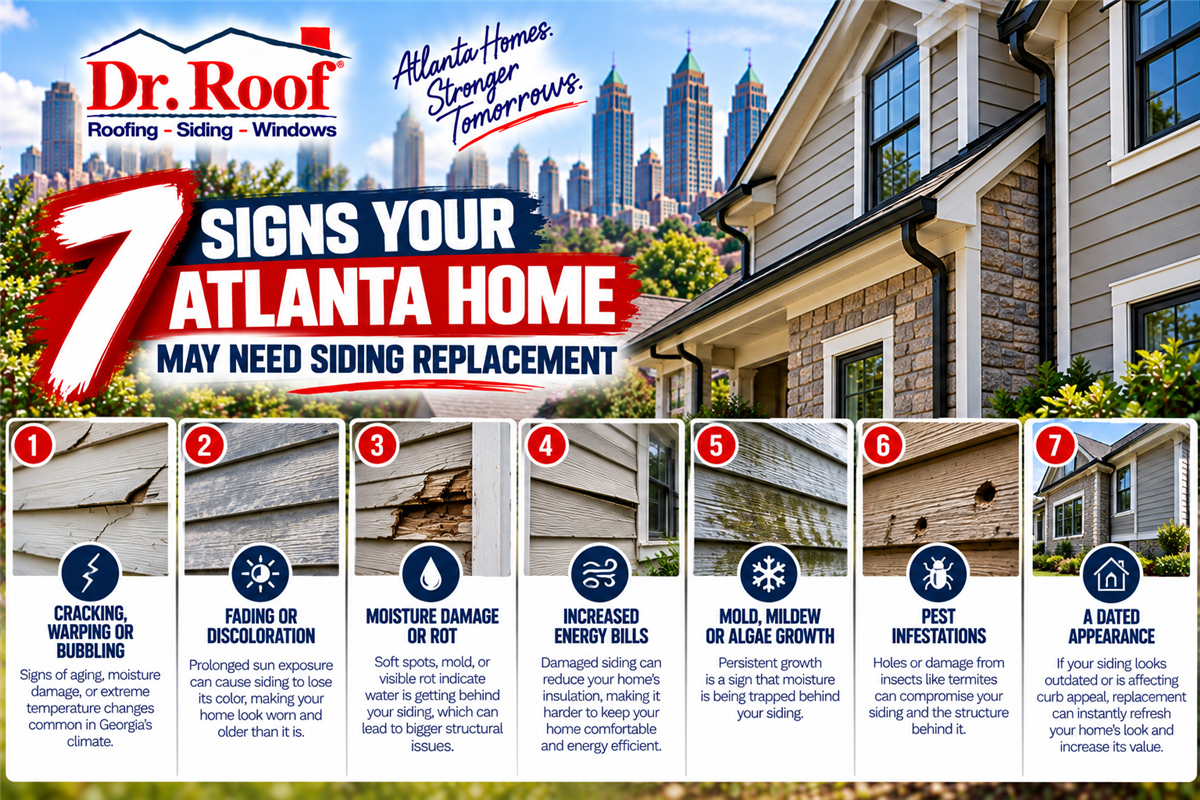
Here are seven signs that your home's siding deserves professional evaluation.
When Should Siding Be Replaced?
Siding replacement becomes worth considering when the existing material can no longer provide appropriate protection or when deterioration affects enough of the exterior that continued repairs become impractical.
Possible warning signs include:
Widespread cracks or holes
Warped or buckled siding
Loose or missing sections
Rot or moisture-related deterioration
Significant finish failure
Pest damage
Recurring repairs throughout the exterior
A professional inspection should determine whether the problem involves the siding itself, the installation, or the wall assembly beneath it.
Age alone is not enough to decide that siding needs replacement.
1. Cracked, Broken, or Missing Siding
Visible physical damage is one of the clearest reasons to inspect siding.
Depending on the material, homeowners may notice:
Cracks
Holes
Broken panel edges
Chipped boards
Missing sections
Impact damage
Gaps between materials
Storm debris, fallen branches, lawn equipment, and other impacts can damage exterior siding.
Can Cracked Siding Be Repaired?
Sometimes.
A single damaged panel or board may be repairable or replaceable without changing the entire exterior.
However, the contractor should inspect the surrounding materials.
If numerous panels are cracking or the siding has become difficult to repair without causing additional damage, broader replacement may deserve consideration.
2. Warped, Buckled, or Distorted Panels
Siding should generally appear properly aligned and securely installed.
Warping or buckling may indicate that something has changed.
Potential causes include:
Improper installation
Restricted thermal movement
Moisture exposure
Physical impact
Material deterioration
Movement in underlying components
Vinyl siding, for example, must be installed to accommodate expansion and contraction as temperatures change.
If panels are fastened too tightly, movement can become restricted.
That may contribute to distortion.
What Should Homeowners Look For?
From the ground, check for:
Uneven panels
Sections that protrude
Wavy siding
Visible buckling
Corners that no longer align
Areas that appear to pull away from the wall
A contractor should determine whether the problem is limited to the siding or involves the materials beneath it.
3. Moisture Stains, Soft Spots, or Water Damage
Moisture-related concerns deserve particular attention.
Atlanta's humidity, heavy rain, and thunderstorms make exterior water management an important part of siding performance.
Possible warning signs include:
Persistent water stains
Soft or deteriorated trim
Peeling paint associated with moisture
Swollen materials
Discoloration
Damp areas
Musty odors near exterior walls
Visible deterioration beneath windows
Water damage does not always originate with the siding material.
The problem may involve:
Window flashing
Roof-to-wall flashing
Exterior penetrations
Gutters
Downspouts
Failed sealant
Improper drainage
Installation details
Why Does the Source Matter?
Replacing siding without correcting the water-entry problem may allow damage to continue.
A professional evaluation should identify the source of moisture before recommending repair or replacement.
If water has affected the wall sheathing or framing, those materials may also require attention.
4. Rot, Pest Damage, or Deteriorating Underlying Materials
Some siding materials are more vulnerable to certain types of deterioration than others.
Traditional wood siding, for example, can experience rot when exposed to persistent moisture.
Depending on the material and conditions, homeowners may notice:
Soft wood
Crumbling areas
Insect damage
Holes
Damaged trim
Visible decay
Loose boards
Unexplained deterioration
Pests may also reach wall materials through openings around damaged siding.
Does Pest Damage Mean Complete Replacement Is Necessary?
Not automatically.
Localized damage may be repairable if the underlying structure remains sound.
However, widespread rot, repeated pest activity, or deterioration affecting several exterior areas may justify a larger project.
If active pests are present, the underlying pest problem should also be addressed.
New siding alone will not necessarily correct the cause.
5. Peeling, Blistering, or Repeated Finish Problems
Siding finishes protect and contribute to the appearance of the exterior.
Over time, some finishes may begin to deteriorate.
Warning signs can include:
Peeling paint
Blistering
Extensive chalking
Uneven discoloration
Repeated paint failure
Exposed underlying material
However, fading or peeling does not automatically mean the siding material must be replaced.
For example, properly maintained wood or fiber-cement siding may sometimes be repainted when the material beneath the finish remains sound.
When Is Replacement Worth Considering?
Replacement may be more practical when finish problems are accompanied by:
Widespread material deterioration
Persistent moisture damage
Cracking
Rot
Repeated repairs
Failed underlying components
The contractor should distinguish between a finish-maintenance problem and failure of the siding itself.
6. Loose Siding or Gaps Around Exterior Openings
Siding should remain properly attached while allowing for the movement required by the specific material.
Strong wind, physical impact, deterioration, or installation problems may cause siding to loosen.
Possible signs include:
Rattling during windy weather
Loose panels
Missing fasteners
Separation around corners
Open gaps
Damaged trim
Sections pulling away from the wall
Pay particular attention to areas around:
Windows
Doors
Roof intersections
Exterior fixtures
Utility penetrations
Deck connections
These areas often contain flashing, trim, and other details necessary for water management.
Why Are Gaps a Concern?
Openings can allow unwanted water or pests to reach materials behind the siding.
Not every gap indicates failure; some are intentional parts of a manufacturer's drainage or movement design.
Homeowners should avoid sealing or fastening unfamiliar openings without understanding their purpose.
7. Repeated Siding Repairs Across the Home
One repair does not mean an entire exterior needs replacement.
The situation can change when problems begin occurring throughout the siding system.
For example, homeowners may experience:
Repeated panel replacement
Frequent loose sections
Multiple cracks
Continuing moisture problems
Widespread finish deterioration
Recurring trim damage
Increasing difficulty matching replacement materials
At some point, continued repairs may become less practical than evaluating a broader replacement project.
The decision depends on the condition of the remaining siding and the cost and effectiveness of the proposed repairs.
A contractor should explain why replacement is being recommended rather than assuming that an older exterior must be completely removed.
Siding Repair vs. Replacement: What's the Difference?
Repair addresses a specific problem while retaining most of the existing siding.
Replacement removes and installs siding across a larger portion of the home.
Repair May Make Sense When:
Damage is limited
Surrounding materials remain serviceable
Compatible materials are available
Underlying sheathing is sound
The cause can be corrected
The repair can be completed properly
Replacement May Make Sense When:
Damage is widespread
Multiple sections are deteriorating
Moisture has affected underlying components
Repairs repeatedly fail
Existing siding is no longer practical to maintain
The homeowner wants to change the siding material or design
A professional inspection helps establish which solution is appropriate.
Does Faded Siding Need to Be Replaced?
Not necessarily.
Exterior siding can experience color changes from sunlight and weather exposure.
Fading may be primarily cosmetic.
The correct response depends on the material and its finish.
Some products may be suitable for repainting or manufacturer-approved restoration.
Others may have specific restrictions on painting or refinishing.
If the siding remains structurally sound and continues to manage water appropriately, replacement may not be necessary solely because its appearance has changed.
Homeowners should review manufacturer recommendations before attempting refinishing.
Can Damaged Siding Cause Higher Energy Bills?
Siding is part of the building envelope, but energy performance depends on more than the visible exterior material.
Other important factors include:
Wall insulation
Air sealing
Window and door installation
Exterior insulation
Weather-resistant barriers
Ductwork
HVAC performance
Damaged siding may indicate problems with the wall assembly, but a higher utility bill alone does not establish that siding replacement is necessary.
If energy performance is a concern, homeowners should evaluate the complete wall system rather than assuming new siding will produce a specific reduction in energy costs.
What About Storm Damage to Siding?
Atlanta thunderstorms can bring strong wind, hail, and falling debris.
After severe weather, siding may show:
Cracks
Dents
Missing panels
Loose trim
Impact marks
Broken corners
Damaged exterior components
Some storm-related siding problems are localized.
Others may affect several elevations.
Homeowners should document visible damage from a safe location and consider a professional evaluation if concerns are present.
If an insurance claim is involved, coverage decisions belong to the insurance company and depend on the policy and individual claim.
A contractor can document physical conditions and provide appropriate repair or replacement recommendations.
What Happens During a Professional Siding Inspection?
A professional evaluation may consider:
Existing siding material
Panel or board condition
Cracks and impact damage
Loose sections
Moisture staining
Trim
Flashing
Windows and doors
Roof-to-wall transitions
Soffit and fascia
Underlying materials where accessible
The goal is to identify the scope and cause of the problem.
A useful recommendation should distinguish between visible cosmetic concerns, localized damage, and broader conditions that may justify replacement.
Should You Replace Siding Before It Starts Leaking?
Not every siding problem becomes an interior leak.
However, visible deterioration should not be ignored simply because the living space remains dry.
Water can sometimes reach concealed wall materials before obvious interior symptoms appear.
Cracks, missing sections, significant gaps, or deterioration around flashing deserve evaluation.
Addressing the cause early may provide more repair options.
That does not mean every defect requires immediate full replacement.
The condition should determine the scope.
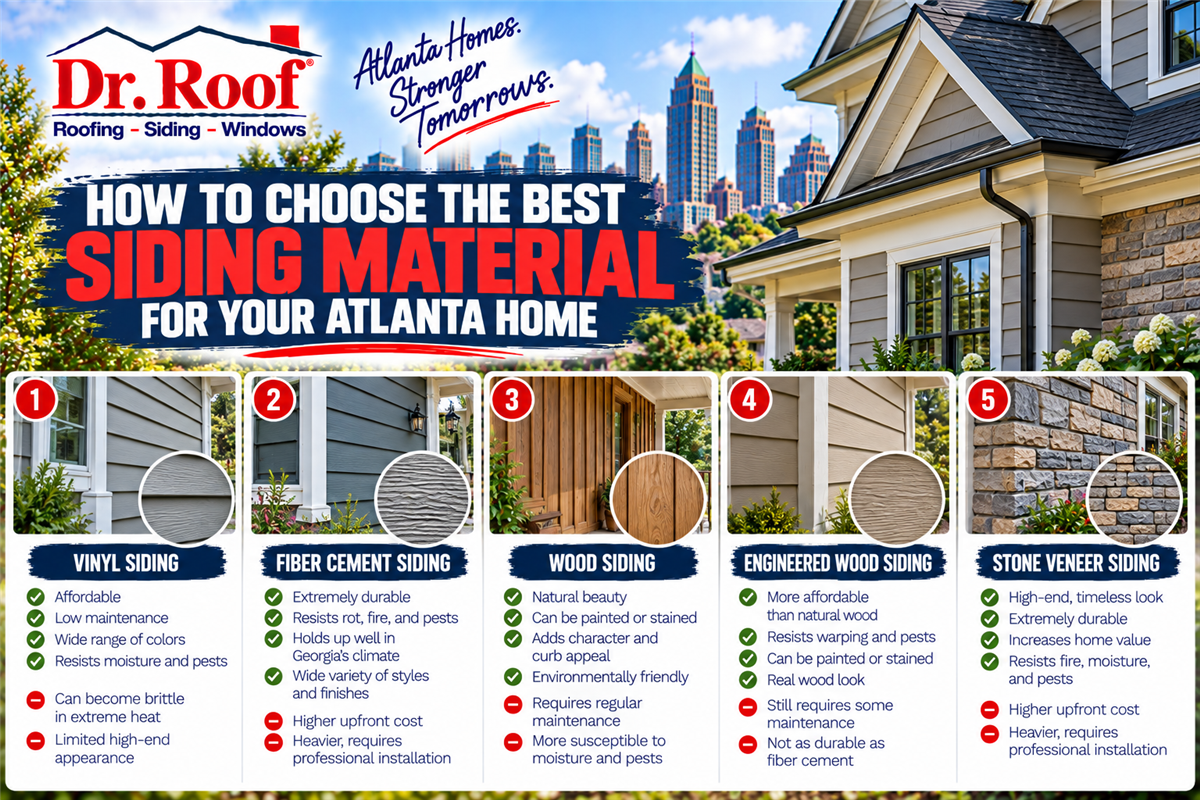
What Siding Materials Can Atlanta Homeowners Consider?
If replacement is appropriate, homeowners may compare different siding options.
Two common categories include vinyl and fiber cement.
Vinyl Siding
Vinyl may appeal to homeowners who want:
Low routine finish maintenance
Broad color selection
Multiple architectural profiles
Lightweight construction
Manufacturer-finished products
Fiber Cement Siding
Fiber cement may appeal to homeowners who prioritize:
Wood-inspired appearance
Moisture resistance
Pest resistance
Substantial architectural profiles
Factory-finished or paintable options
James Hardie fiber-cement products are also classified as noncombustible when evaluated under applicable testing standards.
The appropriate choice depends on the homeowner's priorities and the complete installation.
What Should You Compare Before Approving Siding Replacement?
A complete siding proposal should explain more than the material name.
Homeowners should review:
Manufacturer
Product line
Material
Profile
Color and finish
Existing siding removal
Disposal
Weather-resistant barrier
Flashing
Trim
Underlying repairs
Cleanup
Warranty terms
Ask how hidden damage will be handled if it becomes visible after the existing siding is removed.
Clear documentation helps homeowners understand the project before work begins.
How Dr. Roof Helps Atlanta Homeowners Evaluate Siding
Dr. Roof has served Atlanta-area homeowners since 1988 and provides siding installation and replacement services.
Current siding options include CertainTeed vinyl and James Hardie fiber cement.
Dr. Roof is also a James Hardie Elite Preferred Contractor.
A professional siding consultation can help homeowners evaluate existing exterior concerns and determine whether a repair or replacement project should be considered.
Material selection should follow an understanding of the home's condition, architectural style, maintenance priorities, and installation requirements.
Knowing When Siding Replacement Makes Sense
Cracks, warping, loose panels, moisture damage, rot, failing finishes, and recurring repairs are all reasons to evaluate siding condition.
But no single cosmetic symptom automatically means the entire home needs new siding.
For Atlanta homeowners, the most useful approach is to identify what is wrong, determine whether the problem is isolated, and inspect the condition of surrounding and underlying materials.
When repairs can correct the issue effectively, full replacement may not be necessary.
When deterioration is widespread or the siding system can no longer perform appropriately, replacement may offer a more practical solution.
The first step is understanding the actual condition of your home's exterior.
What are the most common signs that siding needs replacement?
Common warning signs include widespread cracks, warped or buckled panels, loose or missing siding, moisture damage, rot, pest-related deterioration, significant finish problems, and recurring repairs across multiple areas.
Does cracked siding always need to be replaced?
Not necessarily. Localized cracks or impact damage may sometimes be repaired or addressed by replacing individual panels or boards. Widespread cracking or deterioration affecting surrounding materials may make broader replacement more practical.
Can water damage behind siding require replacement?
Yes. Water intrusion can affect sheathing, framing, insulation, and other concealed materials. If damage is extensive, siding may need to be removed so the underlying problems can be evaluated and corrected.
Should faded siding be replaced?
Not automatically. Fading may be cosmetic rather than evidence of siding failure. Depending on the material and manufacturer requirements, refinishing or maintenance may be appropriate when the siding remains in serviceable condition.
How do I know whether to repair or replace my siding?
Repair may make sense when damage is localized and the surrounding wall remains sound. Replacement may be more practical when deterioration is widespread, repairs repeatedly fail, or moisture has damaged underlying materials. A professional inspection can help determine the appropriate scope.
Does Dr. Roof provide siding replacement in Atlanta?
Yes. Dr. Roof provides siding installation and replacement services for Atlanta-area homeowners, including CertainTeed vinyl and James Hardie fiber-cement options. Dr. Roof is also a James Hardie Elite Preferred Contractor.
Subscribe to Dr. Roof's Blog




Comments