When replacing a roof, most homeowners focus on the visible materials: shingle style, color, and manufacturer.
However, one of the most important aspects of roof installation is nearly invisible once the project is complete.
The fasteners used to secure asphalt shingles help keep the roofing materials attached to the roof decking and positioned as intended.
If shingles are fastened incorrectly, the roofing system may become more vulnerable to wind damage, material movement, or other problems.
For Atlanta homeowners, proper shingle fastening is particularly important because residential roofs experience strong thunderstorms, heavy rainfall, and occasional severe weather.
Proper asphalt-shingle fastening requires using manufacturer-approved roofing nails, installing the correct number of fasteners in the specified nailing area, driving them straight and flush, and ensuring they penetrate a suitable roof deck. The exact requirements vary by shingle product, roof pitch, applicable building requirements, and warranty provisions.
A qualified roofing contractor should use the installation instructions for the specific materials selected.
Here are seven fastening details homeowners should understand before approving a roof replacement.
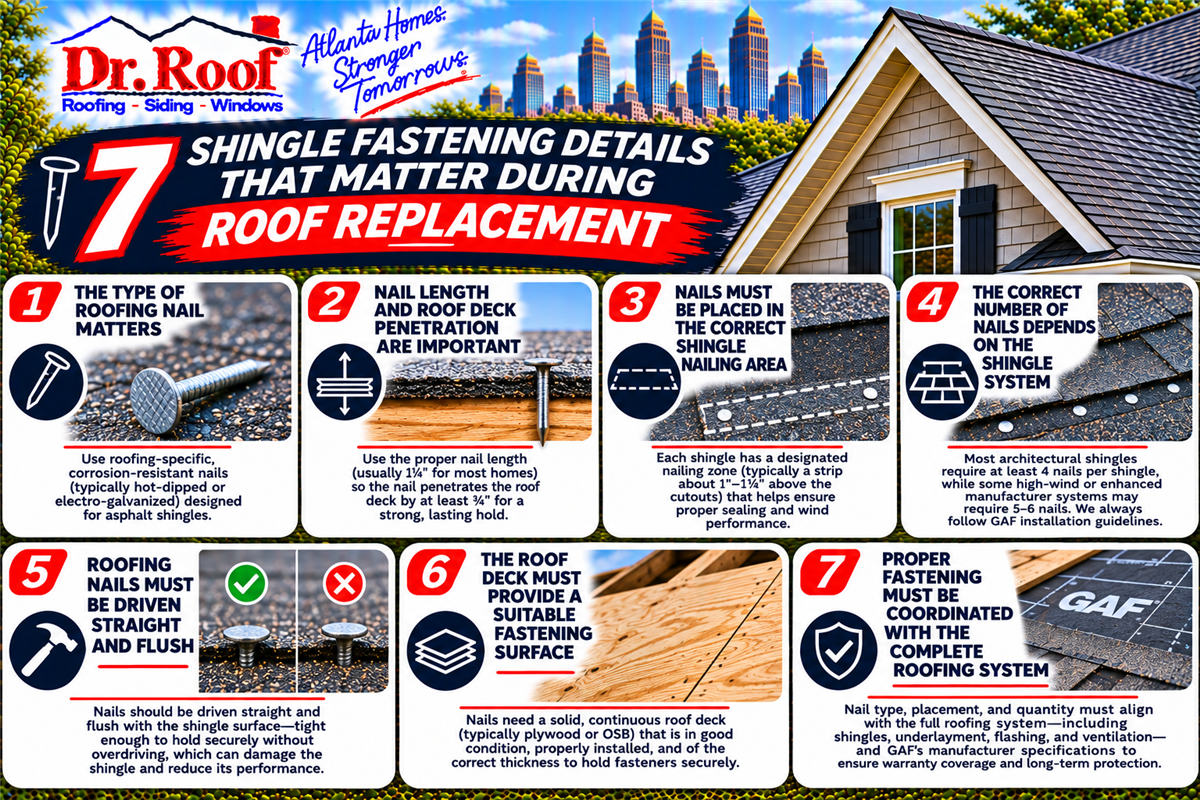
1. The Type of Roofing Nail Matters
Asphalt shingles require fasteners suitable for the roofing product and supporting structure.
Not every nail used in construction is appropriate for roofing.
Manufacturers specify the material, dimensions, and other characteristics of acceptable fasteners.
What Types of Nails Are Used for Asphalt Shingles?
Depending on the manufacturer and product, suitable fasteners may include approved corrosion-resistant roofing nails.
For example, Owens Corning's asphalt-shingle installation instructions identify galvanized steel, stainless steel, and aluminum nails meeting specified requirements.
However, homeowners should not assume that any corrosion-resistant nail will work for every roofing product.
The exact manufacturer's instructions must be followed.
Why Is Corrosion Resistance Important?
Roofing fasteners can experience moisture exposure during the service life of the roofing system.
Corrosion-resistant materials are intended to help maintain appropriate fastening performance under the conditions for which they are specified.
Using unsuitable fasteners may contribute to premature deterioration or other problems.
Can Ordinary Construction Nails Be Used?
Not automatically.
Roofing nails have specific characteristics, including appropriate head dimensions and shank requirements.
A contractor should use fasteners that meet the selected manufacturer's specifications and applicable building requirements.
Are Staples Acceptable for Asphalt Shingles?
Do not assume they are.
Many current asphalt-shingle products specify nails as their required fastening method.
For example, Owens Corning's Duration Series installation instructions require nails for attachment to wood decking.
The contractor should confirm which fasteners are approved for the actual product.
2. Nail Length and Roof Deck Penetration Are Important
Using a suitable roofing nail is only part of the installation process.
The fastener must also provide appropriate attachment to the supporting roof deck.
A nail that is too short may not achieve the required penetration.
Why Does Nail Length Matter?
Asphalt roofing systems include shingles, underlayment, and other components installed over roof decking.
The fastener must pass through the roofing materials and engage the deck appropriately.
The required nail length depends on the shingle assembly and decking configuration.
What Are Manufacturer Penetration Requirements?
For example, Owens Corning's Duration Series instructions require fasteners to penetrate at least three-quarters of an inch into the wood deck or extend completely through the deck by a specified minimum amount.
These are requirements for that manufacturer's product system and should not be treated as universal rules for every shingle.
A contractor must follow the instructions for the selected materials.
Can Nails Be Too Short?
Yes.
Insufficient penetration may reduce the effectiveness of the attachment.
The appropriate length should be established before installation based on the roofing system and supporting materials.
Does Thicker Roof Decking Change Fastener Requirements?
It can.
The fastener selection must account for the materials and assembly being installed.
The contractor should consider the deck thickness, roofing material, and applicable fastening instructions.
3. Nails Must Be Placed in the Correct Shingle Nailing Area
One of the most important details in asphalt-shingle installation is nail placement.
Manufacturers identify where fasteners should be installed on each shingle.
The proper location can vary by product design.
What Is a Shingle Nailing Zone?
The nailing zone is the designated area where fasteners are intended to secure the shingle appropriately.
Some laminated shingles include reinforced or clearly marked fastening areas.
For example, GAF's Timberline products with LayerLock technology use a defined StrikeZone nailing area.
Owens Corning Duration shingles feature SureNail technology, which incorporates a reinforced nailing strip.
These technologies are product-specific.
Why Does Nail Placement Matter?
Correct placement helps the fastener engage the intended shingle layers and support the roofing assembly's designed performance.
A nail positioned too high or too low may not secure the shingle as intended.
Improper placement can contribute to inadequate attachment or other roofing problems.
Do All Asphalt Shingles Have the Same Nailing Pattern?
No.
Different manufacturers and product lines may specify different locations.
For example, a laminated architectural shingle can have different fastening details from a traditional three-tab shingle.
The roofing contractor should follow the instructions for the exact product being installed.
Can a Homeowner Check Nail Placement From the Ground?
Not reliably.
Most fasteners are concealed by overlapping shingles after installation.
Homeowners should ask their contractor about installation procedures and quality checks instead of attempting to inspect the roof themselves.
4. The Correct Number of Nails Depends on the Shingle System
Homeowners sometimes hear that every asphalt shingle should receive four nails or that six nails always provide a better installation.
Neither statement applies universally.
The correct fastening pattern depends on the manufacturer's instructions, roof characteristics, and applicable requirements.
Do Roofers Use Four or Six Nails per Shingle?
Both patterns are used for certain asphalt-shingle products.
For example, Owens Corning explains that its Duration Series shingles may use four or six nails depending on roof slope and building requirements.
Some steep-slope or other specified applications require additional fasteners.
Other manufacturers have different instructions.
Does Using More Nails Automatically Make a Roof Better?
No.
Additional fasteners do not correct improper nail placement, unsuitable decking, or other installation defects.
A contractor must use the correct fastening pattern for the selected system.
Simply adding nails without following manufacturer instructions is not an appropriate substitute for proper installation.
Does Nail Quantity Affect Wind Warranty Eligibility?
It can.
Certain manufacturer warranty provisions depend on specified fastening patterns and qualifying roofing components.
For example, GAF's published warranty information identifies different installation requirements for certain LayerLock products and other shingle types.
The applicable wind coverage also depends on the written warranty and required roofing accessories.
Homeowners should review the actual terms for the selected product.
Does Six-Nail Installation Guarantee Protection From High Winds?
No.
Proper fastening helps the roofing system perform as intended, but it does not make shingles immune to every storm.
Wind performance depends on numerous factors, including roof design, shingle product, installation, surrounding conditions, and the severity of weather exposure.
A manufacturer wind rating or warranty does not guarantee that storm damage cannot occur.
5. Roofing Nails Must Be Driven Straight and Flush
Even when the correct nails and locations are selected, the way the fasteners are driven matters.
A roofing nail should secure the shingle without damaging its surface or remaining improperly raised.
What Is an Overdriven Roofing Nail?
An overdriven nail is installed with excessive force.
The nail head may cut into or pass too far through the shingle material.
This can compromise the intended attachment.
The Asphalt Roofing Manufacturers Association warns against overdriven fasteners.
What Is an Underdriven Roofing Nail?
An underdriven nail does not sit correctly against the shingle or achieve the required installation condition.
A raised nail head may interfere with the shingles installed above it.
Why Are Crooked Nails a Problem?
A nail driven at an angle may not provide the intended attachment.
Improperly seated fasteners can affect the roofing material and how the overlapping courses lie against one another.
Can Roofing Nail Guns Cause Installation Problems?
Pneumatic nail guns are commonly used in residential roofing.
However, improper adjustment or technique can lead to overdriven or underdriven nails.
Owens Corning identifies correct nail-gun adjustment and fastener installation as important aspects of shingle application.
How Should Fastening Mistakes Be Corrected?
The appropriate correction depends on the problem and the manufacturer's instructions.
ARMA's technical guidance explains that certain underdriven nails may be corrected, while crooked or overdriven nails generally require removal and appropriate corrective work.
In some situations, the affected shingle may need replacement.
These corrections should be performed by qualified roofing professionals.
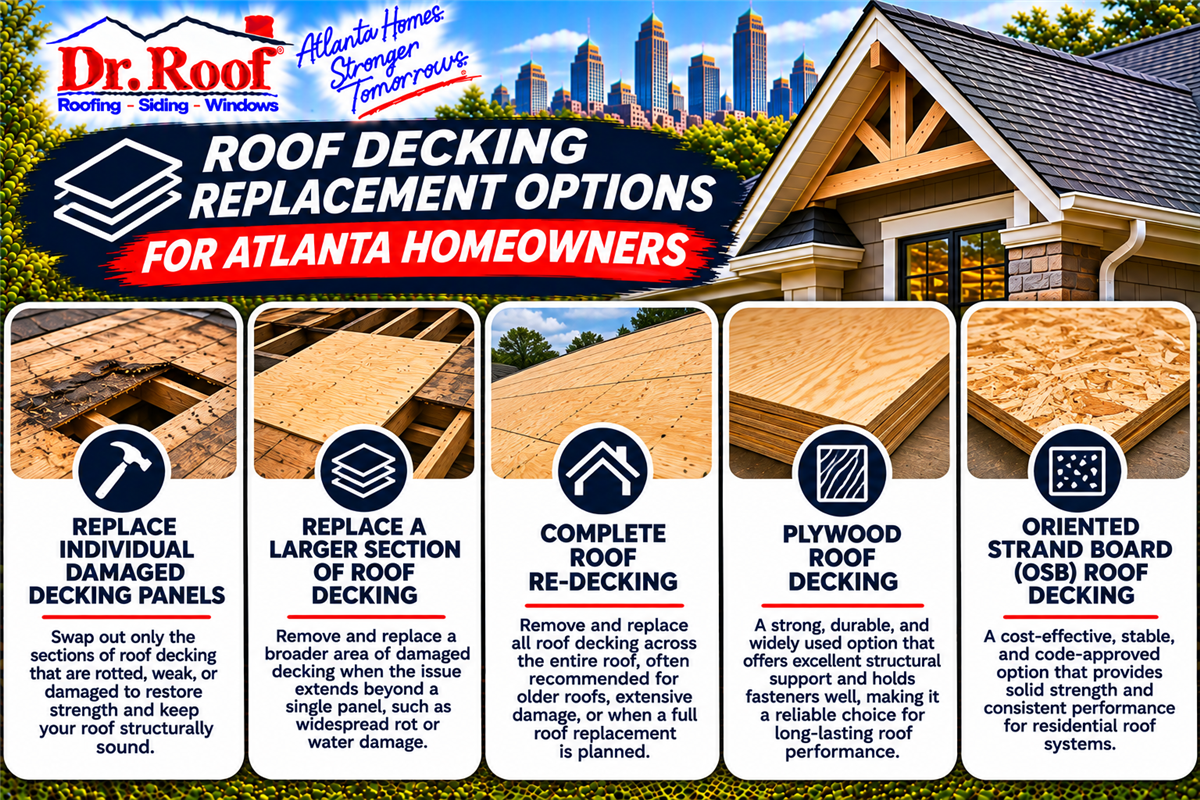
6. The Roof Deck Must Provide a Suitable Fastening Surface
Even properly selected roofing nails cannot perform as intended if the supporting roof deck is unsuitable.
Roof decking provides the surface to which shingles and other roofing components are attached.
On many residential properties, decking consists of plywood or oriented strand board.
Some older homes have individual wood planks.
Why Does Decking Condition Matter?
Roof decking must be structurally suitable and capable of supporting the roofing system.
Potential concerns include:
Wood deterioration
Delaminated panels
Significant moisture damage
Holes or damaged sections
Inadequate support
Unsuitable existing materials
A contractor should evaluate the condition before installing new roofing materials.
What if the Decking Is Rotten?
Unsuitable decking generally needs corrective work before new shingles are installed.
Simply using longer nails does not make deteriorated wood structurally sound.
The contractor should identify the damaged area and determine the appropriate replacement scope.
Can Old Wood Plank Decking Affect Fastening?
Yes.
Individual wood boards may have gaps or other characteristics that require evaluation.
The selected roofing system must be compatible with the supporting deck.
A contractor should confirm that the existing construction provides an appropriate fastening surface.
Does Every Roof Replacement Require New Decking?
No.
Existing decking may remain suitable.
However, roofing materials should not be installed over a substrate that cannot provide the required support or attachment.
The contractor should explain any recommended decking work.
7. Proper Fastening Must Be Coordinated With the Complete Roofing System
Shingle nails are important, but they are only one part of a complete roof replacement.
The shingles, starter materials, underlayment, flashing, ridge components, and roof decking must work together.
Why Do Starter Shingles Matter?
Starter materials are installed at designated roof edges as part of the shingle system.
They help provide appropriate protection and attachment characteristics for the first courses of roofing materials.
Some manufacturer wind-warranty provisions require qualifying starter products at specified roof edges.
Are Ridge Cap Shingles Fastened Differently?
They can be.
Ridge and hip components may have separate fastening instructions.
For example, the manufacturer may specify different fastener lengths or placement requirements for ridge cap shingles installed over a ventilation component.
The roofing contractor should follow the instructions for the actual ridge materials and roof assembly.
What About Shingle Adhesive Sealing?
Many asphalt shingles include thermally activated sealant designed to bond overlapping courses.
Proper nail fastening and sealant activation serve different but complementary roles.
The adhesive does not eliminate the need for correct fasteners.
Likewise, correct fastening does not mean every sealant requirement can be ignored.
Does Cool Weather Affect Roof Installation?
It can.
Some roofing products have specific cold-weather installation instructions.
For example, certain manufacturers require additional procedures under particular temperature conditions.
The contractor should account for weather and the selected product's requirements.
What Can Happen When Asphalt Shingles Are Fastened Incorrectly?
Improper fastening may contribute to several problems, depending on the roofing product and installation conditions.
Potential concerns include:
Lifted shingles
Displaced roofing materials
Reduced attachment performance
Exposed or improperly seated nails
Shingle distortion
Increased vulnerability to certain wind-related damage
Water intrusion associated with defective installation details
However, these symptoms do not automatically prove the fastening was incorrect.
For example, a displaced shingle may result from subsequent storm damage even when the original installation followed the manufacturer's requirements.
A professional inspection should identify the actual cause.
How Can Homeowners Evaluate Shingle Fastening Quality?
Most homeowners cannot directly inspect the completed nail pattern because fasteners are concealed beneath overlapping shingles.
However, you can ask questions before and during the roof replacement project.
What Should You Ask Your Roofing Contractor?
Consider asking:
What exact shingle product will be installed?
Which manufacturer fastening instructions apply?
What type of roofing nails will be used?
How will the correct nail length be determined?
What nailing zone does the product require?
How many fasteners are specified?
Does roof pitch change the fastening pattern?
How will the existing decking be evaluated?
What happens if a fastening error is discovered?
What warranty requirements apply to the installation?
These questions help clarify how the contractor plans to install the roofing system.
Should You Ask for Installation Documentation?
You can.
Depending on the project, the contractor may be able to provide product information, applicable installation specifications, and relevant project records.
The exact documentation available varies.
Can a Home Inspection Confirm Every Nail Was Installed Properly?
Not necessarily.
Concealed fasteners may be difficult to evaluate after installation without disturbing roofing materials.
A professional inspection can identify certain visible symptoms and determine whether further investigation is necessary.
Does Proper Nail Installation Affect a Roof Replacement Warranty?
It can.
Manufacturers establish installation requirements for their roofing products.
A warranty may contain provisions addressing improper installation or eligibility for certain enhanced coverage.
For example, GAF publishes specific installation requirements associated with qualifying wind-warranty provisions.
However, homeowners should not assume every fastening error automatically voids an entire manufacturer's warranty.
The actual coverage and exclusions depend on the written warranty and the cause of the reported problem.
Ask your roofing contractor which warranty applies to the selected shingles and what installation requirements must be met.
Is Shingle Fastening Different on Steep Atlanta Roofs?
It may be.
Atlanta-area homes include a variety of roof designs, from relatively straightforward ranch homes to multi-story properties with steep slopes, dormers, and complicated rooflines.
Some roofing manufacturers specify additional fastening or sealing procedures for very steep roofs.
The Asphalt Roofing Manufacturers Association also identifies special installation considerations for asphalt shingles on slopes greater than 21:12.
However, the exact requirements depend on the selected product and applicable building provisions.
Homeowners should not assume every roof slope uses the same fastening arrangement.
Does More Expensive Roofing Mean Better Fastening?
Not automatically.
A premium shingle may include specialized fastening features, reinforced nailing areas, or different product characteristics.
However, the cost of the roofing materials does not guarantee that they will be installed correctly.
Installation quality depends on following the appropriate procedures and using suitable supporting materials.
A well-selected roofing product still requires professional installation.
Why Proper Shingle Fastening Matters for Atlanta Homeowners
Atlanta-area roofs experience thunderstorms, heavy rainfall, strong winds, and occasional hail.
These weather conditions make it important for roofing materials to be installed according to the intended system design.
Proper fastening supports the attachment of asphalt shingles, but it is not the only factor in roof performance.
Flashing, underlayment, starter materials, ridge components, and roof decking must also be suitable.
For homeowners comparing roofing contractors, understanding these details can make it easier to evaluate the complete installation proposal.
How Dr. Roof Helps Atlanta Homeowners Plan Roof Replacement
Dr. Roof has served Atlanta-area homeowners since 1988, providing professional roofing inspections, repairs, replacement, and storm-damage documentation support.
Dr. Roof is a GAF Master Elite Certified Contractor and CertainTeed SELECT ShingleMaster.
During a roof replacement consultation, homeowners can discuss the selected shingle manufacturer, product specifications, supporting roof decking, and proposed installation scope.
Manufacturer credentials provide information about participation in roofing qualification programs, but actual installation and written warranty requirements remain important.
A professional roofing proposal should explain the materials being installed and identify the components appropriate for the individual home.
Choose a Roof Replacement Contractor Who Understands the Details
Correct shingle fastening is one of the less visible but important parts of residential roof replacement.
The selected nails must be suitable for the roofing product, positioned in the proper fastening area, driven correctly, and attached to a sound roof deck.
The appropriate fastening pattern must also account for the manufacturer's instructions, roof characteristics, and applicable requirements.
For Atlanta homeowners, asking about these details helps ensure that the roof replacement conversation goes beyond shingle colors and appearance.
If you're planning a roof replacement in Atlanta, Marietta, Roswell, Alpharetta, Smyrna, or surrounding communities, contact Dr. Roof to request a professional roofing consultation and discuss the installation requirements appropriate for your home.
How many nails should be used per asphalt shingle during roof replacement?
The required number depends on the shingle manufacturer, product, roof pitch, and applicable building requirements. Some products specify four-nail or six-nail patterns under different conditions. Contractors should follow the instructions for the exact roofing system.
Why is proper nail placement important for asphalt shingles?
Correct placement helps roofing nails secure the intended shingle layers and support the roofing system's attachment. Nails installed outside the specified nailing area may reduce fastening performance or contribute to installation problems.
What happens if roofing nails are overdriven or underdriven?
Overdriven nails may damage the shingle, while underdriven nails may interfere with proper attachment or overlapping materials. The Asphalt Roofing Manufacturers Association recommends correcting improperly installed fasteners using appropriate procedures.
Does roof decking condition affect shingle fastening?
Yes. Shingles need a suitable supporting deck that provides appropriate structural support and fastener attachment. Deteriorated or unsuitable decking may require repair or replacement before new roofing materials are installed.
Does using six nails per shingle guarantee better wind resistance?
No. More nails do not automatically provide better performance. Correct nail placement, product requirements, roof design, supporting materials, and installation details all matter. The manufacturer specifies the appropriate fastening pattern.
Can improper shingle fastening affect roof replacement warranty coverage?
Potentially. Manufacturer warranties may include installation-related requirements, exclusions, or special conditions for wind coverage. The effect of improper fastening depends on the applicable written warranty and the cause of any reported problem.
Subscribe to Dr. Roof's Blog



Comments