Completing a professional roof repair can bring peace of mind, especially if your home recently experienced a leak, damaged shingles, or storm-related roofing problems.
However, the work doesn't necessarily end when the roofing contractor leaves.
Maintaining the repaired area and monitoring the surrounding roofing system can help homeowners recognize developing concerns before they become more extensive.
For Atlanta homeowners, where roofs experience heavy rainfall, thunderstorms, humidity, and occasional severe weather, understanding what to do after a repair is an important part of responsible home maintenance.
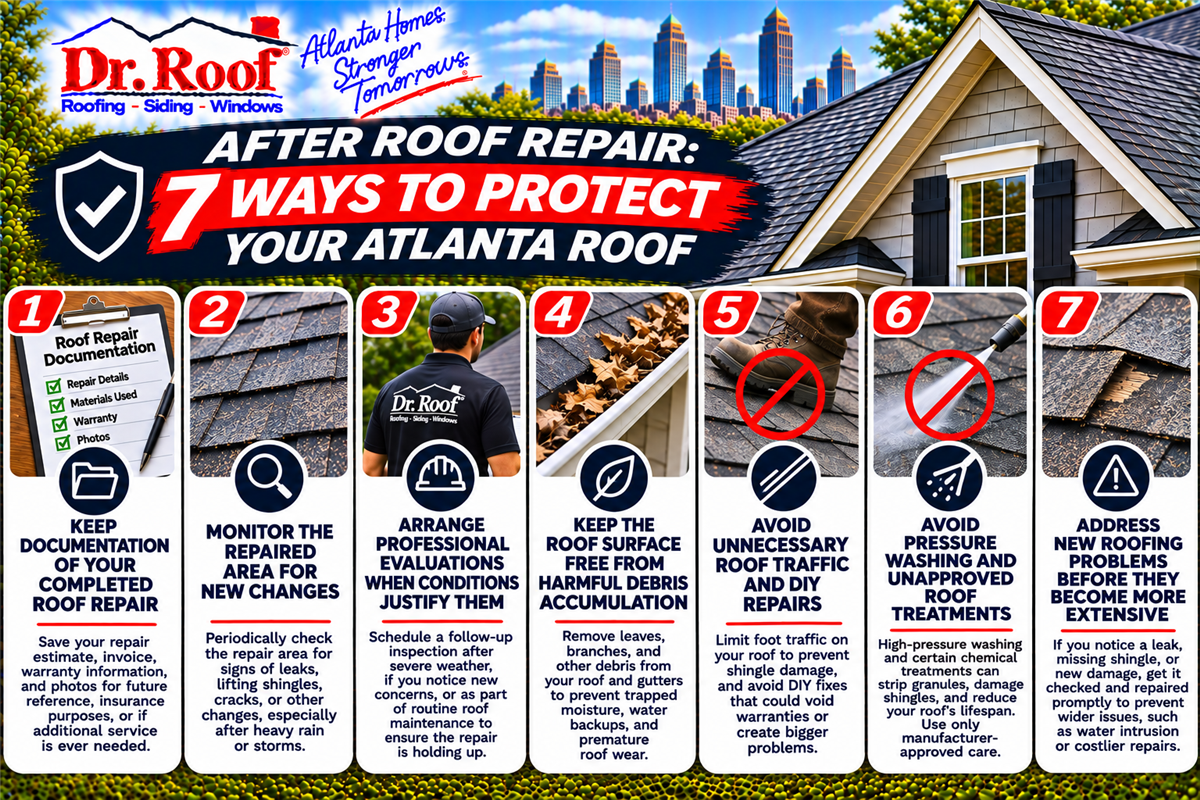
The best way to maintain a repaired roof is to keep documentation of the completed work, monitor the affected area for changes, arrange professional evaluations when appropriate, limit unnecessary roof traffic, and avoid cleaning or treatment methods that could damage asphalt shingles.
These practices can help preserve the condition of the repaired roofing components.
However, no maintenance routine can guarantee that a roof will remain free from future damage or last a particular number of years.
Here are seven practical ways to care for your roof after professional repairs.
1. Keep Documentation of Your Completed Roof Repair
One of the most useful steps after a roof repair is organizing the information about the work performed.
These records can help establish which roofing components were repaired, what materials were used, and whether any warranty protection applies.
What Roof Repair Records Should You Keep?
Consider retaining:
Original inspection findings
Photographs of identified damage
Written repair estimate
Signed repair agreement
Approved changes to the project
Final invoice
Material information
Applicable warranty documents
These records can be especially helpful if additional roofing concerns develop.
Why Is Repair Documentation Important?
Consider a homeowner whose chimney flashing was replaced after a leak.
Several months later, another ceiling stain appears in a different room.
Knowing which flashing components were previously repaired can help the contractor understand the home's roofing history.
However, a new leak does not automatically mean the original repair failed.
Water may be entering through an unrelated roofing component.
Does Every Roof Repair Have the Same Warranty?
No.
Roof repair warranty coverage varies depending on the contractor, roofing materials, and work performed.
A localized repair may have different coverage from a complete roof replacement.
Review the written agreement to understand which components are covered, how long coverage applies, and how to report concerns.
2. Monitor the Repaired Area for New Changes
After a roofing contractor completes repairs, homeowners can continue observing the affected area from safe locations.
You do not need to climb onto the roof.
Instead, pay attention to visible changes or symptoms that might indicate additional investigation is necessary.
What Should You Watch for After Roof Repair?
Depending on the original problem, monitor for:
New ceiling stains
Recurring water intrusion
Missing or displaced shingles
Visible flashing movement
Unusual changes in the repaired area
Damp materials in safely accessible interior spaces
Additional roofing damage after storms
Not every appearance change indicates a roofing defect.
For example, replacement shingles may look slightly different from surrounding materials because of weathering or product availability.
What if the Roof Starts Leaking Again?
Contact your roofing contractor and explain what you've noticed.
The contractor may need to determine whether the water intrusion involves the repaired area or a separate problem.
Keep photographs and notes about when the new leak appeared.
Can a Roof Repair Be Successful Even if Another Problem Develops?
Yes.
A localized repair addresses specific damage.
It does not automatically restore or replace every component of an older roofing system.
For example, replacing a deteriorated plumbing vent boot does not prevent another roof penetration from developing a separate problem in the future.
This is one reason ongoing observation remains useful.
3. Arrange Professional Evaluations When Conditions Justify Them
Regular roof evaluations can help identify damage that may not be obvious from the ground.
However, homeowners should distinguish between monitoring a completed repair and repeatedly performing unnecessary work.
The appropriate inspection schedule depends on the roofing system's condition, materials, history, and weather exposure.
Should You Have Your Roof Inspected After Repairs?
If the original repair has been completed and appropriately reviewed, an immediate additional inspection may not be necessary.
However, future evaluations can be useful as part of routine roofing maintenance.
The Asphalt Roofing Manufacturers Association recommends spring and fall roof evaluations as a general framework for asphalt-shingle maintenance.
Why Are Seasonal Evaluations Useful in Atlanta?
Atlanta-area roofs experience different weather conditions throughout the year.
Spring and summer thunderstorms may produce strong winds and heavy rainfall.
Fall and winter weather can also reveal existing roofing concerns.
A professional evaluation may identify:
Damaged shingles
Loose roofing components
Deteriorated flashing
Problems around roof penetrations
Signs of water intrusion
New damage near previous repair areas
The inspection should identify actual roofing concerns rather than automatically recommend additional work.
Does Every Storm Require Another Inspection?
Not necessarily.
Ordinary rainfall does not automatically justify a professional roofing appointment.
However, significant wind, hail, falling debris, or newly visible damage may warrant an evaluation.
The National Roofing Contractors Association recommends professional inspections after significant storm damage because some roofing problems may not be obvious from the ground.
4. Keep the Roof Surface Free From Harmful Debris Accumulation
Leaves, branches, and other debris can collect on residential roofs, particularly around valleys and roof transitions.
Atlanta neighborhoods often contain mature trees, and homes beneath heavy tree cover may experience increased debris accumulation.
Why Can Debris Be a Concern?
Persistent accumulations can interfere with the roof's intended water-shedding function.
Debris may also retain moisture against roofing materials.
For example, a collection of leaves in a roof valley may obstruct the normal movement of rainwater.
This doesn't mean every fallen leaf damages the roof.
However, significant accumulation can justify professional attention.
Should Homeowners Remove Debris Themselves?
Avoid climbing onto the roof.
Roofing materials can become slippery, and walking across shingles creates a risk of falls and material damage.
If debris needs to be removed from an elevated roof area, arrange for appropriately trained professionals.
What About Overhanging Tree Branches?
Branches that rub against roofing materials or extend into roof access areas may deserve evaluation.
However, homeowners should not attempt elevated tree trimming or removal of large branches themselves.
A qualified tree professional can determine what work is appropriate.
Can Debris Damage a Previously Repaired Area?
Potentially.
For example, falling branches can damage both original and recently replaced shingles.
The repaired area is not immune to new physical impacts.
Maintaining appropriate clearance around the roof may help reduce certain avoidable exposures, although it cannot prevent every storm-related event.
5. Avoid Unnecessary Roof Traffic and DIY Repairs
A professional roof repair is intended to restore the affected roofing components appropriately.
However, subsequent work or unnecessary foot traffic can create additional concerns.
Can Walking on Asphalt Shingles Cause Damage?
It can.
Foot traffic may affect shingles under certain conditions, particularly when materials are hot, brittle, wet, or otherwise vulnerable.
Walking on the roof also creates a substantial safety risk.
Homeowners should avoid rooftop access and leave elevated inspections or repairs to qualified professionals.
What if Another Contractor Needs to Access the Roof?
Some home projects may involve work near roofing materials or penetrations.
For example, installing equipment that passes through the roof may require changes to flashing or other components.
Before authorizing such work, explain where previous roof repairs were completed.
The relevant contractors should coordinate appropriate roofing details.
Should You Apply Additional Sealant as Preventive Maintenance?
Not automatically.
Roofing sealants are designed for specific applications.
Applying additional material over an existing repair may not improve performance and could interfere with the intended roofing assembly.
If you suspect a flashing or shingle problem, request a professional evaluation rather than attempting to cover the area with sealant.
Can Unapproved Repairs Affect Warranty Coverage?
Possibly.
The consequences depend on the written warranty and the work performed.
Some warranties contain provisions addressing damage from alterations or improper repairs.
Review the applicable documents before making changes to previously repaired roofing components.
6. Avoid Pressure Washing and Unapproved Roof Treatments
Homeowners sometimes consider cleaning products, roof coatings, or rejuvenating treatments to improve the appearance of their shingles.
However, some methods can damage asphalt roofing materials.
Is Pressure Washing Safe for Asphalt Shingles?
The Asphalt Roofing Manufacturers Association advises against pressure washing asphalt shingles.
High-pressure water can dislodge protective surface granules or damage the roofing materials.
This is especially important when a roof contains recently repaired sections.
What About Scrubbing Shingles With a Brush?
Aggressive brushing or abrasive cleaning can also damage the roof surface.
ARMA recommends avoiding brushes and other methods that can harm asphalt-shingle materials.
Homeowners should not attempt roof cleaning without understanding manufacturer requirements and safety risks.
Do Roof Rejuvenators Extend the Life of Repaired Shingles?
Homeowners should be cautious about such claims.
In its 2026 technical guidance, ARMA advises against field-applied coatings and rejuvenators on installed asphalt shingles without considering manufacturer recommendations.
Some treatments may negatively affect roofing performance or product characteristics.
Should You Apply a Protective Coating Over Your Roof Repair?
Not unless the proposed treatment is appropriate for the roofing system and permitted by the manufacturer.
A coating is not a substitute for correcting damaged shingles, flashing, or underlying materials.
Before approving a treatment, ask whether the manufacturer recommends it and whether it may affect existing warranty provisions.
7. Address New Roofing Problems Before They Become More Extensive
One of the most important long-term maintenance practices is responding appropriately when new damage develops.
A completed repair does not prevent all future roofing problems.
Strong winds may displace other shingles, flashing can deteriorate elsewhere, and falling branches can create new damage.
Why Does Prompt Attention Matter?
When a roofing component becomes compromised, continued weather exposure may affect surrounding materials.
For example, a missing shingle can expose the underlayment beneath it.
If the problem allows water intrusion, nearby decking or insulation may also be affected.
However, the extent of damage depends on the actual conditions.
Does Every Roofing Concern Require Immediate Repair?
No.
Some cosmetic changes or ordinary weathering may not require corrective work.
A professional evaluation can help distinguish between normal material changes and functional damage.
When Should You Contact a Roofing Contractor?
Arrange an evaluation if you notice:
Active water intrusion
Newly missing shingles
Significant flashing damage
Storm-related impact damage
Exposed roofing materials
Suspected deterioration beneath the roof covering
Do not assume that every new concern involves the previously repaired area.
How Long Should a Professional Roof Repair Last?
There is no universal lifespan that applies to every roofing repair.
The durability of a repair depends on several factors, including:
Type of damage
Materials used
Quality of installation
Condition of surrounding shingles
Roof design
Weather exposure
Subsequent physical damage
For example, replacing an individual damaged shingle on an otherwise serviceable roofing system is different from repairing deteriorated flashing on an extensively aged roof.
Does a Repair Reset the Age of the Roof?
No.
Replacing a localized component does not make the entire roof new.
Other roofing materials continue to age according to their condition and exposure.
This is why homeowners should understand the scope of a completed repair.
Can Maintenance Guarantee a Longer-Lasting Repair?
No.
Appropriate maintenance can help identify developing concerns and reduce certain avoidable problems.
However, it cannot guarantee that a particular repair or roofing system will remain serviceable for a specific number of years.
What if the Repaired Shingles Don't Match the Rest of the Roof?
A difference in appearance does not automatically indicate a poor repair.
Existing asphalt shingles can change color through weather exposure.
Manufacturers may also discontinue certain colors or product lines.
As a result, replacement shingles may appear newer or slightly different.
The important question is whether the installed materials are compatible and the repair was completed appropriately.
If the appearance is unusually inconsistent or the shingles appear distorted, contact the contractor for an evaluation.
Can Homeowners Insurance Cover New Damage After a Roof Repair?
Possibly, depending on the cause of the new damage and the insurance policy.
Some sudden storm-related losses may qualify for coverage.
Ordinary deterioration and maintenance-related problems may be treated differently.
A roofing contractor may document physical conditions and recommend repairs, but the insurer determines coverage and claim payment.
A previous roof repair does not automatically establish coverage for a later loss.
How Dr. Roof Helps Atlanta Homeowners Maintain Their Roofing Systems
Dr. Roof has served Atlanta-area homeowners since 1988, providing professional roofing inspections, repairs, replacement, and storm-damage documentation support.
Dr. Roof is a GAF Master Elite Certified Contractor and CertainTeed SELECT ShingleMaster.
Homeowners with concerns about previously repaired roofing components can request a professional evaluation.
Depending on the circumstances, Dr. Roof may provide photographs, written findings, and recommendations for additional repairs or replacement.
The goal is identifying the actual roofing condition and determining whether corrective work is appropriate.
Protect the Work That's Already Been Done
A completed roof repair is an important step toward restoring your home's protection, but continued attention remains valuable.
Keeping documentation, monitoring the repaired area, limiting unnecessary roof traffic, avoiding damaging cleaning methods, and addressing new problems can help preserve the roofing system's condition.
For Atlanta homeowners, these practices support responsible maintenance without assuming every roofing concern requires another repair.
If you've noticed changes around a previously repaired section or suspect new roof damage, contact Dr. Roof to schedule a professional roofing evaluation and discuss the options appropriate for your home.
How do I maintain my roof after professional repairs?
Keep the repair documentation, monitor the affected area from safe locations, arrange professional evaluations when appropriate, avoid unnecessary roof traffic, and report new leaks or damaged materials promptly. Maintenance cannot guarantee a specific repair lifespan.
Should I schedule another roof inspection after a repair?
Not necessarily immediately. If the completed work has been appropriately reviewed, further inspection may be part of routine maintenance or appropriate after significant storms, suspected damage, or recurring leaks. The schedule depends on the roof's condition.
Can pressure washing damage a repaired asphalt-shingle roof?
Yes. High-pressure washing can dislodge protective granules and damage asphalt shingles. The Asphalt Roofing Manufacturers Association advises against pressure washing asphalt roofing materials, including previously repaired areas.
Does replacing damaged shingles extend the life of the entire roof?
A localized repair can help restore the affected area's protection, but it does not reset the age of the entire roofing system or guarantee additional years of service. Overall performance depends on the condition of all roofing components.
What should I do if a roof leak returns after repairs?
Document the new water intrusion from a safe location and contact the roofing contractor. The cause may involve the repaired section, another roofing component, or a separate moisture source. Review the applicable repair warranty before authorizing additional work.
Subscribe to Dr. Roof's Blog



Comments