Can You Repair a 20-Year-Old Roof?
Yes, a 20-year-old roof can sometimes be repaired.
But whether a repair makes sense depends on much more than the age of the roof.
A 20-year-old asphalt shingle roof may still have useful life left if the damage is isolated and the rest of the roofing system is in good condition. On the other hand, if the roof has widespread deterioration, repeated leaks, brittle shingles, or multiple previous repairs, replacement may make more financial sense.
The key question is not:
“Can this roof be repaired?”
It is:
“Will repairing this roof solve the problem, or am I just delaying an inevitable replacement?”
When Does It Make Sense to Repair a 20-Year-Old Roof?
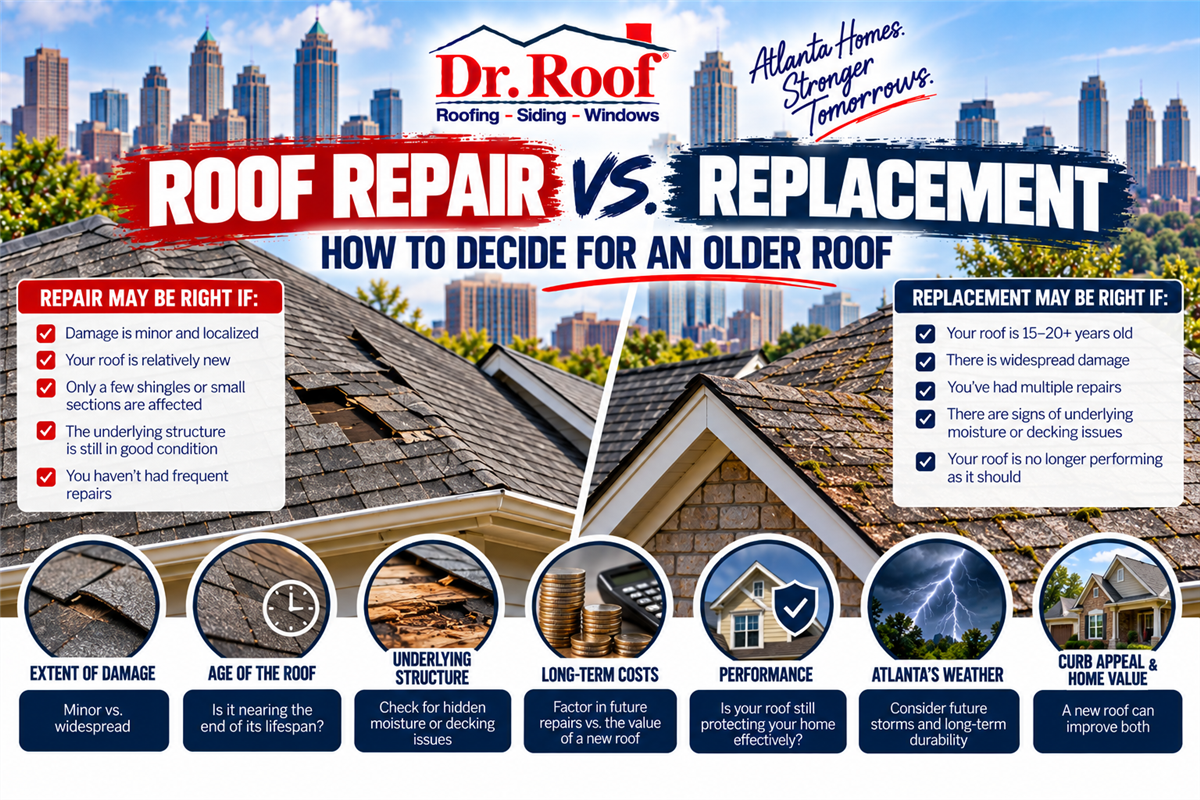
Repair may still be a good option if the problem is limited to one small area.
Examples include:
A leaking pipe boot
Damaged flashing
A few missing shingles
A small area damaged by wind
An isolated roof penetration issue
A localized leak with an obvious cause
If the rest of the roof is still performing well, an experienced roofer may be able to repair the problem and extend the useful life of the roof.
A 20-year-old roof does not automatically need to be replaced simply because of its age.
When Does Repair Stop Making Sense?
Repairs become less attractive when the roof has problems throughout the system rather than in one isolated location.
Replacement may make more sense if you are seeing:
Multiple leaks in different areas
Repeated repairs over the last few years
Widespread granule loss
Curling shingles
Cracked or brittle shingles
Shingles frequently blowing off
Soft or damaged decking
Sagging areas
Significant storm damage
Large sections of deteriorated roofing
At that point, fixing one problem may simply mean another problem appears several months later.
Is 20 Years Old for an Asphalt Shingle Roof?
Twenty years is considered an older roof, but it is not necessarily the end of its life.
Many asphalt shingle roofs last around 20 to 25 years or longer, depending on factors such as:
Shingle quality
Installation quality
Attic ventilation
Sun exposure
Storm exposure
Roof pitch
Maintenance
Previous repairs
In Metro Atlanta, roofs also deal with years of heat, humidity, heavy rain, wind, hail, and severe thunderstorms.
That means two roofs installed in the same year can be in very different condition today.
Should I Repair or Replace My 20-Year-Old Roof?
The decision should be based on the roof's overall condition, not simply its age.
A good way to think about it is:
Age + condition + repair history + extent of damage + remaining useful life + repair cost
For example:
Scenario 1: Repair Probably Makes Sense
Your roof is 20 years old.
You have one leak around a pipe boot.
The shingles are still lying flat, there is no significant granule loss, and you have not had repeated roofing problems.
In this situation, a repair may be completely reasonable.
Scenario 2: Replacement May Make More Sense
Your roof is 20 years old.
You have had three leaks in the past two years.
Several areas have been repaired, shingles are brittle, and granules are collecting in the gutters.
In this situation, continuing to repair individual problems may not be the best long-term investment.
How Much Should I Spend Repairing an Old Roof?
There is no universal dollar amount where repair suddenly becomes a bad decision.
However, homeowners should think about how much money they are putting into a roof that may only have limited life remaining.
If you spend money repairing an older roof and then replace it a year later, much of that repair investment may be lost.
Before making a major repair on a 20-year-old roof, ask:
How much will this repair cost?
How much useful life is likely left?
Have I already repaired this roof several times?
Are other areas likely to fail soon?
Would this money be better applied toward replacement?
A reputable roofing contractor should be willing to have that conversation with you.
Can You Match Shingles on a 20-Year-Old Roof?
Sometimes, but it can be difficult.
Shingle manufacturers change colors and product lines over time. Existing shingles also fade due to years of sun and weather exposure.
Even if a similar shingle is still available, a repair may not perfectly match the surrounding roof.
This does not necessarily affect the performance of the repair, but homeowners should understand that older roof repairs may be more visible.
Can You Repair a Roof That Is Already Leaking?
Yes.
Many roof leaks can be repaired if the source can be identified and the surrounding roofing materials are still in good condition.
Common repairable leak sources include:
Pipe boots
Flashing
Skylights
Valleys
Chimneys
Roof vents
Missing or damaged shingles
The problem becomes more complicated when leaks are appearing in several locations or when the roofing material itself is deteriorating.
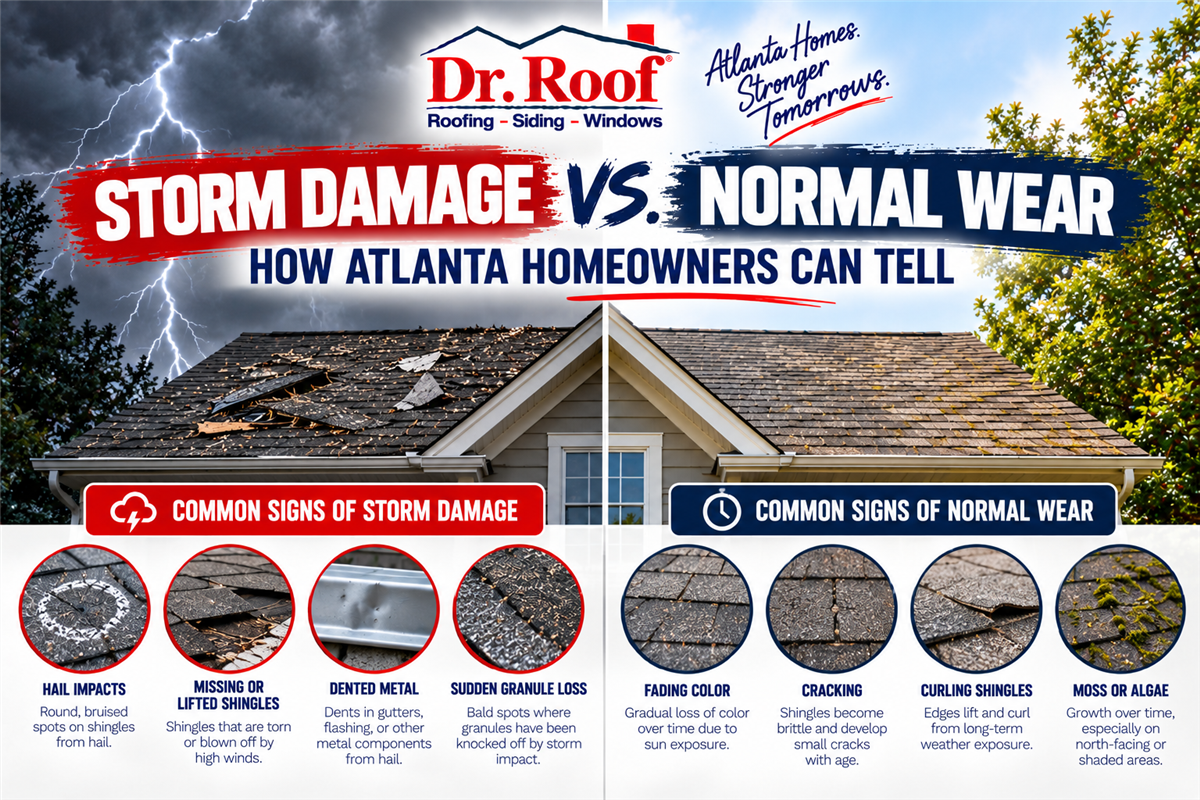
What If My 20-Year-Old Roof Has Storm Damage?
Storm damage does not automatically mean the entire roof needs to be replaced.
Wind, hail, falling branches, or severe weather may damage only part of a roof.
However, repairing storm damage on a 20-year-old roof can be more complicated because the surrounding shingles may already be brittle or deteriorated.
A roofing professional should evaluate both the storm damage and the condition of the existing roof before recommending repair or replacement.
Will Repairing My Old Roof Extend Its Life?
It can.
A properly completed repair can solve a specific problem and potentially add useful life to a roof.
But a repair does not make an old roofing system new again.
For example, replacing one damaged pipe boot does not improve the condition of 20-year-old shingles across the rest of the roof.
This is why the goal should be to determine whether you are fixing an isolated defect or trying to hold together a roofing system that is reaching the end of its useful life.
Should I Replace My 20-Year-Old Roof Before It Starts Leaking?
Not always.
If your roof is still in good condition, you may not need to replace it immediately.
However, homeowners with older roofs may want to start planning ahead.
Proactive replacement can allow you to:
Choose your contractor carefully
Compare roofing options
Arrange financing if needed
Avoid emergency decisions
Schedule the work at a convenient time
Waiting until water enters your home can turn a planned home improvement project into an urgent problem.
What Are the Signs a 20-Year-Old Roof Should Be Replaced?
Some of the most common warning signs include:
Multiple roof leaks
Repeated repair history
Widespread shingle cracking
Curling shingles
Heavy granule loss
Missing shingles in several areas
Soft or damaged decking
Sagging roof sections
Visible deterioration across the roof
Repairs that are becoming increasingly expensive
The more of these conditions you see together, the stronger the case for replacement becomes.
Can a Roofer Tell Me How Much Life My Roof Has Left?
A roofer can usually provide an informed opinion based on the roof's current condition, but nobody can predict the exact date a roof will fail.
A professional inspection should evaluate:
Shingle condition
Flashing
Roof penetrations
Valleys
Ventilation
Visible decking concerns
Previous repairs
Signs of moisture intrusion
The inspection should help you understand whether the roof appears repairable, whether replacement should be planned soon, or whether the roof still has meaningful useful life remaining.
Frequently Asked Questions About Repairing a 20-Year-Old Roof
Is it worth repairing a 20-year-old roof?
It can be.
If the problem is isolated and the rest of the roof is in good condition, repair may be worthwhile.
If deterioration is widespread or you have already made several repairs, replacement may provide better long-term value.
Is a 20-year-old roof too old to repair?
No.
A roof does not become unrepairable automatically at 20 years old.
The condition of the roofing materials matters more than the number alone.
How long will a repair last on an old roof?
That depends on what is being repaired and the condition of the surrounding roofing system.
A properly completed localized repair may last for years, but it cannot prevent unrelated aging problems from occurring elsewhere on the roof.
Should I repair a roof if I plan to replace it soon?
Small repairs may still make sense if they are needed to stop active water intrusion.
However, homeowners should be cautious about investing heavily in repairs if the entire roof will likely be replaced in the near future.
Can I keep repairing my roof instead of replacing it?
For a while, possibly.
But if repairs become frequent, expensive, or widespread, continued patching may eventually cost more than addressing the entire roofing system.
The Bottom Line: Can You Repair a 20-Year-Old Roof?
Yes.
A 20-year-old roof can absolutely be repaired if the problem is isolated and the rest of the roof is still in good condition.
But age becomes an important factor when combined with repeated leaks, widespread deterioration, brittle shingles, and a growing repair history.
The right decision is not always replacement, and it is not always repair.
It should depend on the actual condition of your roof.
Have a 20-Year-Old Roof in Metro Atlanta?
At Dr. Roof Atlanta, we have been helping homeowners with roof repairs and roof replacements since 1988.
Because we handle both repairs and complete roof replacements, we can help you evaluate the roof as a whole rather than assuming every older roof needs to be replaced.
If your roof can reasonably be repaired, we can discuss the repair.
If replacement makes more sense, we can explain why and walk you through your options.
If your roof is around 20 years old and you are unsure what to do next, schedule a professional roof evaluation with Dr. Roof.
Dr. Roof Atlanta - We've Got You Covered.
Subscribe to Dr. Roof's Blog




Comments