How Do I Know If My Roof Is Too Old? 12 Signs It May Be Time for a New Roof
If your roof is 15, 20, or even 25 years old, you may be wondering: Do I actually need a new roof, or can I keep repairing the one I have?
The short answer is that age alone does not determine whether a roof needs to be replaced. The condition of the shingles, previous repairs, leaks, ventilation, storm exposure, installation quality, and condition of the roof decking all matter.
However, once an asphalt shingle roof reaches roughly 15 to 20+ years old, it becomes increasingly important to have it professionally inspected and start planning for eventual replacement.
Here are 12 signs that an older roof may be approaching the end of its useful life.
1. How Old Is Too Old for an Asphalt Shingle Roof?
There is no single expiration date for a roof.
Many asphalt shingle roofs last approximately 20 to 25 years or longer, depending on the type of shingle, installation quality, weather exposure, ventilation, maintenance, and other factors.
In Metro Atlanta, roofs also have to withstand years of intense summer heat, humidity, heavy rain, wind, hail, falling branches, and severe thunderstorms.
If your roof is:
Under 10 years old: A localized problem will often be a repair issue.
10–15 years old: Condition becomes increasingly important.
15–20 years old: It is smart to have the roof evaluated if you notice deterioration or recurring problems.
20+ years old: You should strongly consider having a professional determine how much useful life remains.
A 20-year-old roof does not automatically need replacement, but its age should no longer be ignored.
2. Should I Replace a 20-Year-Old Roof If It Isn't Leaking?
Not necessarily.
A roof does not have to be leaking to be nearing the end of its life.
Leaks usually occur after some portion of the roofing system has already deteriorated enough for water to penetrate it.
An older roof that isn't leaking today may still have:
Brittle shingles
Significant granule loss
Deteriorating flashing
Aging pipe boots
Reduced wind resistance
Previous repairs
Ventilation problems
Deterioration that cannot easily be seen from the ground
If your roof is around 20 years old, a professional inspection can help you understand whether you have several years remaining or whether it makes sense to start planning a replacement.
3. Curling, Cracked or Brittle Shingles
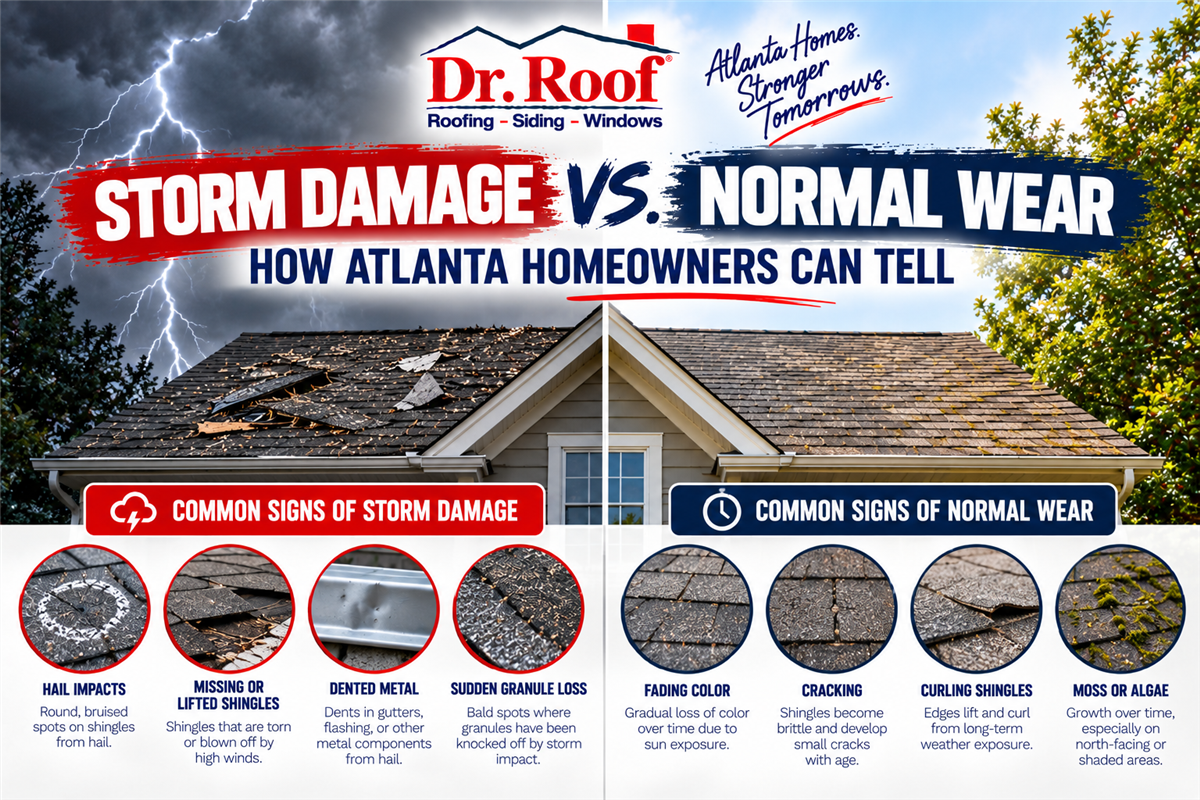
Shingles change as they age.
Look for shingles that are:
Curling at the edges
Cracking
Breaking
Lifting
Buckling
Becoming brittle
One damaged shingle does not mean you need a new roof.
If deterioration is occurring throughout the roof, however, replacing individual shingles may no longer solve the underlying problem.
4. You're Finding Shingle Granules in Your Gutters
Asphalt shingles contain protective granules on their surface.
Some granule loss is normal, but an older roof experiencing substantial granule loss may be deteriorating.
You might notice:
Granules accumulating in gutters
Granules near downspouts
Bald or shiny-looking areas on shingles
Sections of the roof that appear different in color
Widespread granule loss is one reason an older roof should be professionally evaluated.
5. Your Roof Has Needed Multiple Repairs
Ask yourself:
How many times have I repaired this roof in the last few years?
One isolated repair is very different from repeatedly fixing leaks in different areas.
If you have repaired:
A pipe boot one year
Flashing the next year
Missing shingles after another storm
A leak somewhere else several months later
…the individual repairs may actually be symptoms of an aging roofing system.
There eventually comes a point where continuing to spend money repairing an old roof makes less financial sense than replacing it.
6. You Have Recurring Roof Leaks
A single roof leak does not automatically mean you need a new roof.
Roof leaks can sometimes be caused by relatively minor problems such as damaged flashing, pipe boots, isolated shingles, or another localized issue.
But multiple leaks or leaks appearing in different parts of an older roof deserve more attention.
Signs of possible roof leakage include:
Ceiling stains
Water spots
Damp insulation
Moisture in the attic
Musty odors
Peeling paint
Water appearing after heavy rain
The important question isn't simply, "Can this leak be repaired?"
It is:
"What is the overall condition of the roof?"
7. Your Roof Looks Worn Compared With Your Neighbors' Roofs
This is surprisingly useful.
Many neighborhoods around Atlanta were built in phases, meaning several nearby homes may have roofs of approximately the same age.
If homes throughout your neighborhood are suddenly getting new roofs and yours is still original, it may be worth determining how old your roof actually is.
Look at the roof from the ground.
Does it appear:
Faded?
Uneven?
Patchy?
Wavy?
Heavily stained?
Different from newer roofs nearby?
Appearance alone cannot diagnose a roofing problem, but it can be another sign that an inspection is warranted.
8. Shingles Are Missing or Frequently Blowing Off
An occasional missing shingle after severe weather can often be repaired.
But if shingles are repeatedly blowing off an older roof, the problem may be bigger than the missing shingles themselves.
Older shingles can become more brittle and the roofing system may become less capable of handling wind and weather.
If every major storm seems to create another repair, ask a roofing professional to evaluate the roof as a whole.
9. The Roof Deck Appears Saggy or Uneven
A roofline should generally appear straight and consistent.
Visible sagging, dipping, or uneven areas can indicate a problem underneath the shingles.
Potential causes can include:
Deteriorated decking
Long-term moisture exposure
Structural problems
Installation issues
A sagging roof should be inspected promptly.
This is not something homeowners should attempt to diagnose by climbing onto the roof themselves.
10. You Don't Know When the Roof Was Replaced
This is extremely common, particularly after purchasing an older home.
If you don't know your roof's age, start by checking:
Your home inspection report
Seller disclosures
Previous roofing invoices
Permit records
Home improvement records
A roofing contractor may also be able to estimate the approximate age based on the shingles and overall condition.
Knowing your roof's age gives important context when deciding between another repair and replacement.
11. You're Planning to Stay in the Home for Several More Years
Sometimes roof replacement isn't just about stopping an immediate leak.
Suppose you have an aging roof that will probably need replacement within the next few years.
Replacing it proactively may allow you to:
Avoid emergency repairs
Choose your contractor carefully
Select the roofing system you want
Plan financing ahead of time
Improve your home's appearance
Complete the work on your schedule rather than after a major leak
You don't necessarily have to wait for an old roof to fail before replacing it.
12. You're Constantly Asking, "Should I Repair or Replace My Roof?"
That question itself often means it is time for a complete roof evaluation.
The decision should consider:
Roof age + condition + repair history + extent of damage + expected remaining life + cost of continued repairs.
For example:
A 7-year-old roof with one leaking pipe boot will likely be viewed very differently from a 22-year-old roof with brittle shingles, granule loss, and several previous repairs.
A reputable roofing contractor should be willing to tell you when a repair makes sense - not automatically recommend replacement.
Roof Repair vs. Roof Replacement: A Simple Guide
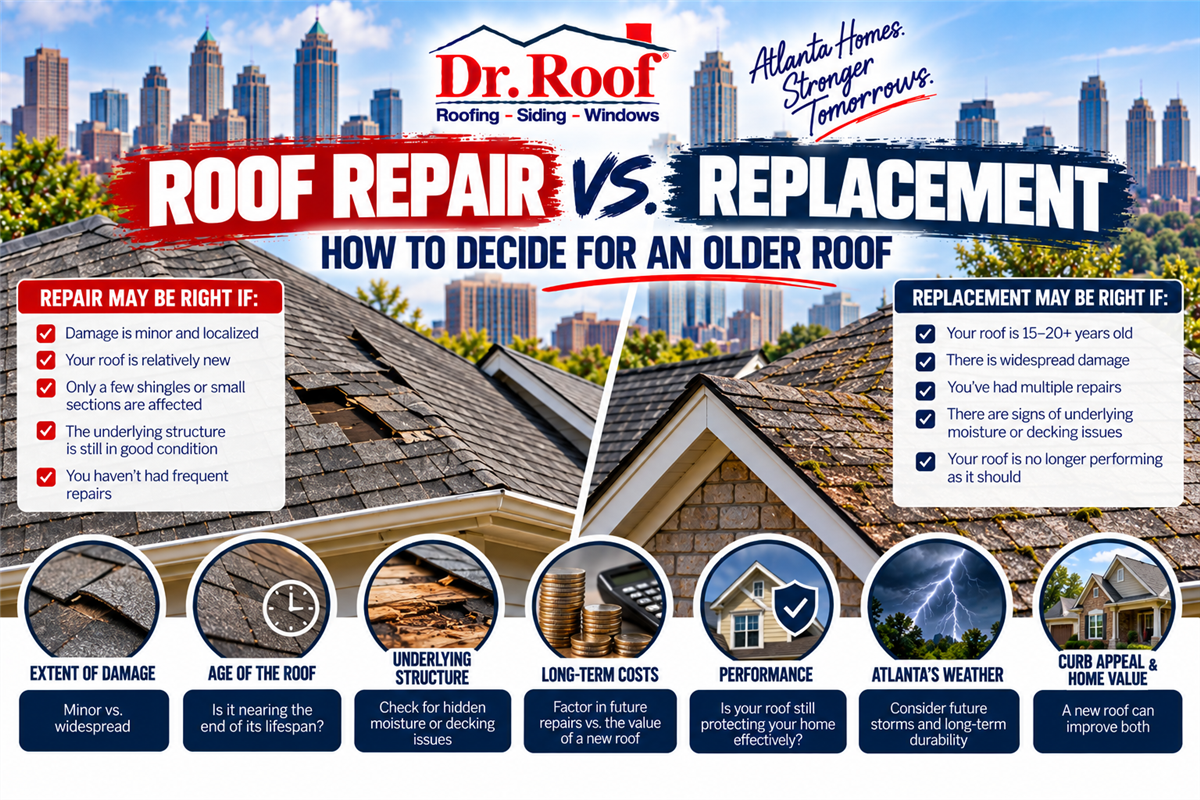
Repair may make more sense when:
The roof is relatively young.
Damage is isolated.
Most shingles are still in good condition.
The leak has a clearly identifiable cause.
The roof has not required repeated repairs.
There are no significant decking or structural problems.
Replacement may make more sense when:
The roof is approaching or beyond its expected useful life.
Deterioration is widespread.
Multiple areas have leaked.
Repairs are becoming frequent.
Shingles are cracking, curling, brittle, or losing substantial granules.
There are decking or structural concerns.
Repairing one area is unlikely to address the overall condition of the roof.
Frequently Asked Questions About Older Roofs
How long does a roof last in Georgia?
There is no exact lifespan for every Georgia roof. Many asphalt shingle roofs last approximately 20–25 years or longer, but actual roof life depends on the roofing material, installation, attic ventilation, weather exposure, maintenance, and other factors.
Atlanta's heat, humidity, thunderstorms, wind, and occasional hail can all affect a roofing system over time.
Is a 15-year-old roof considered old?
A 15-year-old asphalt shingle roof isn't necessarily ready for replacement.
However, once a roof reaches this age, its overall condition becomes increasingly important. If the roof also has recurring leaks, widespread shingle deterioration, granule loss, or a significant repair history, replacement may be worth considering.
Is a 20-year-old roof too old?
A 20-year-old asphalt shingle roof should generally be evaluated based on its condition.
Some 20-year-old roofs may still have useful life remaining. Others may already be experiencing significant deterioration.
Age should be considered together with the roof's condition and repair history.
Can an old roof still be repaired?
Absolutely.
An older roof does not automatically need replacement.
Dr. Roof performs both roof repairs and complete roof replacements, so the goal of an inspection should be to identify the solution that makes the most sense for the homeowner.
If an isolated repair can safely extend the life of the roof, repair may be the appropriate recommendation.
Should I replace my roof before it leaks?
Sometimes.
Homeowners often wait until water enters their home before thinking seriously about roof replacement.
But an aging roof can sometimes be replaced proactively, allowing you to plan the project instead of making a major home-improvement decision during an emergency.
How can I tell whether my roof needs replacing without climbing on it?
Do not climb onto your roof simply to inspect it.
From the ground, look for:
Missing shingles
Curling shingles
Uneven areas
Sagging
Heavy discoloration
Visible deterioration
Inside the home or attic, look for:
Ceiling stains
Damp insulation
Musty odors
Signs of moisture
Daylight visible through areas where it shouldn't be
When in doubt, have the roof professionally inspected.
How Do I Find Out Whether My Old Roof Actually Needs Replacement?
The best way is to have someone evaluate the entire roofing system, not simply look for a reason to sell you a roof.
At Dr. Roof Atlanta, we've been helping Metro Atlanta homeowners with roof repairs and roof replacements since 1988.
Because we have a dedicated roof repair operation in addition to installing new roofing systems, our objective is to help determine which solution actually makes sense for your home.
If your older roof can reasonably be repaired, we can discuss repair options.
If it is reaching the end of its useful life, we can explain what we're seeing, why replacement may make more sense, and what your options are.
Think Your Roof May Be Getting Old?
You don't need to wait for water to start dripping from your ceiling to find out.
If your Atlanta-area roof is 15, 20, 25 years old - or you simply aren't sure how old it is - schedule a professional roof inspection with Dr. Roof.
We'll evaluate its condition and help you answer the question that actually matters:
Does my roof need to be replaced now, can it be repaired, or does it still have useful life remaining?
Dr. Roof Atlanta — We've Got You Covered.
Subscribe to Dr. Roof's Blog



Comments