A roof does not need to be actively leaking into your living room before it needs attention.
Many roofing problems begin as small, localized conditions that are difficult to see from the ground. A lifted shingle, deteriorated pipe boot, damaged flashing, soft decking, or minor storm impact may exist long before obvious interior water damage appears.
That is why regular roof inspections matter.
For Atlanta homeowners, professional inspections can help identify developing repair needs before the damage becomes more widespread.
An inspection does not mean a repair or replacement will automatically be necessary.
Its purpose is to understand the condition of the roofing system and determine whether anything needs attention.
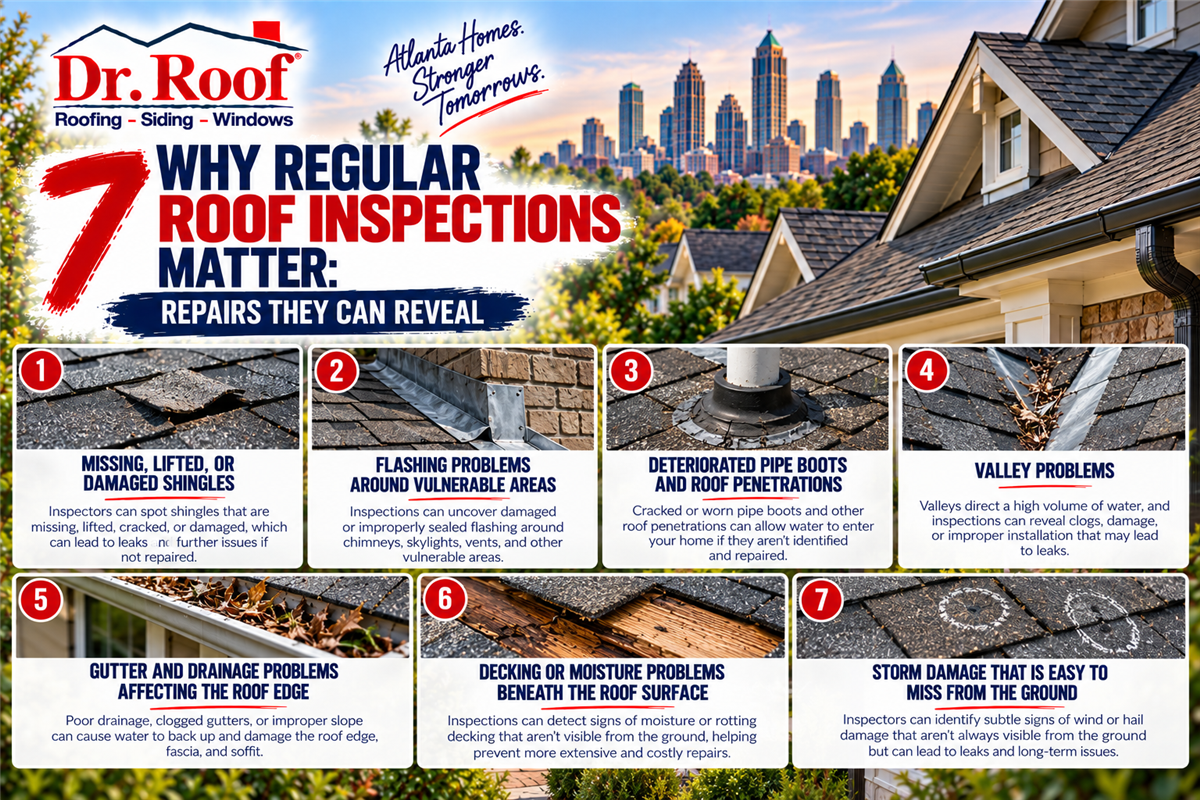
Here are seven common repair needs a roof inspection may uncover.
Why Are Regular Roof Inspections Important?
A roof inspection gives homeowners information they usually cannot obtain from a quick look at the house.
A professional inspection may evaluate:
Shingles or other roof coverings
Flashing
Valleys
Pipe boots
Roof penetrations
Ventilation
Gutters and drainage
Roof decking where visible
Attic conditions when appropriate
Storm-related damage
The goal is to identify problems, determine their extent, and recommend the appropriate next step.
Sometimes the result is a localized repair.
Sometimes monitoring is appropriate.
In other situations, broader deterioration may make roof replacement worth discussing.
The inspection should guide the recommendation.
1. Missing, Lifted, or Damaged Shingles
Shingle damage is one of the most recognizable roof repair concerns.
An inspection may reveal shingles that are:
Missing
Lifted
Torn
Cracked
Creased
Damaged by debris
Improperly secured
Wind damage can be especially difficult to evaluate from street level.
A shingle may still appear to be present while having experienced lifting or damage that affects its ability to perform properly.
Localized shingle damage may sometimes be repairable if the surrounding roofing system remains in serviceable condition.
2. Flashing Problems Around Vulnerable Areas
Flashing helps direct water away from transitions and openings in the roofing system.
It may be found around:
Chimneys
Walls
Skylights
Valleys
Roof penetrations
Certain roof transitions
Inspection may reveal flashing that is:
Loose
Bent
Corroded
Separated
Improperly installed
Damaged by previous repairs
Flashing problems can be significant because these areas frequently handle concentrated water flow.
A professional roofer should determine why the flashing failed before choosing a repair method.
3. Deteriorated Pipe Boots and Roof Penetrations
Plumbing vents and other penetrations pass through the roof surface.
These openings require properly integrated flashing components to help keep water out.
Over time, an inspection may reveal:
Cracked boot material
Loose flashing
Failed seals
Deteriorated surrounding shingles
Evidence of water entry
Damage around the penetration
A small problem around a pipe boot can produce an interior leak even when the surrounding shingles appear normal.
This is one reason inspections need to look at individual roofing components rather than only the overall appearance.
4. Valley Problems
Roof valleys form where two roof planes meet.
They carry concentrated runoff during rain, making proper installation and maintenance particularly important.
An inspection may identify:
Damaged shingles
Debris accumulation
Deteriorated valley materials
Improper repairs
Exposed fasteners
Damage to metal flashing where used
Signs of water movement beneath the surface
Atlanta's heavy rain events can place substantial demand on these drainage areas.
A valley repair should restore the proper water path rather than simply cover a visible symptom.
5. Gutter and Drainage Problems Affecting the Roof Edge
Gutters are not technically the roof covering, but they are part of how water moves away from the structure.
A roof inspection may reveal:
Clogged gutters
Sagging sections
Loose gutters
Damaged downspouts
Overflow staining
Improper drainage
Deterioration near fascia or roof edges
When gutters cannot move water effectively, runoff may collect or spill in areas where it can contribute to exterior damage.
The roof edge, fascia, soffit, and nearby siding should be evaluated when drainage problems are present.
6. Decking or Moisture Problems Beneath the Roof Surface
The roof deck supports the roofing materials above it.
Problems with the deck are not always visible from outside.
Depending on access and conditions, inspection may reveal clues such as:
Soft areas
Sagging
Water staining
Rot
Delamination
Darkened wood
Moisture evidence in the attic
If roof decking has deteriorated, the contractor should determine how moisture reached the area.
Replacing damaged wood without correcting the source of the water may allow the same problem to return.
7. Storm Damage That Is Easy to Miss From the Ground
Atlanta thunderstorms can bring wind, hail, heavy rain, and falling debris.
After a storm, homeowners may look up at the roof and assume everything is fine because there are no obvious missing shingles.
However, some storm-related damage can be subtle.
A professional evaluation may look for:
Shingle impact marks
Granule displacement
Creases from wind movement
Lifted shingles
Damaged flashing
Dented roof components
Punctures from debris
Damage around penetrations
An inspection can help distinguish visible storm-related concerns from normal aging or unrelated deterioration.
Does Every Roof Inspection Lead to a Repair?
No.
An inspection is an evaluation, not an automatic sales recommendation.
Possible outcomes include:
No immediate repair needed
Monitoring a developing condition
Routine maintenance
Localized repair
More extensive repair
Roof replacement evaluation
The recommendation should depend on what the inspection actually finds.
Homeowners should be cautious if a contractor recommends a major project without clearly explaining the condition that supports that recommendation.
Why Early Identification Can Matter
Roofing problems frequently become more complicated once water reaches materials beneath the roof surface.
For example, an unresolved leak may eventually affect:
Roof decking
Insulation
Interior ceilings
Wall materials
Trim
Other building components
Finding the source sooner can give homeowners more options.
That does not mean every small defect will become a major problem.
It means homeowners can make decisions based on information rather than waiting until interior symptoms appear.
What Can Homeowners Check From the Ground?
Homeowners can perform basic visual checks without climbing onto the roof.
From a safe location, look for:
Missing shingles
Visible damage
Sagging areas
Debris on the roof
Damaged gutters
Loose downspouts
Damaged fascia
Tree limbs touching the roof
Inside the home, watch for:
Ceiling stains
Musty odors
Damp attic materials
Visible daylight through unexpected openings
Moisture staining
These observations can be useful, but they do not replace a professional inspection of areas that cannot be seen safely.
Why Homeowners Should Avoid Walking the Roof
Climbing onto a roof creates fall hazards and can also damage certain roofing materials.
Steep slopes, wet surfaces, loose granules, heat, debris, and storm damage can make roof access dangerous.
Homeowners can document concerns from the ground and leave close roof evaluation to trained professionals with the appropriate equipment.
When Should an Atlanta Roof Be Inspected?
There is no single schedule that fits every roof.
Inspection may be especially useful:
After significant wind or hail
After a branch or debris strikes the roof
When a leak appears
When shingles are visibly missing
Before planning major roofing work
When buying or selling a home
When the roof has not been evaluated for an extended period
When repeated repairs suggest a larger issue
Regular preventive evaluations can also help establish a record of the roof's condition over time.
Roof Inspection vs. Roof Repair
An inspection determines what is happening.
A repair corrects a specific problem.
Those should be two separate steps.
For example:
If an inspection finds one damaged pipe boot, the repair may focus on that penetration.
If it finds deteriorated flashing around a chimney, the repair may involve the flashing assembly.
If widespread problems are found across multiple parts of the roofing system, the conversation may shift toward whether ongoing repairs remain practical.
The inspection provides the information needed to make that decision.
Roof Repair vs. Replacement After an Inspection
A professional inspection should help answer an important question:
Can the problem be repaired effectively, or is the roofing system experiencing broader failure?
Repair may be reasonable when:
Damage is localized
Surrounding materials remain serviceable
Compatible replacement materials are available
The underlying deck is sound
The source of the problem can be corrected
Replacement may deserve consideration when:
Damage is widespread
Multiple components are deteriorating
Repeated repairs are occurring
Decking problems are extensive
The existing roof condition makes localized repairs impractical
There is no universal rule based only on roof age or one visible symptom.
The actual condition matters.
Why Documentation Is Useful
A thorough inspection is more valuable when homeowners can understand the findings.
Documentation may include:
Photographs
Written observations
Locations of damage
Repair recommendations
Replacement recommendations when applicable
Estimated scope of work
Dr. Roof may provide photographs, written findings, and repair or replacement recommendations for storm-related roofing concerns.
This gives the homeowner a clearer record of what was observed.
What If an Insurance Claim Is Involved?
Storm-related roof damage may lead some homeowners to contact their insurance company.
A roofing contractor can help by inspecting the roof and documenting physical conditions.
However, the contractor does not determine insurance coverage.
Insurance decisions depend on factors such as:
Policy language
Cause of loss
Deductible
Documentation
Individual claim circumstances
Coverage and claim decisions belong to the insurance company.
Homeowners should be cautious of any contractor that promises a guaranteed claim approval or guaranteed roof replacement.
What Should a Professional Roof Inspection Evaluate?
Depending on the roof and property, a professional inspection may include evaluation of:
Shingles or roofing material
Flashing
Valleys
Ridge areas
Penetrations
Pipe boots
Vents
Roof edges
Gutters
Fascia
Visible decking conditions
Attic conditions when accessible
Signs of storm impact
The inspection should focus on the complete roofing system rather than one isolated symptom.
How Dr. Roof Approaches Roof Inspections in Atlanta
Dr. Roof has served Atlanta-area homeowners since 1988 and provides professional roofing inspections, roof repairs, roof replacement, and storm-damage documentation support.
Dr. Roof is also a GAF Master Elite Certified Contractor and CertainTeed SELECT ShingleMaster.
When a roof concern is identified, the next step should depend on the condition found rather than assuming every property needs the same solution.
A homeowner may need maintenance, a localized repair, a more extensive repair, or replacement.
The inspection helps establish which conversation makes sense.
Why Regular Roof Inspections Matter for Atlanta Homes
A roof inspection is ultimately about information.
It can reveal missing shingles, flashing problems, deteriorated pipe boots, valley concerns, drainage issues, decking deterioration, and storm damage that may not be obvious from the ground.
Finding those conditions gives Atlanta homeowners an opportunity to address actual repair needs before simply waiting for a ceiling stain or active leak.
The best roof repair begins with identifying the real problem.
A professional inspection provides the information needed to do exactly that.
Why are regular roof inspections important?
Regular inspections can identify damaged shingles, flashing problems, deteriorated roof penetrations, drainage issues, moisture concerns, and storm damage that may not be obvious from the ground. The findings help determine whether maintenance, repair, monitoring, or replacement should be considered.
Does every roof inspection mean I will need a repair?
No. An inspection may find that no immediate work is needed. Other possible outcomes include routine maintenance, monitoring, localized repairs, broader repairs, or evaluation for replacement depending on the roof's condition.
What roof problems can an inspection find?
A professional inspection may identify missing or lifted shingles, damaged flashing, deteriorated pipe boots, valley problems, gutter issues, decking concerns, moisture evidence, ventilation concerns, or storm-related damage.
Should I inspect my roof after a storm?
A professional evaluation can be useful after significant wind, hail, falling debris, or other severe weather, particularly when damage cannot be clearly evaluated from the ground.
Can I inspect my own roof?
Homeowners can safely look for visible concerns from the ground and check accessible interior areas for water stains or moisture. Walking on a roof can create fall hazards and may damage roofing materials, so close evaluation is generally better left to trained professionals.
Does Dr. Roof document storm-related roof damage?
Dr. Roof may provide photographs, written findings, and repair or replacement recommendations when evaluating storm-related roofing concerns. If an insurance claim is involved, coverage decisions remain with the insurer and depend on the policy and individual claim.
Subscribe to Dr. Roof's Blog






Comments