When homeowners look at a finished roof, shingles get most of the attention. But some of the roofing system’s most important protective components are hidden underneath them.
Two terms that often appear in roof replacement proposals are roof underlayment and leak barrier. Because both are installed beneath shingles and both help manage moisture, it is easy to assume they are interchangeable.
They are not.
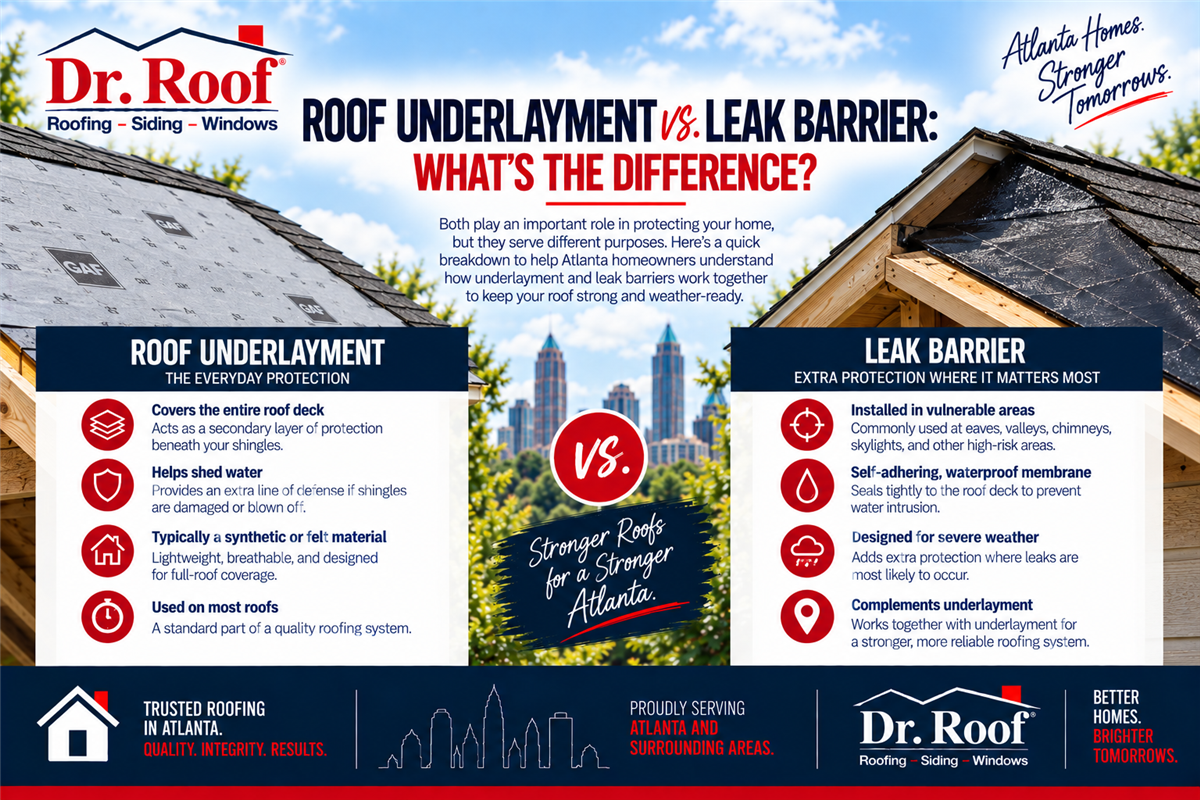
Roof underlayment generally provides a broad layer of protection across the roof deck, while leak barriers are typically used in especially vulnerable areas where water is more likely to collect, back up, or be driven beneath the shingles.
For Atlanta homeowners comparing roof replacement proposals, understanding the difference can make it easier to evaluate exactly what is being installed.
What Is Roof Underlayment?
Roof underlayment is installed over the roof deck and beneath the shingles or other primary roof covering.
Its purpose is to provide an additional protective layer between the roof deck and the exterior roofing material. Depending on the roofing system, underlayment may be made from traditional asphalt-based felt or synthetic materials.
Current GAF roof-deck-protection products, for example, are designed to help shield the roof deck from moisture infiltration and wind-driven rain beneath the shingles.
Underlayment does not replace shingles. Instead, it works beneath them as part of the overall roofing system.
What Is a Leak Barrier?
A leak barrier is a more specialized roofing membrane.
Rather than simply covering the general roof field, leak barriers are commonly installed in areas that may face a greater risk of water intrusion.
GAF currently identifies areas such as eaves, rakes, valleys, and locations around chimneys as examples of places where its leak-barrier products can provide additional protection. The manufacturer also notes that leak barriers can help protect against wind-driven rain—an important consideration in warmer Southern climates.
Some leak barriers are self-adhering and are designed to bond directly to the roof deck. Product construction and installation requirements vary, so the exact material should be selected and installed according to the roofing manufacturer’s instructions.
Underlayment vs. Leak Barrier: 5 Key Differences
Although both materials sit beneath the visible roof covering, they play different roles.
1. Where They Are Installed
Underlayment is generally used across broad areas of the roof deck.
Leak barriers are usually concentrated in vulnerable locations.
Common leak-barrier locations can include:
Roof valleys
Eaves
Rakes
Areas around chimneys
Certain roof penetrations
Other locations identified by the roofing manufacturer or required by applicable codes
Think of underlayment as a broad protective layer and leak barrier as targeted reinforcement.
2. The Type of Water Exposure They Address
A properly installed roof is designed to shed water down and away from the home.
However, certain parts of the roof experience more complicated water movement.
A valley collects runoff from two roof planes. Wind can push rain in directions gravity normally would not. Water can also back up near roof edges when drainage is restricted.
Leak barriers are designed to provide added protection in locations where these conditions may make water intrusion more likely.
GAF specifically identifies wind-driven rain and water backing up at gutters as conditions its StormGuard and WeatherWatch leak barriers are intended to help address.
3. How the Materials Are Constructed
Not all underlayments or leak barriers are made the same way.
Roof underlayment may include asphalt-based felt or synthetic materials. Synthetic products commonly use polymers such as polypropylene and may be designed to resist tearing, moisture absorption, or wrinkling.
Leak barriers are often more robust membranes intended for areas needing additional water protection.
For example, CertainTeed’s current Vycor Ice & Water Shield is a self-adhered membrane using a rubberized asphalt adhesive and polyethylene film, and it is designed to seal around fasteners while helping protect against water backup and wind-driven rain.
The important point for homeowners is that the product name matters. “Underlayment” alone does not tell you exactly what is being installed.
4. They May Have Different Installation Requirements
Roofing materials have manufacturer-specific installation instructions.
The correct overlap, fastening pattern, placement, roof-slope limitations, deck preparation, and exposure allowances can vary.
This is one reason homeowners should be cautious about comparing roofing proposals based only on the visible shingle.
Two proposals may use the same shingle but specify different products beneath it.
When reviewing a roof replacement estimate, ask the contractor to identify:
The exact underlayment
The exact leak barrier, if one is included
Where each product will be installed
Which roofing accessories are part of the proposed system
Whether the products meet the manufacturer’s requirements for the selected shingles
5. Both Are Parts of a Larger Roofing System
Neither underlayment nor leak barrier works alone.
A complete roofing system can also involve shingles, starter strips, flashing, drip edge, ventilation, hip and ridge materials, pipe-penetration details, and appropriate roof-deck preparation.
That matters because water management depends on how these components interact.
Adding a premium leak barrier will not correct improperly installed flashing. Likewise, high-quality shingles do not eliminate the need for appropriate materials beneath them.
The goal should be a coordinated roofing system rather than a collection of individually impressive products.
Does Every Roof Need a Leak Barrier?
The answer depends on the roofing system, roof design, manufacturer requirements, applicable building requirements, and the conditions of the property.
Not every roof uses the same leak-barrier layout.
A simple roof may have different vulnerable areas than a home with multiple valleys, chimneys, dormers, sidewalls, and complicated intersections.
Local climate also matters.
GAF notes that while ice-dam protection is a major reason leak barriers are required in many colder areas, leak barriers can also provide additional protection from wind-driven rain in warmer Southern regions.
For an Atlanta-area home, that makes the discussion broader than ice and snow.
Why Roof Valleys Deserve Special Attention
Roof valleys are one of the most important areas to discuss when reviewing a replacement proposal.
A valley is formed where two roof planes meet, which means runoff from multiple sections of roofing is concentrated into a relatively narrow channel.
Because of that concentrated flow, roofing manufacturers commonly identify valleys as locations where leak-barrier products may be used.
The exact valley construction should follow the selected roofing system’s installation instructions.
Homeowners do not need to choose the technical installation method themselves, but they should feel comfortable asking how valleys will be protected.
Underlayment Is Not a Temporary Roof
Another common misconception is that roofing underlayment can simply serve as a finished temporary roof if shingles have not yet been installed.
That should not be assumed.
For example, GAF specifically states that its FeltBuster synthetic roof deck protection is water resistant but is not waterproof and should not be used as a temporary roof to protect the property or possessions.
Temporary exposure limits also vary among products.
That is another reason manufacturer instructions matter during roof replacement.
What Should Atlanta Homeowners Ask Their Roofer?
You do not need to memorize roofing-product specifications before replacing your roof.
You should, however, know what questions to ask.
Start with the materials you will never see once the project is complete.
Ask which underlayment is being used, where leak barrier will be installed, how valleys and penetrations will be protected, and whether those components are compatible with the shingle system being proposed.
If two roofing estimates look similar but one provides much more detail about these components, that additional information can make the proposals easier to compare.
Look Beneath the Shingles When Comparing Roofs
A roof replacement should not be evaluated only by shingle color and brand.
What goes underneath those shingles matters too.
Roof underlayment provides broad roof-deck protection, while leak barriers provide added protection in vulnerable areas. When combined with appropriate flashing, ventilation, accessories, and installation practices, both can play important roles in the overall roofing system.
Dr. Roof has served the Atlanta area since 1988 and provides roofing inspections, repairs, and complete roof replacement services. As a GAF Master Elite Certified Contractor and CertainTeed SELECT ShingleMaster, Dr. Roof can explain the roofing-system components included in a proposed replacement and why they are being recommended for the individual home.
If you are planning a roof replacement in the Atlanta area, ask about more than the shingles. Understanding what will be installed underneath them can help you make a much more informed decision.
Q: Is roof underlayment the same thing as a leak barrier?
A: No. Roof underlayment generally provides broad protection across the roof deck beneath the shingles, while a leak barrier is typically used in more vulnerable areas such as valleys, eaves, rakes, and around certain penetrations.
Q: Where is a roof leak barrier usually installed?
A: Installation varies by roofing system, but manufacturers commonly identify areas such as eaves, rakes, roof valleys, chimneys, and other vulnerable locations. The exact placement should follow manufacturer instructions and applicable requirements.
Q: Does an Atlanta roof need an ice and water or leak barrier?
A: The appropriate use depends on the roof design, selected roofing system, manufacturer instructions, and applicable building requirements. Leak barriers can also provide added protection against wind-driven rain, not only ice-related conditions.
Q: What type of roof underlayment is best?
A: There is no single underlayment that is best for every roof. Asphalt-based felt and synthetic products have different characteristics, and the appropriate choice depends on the roofing material, roof design, manufacturer requirements, and project goals.
Q: Why should I ask about underlayment when comparing roof estimates?
A: Underlayment and leak barriers are hidden once the shingles are installed, but they are important parts of the roofing system. Knowing the exact products and where they will be installed makes it easier to compare proposals accurately.
Subscribe to Dr. Roof's Blog





Comments