Gutters may sit along the edge of the roof, but they play an important role in managing the water that comes off it.
When gutters and downspouts are working properly, rainwater can move away from the roof edge and toward an appropriate drainage area. When that process breaks down, homeowners may notice overflowing water, wet fascia, stained soffits, standing water, or other moisture-related warning signs.
Atlanta homeowners do not need to become drainage experts, but recognizing a few common problems can help them know when a closer inspection may be worthwhile.
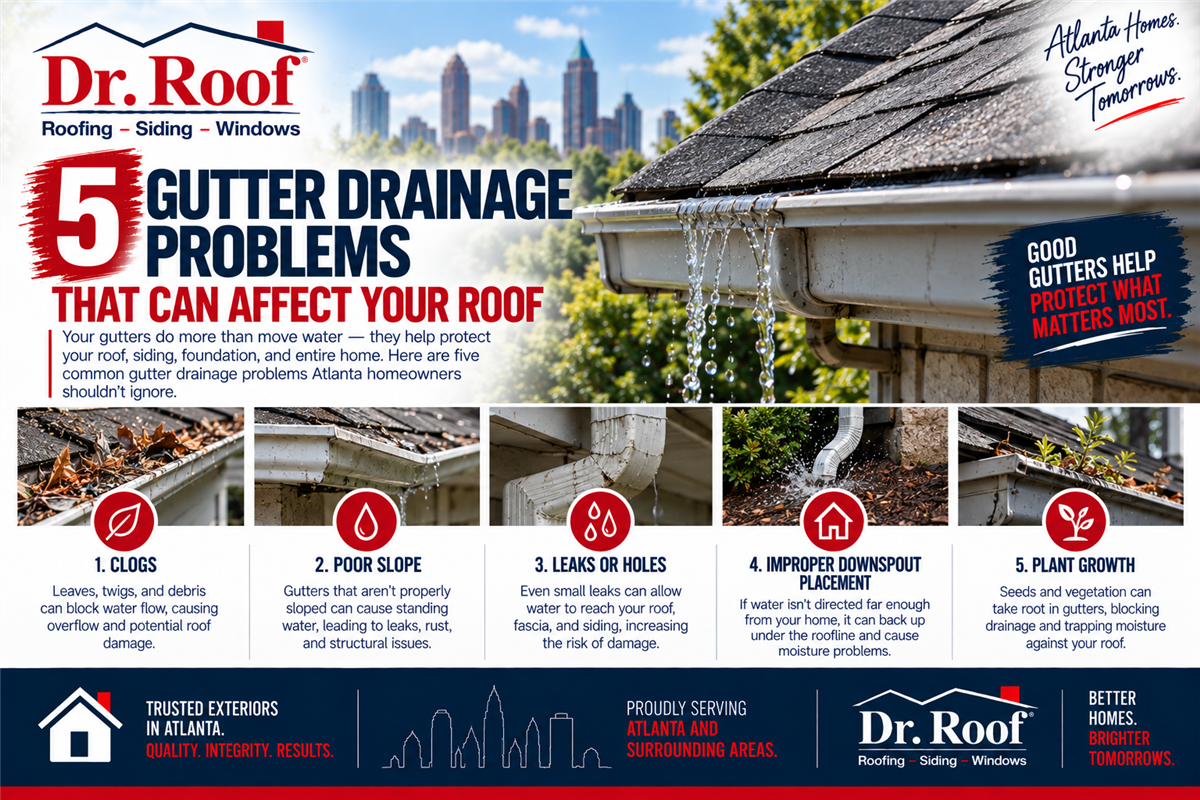
Here are five gutter drainage problems that should not be ignored.
1. Gutters Clogged With Leaves and Debris
One of the simplest gutter problems can also create some of the most obvious symptoms.
Leaves, pine needles, twigs, roofing granules, and other debris can collect inside the gutter or at the entrance to a downspout. As the blockage grows, water has less room to move.
During a heavy rain, that can cause water to spill over the gutter or back up near the roof edge.
Look for signs such as:
Water pouring over the front or back of the gutter
Plants or vegetation growing in accumulated debris
Water stains on fascia or soffit materials
Sections that remain full of water after rainfall
Downspouts producing little or no flow while gutters are overflowing
Cleaning the visible debris may solve a simple blockage, but repeated overflow can indicate another drainage issue that deserves attention.
2. Heavy Runoff at Roof Valleys
Roof valleys are areas where two roof planes meet.
Because water from both roof surfaces is directed into the same channel, valleys can concentrate a significant amount of runoff. During heavy rainfall, that water may reach the gutter quickly and in a concentrated stream.
If the gutter configuration cannot adequately manage that flow, water may overshoot the gutter or spill over the edge.
This is particularly important on homes with complex rooflines, steep slopes, multiple valleys, dormers, or large sections of roof feeding into one drainage point.
The solution is not always a larger gutter. The complete drainage layout should be evaluated, including gutter position, downspout capacity, roof geometry, and the location where concentrated runoff reaches the eave.
3. Gutters That Sag or Do Not Drain Correctly
Gutters need to direct water toward their intended outlets.
A gutter section that has shifted, sagged, loosened, or been installed with an ineffective slope may retain water instead of moving it efficiently toward the downspout.
Standing water adds weight to the gutter system and can also create conditions where debris settles more easily.
From the ground, homeowners may notice a visibly uneven gutter line or water remaining in portions of the gutter long after a storm has passed.
Loose gutters should also receive attention because the fascia and roof edge are important parts of the home’s exterior water-management system.
4. Overflow Leaving Moisture Around the Fascia and Soffit
Overflowing gutters do more than create a waterfall along the edge of the house.
Water repeatedly moving across fascia boards, soffits, trim, siding, or the underside of the roof edge can contribute to moisture-related deterioration.
Homeowners may notice peeling paint, discoloration, staining, warped materials, or areas that remain damp after the rest of the exterior has dried.
These symptoms do not automatically mean the roof itself is leaking. However, they are useful clues that water is not moving through the drainage system as intended.
A roofing inspection can help distinguish between a gutter-related drainage issue, a roof-edge problem, damaged flashing, or another source of moisture.
5. Blocked or Poorly Directed Downspouts
Gutters collect water, but downspouts have to carry it away.
A downspout clogged with leaves or debris can cause water to back up into the gutter. A disconnected downspout can release water where it was never intended to go. A discharge point that sends large amounts of water directly beside the structure can also contribute to moisture problems around the property.
After a rainfall, homeowners can often learn a great deal simply by observing the system safely from the ground.
Water should move through the downspouts rather than continuously overflowing from the gutters.
At ground level, drainage should also be directed appropriately away from the structure based on the property layout and local drainage requirements.
Why Gutter Drainage Matters to the Roof
A roof is designed to shed water.
Shingles, flashing, underlayment, drip edge, valleys, gutters, and downspouts all participate in controlling where that water travels.
Problems can arise when water is repeatedly redirected somewhere it was not designed to go.
For example, clogged gutters can allow water to back up near an eave. Poorly positioned drainage can repeatedly wet fascia or siding. Heavy runoff that overshoots a gutter can leave visible stains and deterioration around the roof edge.
That is why drainage issues should be evaluated as part of the larger exterior system rather than treated as an isolated inconvenience.
Simple Gutter Checks Atlanta Homeowners Can Make
Homeowners can observe several things without climbing a ladder or walking on the roof.
The best time to look is often during or shortly after a normal rainfall.
Watch for water spilling over gutter edges, leaking through seams, shooting over gutters below roof valleys, or failing to emerge from downspouts.
After the rain ends, look for wet fascia, stained soffits, erosion below the roof edge, or standing water near drainage areas.
Also pay attention after storms. Branches, leaves, and roofing debris can enter a gutter quickly, even when the drainage system was clear beforehand.
Avoid climbing onto a wet roof or attempting repairs in unsafe conditions. A ground-level inspection can provide useful information without unnecessary risk.
When a Drainage Problem May Need a Roof Inspection
Some gutter problems are limited to the gutter itself. Others may be connected to conditions at the roof edge.
A professional roofing evaluation may make sense when you notice recurring overflow, moisture stains on soffits or fascia, damaged shingles near the eaves, loose edge materials, interior water stains, or deterioration that returns even after the gutters have been cleared.
The goal is to identify the source of the problem rather than simply treating the most visible symptom.
Dr. Roof has served Atlanta-area homeowners since 1988 and provides roofing inspections, repairs, and roof replacement services. When evaluating a roofing concern, the team can inspect the relevant areas of the system and recommend appropriate next steps based on what is actually found.
Pay Attention to Where the Water Goes
When it rains, a tremendous amount of water moves across a roof surface. Gutters and downspouts help control where that water goes next.
Overflow, staining, standing water, or repeated drainage problems are all worth noticing.
Addressing a drainage concern early can help homeowners better understand whether the issue is routine gutter maintenance or a sign that part of the roof edge or exterior system needs professional attention.
If you are seeing water where it should not be after an Atlanta rainstorm, Dr. Roof can evaluate the roofing system and help identify the source of the concern.
Q: Can clogged gutters contribute to roof leaks?
A: Clogged gutters can contribute to water backing up or overflowing near the roof edge, but they are not the only possible cause of a leak. A professional inspection can help determine whether the moisture is coming from the gutter system, flashing, shingles, roof edge, or another source.
Q: How often should Atlanta homeowners check their gutters?
A: There is no single schedule that fits every property. Homes surrounded by trees may need more frequent attention, and gutters should also be observed after storms or whenever overflow and drainage problems appear.
Q: Why does water sometimes shoot over the gutter below a roof valley?
A: Roof valleys concentrate runoff from multiple roof planes. During heavy rain, that concentrated flow can sometimes overwhelm or overshoot the gutter depending on the roof design and drainage configuration.
Q: What are signs that a gutter is not draining correctly?
A: Common warning signs include water overflowing the gutter, standing water after rainfall, visibly sagging sections, leaking seams, staining on fascia or soffits, and little or no water coming from a downspout during rain.
Q: When should a gutter problem be checked by a roofing professional?
A: A roofing evaluation may be useful when drainage problems are accompanied by damaged roof-edge materials, recurring moisture stains, deteriorated fascia or soffits, shingle concerns near the eaves, or interior signs of water intrusion.
Subscribe to Dr. Roof's Blog







Comments