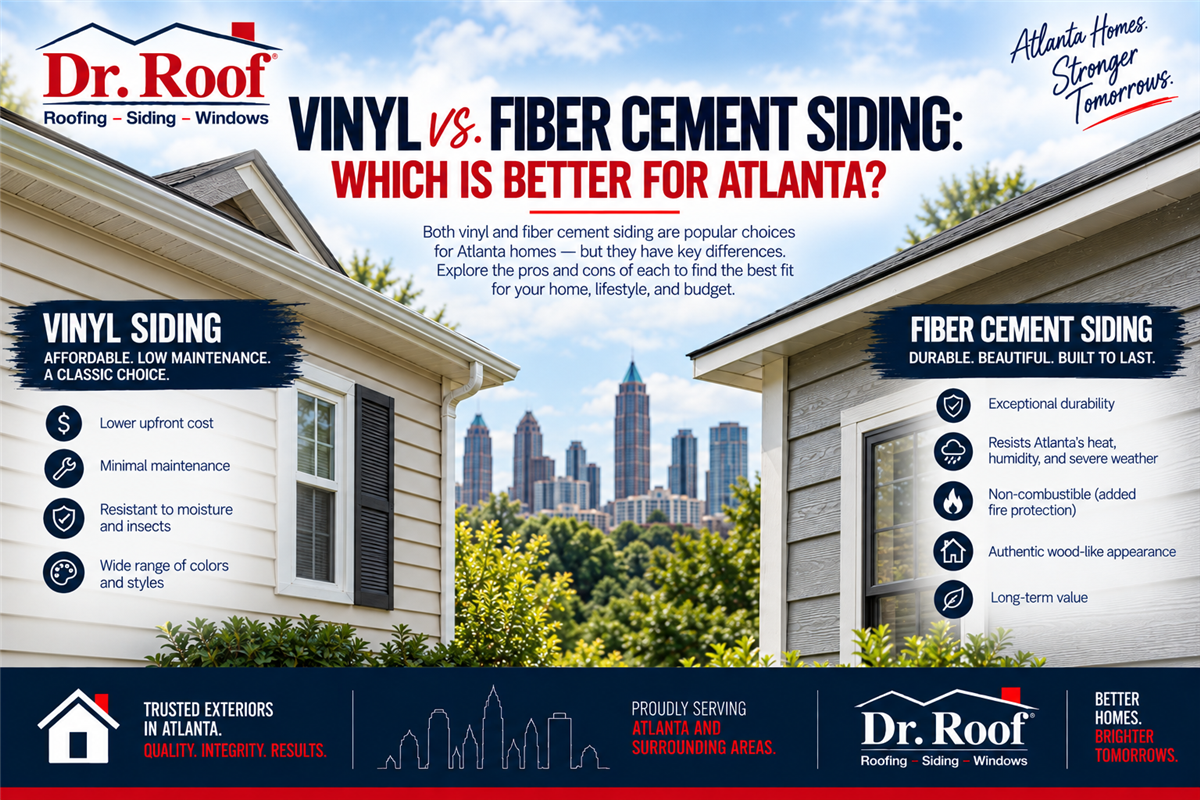
Choosing new siding is about more than picking a color.
Siding affects the appearance of the home, but it also plays an important role in protecting the exterior wall system from weather and everyday exposure.
For Atlanta homeowners comparing replacement options, two materials commonly enter the conversation:
Vinyl siding and fiber cement siding.
Both can be strong choices.
The better option depends on the home's style, budget, maintenance preferences, installation goals, and the appearance the homeowner wants to achieve.
So how do vinyl and fiber cement siding compare?
Here is what Atlanta homeowners should understand before deciding.
Vinyl vs. Fiber Cement Siding: The Quick Answer
Vinyl siding is often chosen by homeowners who value lower maintenance, design flexibility, and a comparatively straightforward exterior upgrade.
Fiber cement siding is often selected by homeowners who want a substantial, painted-wood-inspired appearance and are comfortable with the different installation and maintenance considerations that come with the material.
Neither option is automatically right for every home.
A better decision comes from comparing the factors that matter most to your property.
What Is Vinyl Siding?
Vinyl siding is an exterior cladding material commonly used on residential homes.
It is available in a broad range of:
Colors
Profiles
Textures
Panel styles
Trim combinations
One of its biggest appeals is that the color is incorporated into the siding material, so homeowners do not generally approach routine repainting the same way they would with a painted exterior product.
Vinyl can work with many architectural styles and is often selected when homeowners want a clean exterior update without creating a demanding maintenance routine.
What Is Fiber Cement Siding?
Fiber cement is a manufactured siding material made from a cement-based composition combined with reinforcing fibers and other ingredients.
It is designed to create a substantial exterior cladding system and is available in styles that can resemble:
Traditional lap siding
Wood-grain siding
Vertical siding
Board-and-batten designs
Shingle-style accents
Fiber cement is often chosen for its architectural appearance and its ability to work with both traditional and contemporary homes.
Many products are available prefinished, while others may be painted as part of the exterior design.
1. Appearance: Which Siding Looks Better?
Appearance is subjective.
The best siding is the one that works naturally with the architecture of the home.
Vinyl Siding
Modern vinyl siding is available in many colors, textures, and profiles.
It can work particularly well for homeowners who want:
Clean horizontal lines
Updated exterior colors
Lower-maintenance curb appeal
Coordinated trim systems
A consistent exterior finish
Fiber Cement Siding
Fiber cement is often chosen when homeowners want more of a painted-wood or substantial architectural appearance.
It works well with:
Traditional homes
Craftsman designs
Modern farmhouses
Contemporary exteriors
Mixed-material facades
Atlanta has a wide range of home styles, so neither material has a universal advantage.
The surrounding brick, stone, roofing, trim, shutters, and architectural details should all be considered.
2. Maintenance: Vinyl vs. Fiber Cement
Maintenance requirements can influence the long-term ownership experience.
Vinyl Siding Maintenance
Vinyl siding generally does not require routine painting.
Homeowners may still need to:
Clean dirt or organic buildup
Inspect panels after storms
Address damaged sections
Monitor trim and exterior penetrations
Fiber Cement Maintenance
Fiber cement siding should also be periodically inspected and cleaned.
Because many fiber cement systems use a painted or factory-applied finish, homeowners should also monitor the condition of the finish over time.
Caulking, joints, trim details, and other exterior components may require maintenance depending on the siding system and installation.
If minimizing ongoing finish maintenance is a high priority, vinyl may appeal to some homeowners.
If architectural appearance is the greater priority, fiber cement may be worth the additional considerations.
3. Weather Exposure in Atlanta
Atlanta homes experience a combination of heat, humidity, heavy rain, thunderstorms, wind, occasional hail, and seasonal temperature changes.
Regardless of siding material, installation details matter.
Water management around windows, doors, penetrations, trim, flashing, and wall transitions plays an important role in the performance of the exterior system.
Homeowners should avoid choosing siding based only on the panel material.
A quality installation also requires attention to what is happening behind and around the siding.
4. Durability: Which Siding Holds Up Better?
Both vinyl and fiber cement can provide long-term exterior performance when properly selected, installed, and maintained.
But they behave differently.
Vinyl siding is lightweight and flexible.
Individual panels may be damaged by significant impacts or certain severe weather conditions and may need to be replaced if cracked or broken.
Fiber cement is a denser, heavier material.
Its performance characteristics are different from vinyl, but individual boards can still be damaged and the finish or installation details still require attention.
Instead of asking which material is indestructible, homeowners should ask:
Which material best matches the home, installation conditions, maintenance expectations, and budget?
5. Cost: Is Vinyl or Fiber Cement More Expensive?
Project cost varies based on much more than the siding material itself.
Pricing can be influenced by:
Home size
Number of stories
Existing siding removal
Wall conditions
Trim details
Architectural complexity
Window and door openings
Material selection
Repairs discovered after removal
Labor requirements
Fiber cement installations may involve different labor and material considerations because the product is heavier and installed differently from vinyl.
Vinyl may offer a more budget-conscious path for some homes.
However, homeowners should compare complete project scopes rather than assuming the least expensive initial proposal automatically provides the best value.
6. What Happens Behind the Siding?
This is one of the most important parts of a siding replacement project.
Once old siding is removed, previously hidden problems may become visible.
These can include:
Moisture damage
Rot
Deteriorated sheathing
Pest damage
Improper previous repairs
Water-management concerns
Simply covering damaged material with new siding does not correct the underlying issue.
A professional siding replacement process should include evaluation of the exposed wall system so necessary repairs can be discussed before the new exterior is installed.
This matters regardless of whether the homeowner chooses vinyl or fiber cement.
7. Which Material Offers More Color Flexibility?
Both siding types provide design options, but the approach is different.
Vinyl siding is manufactured in specific colors.
That allows homeowners to select a finished color without planning for routine exterior painting in the same way as painted siding.
Fiber cement may be available in factory-applied finishes or painted configurations, depending on the product and project.
Homeowners who enjoy the look of painted siding may prefer the visual possibilities fiber cement provides.
Those who prefer selecting a finished color and minimizing repainting considerations may lean toward vinyl.
8. Which Siding Is Better for Curb Appeal?
Either material can dramatically change the appearance of a home.
Successful exterior design is less about choosing the material with the most prestige and more about creating a coordinated result.
Consider the relationship between the siding and:
A well-selected vinyl siding color can look better on a particular home than a poorly coordinated fiber cement design.
The reverse is also true.
Material choice and design choice should work together.
9. Can Vinyl and Fiber Cement Be Used With Other Exterior Materials?
Yes.
Atlanta homes frequently incorporate more than one exterior finish.
Depending on the architecture, siding may be paired with:
Brick
Stone
Stucco
Decorative trim
Board-and-batten accents
Shake-style accents
Using multiple materials can create visual depth.
However, the transitions between materials need to be properly planned so the finished exterior looks intentional and manages water appropriately.
When Vinyl Siding May Make More Sense
Vinyl may be a strong option for homeowners who prioritize:
Lower routine finish maintenance
Broad color selection
A straightforward exterior refresh
Budget-conscious project planning
Clean, consistent appearance
That does not mean vinyl is always the least expensive option or the correct choice.
Project details still matter.
When Fiber Cement May Make More Sense
Fiber cement may appeal to homeowners who prioritize:
A substantial siding appearance
Painted-wood-inspired aesthetics
Traditional or upscale architectural details
Design flexibility
Board-and-batten or lap-siding styles
Again, the right choice depends on the specific home and project.
Should You Choose Siding Based Only on Price?
Price matters, but siding is a long-term exterior project.
A useful comparison should include:
Material
Installation
Removal of existing siding
Wall preparation
Trim
Flashing details
Repairs
Cleanup
Warranty information
Maintenance expectations
Two siding proposals with different prices may not include the same work.
Understanding what is included can make it easier to compare value rather than comparing only the final number.
What Should Atlanta Homeowners Ask Before Replacing Siding?
Before choosing a contractor or material, ask questions such as:
What siding materials do you recommend for this home?
What happens if damaged sheathing is discovered?
Is old siding being removed?
How are windows and doors handled?
How are exterior penetrations addressed?
What trim is included?
What maintenance will the new siding require?
How will the siding coordinate with the roof and other exterior materials?
A professional contractor should be able to explain the installation process in understandable terms.
Vinyl vs. Fiber Cement: Which Is Better?
There is no universal winner.
Vinyl siding may be the better fit for a homeowner who wants a lower-maintenance exterior and a broad range of finished colors.
Fiber cement may be the better fit for someone who prioritizes a substantial, painted-siding appearance and specific architectural details.
The right decision comes from looking at the entire home—not just a siding sample.
Choosing the Right Siding for Your Atlanta Home
Replacing siding is an opportunity to improve more than curb appeal.
It is also an opportunity to evaluate the condition of the wall system, correct damaged areas discovered during removal, and create a more cohesive exterior.
Dr. Roof has served Atlanta-area homeowners since 1988 and provides siding replacement along with roofing, windows, and other exterior home services.
If you are considering new siding, contact Dr. Roof to schedule a consultation and compare siding options that fit your home's architecture, maintenance preferences, and project goals.
Is vinyl or fiber cement siding better for Atlanta homes?
Both can work well for Atlanta homes. Vinyl may appeal to homeowners looking for lower routine finish maintenance, while fiber cement may be preferred for its substantial, painted-siding appearance. The best choice depends on the home and project goals.
Is fiber cement siding more expensive than vinyl?
Fiber cement projects can involve different material and labor requirements than vinyl, but actual pricing depends on the size, design, condition, and complexity of the home.
Does vinyl siding need to be painted?
Vinyl siding is manufactured in finished colors and generally is not approached as a siding product that requires routine repainting.
Does fiber cement siding require maintenance?
Yes. Like other exterior materials, fiber cement should be inspected and cleaned periodically. Painted or factory-finished surfaces, joints, caulking, trim, and other components should also be monitored.
What happens if damage is found behind old siding?
Once existing siding is removed, damaged sheathing, moisture concerns, rot, or previous repair issues may become visible. Those conditions should be evaluated and addressed before new siding is installed.
Which siding has better curb appeal?
Either vinyl or fiber cement can create excellent curb appeal. The strongest choice is the one that coordinates with the home's architecture, roof, brick, stone, windows, trim, and overall exterior design.
Subscribe to Dr. Roof's Blog





Comments