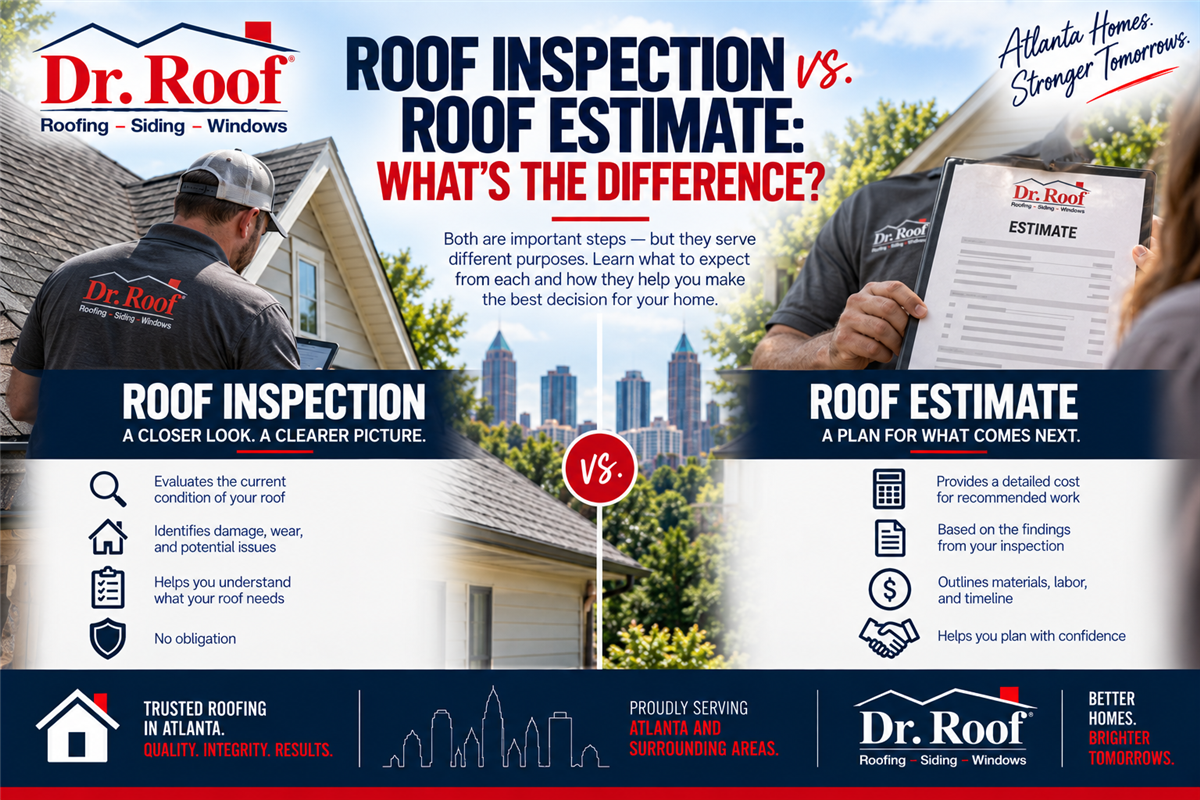
If you are concerned about your roof, you may hear two terms used during the process:
Roof inspection and roof estimate.
They sound similar, but they serve different purposes.
A roof inspection is focused on understanding the condition of the roofing system.
A roof estimate is focused on outlining the proposed work and anticipated cost after the problem or project scope has been identified.
For Atlanta homeowners, understanding the difference can make conversations with roofing contractors easier and help you know what to expect before scheduling service.
The Quick Answer
A roof inspection answers:
What condition is my roof in, and what problems are present?
A roof estimate answers:
What work is being recommended, and what will that work involve?
In many situations, the inspection comes first.
The findings from that evaluation help the roofing contractor determine whether the home needs a repair, additional investigation, maintenance, or a roof replacement.
Once the recommended scope is clear, an estimate or proposal can be prepared.
What Is a Roof Inspection?
A roof inspection is an evaluation of the roofing system.
The purpose is to identify visible concerns, assess the condition of important components, and gather information that can help determine the appropriate next step.
Depending on the home and reason for the inspection, a roofer may evaluate areas such as:
Asphalt shingles
Flashing
Pipe boots
Valleys
Ridge areas
Roof penetrations
Ventilation components
Gutters and drainage
Roof decking where accessible
Attic conditions
Previous repair areas
Signs of moisture intrusion
Visible storm damage
The inspection is primarily diagnostic.
It helps answer the question:
What is happening with the roof?
What Is a Roof Estimate?
A roof estimate focuses on the work being proposed.
Once a roofing contractor understands the problem or the scope of the project, the estimate may describe:
Recommended work
Roofing materials
Repair areas
Replacement scope
Labor
Supporting roofing components
Project details
Pricing
Other relevant project considerations
For a roof replacement, a proposal may be more detailed than a small repair estimate because the project can involve several roofing system components.
The estimate is not simply a statement about the condition of the roof.
It is a proposed plan for addressing that condition.
Why the Inspection Often Comes First
Imagine a homeowner notices a stain on an upstairs ceiling.
They may assume the roof needs a simple patch.
But several different problems could potentially produce a similar symptom.
The moisture could be associated with:
Damaged flashing
A pipe boot
A roof penetration
A valley
Damaged shingles
Decking concerns
Another source of moisture
Without identifying the source, creating an accurate repair scope can be difficult.
That is why the inspection is such an important first step.
It provides the information needed to determine what the estimate should actually include.
Roof Inspection vs. Roof Estimate at a Glance
Roof Inspection
The primary goal is diagnosis.
It helps determine:
The current condition of the roof
Whether damage is visible
Where problems may be located
Whether concerns appear localized or widespread
Whether repair or replacement should be considered
Roof Estimate
The primary goal is project planning.
It helps explain:
What work is being recommended
What materials may be used
What areas will be addressed
The proposed project scope
Estimated project pricing
Both are useful, but they answer different questions.
When Should You Request a Roof Inspection?
A roof inspection may be appropriate when you are unsure what is wrong.
Common reasons Atlanta homeowners schedule an inspection include:
A roof leak
Water stains
Missing shingles
Recent strong winds
Hail concerns
Falling branches
Visible roof damage
Repeated repair problems
An aging roofing system
Concerns about flashing or penetrations
Unexplained attic moisture
An inspection can also be useful when a homeowner simply needs a better understanding of the roof's current condition.
When Do You Need a Roof Estimate?
A roof estimate becomes useful once the project can be reasonably defined.
For example, an estimate may be appropriate when:
A repair area has been identified
Damaged flashing needs to be addressed
Missing shingles need repair
A section of decking needs attention
A full roof replacement is being considered
The homeowner is comparing material options
A defined roofing project needs pricing
The clearer the diagnosis, the easier it becomes to create a meaningful proposal.
Can You Get an Estimate Without an Inspection?
Sometimes the terms are used loosely, and roofing companies may combine parts of the inspection and estimating process into one visit.
However, the contractor still needs enough information to understand the roof before recommending work.
A price without a proper understanding of the problem may not tell the homeowner very much.
For example, a contractor may quote a basic repair based on a visible symptom.
But if the actual moisture source is located somewhere else, that repair may not solve the problem.
A good roofing process should be based on understanding the condition first.
Why Comparing Estimates Can Be Confusing
Homeowners often assume two roof estimates are directly comparable because both contain a bottom-line price.
That is not always true.
Two proposals may include very different scopes of work.
One estimate may include:
Certain flashing work
Decking evaluation
Ventilation components
Specific roofing accessories
Cleanup
Material upgrades
Another may not.
That means price alone does not always tell the full story.
Homeowners should compare what is actually included.
For a roof replacement, ask whether the proposal clearly explains the major components of the roofing system rather than focusing only on the visible shingles.
What Should a Homeowner Ask During a Roof Inspection?
A good inspection is an opportunity to learn about the roof.
Helpful questions include:
Where is the problem located?
Is the damage localized or widespread?
What roofing component is causing the issue?
Are there signs of previous repairs?
Is moisture affecting the decking?
Are there flashing concerns?
Does the roof show signs of storm damage?
Is repair a reasonable option?
Should replacement be considered?
Are there areas that should be monitored?
The answers can help homeowners understand why a particular repair or replacement recommendation is being made.
What Should You Look for in a Roof Estimate?
A useful estimate should make the proposed work understandable.
Homeowners should be able to identify:
What problem is being addressed
Which areas of the roof are included
What materials are proposed
Whether the work is repair or replacement
What supporting components are involved
What the contractor expects to complete
If something is unclear, ask for an explanation.
A roofing proposal should help you understand the project, not make the process more confusing.
How Storm Damage Changes the Conversation
After a storm, the distinction between an inspection and an estimate becomes especially important.
The first priority is understanding whether the roof was damaged.
That may involve evaluating:
Missing shingles
Lifted or displaced materials
Visible impact areas
Flashing
Gutters
Roof penetrations
Interior moisture
Other storm-related concerns
If repairs or replacement are recommended, the contractor can then prepare the appropriate project documentation.
If an insurance claim is involved, homeowners should remember that the roofing contractor evaluates the roof and provides documentation related to the roofing work.
Coverage decisions are made by the insurance company according to the policy and claim.
Does a Roof Inspection Mean You Need a New Roof?
No.
Scheduling a roof inspection does not automatically mean a roof replacement will be recommended.
The inspection may find that:
A small repair is appropriate
Flashing needs attention
One roof penetration is causing the problem
A few shingles are damaged
No immediate major work is needed
A larger roofing issue should be discussed
The purpose of the inspection is to gather information.
The recommendation should follow the findings.
Does a Roof Estimate Mean You Are Committed to the Work?
An estimate or proposal explains the contractor's recommended scope and pricing.
Homeowners should review the details and make sure they understand what is included before moving forward.
If you are comparing roofing contractors, compare more than the total price.
Look at:
Scope of work
Materials
Installation details
Communication
Experience
Roofing system components
Documentation
Warranty information
A lower number may not represent the same project.
Why Clear Communication Matters
Roofing terminology can feel overwhelming when homeowners are already dealing with a leak, storm damage, or an aging roof.
A professional contractor should be able to explain:
What was found
Why it matters
What options are available
What work is recommended
What the proposed project includes
Homeowners should not feel like they need roofing expertise before asking questions.
Clear communication is part of a professional roofing experience.
The Dr. Roof Approach
Dr. Roof has served Atlanta-area homeowners since 1988.
The process begins with understanding the condition of the roof.
Depending on the situation, that may involve evaluating leaks, shingles, flashing, storm damage, roof penetrations, decking concerns, or other roofing components.
Once the condition is understood, Dr. Roof can explain appropriate repair or replacement options and provide a clear scope of work.
That helps homeowners make decisions based on what their roof actually needs.
Inspection First, Estimate Second
A roof inspection and a roof estimate are connected, but they are not the same thing.
The inspection helps identify the condition of the roofing system.
The estimate explains the proposed solution.
When those steps are handled carefully, homeowners can better understand what they are paying for and why the work is being recommended.
If you are concerned about your roof, contact Dr. Roof to schedule a professional roof inspection and get a clearer understanding of your repair or replacement options.
What is the difference between a roof inspection and a roof estimate?
A roof inspection evaluates the condition of the roofing system. A roof estimate outlines the recommended work, project scope, and anticipated pricing.
Should I get a roof inspection before an estimate?
In many situations, yes. The contractor needs to understand the condition of the roof before determining what work should be included in an estimate.
Does a roof inspection mean I need a new roof?
No. An inspection may determine that a repair is appropriate, no immediate major work is needed, or replacement should be considered.
What should be included in a roof estimate?
A roof estimate should clearly explain the proposed scope of work, materials, repair or replacement areas, project details, and pricing.
Can two roof estimates be very different?
Yes. Contractors may recommend different materials, components, repair methods, or project scopes. Homeowners should compare what is included rather than looking only at the total price.
Can a roofing contractor help document storm damage?
A roofing contractor can document visible roofing conditions, photos, findings, and recommended repair or replacement work. Insurance coverage decisions remain with the insurance company.
Subscribe to Dr. Roof's Blog





Comments