
When something goes wrong with your roof, one of the first questions is usually the same:
Can this be repaired, or do I need a full roof replacement?
For Atlanta homeowners, the answer depends on several factors, including the age of the roof, the extent of the damage, the number of previous repairs, and the condition of the roofing system as a whole.
Sometimes a targeted roof repair is all that is needed.
In other cases, a roof replacement may provide the more practical long-term solution.
Understanding the difference can help homeowners make a more informed decision and avoid spending money on repairs that may only address part of the problem.
Roof Repair vs. Roof Replacement: The Quick Answer
A roof repair is generally best when the damage is isolated and the surrounding roofing system is still in good condition.
A roof replacement may make more sense when damage is widespread, the roof is aging, leaks keep returning, or several parts of the roofing system are beginning to fail.
The goal should always be to choose the option that best matches the actual condition of the roof.
When Roof Repair May Be the Better Choice
Roof repair is often appropriate when the problem is limited to one area.
A professional roofer may be able to repair issues such as:
Missing shingles
Cracked shingles
Small roof leaks
Damaged flashing
Pipe boot problems
Minor storm damage
Localized decking damage
If the rest of the roof remains in good condition, repairing the affected area can help extend the life of the existing roofing system.
For example, a few missing shingles after a windstorm do not automatically mean the entire roof needs to be replaced.
The important question is whether the damage is truly isolated.
When Roof Replacement May Make More Sense
Roof replacement becomes a stronger consideration when damage or deterioration affects a larger portion of the roofing system.
Some of the most common signs include:
Repeated leaks
Widespread shingle damage
Extensive granule loss
Curling or brittle shingles
Multiple previous repairs
Significant storm damage
Aging roofing materials
Damaged roof decking in multiple areas
At some point, continuing to repair one section after another may become less practical than replacing the roof as a complete system.
The Age of the Roof Matters
Roof age should never be the only factor used to decide between repair and replacement.
However, it is still important.
Roofing materials are exposed to years of:
Heat
Humidity
Heavy rain
Strong winds
Hail
Sunlight
Temperature changes
Over time, that exposure can affect the performance of shingles, flashing, sealants, and other roofing components.
A newer roof with one damaged section may be a strong candidate for repair.
An older roof experiencing recurring problems may deserve a more complete evaluation.
The Extent of the Damage Is Critical
One of the biggest differences between roof repair and replacement is the amount of the roofing system that has been affected.
Localized damage may include:
A small number of missing shingles
One leaking pipe boot
Damaged flashing around a chimney
A limited section affected by falling debris
Widespread damage may include:
Problems across multiple roof slopes
Numerous damaged shingles
Repeated leaks in different areas
Large areas of storm damage
Extensive deterioration underneath the shingles
A professional roof inspection can help determine which category your roof falls into.
Repairing Repeated Leaks Can Become Costly
One isolated roof leak may have a straightforward solution.
Several leaks over time can tell a different story.
If a homeowner is repeatedly paying to repair different areas of the roof, the overall roofing system may be deteriorating.
That does not automatically mean replacement is necessary.
But it does mean the homeowner should look beyond the most recent leak and ask whether the roof is becoming a recurring maintenance problem.
A professional inspection can help determine whether another repair makes sense or whether replacement should be considered.
Can an Older Roof Still Be Repaired?
Yes, in some cases.
An older roof does not automatically need to be replaced.
If the damage is localized and the surrounding roofing materials are still in serviceable condition, repair may still be possible.
However, older shingles can sometimes become brittle, faded, discontinued, or more difficult to match.
That can make repairs more complicated.
The condition of the entire system matters more than age alone.
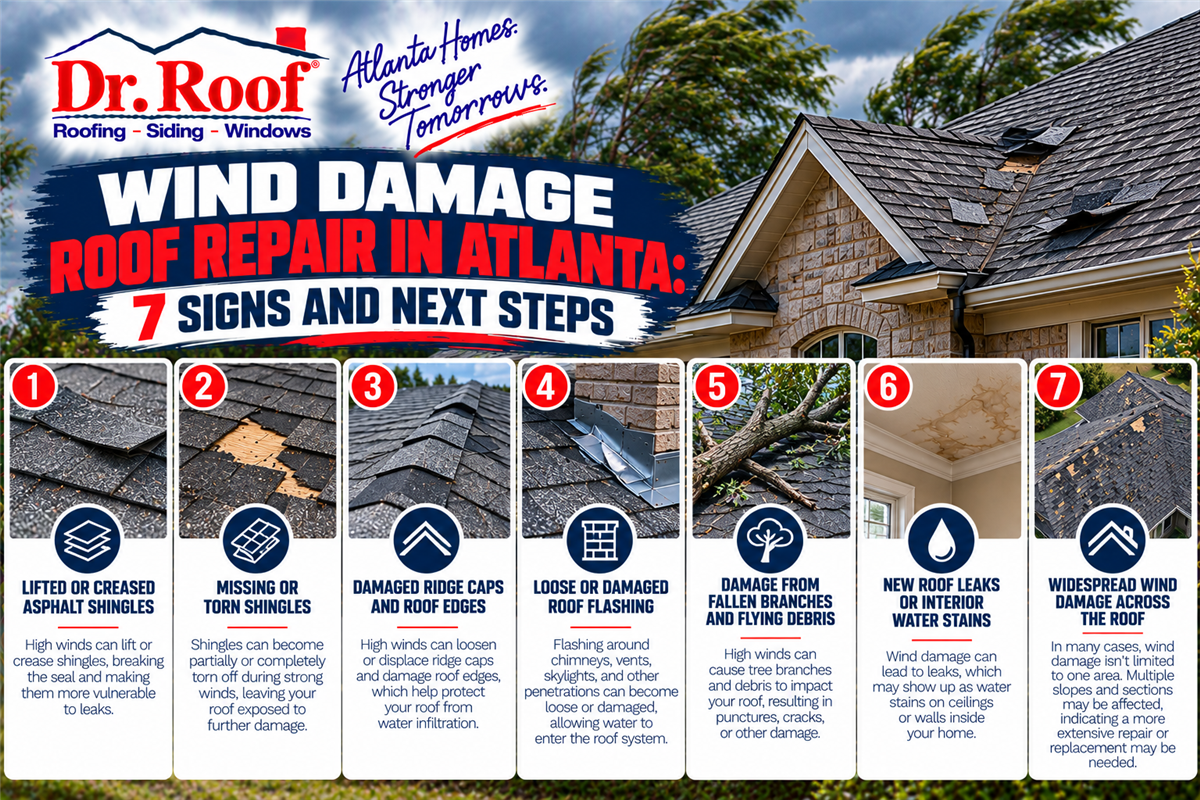
What About Storm Damage?
Atlanta homeowners are familiar with strong winds, hail, heavy rain, and severe storms.
Storm damage can range from minor to extensive.
Some homeowners may notice obvious problems such as:
Missing shingles
Damaged flashing
Fallen tree limbs
Water stains
Loose roofing materials
Other types of storm damage may be more difficult to see from the ground.
Wind can affect shingles without completely removing them, while hail may damage protective surfaces even when the roof still appears intact from below.
A professional storm damage inspection can help determine whether the affected areas can be repaired or whether the damage is extensive enough to consider replacement.
Roof Repair vs. Roof Replacement After a Storm
After severe weather, homeowners may feel pressure to make a quick decision.
The better approach is to first determine what actually happened to the roofing system.
A professional roof inspection can document visible damage, evaluate surrounding materials, and identify areas that may need further attention.
If storm damage is involved, Dr. Roof can provide photos, written findings, and repair or replacement recommendations to help homeowners better understand the condition of the roof.
This documentation may also help support an insurance claim process.
Every insurance policy and claim is different, and coverage decisions are made by the insurance company.
Why a Professional Roof Inspection Matters
The shingles are only one part of the roof.
A complete roofing evaluation may also include:
Flashing
Pipe boots
Roof valleys
Roof decking
Ventilation
Gutters
Drainage
Roof penetrations
Attic conditions
Signs of moisture intrusion
This is especially important when a homeowner notices a leak.
Water does not always enter directly above the stain visible inside the home.
It may travel along decking, rafters, fasteners, or other components before becoming visible.
Finding the source of the problem is often the most important step in determining whether a repair or replacement is appropriate.
Avoiding the Lowest-Cost Decision Trap
Homeowners naturally want to control roofing costs.
But the least expensive option today is not always the most economical option over time.
A small repair may be the right choice when the roof is otherwise healthy.
But repeatedly repairing an aging or deteriorating roofing system can eventually cost more without solving the larger problem.
On the other hand, replacing an entire roof when a reliable repair would solve the issue may also be unnecessary.
The goal is not to automatically choose repair or replacement.
The goal is to choose the right solution for the condition of the home.
The Dr. Roof Approach
Dr. Roof has served Atlanta-area homeowners since 1988.
Our approach begins with understanding the condition of the roofing system before recommending a solution.
That may mean a targeted roof repair.
It may mean addressing storm damage.
Or it may mean discussing a full roof replacement when the existing system has reached the point where continued repairs are no longer practical.
Dr. Roof provides roof inspections, roof repair, asphalt shingle roof replacement, storm damage documentation support, and other exterior home services throughout the Atlanta area.
Choosing the Right Solution for Your Atlanta Home
Roof repair and roof replacement both have an important role.
The question is not which option is universally better.
The question is which option makes the most sense for your roof.
Repair may be the right choice when the damage is limited and the surrounding roofing system remains strong.
Replacement may be the better long-term solution when damage is widespread, materials are deteriorating, or repair needs are becoming more frequent.
If you are unsure whether your roof needs repair or replacement, contact Dr. Roof to schedule a professional roof inspection and get a clear understanding of your options.
Can a roof be repaired instead of replaced?
Yes. If the damage is localized and the surrounding roofing system is still in good condition, targeted repairs may be appropriate.
How do I know if my roof needs to be replaced?
Widespread deterioration, repeated leaks, extensive storm damage, aging materials, or problems across multiple roof sections can indicate that replacement should be considered.
Is roof repair cheaper than roof replacement?
A roof repair usually involves a smaller immediate project scope. However, repeated repairs on a deteriorating roof can add up over time, so homeowners should consider both short-term and long-term costs.
Should I repair or replace my roof after a storm?
It depends on the extent of the damage. Isolated wind or storm damage may be repairable, while widespread damage may require a more comprehensive solution.
Can an older roof still be repaired?
Yes, in some cases. Roof age is only one factor. The condition of the shingles, flashing, decking, previous repairs, and surrounding roofing materials should also be evaluated.
How can I tell if roof damage is widespread?
A professional roof inspection can identify damage across multiple roof slopes, evaluate the condition of shingles and flashing, and look for signs of moisture or decking problems that may not be visible from the ground.
Subscribe to Dr. Roof's Blog



Comments