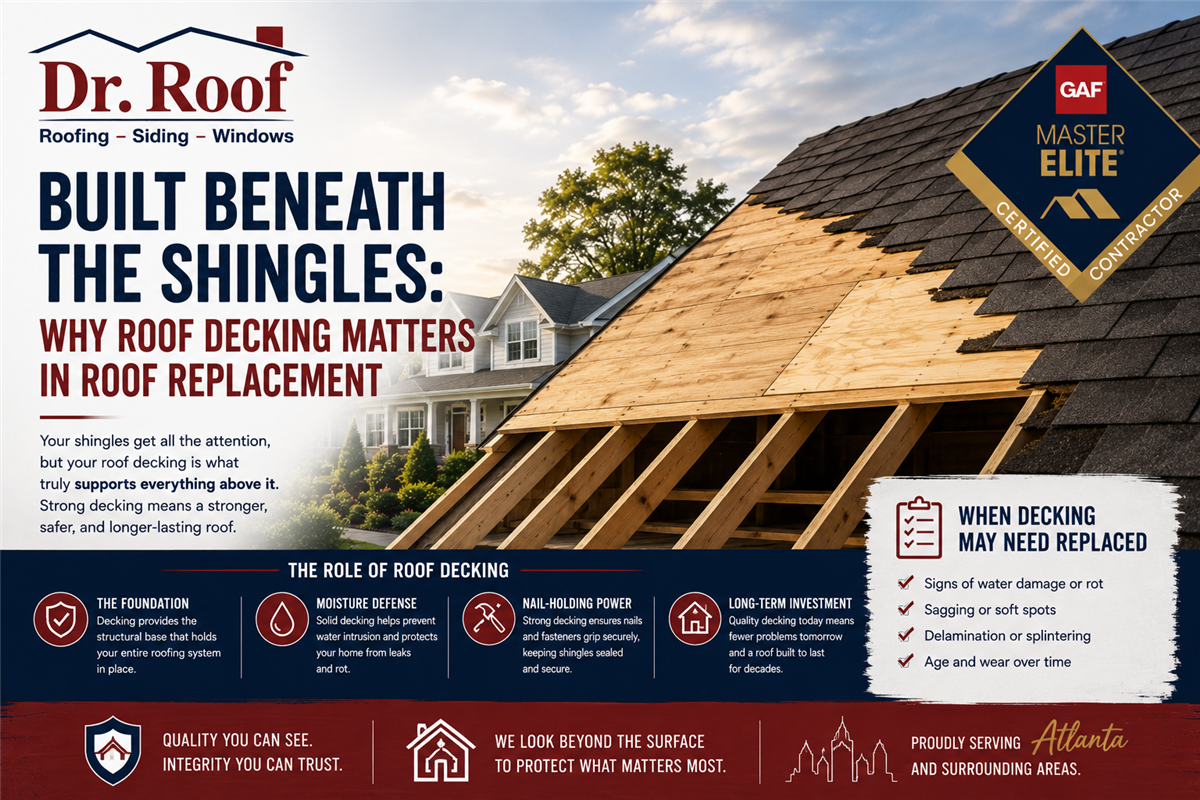
This article challenges the common belief that roof replacement is only about installing new asphalt shingles. For Atlanta homeowners, it explains why sound roof decking is one of the most important parts of a durable, long-lasting roofing system.
For homeowners planning a roof replacement, working with an experienced Georgia roofing company like Dr. Roof can help ensure the visible shingles, hidden decking, ventilation, flashing, and supporting roof components are all properly evaluated before installation begins.
Debunking the Decking Myth: What You'll Discover
Many homeowners approaching a roof replacement focus mainly on what they can see.
They may think about asphalt shingle color, style, curb appeal, or how the finished roof will look from the street.
Those details matter, but they are only part of the roofing system.
One of the most important parts of a roof replacement is hidden beneath the shingles: the roof decking.
A common misconception is that roof decking is usually fine unless there is obvious rot or visible damage. Unfortunately, decking problems are not always easy to see before the old roofing materials are removed.
If damaged decking is ignored, the new asphalt shingles may be installed over a weak foundation.
That can affect the roof’s performance, durability, warranty options, and ability to protect the home.
A successful roof replacement starts from the structure up, not just from the shingle layer down.
Understanding Your Roof's Foundation: Why Decking Matters
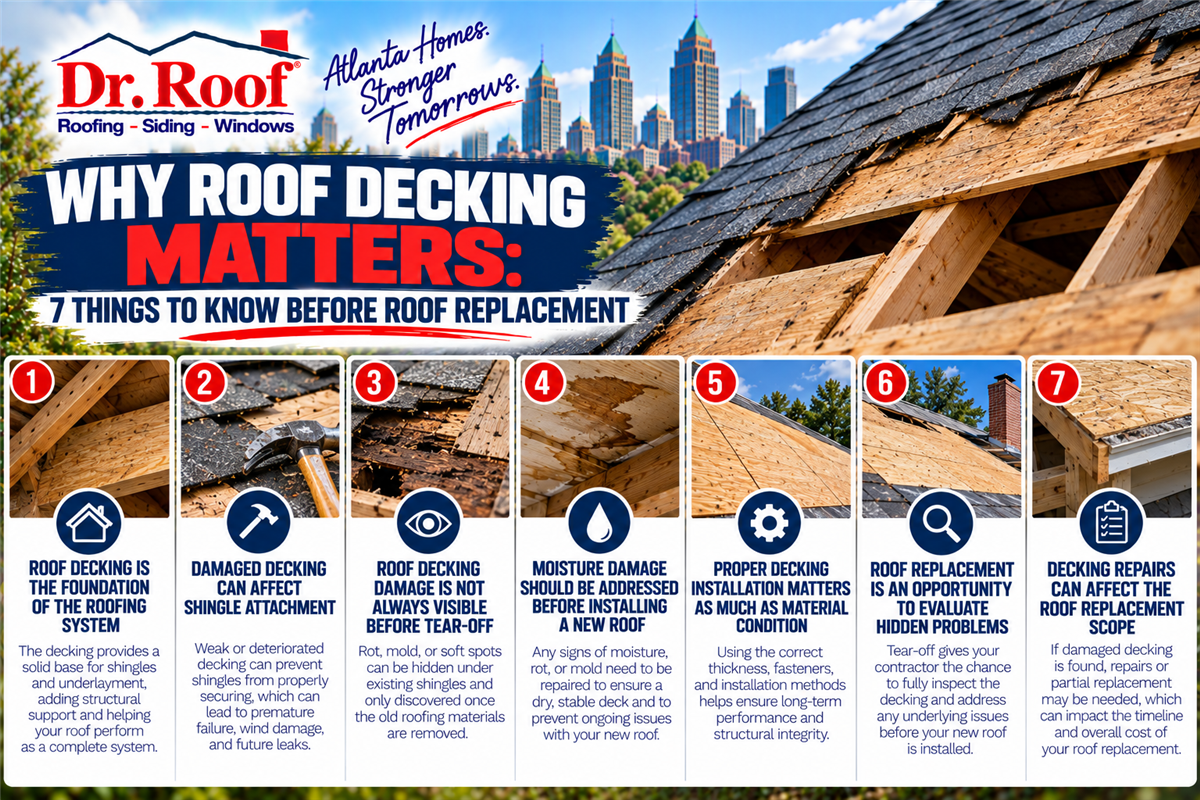
Roof decking is the solid surface attached to the roof framing.
It is typically made of plywood or oriented strand board, also known as OSB. This decking provides the base that supports underlayment, asphalt shingles, flashing, ridge caps, and other roofing materials.
Decking plays several important roles.
It gives roof fasteners a secure surface to grip. It helps support the weight of the roofing system. It contributes to the roof’s overall strength and helps protect the home from weather exposure.
When roof decking is sound, shingles and other materials can be installed properly.
When decking is soft, rotted, delaminated, warped, or damaged by moisture, the roofing system may not perform as intended.
Compromised decking can lead to:
Poor fastener hold
Loose asphalt shingles
Premature shingle failure
Leaks
Soft spots
Sagging roof areas
Moisture intrusion
Reduced roof performance
Warranty concerns
More roof repair needs later
Even high-quality asphalt shingles need a strong, stable foundation beneath them.
The Expert Process for Sound Roof Decking
Ensuring sound roof decking requires a careful, methodical approach during roof replacement.
Here is how the process typically works:
Initial Roof Evaluation: A professional roofer inspects the roof for signs of decking concerns. This may include soft spots, sagging areas, water stains, attic moisture, visible rot, or signs of long-term leaks. When possible, attic areas may also be checked for dark staining, moisture, or daylight coming through the roof deck.
Removal of Old Roofing Materials: Once the old asphalt shingles and underlayment are removed, the decking becomes fully visible. This is the best time to identify hidden damage that may not have been obvious during the first inspection.
Decking Inspection: The roofing team checks for rot, delamination, warping, soft spots, water damage, fastener problems, and areas that no longer provide a secure surface for the new roofing system.
Replacement of Unsound Decking: Any damaged or weakened decking should be replaced with approved materials that meet code requirements and manufacturer guidelines. This creates a stronger foundation for the new roof replacement.
Verification Before Installation: Before new underlayment and asphalt shingles are installed, the decking should be checked again to confirm the roof surface is solid, secure, and ready for the next layers.
Documentation and Communication: Homeowners should be informed if damaged decking is found. Clear photos and explanations help homeowners understand why the repair is needed and how it supports the roof’s long-term performance.
This process helps ensure the new roof is not simply placed over hidden problems.
Critical Impacts: Warranty, Energy, and Structural Integrity
At Dr. Roof, we understand that a quality roof replacement depends on more than the asphalt shingles.
Dr. Roof has served Atlanta-area homeowners since 1988, giving our team decades of experience with Georgia weather, roof repair, roof replacement, storm damage, and complete roofing system performance.
As a GAF Master Elite Certified Contractor, Dr. Roof brings professional training, installation knowledge, and quality workmanship standards to every roof replacement project.
Sound roof decking matters for several reasons.
First, it supports proper installation. Roofing materials need a stable surface so fasteners can hold securely and shingles can perform as intended.
Second, it supports warranty eligibility. Many roofing product warranties require installation over a sound, properly prepared, code-compliant deck. If damaged decking is ignored, warranty options may be affected.
Third, decking helps protect the structure of the home. A weakened roof deck can allow moisture to spread, increase the risk of leaks, and contribute to structural concerns over time.
Fourth, decking can influence overall roof performance. While attic insulation and ventilation play the biggest roles in energy efficiency, gaps, moisture damage, or deterioration in the roof deck can affect how well the full system supports the home.
A strong roof replacement begins with a strong foundation.
Avoiding Costly Misconceptions in Roof Replacement
One of the biggest mistakes homeowners can make is assuming roof decking is a minor detail.
It is not.
Decking is the surface that supports the entire roof replacement system. If it is weak, the new asphalt shingles may not be able to perform properly.
Another misconception is that decking damage is always visible before work begins.
In many cases, damaged decking is hidden beneath old shingles and underlayment. It may only become clear once the existing roofing materials are removed.
Homeowners should also avoid viewing decking replacement as an unnecessary add-on.
If decking is rotted, soft, warped, or no longer holding fasteners properly, replacing it is an important part of protecting the roof replacement investment.
Ignoring damaged decking can lead to:
Leaks after installation
Shingle lifting
Poor nail hold
Soft or sagging areas
Moisture problems
Repeated roof repair needs
Reduced roof lifespan
Warranty concerns
A trusted Georgia roofing company should explain decking concerns clearly and provide photos when damage is found.
Dr. Roof's Commitment: Comprehensive Protection and Support
Dr. Roof takes a full-system approach to roof replacement.
That means we look beyond the visible asphalt shingles and consider the parts of the roof that affect long-term performance, including decking, flashing, underlayment, ventilation, gutters, drainage, and roof penetrations.
Our Make-It-Right mindset reflects our commitment to clear communication, dependable workmanship, and helping homeowners feel confident in their roofing decisions.
If storm damage is involved, Dr. Roof can provide photos, written findings, and repair or replacement recommendations to help support the insurance claim process. Every policy and claim is different, and coverage decisions are made by the insurance company, but clear documentation can help homeowners better understand the condition of their roof.
During roof replacement, if unsound decking is discovered, our team explains what was found, why it matters, and how replacing it supports the strength and performance of the new roofing system.
The goal is simple: build the new roof on a foundation that is ready to support it.
Your Path to a Durable, Worry-Free Roof
Sound roof decking is not a minor detail in roof replacement.
It is one of the most important parts of the entire roofing system.
New asphalt shingles need a stable, secure, and properly prepared surface beneath them. Without that foundation, the roof may be more vulnerable to leaks, wind damage, premature wear, and future repair needs.
Dr. Roof provides roof inspections, roof replacement, roof repair, storm damage documentation support, and exterior home services throughout the Atlanta area.
As a trusted Georgia roofing company and GAF Master Elite Certified Contractor, Dr. Roof helps homeowners understand every layer of the roof replacement process, including the hidden details that matter most.
If you are planning a roof replacement, contact Dr. Roof to schedule a professional inspection and get clear guidance on the condition of your asphalt shingles, roof decking, and full roofing system.
Frequently Asked Questions
Is it true that roof decking is only replaced if there's obvious rot during a roof replacement?
No, this is a common misconception. While obvious rot certainly warrants replacement, our experts at Dr. Roof often find hidden damage like delamination, soft spots, or fastener withdrawal issues that are not immediately visible. A thorough inspection during tear-off is essential to assess the true condition of the sound roof decking, ensuring a proper foundation for your new roof.
How does weak roof decking specifically void my new roof's warranty?
Roofing material manufacturers, including GAF, specify installation requirements that demand a solid, structurally sound substrate. If new shingles are installed on compromised decking, it can't hold fasteners properly, leading to shingle failure. This directly violates installation guidelines, giving the manufacturer grounds to deny warranty claims, leaving homeowners exposed to repair costs.
What often gets overlooked about the role of sound roof decking in storm resistance?
Many homeowners overlook how crucial sound roof decking is for protecting against storm damage. Strong decking provides the rigid base necessary for shingles and other roofing components to resist high winds, hail, and heavy rain. Weak decking can flex or crumble under stress, making the entire system vulnerable to uplift and breaches during severe weather, even with new shingles.
Can homeowners really tell if their roof decking needs attention without professional help?
While homeowners might notice visible sagging or interior water stains, these are often signs of advanced decking issues. Subtle problems like soft spots, delamination, or areas with poor fastener retention are usually undetectable without a professional, detailed inspection, particularly during the roof replacement process when old shingles are removed.
Beyond visible damage, what are the subtle signs that your existing roof decking might be compromised?
Subtle signs can include a bouncy feel when walking on the roof, slightly inconsistent shingle alignment that suggests an uneven base, or minor water staining in the attic without obvious leaks from the exterior. These indications point towards potential underlying issues with the sound roof decking that an experienced contractor would identify during a comprehensive assessment.
Subscribe to Dr. Roof's Blog



Comments