When homeowners plan a roof replacement, they often focus on shingle colors, roofing materials, warranties, and the appearance of the finished roof.
But one of the most important parts of the roofing system is hidden beneath the shingles.
Roof decking, also called roof sheathing, provides the structural surface to which many roofing materials are attached. It helps support the roofing system and creates the foundation for underlayment, flashing details, and roof coverings.
Sound roof decking is important because new roofing materials need a structurally suitable, properly installed surface to perform as intended. Installing new shingles over severely deteriorated decking can leave underlying problems unresolved.
For Atlanta homeowners, understanding roof decking before replacement can help prevent unexpected questions during installation and clarify why some projects require additional structural work.
Here are seven important things to know.
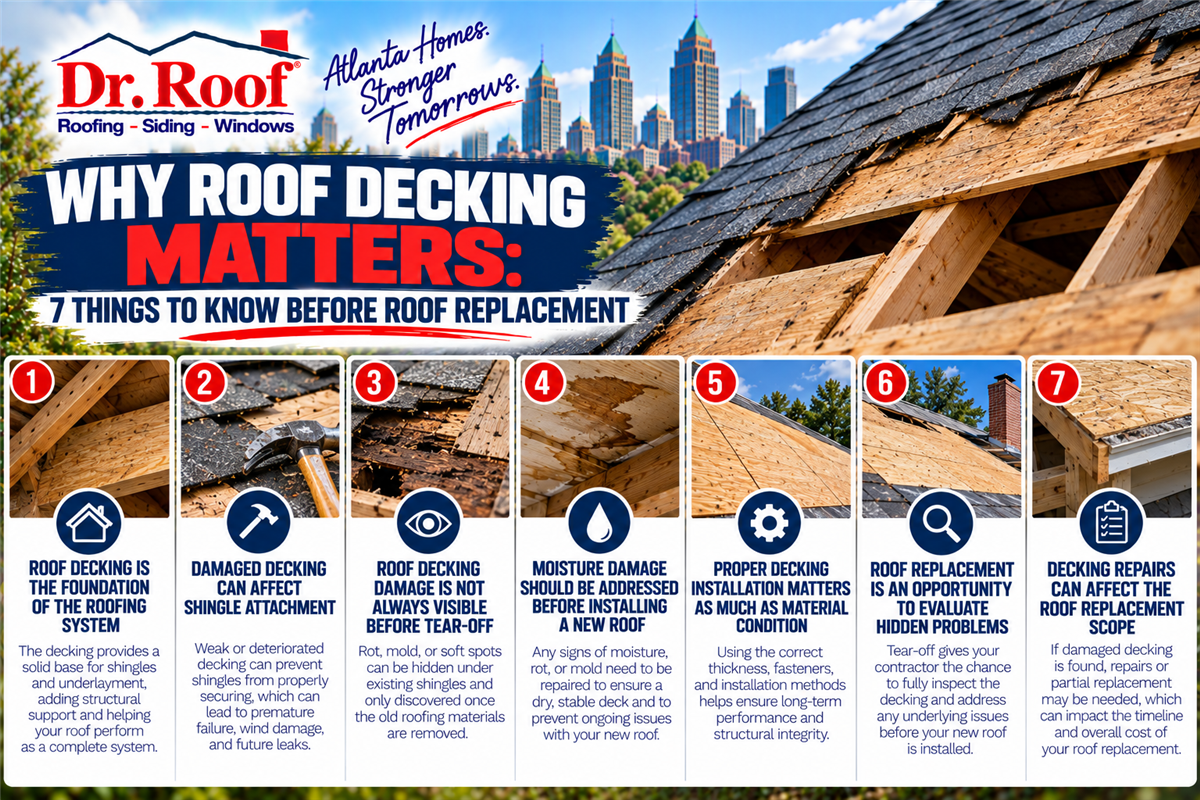
1. Roof Decking Is the Foundation of the Roofing System
Roof decking is installed over the roof's structural framing.
In many residential roofing systems, decking consists of plywood or oriented strand board, commonly called OSB.
These panels form a continuous surface beneath the roof covering.
A typical asphalt-shingle roofing system may include:
Roof framing
Roof decking
Underlayment
Leak-protection materials where appropriate
Starter shingles
Field shingles
Ridge and ventilation components
Flashing at vulnerable transitions
Each component serves a different purpose.
The decking provides support, while the layers above it help manage water and protect the home.
Why Does the Decking Condition Matter?
If the supporting surface is severely damaged, weakened, or improperly installed, the roofing materials above it may not have the support or attachment conditions they require.
That is why decking evaluation is an important part of a replacement project.
2. Damaged Decking Can Affect Shingle Attachment
Asphalt shingles are fastened through the roofing materials into the supporting roof deck.
The fastening system must be appropriate for the roofing product, decking, and applicable installation requirements.
If the decking is deteriorated, it may not provide the intended support for the fasteners.
Potential concerns include:
Rotted wood
Delaminated panels
Severely weakened areas
Holes
Unsupported edges
Improperly installed sheathing
Significant structural deterioration
Can New Shingles Fix Damaged Decking?
No.
New shingles cover the roof, but they do not restore the structural integrity of damaged decking.
If the decking is unsuitable, the affected areas need to be corrected before the new roof covering is installed.
3. Roof Decking Damage Is Not Always Visible Before Tear-Off
One challenge during roof replacement is that decking is usually concealed beneath the existing roofing materials.
A contractor may identify warning signs during an inspection, but some conditions become visible only after the old shingles and underlayment are removed.
Possible warning signs include:
Sagging roof areas
Dark stains in the attic
Previous roof leaks
Deteriorated wood
Visible holes
Soft or weakened sections
Damaged panel edges
Does a Ceiling Stain Prove the Decking Is Damaged?
No.
A ceiling stain indicates that moisture may have reached an interior surface, but it does not establish the condition of the roof decking.
The source of the moisture and the condition of the affected materials need to be evaluated.
Similarly, not every plywood or OSB panel that has become wet must automatically be replaced.
The key question is whether the material remains structurally suitable after its condition is assessed.
4. Moisture Damage Should Be Addressed Before Installing a New Roof
Moisture can enter a roofing system through damaged shingles, flashing problems, roof penetrations, or other openings.
When water intrusion continues, affected materials may deteriorate.
Possible conditions include:
Wood rot
Panel delamination
Loss of structural integrity
Persistent dampness
Damage to surrounding framing
A replacement project should address both the damaged materials and the conditions that caused the problem.
Why Isn't Replacing the Decking Alone Enough?
Suppose decking near a chimney has deteriorated because of a flashing defect.
Replacing the damaged wood without correcting the flashing could allow water to enter again.
A complete solution should consider the entire affected assembly.
For Atlanta homeowners, this is particularly important after repeated heavy rainfall or recurring roof leaks.
5. Proper Decking Installation Matters as Much as Material Condition
New decking must also be installed correctly.
Important considerations include:
Suitable panel selection
Proper support from framing
Correct panel orientation
Appropriate fasteners
Required fastening patterns
Panel spacing
Applicable building requirements
Manufacturer installation instructions
Wood structural panels can expand and contract with changes in moisture conditions.
Proper installation details help accommodate expected material movement.
Can Improperly Installed Decking Affect the Finished Roof?
Yes.
Improper support, fastening, or panel spacing can contribute to uneven surfaces and other performance concerns.
The installation should follow the requirements applicable to the roof design and selected materials.
Homeowners should not assume that replacing damaged decking is simply a matter of laying down any available sheet of plywood.
6. Roof Replacement Is an Opportunity to Evaluate Hidden Problems
Removing the old roofing materials creates an opportunity to inspect the deck more directly.
Depending on the project, a roofing contractor may identify:
Previously concealed water damage
Deteriorated sheathing
Damaged panel edges
Improper previous repairs
Areas requiring additional fastening
Openings around roof penetrations
Other visible structural concerns
Not every issue requires replacing the entire roof deck.
Localized problems may be addressed by replacing affected sections when the remaining decking is suitable.
Does Every Roof Replacement Require New Decking?
No.
A roof replacement does not automatically require replacing all the existing decking.
If the decking remains structurally sound and meets applicable installation requirements, it may be suitable for continued use.
The contractor should determine whether individual sections need repair or replacement based on their condition.
7. Decking Repairs Can Affect the Roof Replacement Scope
Because some decking problems are hidden, the full extent of necessary work may not be known before tear-off.
This is an important point to discuss before signing a roofing contract.
Ask the contractor:
How will the existing decking be inspected?
What conditions would require replacement?
Will damaged areas be photographed?
How will additional work be priced?
Will approval be requested before proceeding?
What type of replacement decking will be used?
How will installation requirements be verified?
A clear process helps homeowners understand what happens if the crew discovers hidden damage.
Plywood vs. OSB: What's the Difference?
Plywood and oriented strand board are both engineered wood products commonly used as structural roof sheathing.
Plywood
Plywood is manufactured from layers of wood veneer bonded together.
Oriented Strand Board
OSB is manufactured from wood strands arranged and bonded into structural panels.
Both materials can be appropriate for roof decking when the product is selected and installed according to the applicable requirements.
Is One Always Better?
No single material is automatically best for every roof.
The appropriate selection depends on the roof design, required structural performance, panel specifications, local requirements, and installation conditions.
Homeowners should ask which decking product is proposed and why it is suitable for their home.
How Do Roofers Know If Decking Needs Replacement?
Contractors evaluate the condition of the existing material.
Concerns that may justify replacement include:
Rot
Severe deterioration
Delamination
Holes
Structural damage
Unsuitable existing panels
Significant loss of fastening support
Minor discoloration or evidence of previous wetting does not automatically establish that a panel must be replaced.
The decision should reflect the actual condition and structural suitability of the material.
Can Roof Decking Be Repaired Instead of Completely Replaced?
Yes, in some cases.
Localized damage may be addressed by replacing affected panels or sections.
More extensive work may be required when deterioration covers a large area or involves structural framing.
The contractor should explain whether the concern is limited to the sheathing or whether additional structural evaluation is needed.
A complete decking replacement should not be recommended solely because the roof covering is being replaced.
How Does Roof Decking Affect Roof Replacement Quality?
Roof replacement quality depends on how the complete roofing system is assembled.
A sound deck provides a suitable foundation for installing the remaining components.
Those components may include:
Underlayment
Leak barriers
Starter shingles
Asphalt shingles
Flashing
Ridge materials
Ventilation components
Even high-quality roofing products depend on appropriate installation conditions.
A roof replacement should address underlying defects rather than simply cover them.
What Should Homeowners Expect During Roof Tear-Off?
During a replacement project, the contractor removes the existing roofing materials according to the approved scope.
Once the decking is exposed, the crew can inspect areas that were previously hidden.
If damaged decking is discovered, the contractor should explain the findings and the necessary corrective work.
After the deck is prepared and any required repairs are completed, the new roofing system can be installed.
Should Homeowners Request Photographs?
Photographs can be useful.
They help document the condition of the exposed decking and provide a clearer explanation of any additional work.
Homeowners can ask for photographs of damaged areas before they are covered by the new roofing materials.
Why Roof Decking Matters for Atlanta Homes
Atlanta-area homes experience periods of heavy rainfall, strong storms, humidity, and changing weather conditions.
These conditions make proper roof water management important.
A roof replacement should evaluate existing moisture damage and ensure that the supporting materials are suitable for the new roofing system.
For homeowners in Atlanta, Marietta, Alpharetta, Roswell, and surrounding communities, decking condition is an important part of understanding the complete replacement scope.
How Dr. Roof Helps Homeowners Plan Roof Replacement
Dr. Roof has served Atlanta-area homeowners since 1988 and provides roof inspections, repairs, and replacement services.
Dr. Roof is a GAF Master Elite Certified Contractor and CertainTeed SELECT ShingleMaster.
A professional replacement evaluation can help identify visible concerns involving roofing materials, flashing, decking, and other components.
When existing roofing materials are removed, previously concealed decking conditions can be assessed and addressed as needed.
Homeowners should understand how additional decking work will be documented and approved before installation begins.
A New Roof Needs a Sound Foundation
Roof decking may be hidden once the new shingles are installed, but its condition remains important to the roofing system.
Sound decking provides the supporting surface for proper roof installation. Damaged or unsuitable decking should be addressed before the new materials are applied.
For Atlanta homeowners planning roof replacement, ask how the contractor will inspect the decking, document problems, and handle any necessary repairs.
Choosing roofing materials is important, but making sure those materials are installed over a suitable foundation is equally essential.
Why is sound roof decking important during roof replacement?
Sound roof decking provides the structural surface supporting the roofing system and its fasteners. Damaged or unsuitable decking can compromise the installation conditions required by the roofing materials.
Does every roof replacement require new decking?
No. Existing decking may remain in place when it is structurally suitable and meets applicable installation requirements. Damaged or unsuitable sections should be evaluated and corrected before installing the new roofing system.
How do roofers determine whether decking needs replacement?
Roofers inspect exposed decking for conditions such as rot, delamination, holes, severe deterioration, structural damage, and loss of fastening support. Some problems become visible only after the old roof covering is removed.
Can roof decking be repaired instead of fully replaced?
Yes. Localized decking damage may sometimes be addressed by replacing affected sections. Extensive deterioration or structural problems may require more substantial work.
Is plywood or OSB better for roof decking?
Both plywood and oriented strand board can be suitable structural roof sheathing materials. The appropriate choice depends on the roof design, panel specifications, installation requirements, and existing conditions.
Can a roofer discover additional decking damage during replacement?
Yes. Existing shingles and underlayment can conceal damaged decking. Once those materials are removed, the contractor can inspect the exposed surface and document any additional work that may be necessary.
Subscribe to Dr. Roof's Blog





Comments