A leaking roof rarely happens at a convenient time. Whether heavy rain reveals an unexpected ceiling leak or strong winds tear shingles from your home, knowing what to do next can help limit additional damage.
Emergency roof patching provides temporary protection when part of a roofing system has been compromised and a permanent repair cannot be completed immediately.
For Atlanta homeowners, the most important steps are to protect everyone inside the home, document visible damage from a safe location, and contact a qualified roofing contractor to assess the problem.
However, not every roof leak requires the same emergency response. Understanding when temporary patching is appropriate, how the process works, and what happens afterward can help homeowners make informed decisions.
What Is Emergency Roof Patching?
Emergency roof patching is a temporary measure used to reduce water intrusion through a damaged section of a roof.
Depending on the condition of the roofing system, a contractor may recommend temporary materials or protective measures until a permanent repair can be completed.
Common situations include:
Missing shingles after strong winds
Localized damage from fallen debris
Active water intrusion
Damaged roof flashing
Openings created by storm damage
Roofing materials that have become loose or displaced
Emergency stabilization may involve temporary roof coverings, tarping, or other methods appropriate to the damage.
The goal is to limit further exposure while the permanent repair is planned.
Is Emergency Roof Patching a Permanent Repair?
Not necessarily.
A temporary patch may reduce water intrusion without fully correcting the damaged roofing components.
Permanent repairs may require replacing shingles, flashing, underlayment, decking, or other affected materials.
Homeowners should ask whether the proposed work is intended as temporary protection or a completed permanent repair.
When Should You Request Emergency Roof Patching?
Some roofing concerns require more immediate attention than others.
The following situations may justify contacting a roofing professional promptly.
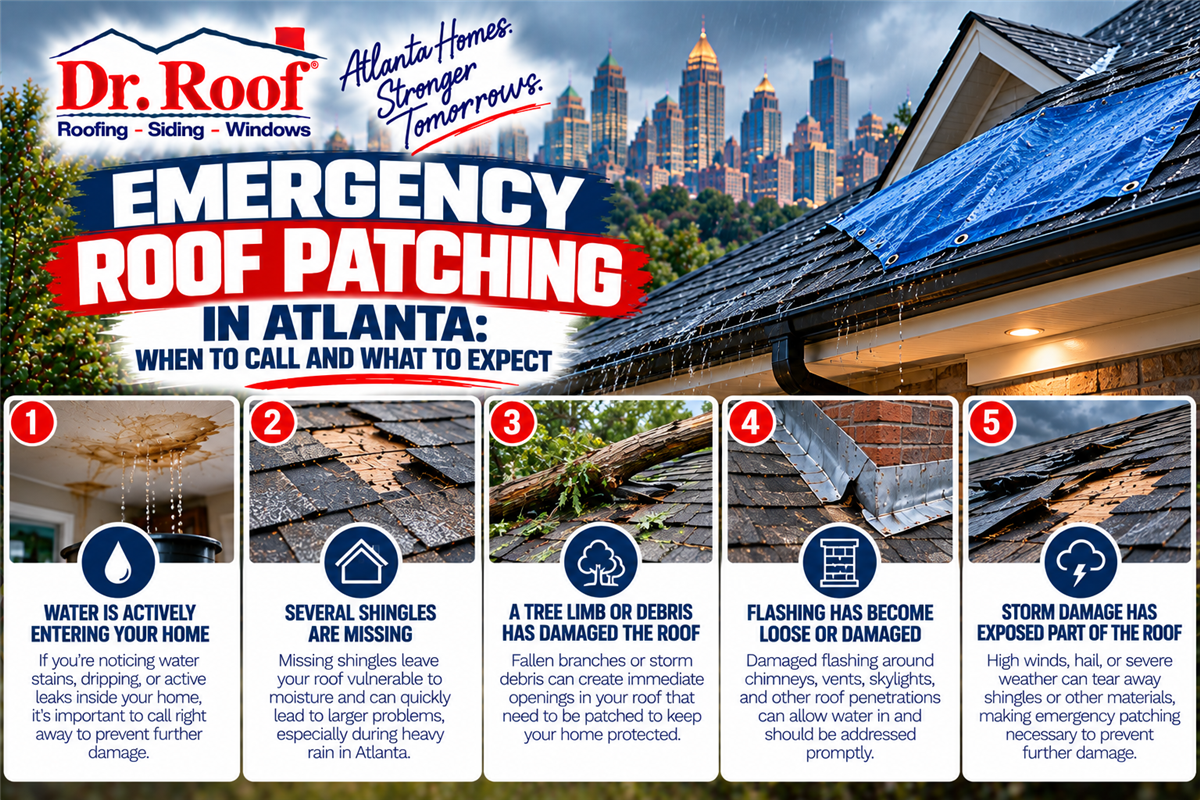
1. Water Is Actively Entering Your Home
An active leak during heavy rain deserves attention.
Water may appear as:
Dripping from the ceiling
Wet drywall
Water stains that continue expanding
Moisture entering around a ceiling fixture
Water collecting in the attic
Even a small visible drip may originate from a larger damaged area.
If water is near electrical equipment, wiring, or fixtures, avoid the affected area and seek appropriate professional assistance.
2. Several Shingles Are Missing
Strong winds can loosen or remove asphalt shingles.
Missing shingles may expose the materials beneath the roof covering to additional weather.
The urgency depends on the location and extent of the damage.
A roofing professional can determine whether temporary protection is necessary before permanent shingle repairs.
3. A Tree Limb or Debris Has Damaged the Roof
Falling branches can damage shingles, decking, and structural framing.
If a tree or large limb has struck the home, do not attempt to remove it yourself.
Stay away from visibly damaged or sagging areas.
Structural damage, downed power lines, or other immediate hazards should be addressed by the appropriate emergency professionals before roofing work begins.
4. Flashing Has Become Loose or Damaged
Roof flashing helps manage water around chimneys, valleys, walls, skylights, and penetrations.
Damaged flashing can create openings where rain enters the roofing system.
A contractor should determine whether temporary stabilization is appropriate or whether the damaged flashing can be permanently repaired.
5. Storm Damage Has Exposed Part of the Roof
Severe weather may leave sections of the roofing system exposed.
When roofing materials have been displaced or damaged, temporary protection may be useful while replacement materials are obtained or additional repairs are arranged.
What Should You Do Immediately When Your Roof Starts Leaking?
The first priority is safety.
Homeowners can take several steps without climbing onto the roof.
Protect People and Belongings
Move furniture, electronics, and valuables away from water intrusion when it is safe to do so.
Use containers to collect dripping water if the surrounding area is safe.
Keep children and pets away from affected spaces.
Avoid standing beneath visibly sagging ceilings or entering areas with suspected structural damage.
Document the Problem
Take photographs of:
Visible interior water stains
Damaged ceilings or walls
Water entering the home
Missing shingles visible from the ground
Fallen branches
Other visible storm damage
Record when the damage occurred and when you first noticed the leak.
This documentation can help a roofing contractor understand the situation.
It may also be useful if you decide to contact your insurance company.
Stay Off the Roof
Do not climb onto a wet or storm-damaged roof.
Roofing materials can be slippery, and some structural damage may be hidden beneath the surface.
A professional roofing contractor has the training and equipment necessary to evaluate elevated work areas.
What Happens During an Emergency Roof Patching Appointment?
The exact process depends on the severity of the damage, weather conditions, and accessibility.
A professional evaluation generally involves several stages.
Step 1: Assess the Immediate Problem
The contractor begins by evaluating the visible damage and determining whether the roof can be accessed safely.
Important questions include:
Where is the leak occurring?
What caused the damage?
Is the problem isolated?
Are there structural concerns?
Can the affected area be temporarily protected?
Is a permanent repair immediately practical?
If the roof has major structural damage, additional evaluation may be necessary before any work begins.
Step 2: Identify the Damaged Roofing Components
A leak may originate from several roofing areas.
Potential sources include:
Missing shingles
Cracked shingles
Deteriorated flashing
Failed pipe boots
Roof valleys
Chimney transitions
Damaged decking
The visible interior stain does not always identify the exact location where water entered.
Water may travel along framing or decking before becoming visible inside the home.
This is one reason professional diagnosis is important.
Step 3: Determine the Appropriate Temporary Protection
If permanent repairs cannot be completed immediately, the contractor may recommend temporary protection.
Possible approaches depend on the damage and may include:
Professional roof tarping
Temporary coverings
Localized stabilization
Other temporary weather-protection methods
The appropriate method depends on roof design, accessibility, weather conditions, and the extent of damage.
Not every damaged roof is suitable for the same temporary solution.
Step 4: Document the Work
Photographs and written findings can help establish the condition of the roof before and after temporary stabilization.
Homeowners should ask what areas were protected and whether any additional damage was discovered.
This documentation is particularly useful when permanent repairs will be completed during a later appointment.
Step 5: Plan the Permanent Roof Repair
After temporary protection is in place, the next step is correcting the underlying roofing problem.
A permanent repair may involve:
Replacing damaged shingles
Repairing flashing
Replacing a pipe boot
Addressing damaged underlayment
Replacing deteriorated decking
Repairing other affected roofing components
The contractor should explain the recommended scope and whether the surrounding roof remains serviceable.
Emergency Roof Patching vs. Roof Tarping: What's the Difference?
The terms are sometimes used interchangeably, but they can describe different temporary measures.
Emergency Roof Patching
Patching generally refers to addressing a specific damaged area.
Depending on the situation, this may involve a limited temporary repair or a localized permanent repair.
The homeowner should confirm which type of work is being proposed.
Roof Tarping
Tarping involves installing a protective covering over a damaged portion of the roof.
It is generally used to reduce exposure until permanent repairs can be completed.
A properly installed tarp can provide valuable temporary protection, but it should not be considered a substitute for repairing damaged roofing components.
Which Option Is Better?
The appropriate choice depends on the condition of the roof.
A localized opening may require a different approach than a large section damaged by fallen debris.
A roofing contractor should recommend the method suited to the actual damage.
How Long Can Temporary Roof Protection Remain in Place?
Temporary roof protection is not intended to become a permanent roofing system.
Its effectiveness depends on several factors, including:
Material condition
Weather exposure
Installation method
Roof design
Wind conditions
Subsequent storm activity
A tarp or temporary covering may deteriorate, loosen, or require adjustment.
Ask the contractor when the temporary installation should be inspected and when permanent repairs can be scheduled.
Do not assume that temporary protection eliminates the need to monitor for additional leaks.
How Much Does Emergency Roof Patching Cost?
The cost depends on the type and extent of work required.
Important factors include:
Damage severity
Roof height
Roof pitch
Accessibility
Materials needed
Size of the affected area
Safety requirements
Whether temporary or permanent work is performed
A small localized issue may involve less work than covering a large storm-damaged section.
Emergency conditions and difficult access can also affect the scope.
Homeowners should request an explanation of the work and associated pricing before approving it whenever circumstances permit.
Avoid assuming that all emergency roof repairs have a standard price.
Will Emergency Patching Stop Every Roof Leak?
No temporary measure can guarantee that all water intrusion will stop under every condition.
For example, a roof may have:
Multiple damaged areas
Concealed flashing problems
Water entering through an unprotected section
Structural damage
Additional storm-related vulnerabilities
A tarp or localized patch may protect one area while another problem remains.
The contractor should explain what the temporary work covers and what additional repairs may be necessary.
Does Homeowners Insurance Cover Emergency Roof Patching?
Coverage depends on the homeowner's policy and the cause of the damage.
Some policies may provide coverage for certain storm-related damage or reasonable mitigation expenses.
However, ordinary deterioration, maintenance-related leaks, and other circumstances may be treated differently.
The insurance company determines coverage according to the policy and individual claim.
If you believe storm damage may be involved:
Document the visible damage.
Review your insurance policy.
Contact your insurer for claim procedures.
Keep copies of estimates, invoices, and photographs.
Request written findings from the roofing contractor.
Do not assume that a roofing contractor can guarantee claim approval.
When Is a Permanent Repair Better Than Temporary Patching?
Whenever conditions permit, correcting the underlying problem is generally preferable to relying indefinitely on temporary protection.
A permanent repair may be appropriate when:
The damaged area can be accessed safely
The problem has been identified
Suitable materials are available
Weather conditions allow installation
Surrounding roofing materials remain serviceable
However, widespread deterioration or significant structural damage may require a more extensive solution.
A professional evaluation should determine whether targeted repair or replacement is appropriate.
How Can Atlanta Homeowners Find the Right Roofing Help?
When contacting a roofing contractor, explain the urgency and describe the damage clearly.
Ask:
Do you evaluate active roof leaks?
What is your next available inspection appointment?
Is temporary stabilization available for my situation?
What information should I provide before the visit?
Will the damaged areas be photographed?
Can you explain the permanent repair options?
Will I receive a written estimate?
Actual appointment availability and emergency response times should always be confirmed directly with the contractor.
After widespread storms, roofing schedules may be affected by increased demand and unsafe working conditions.
How Dr. Roof Helps Atlanta Homeowners With Roof Damage
Dr. Roof has served Atlanta-area homeowners since 1988 and provides professional roofing inspections, repairs, replacement, and storm-damage documentation support.
A roofing evaluation can help identify whether a problem involves:
Missing or damaged shingles
Roof flashing
Roof penetrations
Valleys
Roof decking
Storm-related damage
Other roofing components
For storm-related concerns, Dr. Roof may provide photographs, written findings, and repair or replacement recommendations.
Homeowners experiencing urgent roof damage can contact Dr. Roof to describe the problem, request an assessment, and confirm available service options.
Take Action Before Water Intrusion Spreads
Emergency roof patching can provide temporary protection when roof damage leaves a home exposed to rain.
The important distinction is understanding what the temporary work accomplishes and what permanent repairs are still necessary.
For Atlanta homeowners dealing with unexpected roof damage, begin with safety, document visible conditions, and arrange a professional roofing evaluation.
A clear diagnosis and appropriate repair plan are the best foundation for addressing the problem rather than repeatedly covering its symptoms.
What is emergency roof patching?
Emergency roof patching is temporary work intended to reduce water intrusion through a damaged roof area until permanent repairs can be completed. The method depends on the location, extent, and cause of the damage.
When should I request emergency roof repair?
Contact a roofing professional promptly if water is actively entering your home, shingles are missing, flashing is damaged, or storm debris has compromised the roof. Structural damage or electrical hazards may require emergency assistance before roofing work begins.
Is roof tarping the same as permanent roof repair?
No. Roof tarping is generally a temporary protective measure. Permanent repair may require replacing damaged shingles, flashing, underlayment, decking, or other roofing components.
How much does emergency roof patching cost?
Pricing depends on damage severity, roof accessibility, affected area, materials, labor, and whether temporary or permanent work is required. A professional assessment and written estimate provide the most reliable project-specific information.
Will homeowners insurance pay for emergency roof patching?
Coverage depends on the cause of the damage, policy terms, and the individual claim. Some storm-related mitigation expenses may qualify, but coverage is determined by the insurance company.
Can I patch a leaking roof myself?
Climbing onto a wet or damaged roof can be dangerous. Homeowners should focus on protecting people and belongings, documenting visible damage from safe locations, and contacting a qualified roofing professional.
Subscribe to Dr. Roof's Blog




Comments