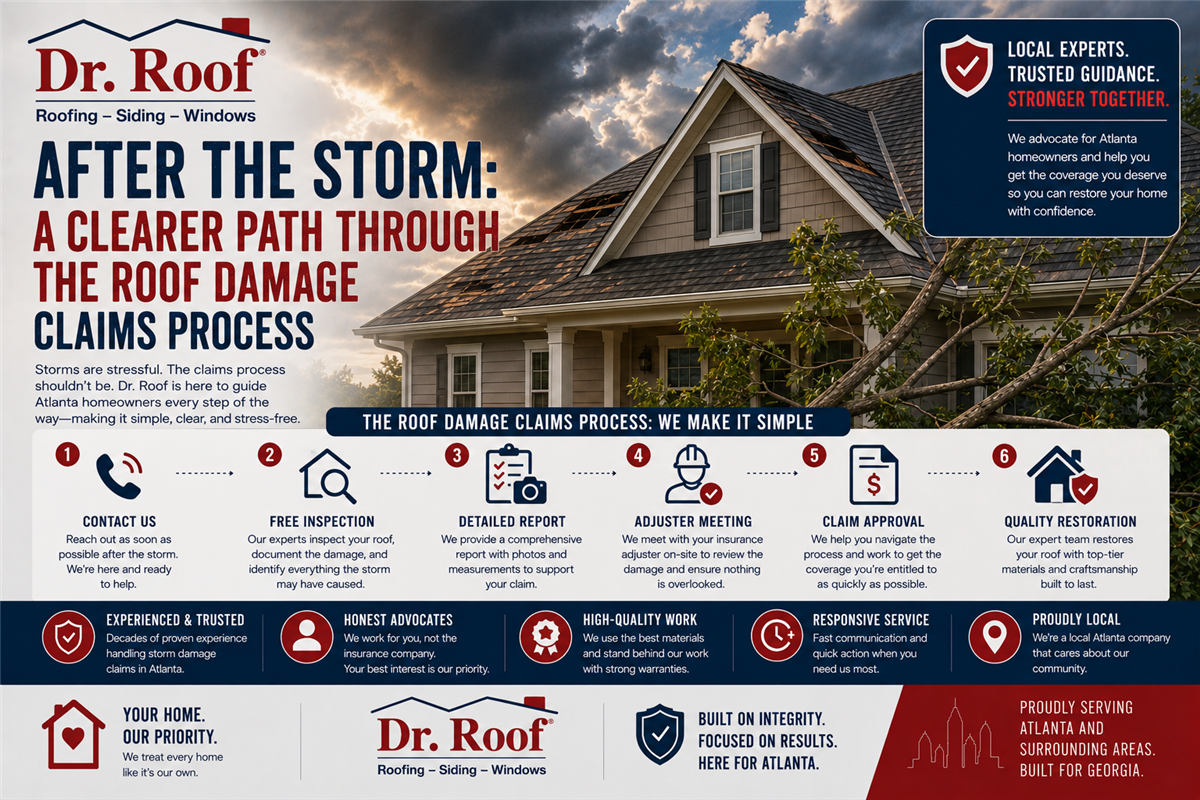
This article gives Atlanta homeowners practical guidance for understanding the storm damage claims process. It challenges common misconceptions about storm restoration and explains why professional roof inspections, clear documentation, and experienced roofing guidance matter after severe weather.
For homeowners dealing with damaged asphalt shingles, hail impact, wind damage, leaks, or roof replacement concerns, working with an experienced Georgia roofing company like Dr. Roof can help make the process clearer and more organized.
The Common Myth: Navigating Storm Claims Alone
When a severe storm moves through the Atlanta metropolitan area, homeowners may be left with roof damage, fallen debris, leaks, or concerns that are not easy to evaluate from the ground.
Many people assume the storm damage claims process is simple and that their insurance provider will handle every detail without the need for additional roofing expertise.
While the insurance company plays an important role, homeowners still need to understand the condition of their roof.
A storm damage claim can involve inspection reports, photos, adjuster appointments, policy details, repair estimates, and decisions about whether roof repair or roof replacement may be needed.
Trying to manage all of that without a professional roofing assessment can leave homeowners uncertain about what damage exists and what steps to take next.
The Costly Reality: Why Relying Solely on Insurers Fails
Insurance adjusters evaluate claims based on the information available, the policy, and their inspection process. However, roof storm damage is not always obvious during a quick review.
Hail can bruise asphalt shingles or knock away granules without creating immediate leaks. Wind can lift shingles, weaken seals, crease tabs, and allow wind-driven rain beneath the roof surface. Flashing, pipe boots, gutters, ridge caps, vents, and roof valleys may also be affected.
If subtle damage is missed, homeowners may not fully understand the condition of their roof.
That is why involving an experienced storm restoration contractor early can be helpful.
Dr. Roof has served Atlanta-area homeowners since 1988, and our team understands how Georgia weather affects asphalt shingles and full roofing systems. As a GAF Master Elite Certified Contractor, Dr. Roof brings professional training, local experience, and quality workmanship standards to storm damage inspections, roof repair, and roof replacement recommendations.
Our role is to provide clear findings, photos, and repair or replacement recommendations that may help support the insurance claim process.
Every policy and claim is different, and coverage decisions are made by the insurance company. But professional documentation can help homeowners communicate the roof’s condition more clearly.
Unseen Damage & Oversight: The True Obstacles
Consider an Atlanta-area homeowner after a significant hailstorm.
From the ground, the roof may look mostly intact. There may be no active leak, no large missing section, and no obvious reason to believe the roof needs more than a minor repair.
However, a professional inspection may reveal damage that is not easy to see without training and close evaluation.
This can include widespread granule loss, bruised asphalt shingles, lifted shingle edges, damaged flashing, dented vents, gutter damage, or signs of moisture entering near roof penetrations.
If these issues are not documented, the homeowner may not have a complete picture of the storm damage.
Dr. Roof helps homeowners by inspecting the full roofing system and explaining what was found. When damage is present, our team can provide photos, written findings, and recommendations for roof repair, storm damage repair, or roof replacement.
That information can help homeowners feel more prepared when speaking with their insurance provider.
A Proven Path: Reclaiming Your Home After a Storm
Navigating storm damage does not have to feel like guesswork.
A clear process helps homeowners protect their property, gather useful information, and understand the best next step.
The key is to act safely, document what you can, schedule a professional roof inspection, and keep organized records throughout the storm damage claims process.
This is especially important in Atlanta, where hail, heavy rain, strong wind, heat, humidity, and falling debris can affect asphalt shingles and full roofing systems in different ways.
A trusted Georgia roofing company can help identify visible and hidden storm damage and provide practical guidance based on the roof’s actual condition.
Your Step-by-Step Storm Restoration Claims Process
Secure Your Property and Document Initial Damage Safely. After the storm, safety comes first. Do not climb onto a wet or damaged roof. From the ground, take photos and videos of visible damage, including missing asphalt shingles, fallen limbs, damaged gutters, siding concerns, interior leaks, ceiling stains, or attic moisture.
If water is entering the home, take reasonable steps to protect the interior, such as moving valuables, using buckets, or covering affected areas. Avoid permanent repairs before the damage has been properly documented.
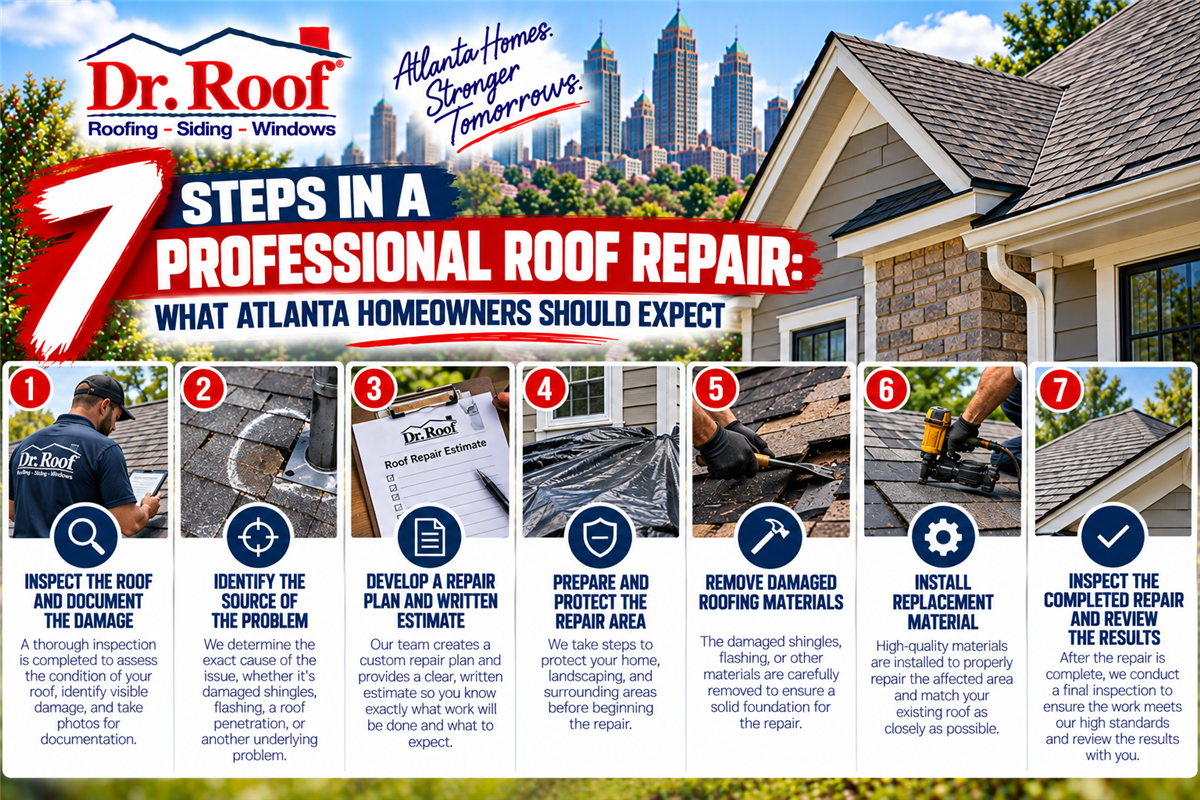
Contact Dr. Roof for a Professional Inspection. A professional roof inspection helps identify storm damage that may not be visible from the ground.
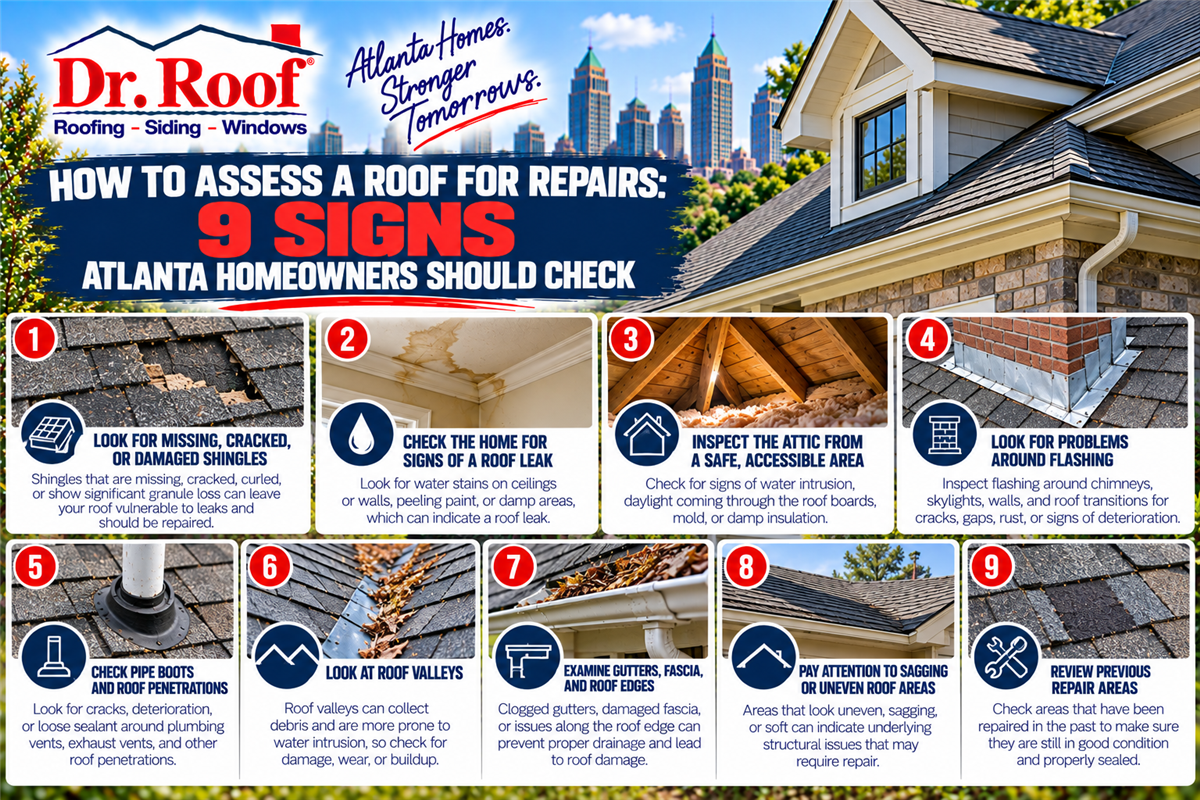
Dr. Roof evaluates asphalt shingles, flashing, pipe boots, roof vents, valleys, gutters, ridge caps, attic moisture, roof penetrations, and signs of wind or hail damage. This gives homeowners a clearer understanding of the roof’s condition.
Review the Inspection Findings. After the inspection, Dr. Roof can explain what was found and whether roof repair, storm damage repair, or roof replacement may be recommended.
When damage is present, photos and written findings can help homeowners understand the affected areas and keep organized records.
File the Claim With Your Insurance Provider. If you decide to file a claim, contact your insurance company and provide the requested information, such as your policy number, the date of the storm, and a description of the damage.
Your insurance provider will explain the next steps based on your policy and claim details.
Meet With the Adjuster. When the adjuster visits your property, having roofing documentation available can help keep the conversation focused on the roof’s condition.
Dr. Roof can provide inspection findings, photos, and repair or replacement recommendations to help support the claim process. Every policy and claim is different, and the insurance company determines coverage.
Review the Insurance Scope. Once you receive the insurance scope or estimate, review it carefully.
Compare the documented roof concerns with the proposed scope of work. If there are questions or discrepancies, Dr. Roof can help explain roofing terminology, material needs, and repair or replacement considerations so you better understand what is included.
Begin Storm Restoration Work. Once the claim process and project scope are clear, Dr. Roof can move forward with the approved roof repair or roof replacement work.
As a GAF Master Elite Certified Contractor, Dr. Roof focuses on proper installation, quality workmanship, clear communication, and careful cleanup.
Quality & Advocacy: Core Principles for Success
A successful storm restoration process starts with accuracy.
Homeowners need to know what happened to their roof, what damage is present, and what repair or replacement options may make sense.
Dr. Roof’s approach is built around detailed inspections, clear documentation, and professional recommendations.
Our team understands asphalt shingles, storm damage patterns, roof ventilation, flashing, gutters, and the full roofing system. That experience helps homeowners move through the process with more confidence.
As a GAF Master Elite Certified Contractor, Dr. Roof brings professional standards and quality workmanship to roof repair and roof replacement projects.
Our Make-It-Right mindset reflects our commitment to communication, accountability, and helping homeowners feel supported throughout the project.
Beyond Repairs: Preventing Future Claim Headaches
A storm damage claim is not only about fixing what is visible today.
It is also about identifying hidden issues before they create future problems.
Missed storm damage can lead to leaks, attic moisture, damaged insulation, weakened decking, ceiling stains, and repeated roof repair needs.
A thorough inspection and organized documentation can help homeowners avoid confusion later.
It also helps create a clearer record of the roof’s condition after the storm.
For Atlanta homeowners, this is especially important because severe weather can affect asphalt shingles in subtle ways. Hail bruising, lifted shingle seals, granule loss, and wind-driven rain may not be obvious right away.
Working with an experienced Georgia roofing company helps homeowners get a more complete picture before moving forward.
Secure Your Investment: Partnering for Peace of Mind
The storm damage claims process can feel overwhelming, but homeowners do not have to navigate the roofing side alone.
Dr. Roof provides professional storm damage inspections, roof repair, roof replacement, storm damage documentation support, and exterior home services throughout the Atlanta area.
As a trusted Georgia roofing company and GAF Master Elite Certified Contractor, Dr. Roof helps homeowners identify storm damage, understand repair or replacement recommendations, and move forward with clear information.
If your home has been affected by hail, wind, heavy rain, falling debris, missing asphalt shingles, leaks, or signs of water intrusion, contact Dr. Roof to schedule a professional storm damage roof inspection and get clear guidance on the best next step for protecting your home.
Frequently Asked Questions
Is it true I should wait to contact my insurer before calling a storm restoration contractor?
No, this is a common myth. We strongly recommend contacting a professional for an inspection immediately after securing your property.
An expert assessment provides crucial documentation and details that strengthen your storm damage claims process from the very beginning, helping you avoid potential pitfalls with the adjuster.
How quickly do I really need to file a storm damage claims process after a storm?
While policies vary, most require claims to be filed within a certain timeframe, often one year from the date of loss.
However, it's always best to file as soon as possible after the damage occurs and after you've had a professional assessment. Prompt action can prevent further damage and streamline your storm damage claims process.
Will filing a storm damage insurance claim automatically raise my premiums?
Not necessarily. While some homeowners worry about premium increases, filing a legitimate storm damage claim typically doesn't automatically lead to a hike, especially if it's due to a widespread catastrophic event.
Premiums are influenced by many factors, and neglecting to repair damage can lead to greater issues down the line.
What kind of damage does my homeowner's insurance typically cover after a storm?
Most standard homeowner's policies cover sudden and accidental damage from perils like wind, hail, and lightning. However, coverage specifics can vary significantly.
It's essential to review your individual policy for details on what's covered for storm restoration, including deductibles and exclusions, and to have a professional expert help identify all covered damage.
Can an expert truly help streamline my storm damage claims process with the insurance adjuster?
Absolutely. With over 30 years of experience and GAF Master Elite certification, a reputable expert brings unparalleled expertise to the table.
They assist with thorough documentation, detailed estimates, and direct communication with adjusters, ensuring all damage is recognized and advocating for a fair settlement to facilitate your storm restoration.
Subscribe to Dr. Roof's Blog



Comments