This guide offers practical insight for homeowners on maintaining repaired roof longevity. It challenges the common misconception that once a roof repair is complete, no further attention is needed.
For Atlanta homeowners with repaired asphalt shingles, flashing, pipe boots, storm damage, or minor leak concerns, this article explains how smart roof maintenance, routine inspections, and professional guidance from an experienced Georgia roofing company like Dr. Roof can help protect the repair and extend the life of the roofing system.
Debunking the 'Fix It Once' Roof Repair Myth
It is easy to understand why many homeowners feel relieved once a roof repair is finished.
The leak has stopped. The damaged asphalt shingles have been replaced. The flashing has been corrected. The immediate concern appears to be resolved.
However, roof repair should not always be treated as a “fix it once and forget it” solution.
A quality repair can restore protection to a specific area of the roof, but the entire roofing system still faces heat, humidity, rain, wind, hail, falling debris, and everyday wear.
Maintaining repaired roof longevity requires continued attention.
That does not mean homeowners need to worry constantly. It simply means routine care, safe visual checks, gutter maintenance, and periodic professional inspections can help the repair continue performing as intended.
Dr. Roof has served Atlanta-area homeowners since 1988, and our team has seen how proactive maintenance after roof repair can help prevent small issues from becoming larger problems.
The Dangers of Neglecting Post-Repair Care
One of the biggest mistakes homeowners make after roof repair is assuming the repaired area no longer needs attention.
Even when the repair is completed properly, the roof continues to experience weather exposure.
For example, a homeowner in Brookhaven may have storm damage repaired after heavy wind and rain. The damaged asphalt shingles are replaced, the flashing is secured, and the leak is resolved.
Months later, another storm moves through the area. If the homeowner never checks the roof, cleans the gutters, or schedules a follow-up inspection, a small issue near the repaired section may go unnoticed.
A loosened piece of flashing, clogged gutter, or new lifted shingle can allow water to enter again.
This does not mean the original repair failed. It may mean the roof has experienced new weather exposure or another vulnerable area has developed nearby.
Post-repair maintenance helps homeowners catch these changes early and protect the investment they already made in roof repair.
Crucial Practices for Sustained Roof Health
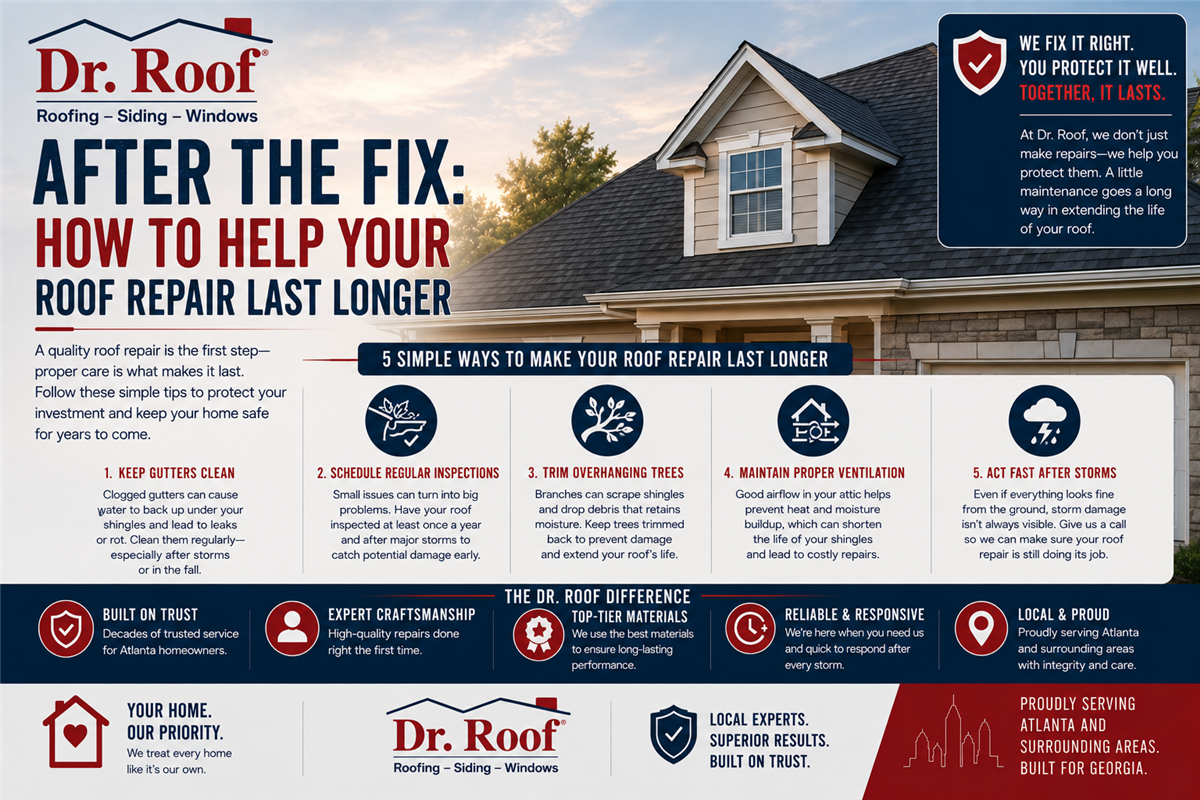
One of the best ways to support repaired roof longevity is through routine visual checks.
Homeowners should not climb onto the roof, but a safe ground-level review can still reveal important warning signs.
Look for missing, lifted, curling, or damaged asphalt shingles. Pay close attention to the repaired area and nearby roof sections. Also watch for granules collecting in gutters, around downspouts, or on walkways.
Granule loss can indicate shingle wear, storm damage, or ongoing weather exposure.
Gutter maintenance is another important step.
Clogged gutters can cause water to back up along the roof edge, fascia, soffits, or beneath shingles. This can be especially problematic near repaired areas if water is not draining properly.
Keeping gutters and downspouts clear helps direct water away from the roof and foundation.
Tree maintenance also matters.
Overhanging branches can scrape asphalt shingles, drop debris into valleys and gutters, or break during storms. Trimming limbs away from the roofline can help reduce abrasion, impact damage, and debris buildup.
Homeowners should also monitor the attic.
After heavy rain, check for water stains, damp insulation, musty odors, dark spots on decking, or signs of moisture near the repaired area. These clues can help identify a developing concern before it becomes a major leak.
Understanding Your Roof Repair Warranty
Warranty coverage can be an important part of roof repair confidence, but homeowners should understand what it does and does not cover.
Warranty options may vary depending on the repair scope, materials, roofing system, and project details.
A warranty is not a substitute for maintenance.
Most roofing products and workmanship protections are designed to cover specific issues, but neglect, clogged gutters, new storm damage, falling limbs, or lack of maintenance may not be included.
That is why homeowners should keep records after roof repair.
Save inspection notes, repair details, photos, warranty information, and any recommendations provided by your roofing contractor. This documentation can help you understand what was repaired and what future maintenance may be recommended.
Dr. Roof helps homeowners review available warranty options and understand how routine care can support the long-term performance of their roof repair.
Advanced Tips: The Power of Professional Assessments
Even careful homeowners cannot see every roofing concern from the ground.
Some issues require a trained eye.
A professional roofing inspection can identify subtle concerns such as lifted asphalt shingles, weakened seals, cracked pipe boots, worn flashing, attic moisture, soft decking, ventilation concerns, or storm damage that may not be obvious.
This is especially important after a major roof repair, roof leak repair, or storm damage repair.
A follow-up assessment can help confirm that the repaired area is performing properly and that surrounding roof components are still in good condition.
As a GAF Master Elite Certified Contractor and experienced Georgia roofing company, Dr. Roof evaluates the full roofing system, not just one visible area.
Our team may inspect:
Asphalt shingles
Flashing
Pipe boots
Roof vents
Valleys
Ridge caps
Gutters and downspouts
Roof penetrations
Attic moisture
Decking concerns
Signs of storm damage
Areas around previous repairs
This full-system approach helps homeowners stay ahead of future roof repair needs.
Your Action Plan for Lasting Roof Repair Longevity
For homeowners who want to extend the life of a repaired roof, a simple maintenance plan can make a meaningful difference.
Perform Safe Ground-Level Checks Twice a Year. Look for missing asphalt shingles, lifted edges, curling shingles, sagging areas, debris buildup, or changes around the repaired section.
Keep Gutters and Downspouts Clear. Clean gutters regularly so water can drain away from the roof, fascia, soffits, and foundation.
Trim Overhanging Branches. Keep tree limbs away from the roofline to reduce scraping, falling debris, and impact damage during storms.
Check the Attic After Heavy Rain. Look for damp insulation, water stains, musty odors, dark spots on decking, or signs of moisture near the repaired area.
Watch for Granule Loss. Granules near downspouts or in gutters may indicate asphalt shingle wear or storm damage.
Schedule Professional Inspections. A roof inspection every year or two, and after major storms, can help identify small problems before they become larger repair needs.
Keep Repair Records. Save estimates, photos, warranty information, and inspection reports so you understand what work was completed and what areas should be monitored.
Act Quickly on New Issues. If you notice a new leak, missing shingle, damaged flashing, or attic moisture, do not wait. Prompt roof repair can help prevent more extensive damage.
If storm damage is suspected, Dr. Roof can provide photos, written findings, and repair or replacement recommendations to help support the insurance claim process. Every policy and claim is different, and coverage decisions are made by the insurance company, but clear documentation can help homeowners better understand the roof’s condition.
Protect Your Investment: Embrace Proactive Roof Care
A roof repair is an important step, but it should not be the final step in caring for your roof.
Maintaining repaired roof longevity comes down to smart, consistent attention. Safe visual checks, clean gutters, trimmed trees, attic monitoring, and professional inspections can all help protect the repair and support the overall roofing system.
Dr. Roof provides roof inspections, roof repair, roof leak repair, roof replacement, storm damage documentation support, and exterior home services throughout the Atlanta area.
As a trusted Georgia roofing company and GAF Master Elite Certified Contractor, Dr. Roof helps homeowners protect asphalt shingles, repaired roof areas, and full roofing systems with clear guidance and dependable workmanship.
If your roof has recently been repaired, or if you want to make sure an older repair is still performing properly, contact Dr. Roof to schedule a professional inspection and get clear recommendations for protecting your home.
Frequently Asked Questions
Does a new roof repair mean I don't need ongoing maintenance?
No, this is a common misconception. While a high-quality roof repair addresses immediate damage, ongoing maintenance is crucial for sustaining the integrity of the repaired area and the rest of your roof. Neglecting this can lead to premature wear and additional issues.
What's the biggest misconception about maintaining repaired roof longevity?
The biggest myth is believing that once a roof is repaired, it's a completely maintenance-free solution. In reality, repaired sections, like all roofing components, benefit significantly from regular inspections, debris removal, and proactive care to ensure their long-term performance.
How often should a repaired roof be professionally inspected?
Even after a repair, we recommend a professional roof inspection every 1 to 2 years. This allows experienced professionals to identify any subtle issues, assess the integrity of the repair, and provide recommendations that help in maintaining repaired roof longevity effectively.
Can neglecting minor issues after roof repair lead to bigger problems?
Absolutely. Small, overlooked issues like a loose shingle or clogged gutter near a repaired section can quickly escalate. Water intrusion or continued deterioration can compromise the entire roof system, leading to more extensive and costly future roof repair needs.
Are warranties enough to ensure long-term repaired roof longevity?
Warranties provide vital protection against material defects and workmanship. However, they don't typically cover damage caused by neglect or lack of proper maintenance. Active homeowner care, combined with professional inspections, is essential to complement your warranty and truly ensure your roof's long-term health.
Subscribe to Dr. Roof's Blog





Comments