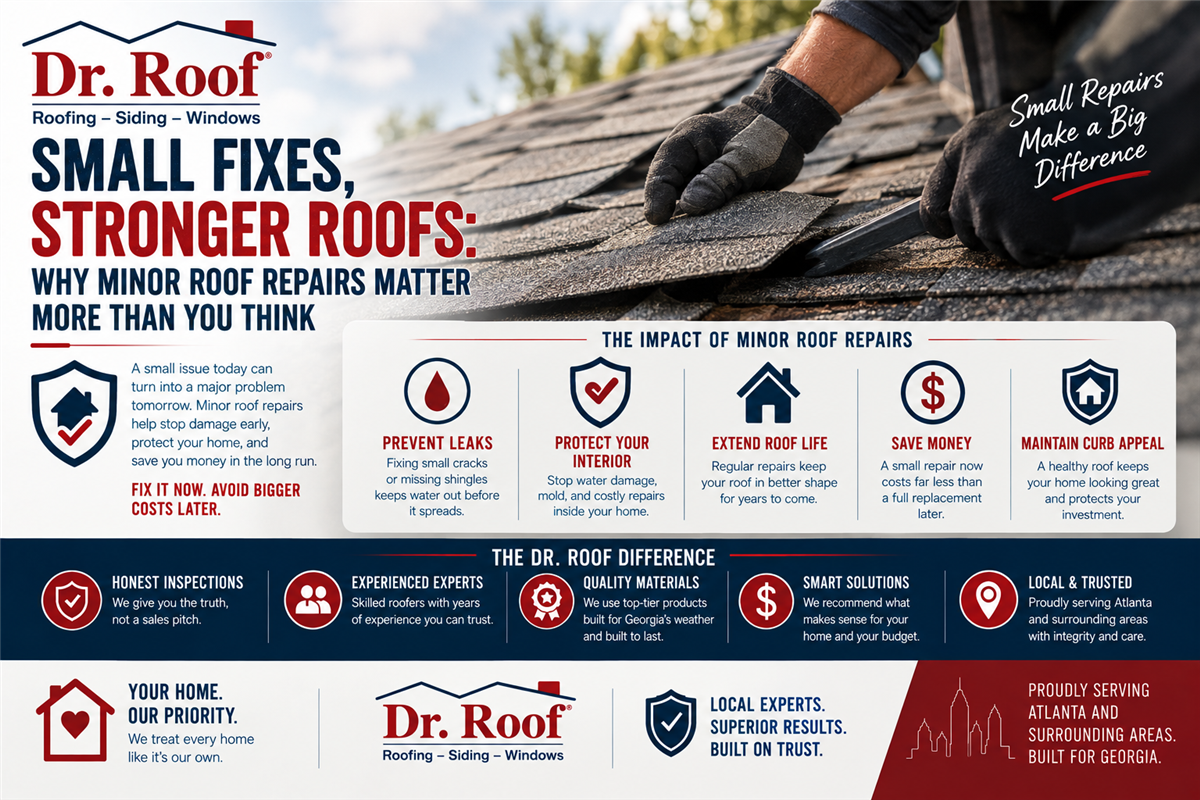
This article explains why addressing minor roof repairs quickly is one of the smartest ways homeowners can protect their property. It challenges the common belief that small roofing issues are harmless and shows how early action can help prevent leaks, structural damage, and more expensive repairs later.
For Atlanta homeowners dealing with aging asphalt shingles, loose flashing, clogged gutters, storm damage, or early signs of roof wear, working with an experienced Georgia roofing company like Dr. Roof can help protect the home and extend the life of the roofing system.
The Costly Myth of Minor Blemishes
Many homeowners assume small roof problems are only cosmetic.
A lifted shingle, loose granules, cracked sealant, or small flashing issue may not seem urgent at first. If there is no active leak inside the home, it can be tempting to wait.
Unfortunately, minor roof repairs often matter more than homeowners realize.
Small issues can create openings for water, wind, and moisture. Over time, those openings can affect asphalt shingles, underlayment, roof decking, attic insulation, ceilings, walls, and interior finishes.
What begins as a simple roof repair can become a larger and more expensive problem if ignored.
Timely roof repair is not just about fixing what is visible. It is about preventing small vulnerabilities from spreading through the roofing system.
Setting the Scene: Unseen Damage and Hidden Risks
One of the most common roofing myths is that a problem only matters once water appears inside the home.
By the time a ceiling stain, drip, or musty odor appears, moisture may have already traveled through multiple layers of the roof system.
A small crack in flashing near a chimney, skylight, or wall can allow water to enter slowly during heavy rain. A cracked pipe boot can leak around a plumbing vent. A lifted asphalt shingle can let wind-driven rain reach the underlayment.
These problems may not cause immediate interior damage, but they can quietly weaken the roof over time.
Hidden moisture can affect:
Roof decking
Attic insulation
Rafters
Drywall
Ceilings
Fascia and soffits
Interior paint
Indoor air quality
This is why minor roof repairs should be treated as prevention, not just maintenance.
A Timely Intervention: The Roswell Homeowner's Story
Consider a homeowner in Roswell who notices granules near the downspout after a storm.
At first, the roof may appear normal from the ground. There may be no missing shingles, no active leak, and no obvious reason to worry.
However, a professional inspection may reveal loose asphalt shingles, damaged flashing near a vent pipe, or early signs of storm-related wear.
Addressing those small concerns early can help prevent water intrusion during the next heavy rain.
In this type of situation, targeted minor roof repairs may include replacing damaged asphalt shingles, sealing vulnerable flashing, replacing a cracked pipe boot, or clearing drainage issues.
The benefit is simple: small repairs can help stop larger problems before they begin.
Challenges Encountered: Overcoming the 'Wait and See' Trap
The biggest challenge with minor roof damage is that it often seems easy to ignore.
A homeowner may think, “It is only one shingle,” or “I will wait until it leaks.”
That wait-and-see approach can be risky.
A loose shingle may expose the underlayment to sun and rain. Damaged flashing may allow small amounts of water to enter again and again. Clogged gutters may cause water to back up beneath shingles and damage fascia or soffits.
Small roof issues can also work together.
For example, clogged gutters may worsen roof edge damage. Poor attic ventilation may speed up asphalt shingle wear. A lifted shingle may become a larger opening during the next storm.
Common minor issues that should not be ignored include:
Missing asphalt shingles
Lifted or loose shingles
Cracked pipe boots
Damaged flashing
Granule loss
Loose nails or exposed fasteners
Small punctures from debris
Clogged gutters
Sagging gutter sections
Minor roof leaks
Water stains in the attic
Damaged ridge caps
Worn sealant around roof penetrations
Regular inspections help homeowners catch these concerns before they become emergencies.
As a GAF Master Elite Certified Contractor, Dr. Roof brings professional training and local roofing experience to inspections and repair recommendations throughout the Atlanta area.
Key Insights: The True Cost of Delay
Minor roof repairs are often far more manageable than major roof damage.
A targeted repair may address a specific issue without disturbing large sections of the roofing system. In contrast, delayed repairs can lead to widespread moisture problems, repeated leaks, damaged decking, interior repairs, or even premature roof replacement.
The true cost of delay is not always the first repair.
It is what happens when water is allowed to keep entering the home.
A small leak can eventually lead to damaged insulation, stained ceilings, rotted wood, mold or mildew concerns, and more extensive restoration work.
That is why early roof repair is an investment in long-term home protection.
Dr. Roof frequently helps homeowners address issues such as cracked caulk around vents, damaged flashing, missing asphalt shingles, storm-related granule loss, or small punctures from debris.
When these concerns are caught early, the repair can often be more focused and less disruptive.
Connecting the Dots: Dr. Roof's Comprehensive Approach
Minor roof repairs should always be handled with the full roofing system in mind.
A repair should not simply cover the visible symptom. It should address the source of the issue and help restore protection to the affected area.
Dr. Roof evaluates the surrounding roof components to determine whether the problem is isolated or connected to a larger concern.
Our team may inspect:
Asphalt shingles
Flashing
Pipe boots
Roof vents
Gutters and drainage
Ridge caps
Valleys
Roof penetrations
Attic moisture
Decking concerns
Signs of storm damage
As an experienced Georgia roofing company, Dr. Roof understands how Atlanta weather affects asphalt shingles and full roofing systems.
Heat, humidity, hail, heavy rain, wind, falling debris, and seasonal storms can all create minor roof issues that should be addressed before they grow.
Dr. Roof has served Atlanta-area homeowners since 1988, providing roof inspections, roof repair, roof replacement, storm damage documentation support, and exterior home services.
Our Make-It-Right mindset reflects our commitment to clear communication, dependable workmanship, and helping homeowners feel confident in their roofing decisions.
If storm damage is suspected, Dr. Roof can provide photos, written findings, and repair or replacement recommendations to help support the insurance claim process. Every policy and claim is different, and coverage decisions are made by the insurance company, but clear documentation can help homeowners better understand the roof’s condition.
Conclusion: Prioritizing Your Home's Long-Term Health
Do not underestimate small roof problems.
Minor roof repairs can play a major role in preventing leaks, moisture damage, structural concerns, and more expensive roofing issues later.
A missing asphalt shingle, cracked pipe boot, damaged flashing, clogged gutter, or small attic stain may be the first sign that your roof needs attention.
Acting early helps protect your home, preserve the roofing system, and reduce the risk of larger repair needs.
Dr. Roof provides professional roof inspections, minor roof repairs, roof repair, roof replacement, storm damage documentation support, and exterior home services throughout the Atlanta area.
As a trusted Georgia roofing company and GAF Master Elite Certified Contractor, Dr. Roof helps homeowners identify small roofing issues and make informed decisions about protecting their homes.
If you have noticed loose shingles, granule loss, a small leak, clogged gutters, or signs of storm damage, contact Dr. Roof to schedule a professional inspection and get clear guidance on your next step.
Frequently Asked Questions
Is it really worth fixing small roof issues if there’s no leak yet?
Absolutely. It’s a common misconception that minor roof repairs can wait until a noticeable leak appears. By then, significant and costly damage may have already occurred to your attic, insulation, and interior structures. Addressing small problems like cracked shingles or loose flashing early prevents water intrusion and stops issues from escalating.
What kind of “minor roof damage” should I watch out for?
Homeowners should look for loose, cracked, or missing shingles, deteriorated flashing around chimneys or vents, clogged or damaged gutters, and excessive shingle granules in downspouts. Even small rust spots on metal components or sagging in minor areas can indicate developing problems. These warrant immediate professional assessment. For more specific examples, consider reviewing types of roof repairs that prevent water damage.
How much can I actually save by doing minor roof repairs promptly?
The savings can be substantial. For example, a simple repair like replacing a few shingles might cost a few hundred dollars. Ignoring this could lead to thousands of dollars in repairs for water-damaged decking, mold remediation, and interior structural fixes. Proactive minor roof repairs are an investment that pays off by preventing much larger, unforeseen expenses.
Does Dr. Roof offer warranties on small repair jobs?
Yes, Dr. Roof stands behind all our work, including minor roof repairs. As a GAF Master Elite Certified Contractor, we offer industry-leading warranties on both labor and materials. This commitment reflects our dedication to quality craftsmanship and customer satisfaction, ensuring your repairs are durable and reliable.
How often should I have my roof inspected to catch minor damage?
We generally recommend having your roof professionally inspected at least once a year, ideally in the spring or fall. After any severe weather event, such as a strong storm or hail, an additional inspection is highly advisable. Regular checks help identify and address minor roof issues before they can become significant, costly roof problems.
Subscribe to Dr. Roof's Blog







Comments