This guide gives Atlanta homeowners a clear action plan after roof storm damage. It challenges common misconceptions about what to do first, how to document damage, and when to call a professional roofing contractor.
For homeowners dealing with wind, hail, heavy rain, or damaged asphalt shingles, this article explains how Dr. Roof helps protect homes through professional inspections, clear documentation, storm damage roof repair, roof replacement recommendations, and local expertise as a trusted Georgia roofing company.
Challenging Initial Reactions to Roof Storm Damage
When a strong storm moves through the Atlanta area, homeowners are often left with uncertainty.
High winds, hail, falling branches, and heavy rain can affect a roof quickly. The damage may be obvious, such as missing asphalt shingles or a fallen limb, or it may be hidden beneath the surface.
Many homeowners are unsure what to do first.
Some assume they should wait to see if a leak appears. Others believe they can safely evaluate the roof themselves. Some may think a quick temporary fix is enough to prevent future problems.
These assumptions can lead to bigger issues.
The first steps after roof storm damage matter. Acting carefully and promptly can help protect your home, limit additional water intrusion, and provide clearer information if an insurance claim becomes part of the process.
Dr. Roof helps Atlanta-area homeowners understand the condition of their roof after severe weather and determine whether roof repair, storm damage roof repair, or roof replacement may be needed.
The Real Cost of Misconceptions After a Storm
One of the most common misconceptions after a storm is that visible damage is the only damage that matters.
A roof can look mostly intact from the ground while still having lifted asphalt shingles, creased shingles, bruised shingle mats, damaged flashing, loosened ridge caps, clogged gutters, or small openings where water can enter.
Another misconception is that homeowners have plenty of time to address storm damage.
Delaying a professional inspection can allow small problems to grow. Wind-driven rain may enter beneath lifted shingles. Hail damage may weaken shingle granules and shorten the life of the roof. Damaged flashing may lead to leaks around chimneys, vents, skylights, or roof valleys.
What begins as a minor roofing concern can become attic moisture, damaged insulation, stained ceilings, rotted decking, or more extensive roof repair needs.
That is why timely storm damage inspection matters.
Unmasking the Myths: Why Homeowners Make Costly Mistakes
After a storm, homeowners often make decisions based on what they can see from the ground.
Unfortunately, roof storm damage is not always easy to identify without a professional inspection.
Wind damage may show up as missing shingles, but it can also appear as lifted edges, broken seals, creased tabs, or loosened asphalt shingles that settle back into place after the storm.
Hail damage may not always create holes or dramatic dents. It can bruise asphalt shingles, knock away protective granules, or weaken the shingle mat. These issues may not cause an immediate leak, but they can affect the roof’s long-term performance.
Another common mistake is overlooking documentation.
Photos, written findings, and a clear inspection report can help homeowners understand the roof’s condition after a storm. If an insurance claim is filed, this information may help support the claim process.
Homeowners may also assume that any roofing company can handle storm damage restoration. In reality, storm damage work requires careful inspection, knowledge of asphalt shingles, understanding of local weather patterns, and clear communication.
Choosing an experienced Georgia roofing company can make the process more organized and less stressful.
A Proactive Plan: Your Immediate Steps Post-Storm
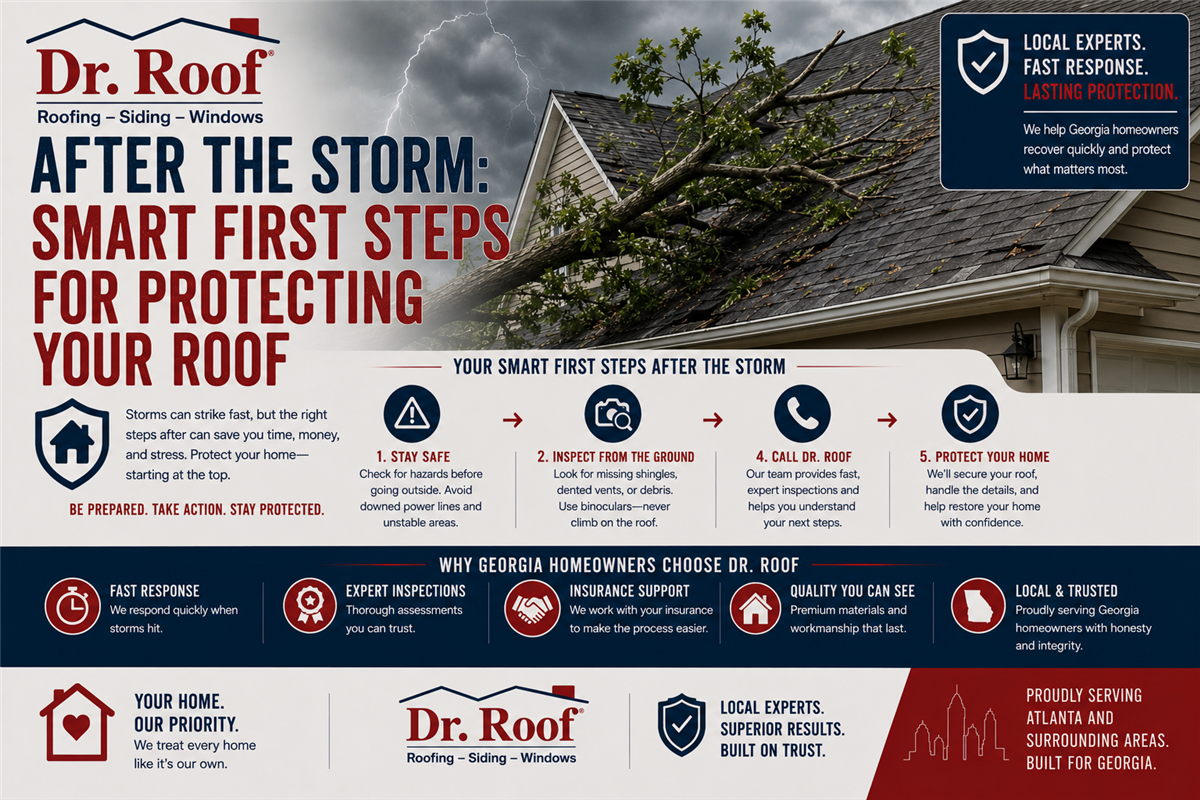
After a storm, safety should always come first.
Do not climb onto the roof, especially if it is wet, damaged, or covered with debris. Avoid downed power lines, broken tree limbs, unstable structures, and areas where water may be entering the home.
Once it is safe, homeowners can take a few important steps:
Check the property safely from the ground. Look for missing asphalt shingles, shingle pieces in the yard, fallen branches, damaged gutters, loose flashing, or visible roof debris.
Look indoors for signs of water intrusion. Check ceilings, walls, attic areas, insulation, and around light fixtures for stains, dampness, or active dripping.
Document visible damage. Take photos and videos from safe areas. Capture damaged shingles, gutters, siding, windows, fallen limbs, leaks, ceiling stains, and any debris around the home.
Prevent further interior damage when possible. If water is entering the home, place buckets, move valuables, and protect flooring or furniture. Do not attempt unsafe roof work.
Schedule a professional roof inspection. A trained roofing specialist can evaluate asphalt shingles, flashing, gutters, roof penetrations, vents, valleys, attic moisture, and other signs of storm damage.
Keep records. Save photos, inspection notes, repair recommendations, and any communication related to the storm damage.
A prompt inspection can help homeowners understand whether the roof needs a targeted repair, temporary protection, or a larger roofing solution.
Case in Point: Navigating Hidden Damage in 2026
Consider an Atlanta-area homeowner who experiences a severe hail and wind event.
From the ground, the roof may appear mostly normal. There may be no active leak, no large missing section, and no obvious structural damage.
However, during a professional inspection, a roofing contractor may find hidden storm damage that is difficult to see from below.
This can include bruised asphalt shingles, granule loss, lifted shingles, creased tabs, damaged flashing, loosened ridge caps, or signs of moisture entering the attic.
These findings matter because hidden storm damage can weaken the roofing system over time.
A homeowner who waits too long may not realize the roof has been compromised until water stains appear inside the home.
Dr. Roof’s storm damage inspection process is designed to identify both obvious and subtle roof concerns. When damage is found, our team can provide photos, written findings, and repair or replacement recommendations to help homeowners better understand the condition of their roof.
Essential Principles for Effective Storm Restoration
Effective storm restoration starts with a full understanding of the roof damage.
Wind and hail can affect asphalt shingles in different ways. Wind may lift shingles, break seals, crease tabs, or remove materials completely. Hail may knock away granules, bruise the shingle surface, or damage vents, gutters, and roof accessories.
A professional inspection should evaluate more than the shingles alone.
Dr. Roof looks at the full roofing system, including:
Asphalt shingles
Ridge caps
Flashing
Pipe boots
Roof vents
Valleys
Gutters and downspouts
Roof penetrations
Attic moisture
Decking concerns
Siding and exterior components when applicable
If an insurance claim is involved, Dr. Roof can provide documentation to help support the claim process. Every policy and claim is different, and coverage decisions are made by the insurance company, but clear photos and written findings can help homeowners communicate the condition of the roof more effectively.
Our Make-It-Right mindset reflects our commitment to quality workmanship, clear communication, and helping homeowners move through the restoration process with greater confidence.
Choosing Expertise to Prevent Future Headaches
Storm damage roof repair should not be based on guesswork.
Atlanta-area homes face strong winds, hail, heavy rain, humidity, heat, and falling debris. These conditions can affect asphalt shingles and complete roofing systems in ways that are not always visible right away.
Dr. Roof has served the Atlanta metropolitan area since 1988, giving our team decades of experience with Georgia weather and local roofing needs.
As a GAF Master Elite Certified Contractor, Dr. Roof brings professional training, installation knowledge, and strong workmanship standards to roof repair, roof replacement, and storm damage restoration projects.
Working with an experienced Georgia roofing company helps homeowners receive clear guidance, detailed inspections, and repair or replacement recommendations based on the actual condition of the roof.
That experience matters when deciding whether damage is isolated, widespread, repairable, or severe enough to consider roof replacement.
Restoring Peace of Mind, One Roof at a Time
Roof storm damage can feel overwhelming, but homeowners do not have to navigate the process alone.
Dr. Roof provides professional storm damage inspections, roof repair, roof replacement, storm damage documentation support, and exterior home services throughout the Atlanta area.
Our process begins with a detailed inspection and clear communication. Homeowners receive information about what was found, what it may mean, and what steps may be recommended next.
Whether your home has missing asphalt shingles, hail damage, wind damage, leaks, damaged gutters, or concerns after a severe storm, Dr. Roof can help you understand the condition of your roof and make an informed decision.
If your home has been affected by recent storms, contact Dr. Roof to schedule a professional roof inspection and get clear guidance on the next step for protecting your home.
Frequently Asked Questions
Is it a myth that I should wait for my insurance adjuster before calling a roofing expert for roof storm damage?
Yes, it's a common myth. While contacting your insurance company is important, waiting for an adjuster before calling a roofing expert can be a costly mistake.
A professional roofing contractor can conduct an immediate, thorough inspection, document all damage, and provide an expert assessment to support your claim from the very beginning, ensuring no hidden issues are overlooked.
What common "DIY" steps after roof storm damage often lead to bigger problems, contrary to popular belief?
Many homeowners believe they can perform temporary repairs or a full DIY assessment. However, attempting to climb on a damaged roof without proper safety equipment or expertise can be extremely dangerous.
Incorrect temporary fixes can worsen damage, void warranties, or even create new leaks, highlighting why professional intervention is crucial for effective storm restoration.
Many believe all storm damage is obvious; how does a professional storm restoration inspection uncover hidden issues?
It's a misconception that all storm damage is clearly visible from the ground. A professional storm restoration inspection involves a detailed, comprehensive roof assessment.
It often identifies subtle signs like creased shingles, granule loss, or impact marks that compromise the roof's integrity but aren't immediately apparent. Expert roofers know exactly where to look for hidden wind or hail damage that could lead to future leaks.
Is it true that my insurance policy automatically covers all types of roof storm damage without question?
This is another myth. While most policies cover sudden and accidental damage from storms, coverage specifics vary greatly.
Factors like your deductible, policy exclusions, and whether damage is classified as wind, hail, or water can all impact your payout. Expert roofing assistance can help you understand your policy and advocate for a fair claim.
Beyond repairs, what lasting benefits does choosing a GAF Master Elite contractor for storm restoration truly offer?
Choosing a GAF Master Elite contractor for storm restoration goes beyond simple repairs. It ensures you receive the highest quality craftsmanship, backed by industry-leading labor and material warranties that general contractors cannot offer.
This commitment to superior materials and expert installation provides unparalleled long-term protection and peace of mind for your home.
Subscribe to Dr. Roof's Blog




Comments