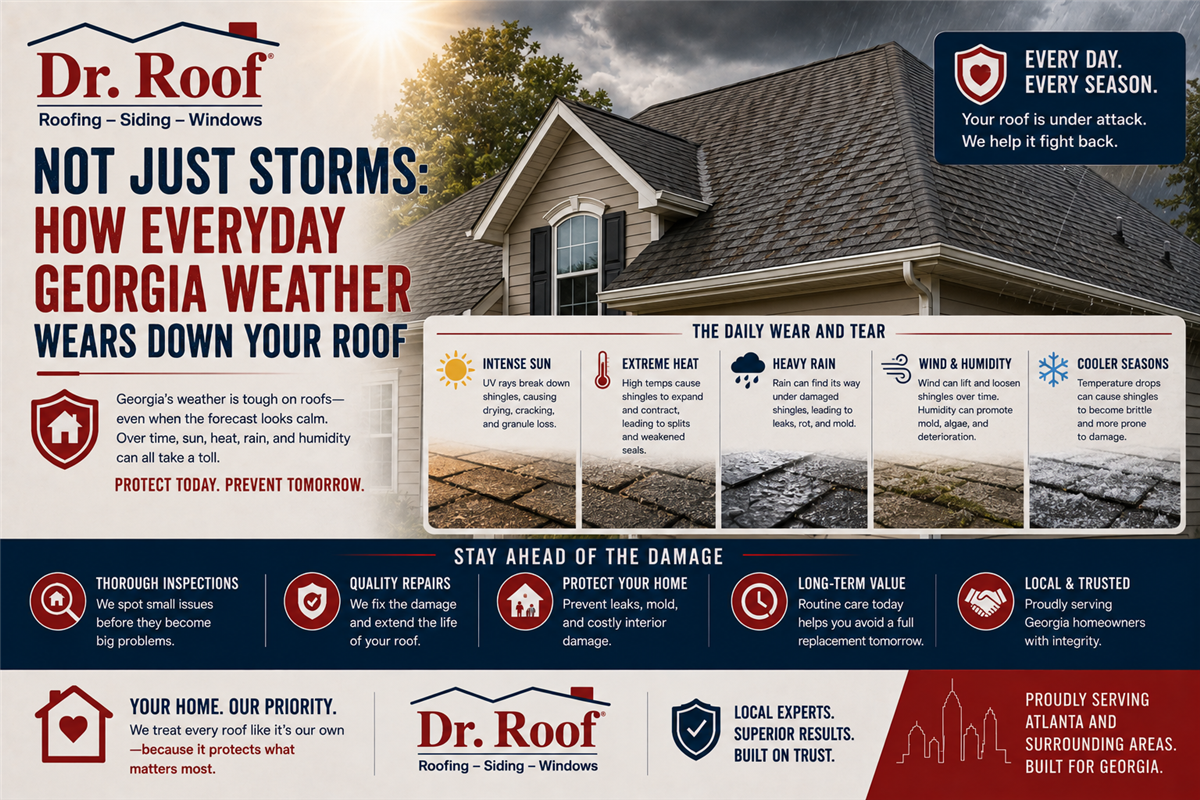
This guide helps Atlanta homeowners understand that roof repair needs are not only caused by major storms. Everyday weather conditions, including sun exposure, heat, humidity, rain, wind, and seasonal temperature changes, can gradually wear down asphalt shingles and other roofing components.
For homeowners looking to protect their investment, this article explains how weather impacts the need for roof repair and why working with an experienced Georgia roofing company like Dr. Roof can help identify small problems before they become larger concerns.
Problem Introduction: Unmasking the Subtle Threat to Your Roof
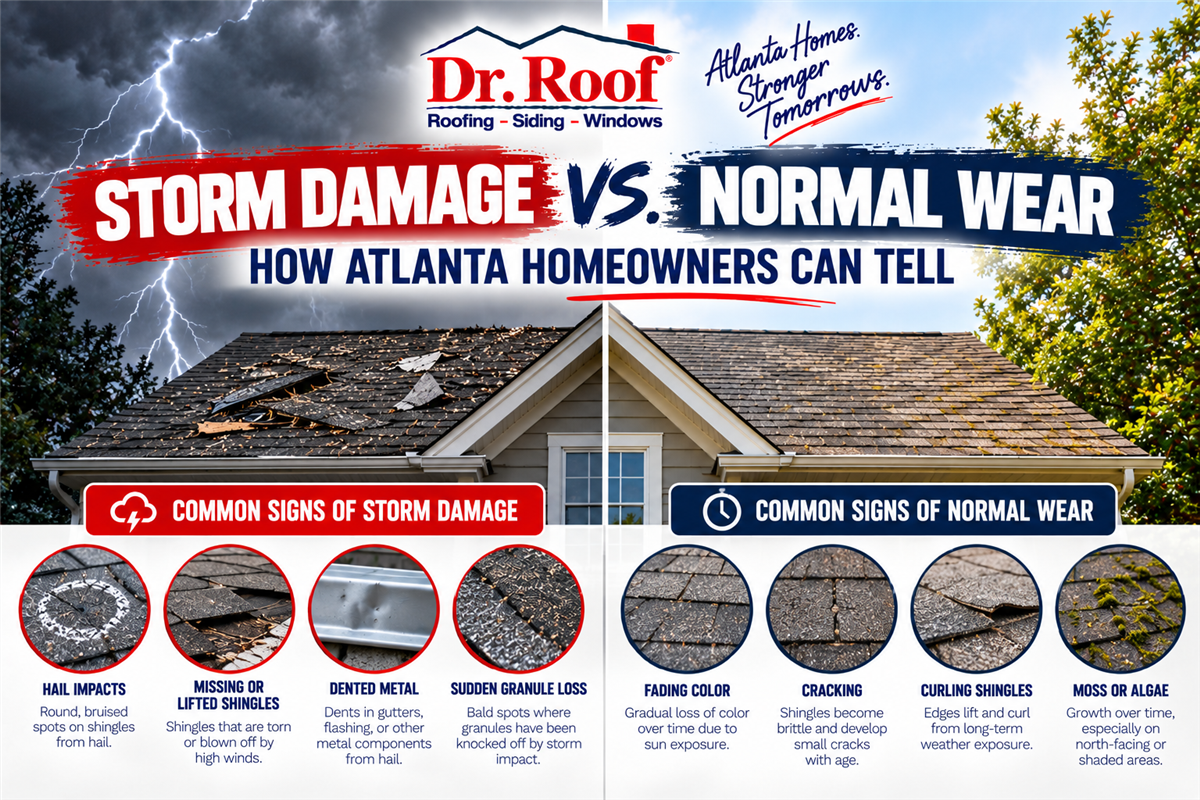
Many homeowners in the Atlanta metropolitan area believe the only time to worry about roof damage is after a severe storm.
Hail, high winds, and heavy rain can certainly cause serious roofing problems, but they are not the only threats to your home.
Everyday Georgia weather can also take a toll on your roof.
Sun exposure, humidity, steady rain, seasonal temperature swings, and mild winds can gradually weaken asphalt shingles, flashing, pipe boots, sealants, gutters, and other roofing system components.
This slow wear may not be dramatic, but it can still lead to roof repair needs over time.
The problem is that subtle weather damage often goes unnoticed until a leak, ceiling stain, or missing shingle appears. By then, the issue may have already affected the underlayment, decking, attic insulation, or interior finishes.
Understanding how weather affects your roof is one of the best ways to stay ahead of avoidable damage.
Why This Problem Matters: The Hidden Costs of Neglect
Small roof issues can become expensive when they are ignored.
A little granule loss, a cracked pipe boot, loose flashing, or a lifted asphalt shingle may not seem urgent at first. But once water finds a path beneath the roof surface, damage can spread quietly.
Moisture may affect the roof deck, attic insulation, fascia, soffits, drywall, ceilings, or structural materials.
That is why proactive roof repair is so important.
Dr. Roof has served Atlanta-area homeowners since 1988, and our team has seen how routine weather exposure can gradually weaken roofing systems. Early detection helps homeowners address small problems before they turn into major repairs.
Preventative inspections and timely roof repair can help extend the life of the roof, protect the home, and reduce the risk of emergency leaks.
Root Causes: The Everyday Assault on Your Roof
Atlanta roofs are exposed to a wide range of weather conditions throughout the year.
Each type of weather affects the roofing system differently.
Prolonged sun exposure is one of the biggest contributors to asphalt shingle wear. Over time, UV rays can dry out roofing materials, making shingles more brittle and less flexible. This may lead to cracking, curling, fading, or granule loss.
Granules are important because they help protect asphalt shingles from sun and weather exposure. When granules wear away, the shingle becomes more vulnerable to further deterioration.
Temperature changes also matter. Roofing materials expand in heat and contract when temperatures drop. This repeated movement can stress fasteners, flashing, sealants, and shingles over time.
Humidity and moisture can also create problems, especially if ventilation is poor. Trapped moisture in attic spaces can contribute to condensation, mold or mildew concerns, and premature roof deterioration.
Wind does not have to be extreme to affect a roof. Persistent gusts can lift shingles, weaken seals, move debris across the roof surface, and loosen vulnerable materials. Once shingles are lifted or unsealed, wind-driven rain can enter beneath them.
Rainfall is another constant concern. Even moderate rain can exploit small cracks, worn flashing, damaged pipe boots, clogged gutters, or weak areas around roof penetrations.
Common weather-related roof repair issues include:
Granule loss on asphalt shingles
Cracked or curling shingles
Lifted or loosened shingles
Worn flashing
Cracked pipe boots
Damaged sealant
Clogged gutters
Moisture in attic spaces
Algae or moss growth
Soft or weakened decking
Water stains after heavy rain
Shingle wear on sun-exposed slopes
Even when there has not been a major storm, these conditions can gradually create roof repair needs.
Prevention: Learning from Real-World Experience
Consider an Atlanta-area homeowner who believes their roof is in good shape because it has not experienced major storm damage.
From the ground, the roof may look normal. There may be no missing shingles, no obvious leaks, and no visible damage.
But during a professional inspection, the roofing contractor may discover weather-related wear that is not easy to see from below.
This could include brittle asphalt shingles on a sun-exposed slope, worn flashing near a chimney, cracked pipe boots, or granules collecting in the gutters.
Left alone, these issues can become more serious during the next season of heavy rain or strong wind.
This is why routine inspections are so valuable. A trained roofing professional can identify early warning signs and recommend targeted roof repair before the damage spreads.
Preventative care is especially important in Georgia, where roofs face intense heat, humidity, sudden storms, and frequent weather changes.
Solution Framework: Proactive Protection Strategies
The best way to reduce weather-related roof repair problems is to stay proactive.
Homeowners can start with safe visual checks from the ground. Look for missing asphalt shingles, sagging areas, debris buildup, granules near downspouts, clogged gutters, or visible damage around roof edges.
However, a ground-level check is not a substitute for a professional roof inspection.
Dr. Roof’s team evaluates the full roofing system, including asphalt shingles, flashing, vents, pipe boots, gutters, roof valleys, roof penetrations, attic ventilation, and signs of moisture intrusion.
As a GAF Master Elite Certified Contractor, Dr. Roof brings professional training, installation knowledge, and decades of local experience to roof inspections, roof repair, and roof replacement recommendations.
A proactive protection plan may include:
Annual professional roof inspections
Post-storm roof checks
Gutter cleaning
Tree trimming near the roofline
Attic ventilation evaluation
Prompt asphalt shingle repair
Flashing and pipe boot maintenance
Drainage review
Documentation of storm-related concerns
The goal is to catch small problems early and help the roof perform better over time.
Implementation: Dr. Roof's Systematic Repair Approach
Here is a simplified process for effective weather-related roof repair:
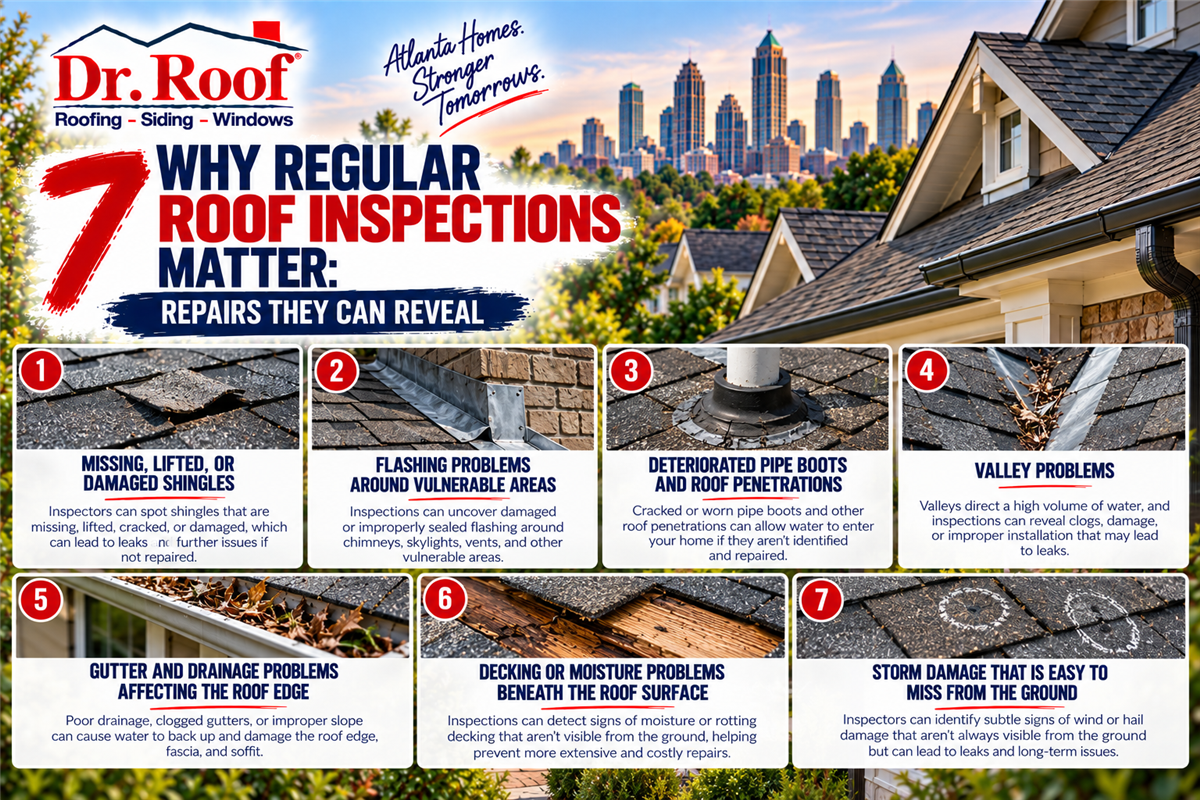
Comprehensive Roof Assessment: Dr. Roof inspects the roofing system for granule loss, cracked or lifted asphalt shingles, worn flashing, damaged pipe boots, clogged gutters, ventilation concerns, and signs of water intrusion.
Cause Identification: Our team looks for the source of the issue, whether it appears related to everyday weather wear, storm damage, aging materials, drainage problems, or ventilation concerns.
Clear Repair Recommendation: Based on the findings, Dr. Roof provides practical roof repair recommendations. This may include asphalt shingle replacement, flashing repair, pipe boot replacement, gutter-related guidance, or additional evaluation if the damage is more widespread.
Professional Repair Work: Repairs are completed with attention to quality materials, proper installation, and the surrounding roofing system. The goal is to restore protection to the affected area, not just cover the visible symptom.
Final Review and Guidance: After the work is complete, Dr. Roof reviews the repair and helps homeowners understand ongoing maintenance, warranty guidance, and future roof care recommendations.
If storm damage is suspected, Dr. Roof can also provide photos, written findings, and repair or replacement recommendations to help support the insurance claim process. Every policy and claim is different, but clear documentation can help homeowners better understand the condition of their roof.
Key Principles: Quality, Trust, and Lasting Protection
Dr. Roof believes roof repair should be based on clear findings, honest recommendations, and quality workmanship.
Everyday weather can be just as important as dramatic storm events when it comes to long-term roof performance. A roof that is regularly inspected and maintained is better positioned to handle Georgia’s changing conditions.
As an experienced Georgia roofing company, Dr. Roof understands how local weather affects asphalt shingles and complete roofing systems.
Our Make-It-Right mindset reflects our commitment to customer satisfaction, communication, and doing the job properly.
Whether your roof has storm damage, aging shingles, ventilation concerns, or weather-related wear, the right professional guidance can help protect your home and reduce the risk of larger repairs.
Conclusion: Guarding Your Home Against All Elements
Do not fall for the myth that only extreme weather causes roof problems.
Your roof works every day to protect your home from sun, rain, humidity, wind, and changing temperatures. Over time, those conditions can create wear that may lead to roof repair needs.
Dr. Roof has served Atlanta-area homeowners since 1988, providing roof inspections, roof repair, roof replacement, storm damage documentation support, and exterior home services.
As a trusted Georgia roofing company and GAF Master Elite Certified Contractor, Dr. Roof helps homeowners identify weather-related roof concerns and make informed decisions about protecting their homes.
If you have noticed granule loss, damaged asphalt shingles, clogged gutters, attic moisture, or signs of a leak, contact Dr. Roof to schedule a professional inspection and get clear guidance on your next step.
Frequently Asked Questions
Is weather roof repair only necessary after a major storm?
No, this is a common misconception. While severe storms cause obvious damage, continuous exposure to sun, mild winds, and temperature fluctuations also significantly contributes to roof wear and tear, necessitating regular inspections and potential repairs.
How does regular sunlight impact my roof's health in Atlanta?
Constant UV exposure from the sun breaks down roofing materials, causing granules to loosen, shingles to become brittle, and seals to degrade. This cumulative damage weakens your roof's protective layers, making it vulnerable to leaks and increasing the need for weather roof repair over time.
What subtle signs indicate I need weather roof repair?
Look for signs like excessive granular loss in gutters, cracked or curling shingles, lifted edges, compromised flashing around vents or chimneys, and loose debris. These often indicate gradual weather-related deterioration that a professional inspection can confirm and address.
Does Dr. Roof offer assistance with insurance claims for weather-related damage?
Yes, Dr. Roof provides comprehensive storm damage insurance assistance. Our experienced team helps homeowners navigate the claims process, ensuring you receive proper coverage for necessary weather roof repair and restoration.
Why is timely weather roof repair important for my home?
Addressing subtle weather damage promptly prevents minor issues from escalating into major problems like extensive leaks, structural rot, and costly interior damage. Proactive weather roof repair protects your home's integrity, extends your roof's lifespan, and saves you significant money in the long run.
Subscribe to Dr. Roof's Blog




Comments