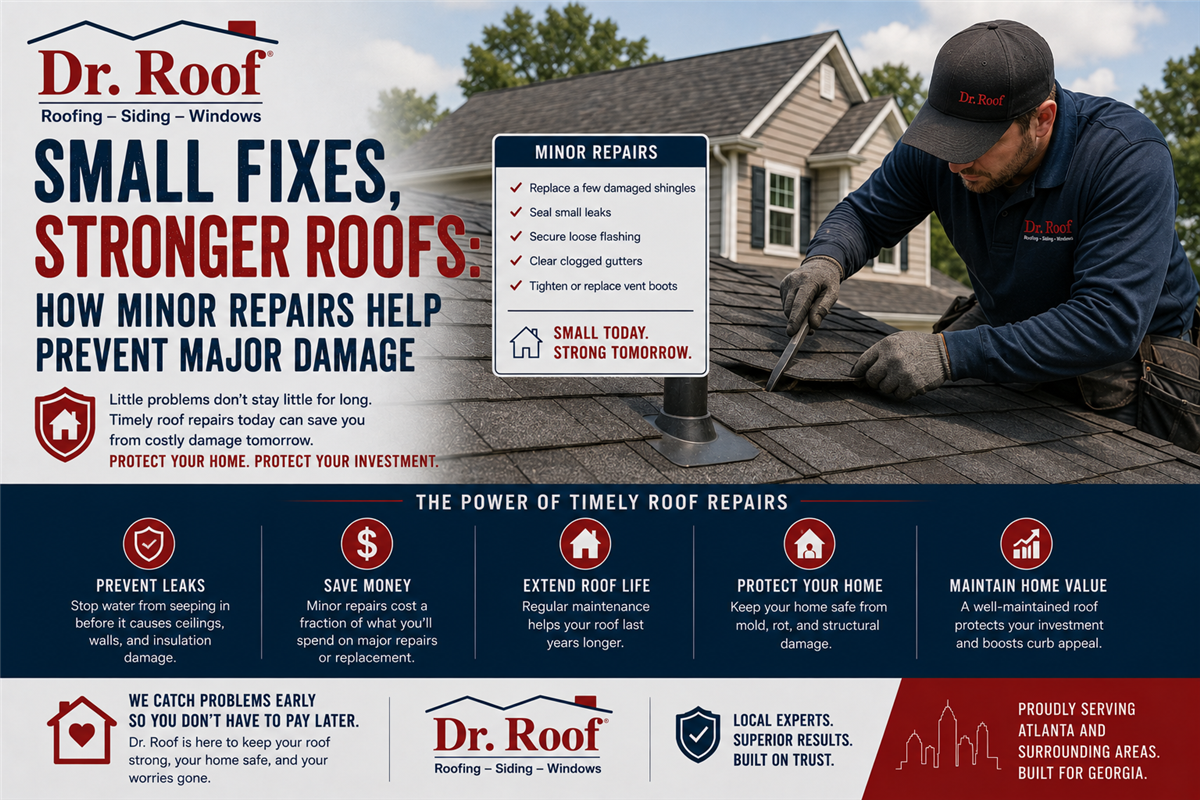
This guide helps homeowners understand why addressing small roofing issues early can help prevent larger, more expensive damage later. For Atlanta homeowners, minor roof repair is an important part of protecting the home, extending the life of asphalt shingles, and reducing the risk of leaks, decking damage, attic moisture, and emergency repairs.
With expert insight from Dr. Roof, homeowners can better understand why proactive roof care from an experienced Georgia roofing company is one of the best ways to protect their home and long-term investment.
The Costly Myth of Delaying Roof Repairs
A common misconception among homeowners is that a small crack, loose shingle, missing granules, or slightly damaged flashing is not urgent.
If there is no active leak inside the home, it can be easy to assume the roof is still performing as it should.
Unfortunately, that “fix it later” approach can become costly.
Minor roof repair is often the difference between a manageable issue and a much larger roofing problem. A small opening in the roofing system can allow water to enter slowly, affecting the roof deck, insulation, attic spaces, drywall, and even structural components over time.
Addressing small concerns early helps protect the full roofing system and can reduce the risk of major roof repair needs later.
The Steep Price of Overlooking Small Flaws
Small roofing issues rarely stay small forever.
A lifted asphalt shingle, cracked pipe boot, worn sealant, or loose flashing may not seem serious at first. But once water finds a path beneath the roof surface, damage can spread quietly.
A single cracked shingle can expose the layer beneath it. Wind-driven rain can work its way under the shingle, reach the underlayment, and eventually affect the decking. If the issue is ignored, the homeowner may later face rotted decking, attic moisture, stained ceilings, mold or mildew concerns, or more extensive repairs.
The same is true for small areas of storm damage. Hail impact, granule loss, or wind-lifted shingles may not create an immediate leak, but those weakened areas can make the roof more vulnerable during future storms.
For homeowners in Atlanta, where roofs face heat, humidity, heavy rain, wind, hail, and seasonal storms, early roof repair can make a meaningful difference.
A minor roof repair today may help prevent a larger repair tomorrow.
Understanding the Vulnerable Points on Your Roof
Some of the most common roof problems begin in areas homeowners rarely notice from the ground.
Flashing is one of those critical areas. Flashing is installed around chimneys, skylights, walls, valleys, and vents to help direct water away from vulnerable transitions.
When flashing becomes loose, cracked, corroded, or poorly sealed, water can enter beneath the roofing system. That moisture may travel into the attic or wall cavities before any visible stain appears inside the home.
Pipe boots are another common source of leaks. Over time, rubber seals around plumbing vents can crack, dry out, or separate, creating a direct opening for water.
Gutters also play an important role in preventing roof damage. When gutters are clogged with leaves, pine needles, or debris, water can back up along the roof edge and soak into fascia, soffits, or decking.
Common vulnerable areas include:
Lifted or missing asphalt shingles
Cracked shingles
Granule loss
Damaged flashing
Worn pipe boots
Loose ridge caps
Clogged gutters
Damaged fascia or soffits
Roof valleys
Chimneys and skylights
Vents and roof penetrations
Areas affected by tree branches or debris
Identifying these concerns early is one of the most effective ways to prevent larger roof repair problems.
A Proactive Framework for Roof Health
The best approach to roof care is proactive, not reactive.
Homeowners should pay attention to signs of wear and schedule professional inspections before small problems become major issues.
A professional roof inspection can identify concerns that may not be obvious from the ground, including subtle hail damage, lifted asphalt shingles, deteriorated flashing, cracked pipe boots, soft decking, or attic moisture.
As a GAF Master Elite Certified Contractor, Dr. Roof brings professional training, installation knowledge, and decades of Atlanta-area experience to roof inspections and roof repair recommendations.
A proactive roof care plan may include:
Seasonal visual checks from the ground
Professional roof inspections
Gutter cleaning
Tree trimming near the roofline
Attic moisture checks
Prompt repair of damaged asphalt shingles
Flashing and pipe boot evaluation
Storm damage inspections after severe weather
This approach helps homeowners stay ahead of problems instead of waiting for an emergency leak.
Dr. Roof's Precision Repair Process
At Dr. Roof, minor roof repair starts with understanding the real source of the problem.
A visible symptom, such as a ceiling stain or missing shingle, may not tell the full story. That is why our team evaluates the affected area and surrounding roofing components before recommending a repair.
Our inspection may include asphalt shingles, flashing, pipe boots, vents, gutters, roof valleys, attic spaces, and signs of water intrusion.
Once the issue is identified, Dr. Roof explains the recommended repair clearly. Depending on the findings, the repair may involve replacing damaged shingles, resealing flashing, replacing a pipe boot, addressing a small leak source, improving drainage, or repairing a localized area of damage.
The goal is not just to cover the visible issue. The goal is to address the cause and restore protection to that area of the roofing system.
After the work is complete, the repaired area is reviewed to help ensure it is properly integrated with the surrounding roof components.
As an experienced Georgia roofing company, Dr. Roof understands how asphalt shingles and roofing systems perform in Georgia weather and how small issues can become bigger problems when left untreated.
The Core Principle: Proactive Care Over Reactive Repairs
Proactive roof care is often more cost-effective than waiting for emergency repairs.
When minor roof repair needs are handled early, homeowners may be able to avoid more extensive damage to the roof deck, attic, ceilings, insulation, and interior finishes.
A roof with neglected small issues may also be more vulnerable during the next storm. Loose shingles can lift further in high winds. Weak flashing can allow heavier water intrusion. Clogged gutters can worsen during heavy rain.
Small problems can create larger weak points.
That is why timely roof repair matters. It helps maintain the roof’s ability to shed water, resist weather, and protect the home.
Preventing Future Roof Damage
Minor roof repair is not just about fixing today’s issue. It is also about reducing tomorrow’s risk.
Homeowners can help prevent future roof damage by:
Scheduling professional inspections
Addressing loose or missing asphalt shingles quickly
Keeping gutters and downspouts clear
Trimming branches away from the roof
Watching for granules near downspouts
Checking the attic for stains or musty odors
Calling for an inspection after hail or strong winds
Repairing damaged flashing or pipe boots promptly
Avoiding temporary fixes that do not address the source
If storm damage is suspected, Dr. Roof can provide photos, written findings, and repair or replacement recommendations to help support the insurance claim process. Every policy and claim is different, but clear documentation can help homeowners better understand the condition of their roof.
Reinforcing Your Home's Long-Term Value
The belief that small roof problems can wait is one of the most expensive myths in home maintenance.
Minor roof repair helps protect asphalt shingles, prevent water intrusion, preserve roof decking, and reduce the risk of larger repairs. It also supports curb appeal, home value, and long-term peace of mind.
Dr. Roof has served Atlanta-area homeowners since 1988, providing roof inspections, roof repair, roof replacement, storm damage documentation support, and exterior home services.
As a trusted Georgia roofing company and GAF Master Elite Certified Contractor, Dr. Roof helps homeowners identify small roof issues early and make informed decisions about protecting their homes.
If you have noticed missing shingles, granule loss, damaged flashing, clogged gutters, attic moisture, or signs of a roof leak, contact Dr. Roof to schedule a professional inspection and get clear guidance on your next step.
Frequently Asked Questions
Does ignoring a small leak really lead to major damage?
Absolutely. A small leak, even a slow drip, is a direct indicator of water intrusion that can cause significant hidden damage over time. This includes rotting roof decking, damaged insulation, mold growth in the attic, and compromised structural components. What starts as a simple minor roof repair can quickly escalate into a complete section replacement, costing significantly more than addressing the initial issue promptly.
How often should I have my roof inspected to catch minor issues?
For most homeowners, we recommend professional roof inspections at least twice a year. Scheduling one in the spring after winter storms and another in the fall before winter hits allows our experts to identify minor roof repair needs early. This proactive approach helps catch problems like cracked shingles or loose flashing before they can develop into major issues and cause extensive property damage.
Is a DIY fix acceptable for a minor roof repair?
While some homeowners might attempt DIY solutions for what they perceive as minor roof repair tasks, we strongly advise against it. Roofing work can be dangerous, and improper repairs often lead to more significant problems, voided warranties, and recurring damage. Professional contractors like Dr. Roof possess the specialized knowledge, tools, and GAF Master Elite certification to ensure repairs are done correctly and safely, preventing future headaches.
What are common signs that indicate a need for minor roof repair?
Look for signs such as cracked, curled, or missing shingles, granular loss in gutters, loose or damaged flashing around chimneys and vents, and any water stains on your ceiling or attic walls. Even small patches of moss or algae can indicate trapped moisture. Addressing these small roof issues quickly can prevent a much larger and more costly intervention later.
How much can I really save by doing a minor roof repair promptly?
The savings can be substantial. For example, replacing a few shingles or resealing flashing as a minor roof repair might cost a few hundred dollars. If left unaddressed, that same issue could lead to water damage requiring thousands of dollars in decking replacement, mold remediation, and interior repairs. Timely intervention ensures you protect your investment and avoid exponential repair costs.
Subscribe to Dr. Roof's Blog







Comments