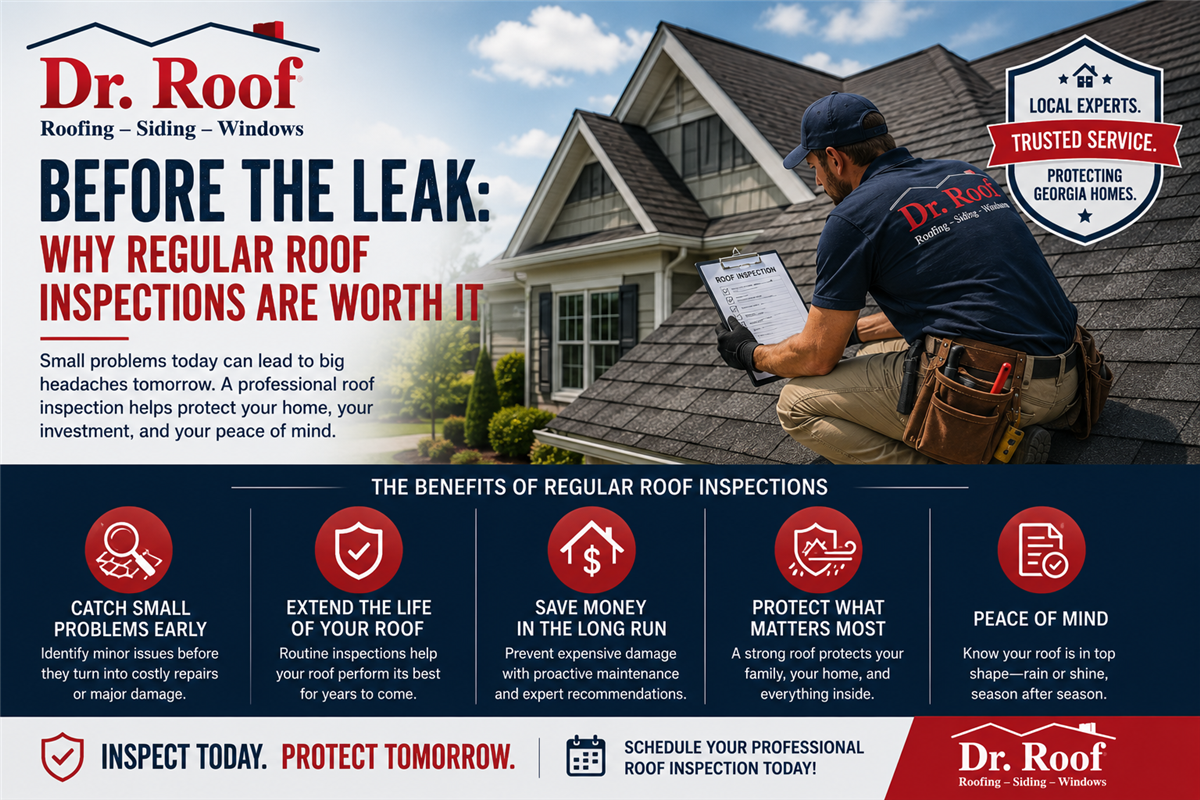
This article helps Atlanta homeowners understand why regular roof inspections are essential for identifying repair needs before they become expensive problems. It challenges the common belief that a roof only needs attention when visible damage appears and explains how professional inspections can uncover hidden issues with asphalt shingles, flashing, ventilation, and other key roofing components. With insight from Dr. Roof, homeowners can better protect their property value, avoid unnecessary damage, and make informed roof repair decisions.
The Myth and Its Costly Reality
Many Atlanta homeowners believe that if their roof is not actively leaking or missing shingles, it must be in good condition. This assumption is understandable, but it can be risky.
Roof problems are not always visible from the ground.
A roof may appear fine while still having lifted asphalt shingles, worn flashing, cracked pipe boots, granule loss, attic moisture, or early signs of water intrusion. These issues can stay hidden until they become more serious and more expensive to repair.
Regular roof inspections help homeowners identify small concerns early, before they turn into major roof repair needs.
As a trusted Georgia roofing company serving the Atlanta area since 1988, Dr. Roof understands how local weather, aging materials, and storm exposure can affect roofing systems over time.
Challenging the "Out of Sight, Out of Mind" Myth
The idea that roof damage will always be obvious is one of the most common misconceptions homeowners face.
Some roofing issues are easy to spot, such as missing shingles, fallen branches, or an active leak. But many problems develop slowly and quietly.
Heat, humidity, heavy rain, wind, hail, and everyday wear can weaken asphalt shingles and other roof components over time. Even a small opening around flashing or a roof penetration can allow moisture to enter beneath the surface.
By the time a stain appears on the ceiling, the water may have already affected decking, insulation, or interior materials.
Regular roof inspections help catch these concerns before visible damage appears inside the home.
The Silent Escalation of Hidden Damage
Small roof problems can grow quickly when they are not addressed.
A cracked pipe boot may allow water to seep into the attic during heavy rain. Loose flashing can create a hidden leak around a chimney or wall transition. Asphalt shingles with granule loss may become more vulnerable to sun exposure and storm damage.
Over time, hidden roof damage can contribute to:
Roof leaks
Damaged decking
Attic moisture
Mold or mildew concerns
Damaged insulation
Interior ceiling stains
Higher repair costs
Shortened roof lifespan
Reduced home value
Repeated roof repair needs
The longer these issues go unnoticed, the more damage they may cause.
A professional inspection helps homeowners understand the condition of the roof before small problems spread.
Dr. Roof's Proactive Inspection Methodology
Dr. Roof approaches roof inspections with a full-system mindset.
A roof is not just asphalt shingles. It also includes underlayment, flashing, ventilation, pipe boots, vents, valleys, decking, gutters, and drainage areas. Each part plays a role in protecting the home from water intrusion.
During a professional roof inspection, our team evaluates visible roof conditions and looks for signs that may point to hidden issues.
This may include checking for:
Missing or lifted asphalt shingles
Cracked, curled, or brittle shingles
Granule loss
Damaged flashing
Worn pipe boots
Roof valley concerns
Ventilation issues
Gutter and drainage problems
Signs of storm damage
Attic or interior moisture concerns
As a GAF Master Elite Certified Contractor, Dr. Roof brings professional training, strong installation standards, and decades of local experience to roof inspections and repair recommendations.
A Marietta Case Study: Uncovering Hidden Vulnerabilities
Consider a homeowner who believes their roof is in good condition because there are no visible leaks or missing shingles.
From the ground, everything may appear normal. But during a professional roof inspection, a contractor may find a small failing pipe boot, early flashing separation, or water-damaged decking beneath an otherwise intact area of asphalt shingles.
Without an inspection, this kind of issue may continue unnoticed until water reaches the ceiling or damages insulation and framing.
Once the problem is found early, the repair may be more focused and manageable. Addressing the issue promptly can help prevent larger roof repair needs and protect the home’s structure.
This is why regular roof inspections are valuable. They help reveal problems homeowners may not see until damage has already spread.
From Small Repair to Major Expense: The Power of Early Detection
Early detection can make a meaningful difference in repair scope and cost.
A small roof repair may involve replacing damaged asphalt shingles, repairing flashing, or replacing a worn pipe boot. If left untreated, that same issue may lead to damaged decking, interior water stains, insulation replacement, or more extensive structural concerns.
The goal of a regular roof inspection is to identify these issues before they become emergencies.
Proactive roof repair is often less disruptive than emergency repair. It also gives homeowners more time to understand their options and make informed decisions.
For Atlanta homeowners, regular inspections are especially important after severe weather, heavy rain, hail, high winds, or falling debris.
Comprehensive Inspections: Beyond the Obvious
A professional roof inspection should go beyond a quick glance.
At Dr. Roof, a thorough inspection may include several important steps.
Ground-Level Assessment
The inspection may begin with a safe ground-level review. This can help identify visible concerns such as missing shingles, sagging areas, debris, gutter problems, or signs of drainage issues.
Roof Surface Review
When safe and appropriate, the roof surface is evaluated more closely. This may include checking asphalt shingles for cracking, curling, lifting, granule loss, hail impact, or wind damage.
Flashing, vents, pipe boots, valleys, and roof penetrations are also reviewed for signs of wear or vulnerability.
Gutter and Drainage Check
Gutters and downspouts are important to roof performance. Clogged, damaged, or poorly draining gutters can contribute to roof edge issues, fascia damage, and water problems around the home.
Attic and Interior Indicators
When needed, attic or interior signs may also be reviewed. Water stains, musty odors, damp insulation, or discoloration on decking can point to hidden moisture concerns.
Photos and Clear Recommendations
A reliable Georgia roofing company should provide clear findings, photos when applicable, and practical recommendations.
Homeowners should understand what was found, whether roof repair is needed, and how urgent the issue may be.
Secure Your Investment with Dr. Roof's Expertise
Regular roof inspections are one of the simplest ways to protect your home from avoidable roofing problems.
They can help identify hidden asphalt shingle damage, flashing concerns, ventilation issues, storm damage, and early signs of water intrusion before those problems grow.
Inspections can also be helpful after major storms. If wind, hail, or falling debris may be involved, Dr. Roof can provide photos, written findings, and repair or replacement recommendations to help support the insurance claim process. Every policy and claim is different, but clear documentation can help homeowners better understand the condition of their roof.
Dr. Roof has served Atlanta-area homeowners since 1988, providing roof inspections, roof repair, roof replacement, storm damage documentation support, and exterior home services.
As an experienced Georgia roofing company, our goal is to help homeowners catch problems early, make informed decisions, and protect their homes for the long run.
If it has been a while since your last roof inspection, or if your roof has recently been through severe weather, contact Dr. Roof to schedule a professional roof inspection and get clear guidance on any repair needs.
Frequently Asked Questions
Is it really necessary to get regular roof inspections if my roof looks fine?
Yes, absolutely. This is a common misconception. Many significant roof issues, such as compromised flashing, minor granule loss, or subtle water intrusion, are not visible from the ground. Regular roof inspections by professionals can uncover these hidden problems early, preventing them from escalating into major, costly roof repair projects.
How do professional regular roof inspections uncover hidden damage?
Professional inspectors use their extensive experience and knowledge of roofing systems to meticulously examine areas homeowners often overlook. They check critical components like flashing, sealants, ventilation, and the integrity of individual shingles or tiles. This detailed process allows them to identify subtle indicators of wear, moisture, or material fatigue that point to underlying issues.
Can delaying a roof inspection truly lead to more expensive roof repair?
Delaying a roof inspection almost always leads to more expensive roof repair. Small issues, if left unattended, will inevitably worsen over time due to weather exposure. A minor leak can become extensive water damage affecting insulation, decking, and interior walls, turning a relatively inexpensive fix into a substantial and complex restoration project.
What common roof problems might a homeowner miss without professional regular roof inspections?
Homeowners often miss issues like deteriorated pipe collars, loose or rusted flashing around chimneys, clogged gutters leading to fascia rot, granular loss on asphalt shingles, and subtle sagging that indicates structural compromise. These problems are typically hard to spot without proper training and a thorough, up-close examination.
How often should homeowners schedule regular roof inspections for optimal protection?
For optimal protection, we generally recommend scheduling regular roof inspections at least once every one to two years. It's also crucial to have an inspection after any significant storm, especially those with high winds or hail. This proactive approach ensures minor issues are addressed promptly, extending your roof's lifespan and maintaining your home's integrity.
Subscribe to Dr. Roof's Blog






Comments