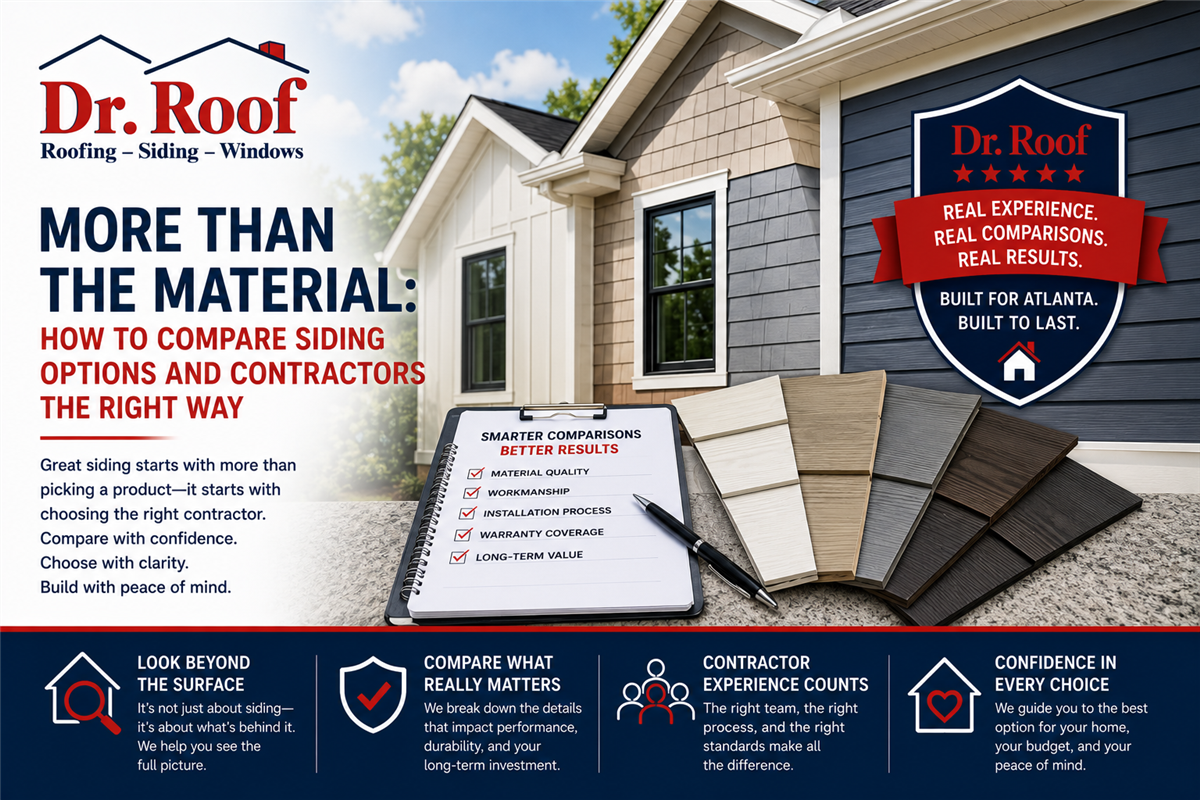
Choosing new siding can feel simple at first.
You compare a few materials, look at colors, check prices, and choose a contractor. But siding is one of those home improvements where the details behind the decision matter just as much as the final appearance.
The material matters. The installer matters. The preparation matters. The warranty matters. And for Atlanta homeowners, local weather matters too.
That is why comparing siding companies should go beyond asking, “What materials do you offer?” A better question is, “How will this siding protect my home over time?”
The Siding Decision Homeowners Often Underestimate
Many homeowners start with the material. Vinyl, fiber cement, engineered wood, and other siding options each come with different benefits, maintenance needs, price points, and performance expectations.
But even the best material can disappoint if it is installed poorly.
A siding project is not just a cosmetic upgrade. It is part of your home’s exterior protection system. It helps defend against rain, humidity, pests, wind, UV exposure, and moisture intrusion.
That means the contractor’s installation process can have a major impact on how the siding performs years after the project is complete.
Material Choice Is Only One Part of the Comparison
When comparing siding companies, it is helpful to look at the full picture.
Two contractors may both offer fiber cement siding, but that does not mean the finished result will be the same. One may take time to inspect the underlying wall condition, address moisture concerns, install flashing properly, and finish trim details carefully. Another may focus mainly on speed and price.
Those differences matter.
The same is true for vinyl siding. One product may offer better rigidity, color retention, and insulation options than another. One installer may understand how to allow for expansion and contraction, while another may fasten panels too tightly and create future warping.
Siding performance depends on both product quality and installation quality.
Popular Siding Material Options
Here is how homeowners can think about common siding options when comparing contractors.
Vinyl Siding
Vinyl siding is popular because it is affordable, versatile, and low maintenance. It comes in many colors and styles and can be a practical option for homeowners who want a clean exterior update without frequent painting.
When comparing vinyl siding, ask about product thickness, insulation options, color durability, panel profile, and installation methods.
Fiber Cement Siding
Fiber cement siding, including James Hardie products, is known for durability, curb appeal, and strong performance in challenging climates. It can offer the look of wood with better resistance to pests and rot.
Installation is especially important with fiber cement. Proper cutting, fastening, flashing, spacing, and sealing all matter.
Engineered Wood Siding
Engineered wood siding can offer a warm, natural appearance with improved durability compared to traditional wood. It may be a good fit for homeowners who want texture and character.
Wood Siding
Wood siding offers timeless beauty, but it requires more maintenance than many other siding options. It may need regular painting, staining, or sealing to help protect against moisture, insects, and weather exposure.
Wood can be a beautiful choice, but homeowners should be realistic about upkeep.
What Separates a Strong Siding Contractor From a Basic Installer
A reliable siding contractor should do more than show samples and provide a price.
They should help you understand how the siding will be installed, how your home will be prepared, and how vulnerable areas will be protected.
Before choosing a siding company, ask:
Will you inspect for rot, moisture damage, or soft areas before installation?
How will you handle flashing around windows and doors?
What weather barrier or house wrap is included?
How do you manage trim, corners, and transitions?
What siding materials do you recommend for Atlanta homes?
What warranty options are available?
Will I receive a written scope of work?
How will the jobsite be cleaned?
Who will manage the project?
What happens if hidden damage is found?
The answers can reveal a lot about the contractor’s process.
Why Atlanta Weather Should Influence Your Choice
Atlanta’s climate is not always easy on siding.
Homes in this area deal with heat, humidity, heavy rain, strong sun, wind, and seasonal storms. Siding needs to be installed with moisture control and durability in mind.
Poor installation can allow water to get behind the siding, especially around windows, doors, rooflines, and trim. Over time, trapped moisture may lead to rot, mold concerns, damaged sheathing, or interior issues.
A quality siding contractor should understand these local conditions and recommend materials and installation practices that fit the environment.
How Dr. Roof Approaches Siding Projects
Dr. Roof looks at siding as part of the full home exterior, not just a surface upgrade.
That perspective matters because siding connects with roofing, gutters, windows, trim, flashing, and drainage. If one part of the exterior is not working properly, it can affect the rest of the home.
Our siding process focuses on:
Understanding the homeowner’s goals
Reviewing the condition of the existing exterior
Looking for moisture or damage concerns
Explaining material options clearly
Recommending products that fit the home and climate
Installing siding with attention to detail
Communicating throughout the project
Cleaning the jobsite properly
Reviewing warranty options
The goal is not just to make the home look better on installation day. The goal is to help the exterior perform better over time.
Comparing Dr. Roof With Other Siding Companies
When comparing Dr. Roof with other siding companies, homeowners should look at more than the material list.
A strong comparison should include:
Experience:
Dr. Roof has served the Atlanta area since 1988, bringing decades of local exterior home improvement experience to siding projects.
Whole-home understanding:
Because Dr. Roof also works with roofing, gutters, windows, and exterior systems, our team understands how siding connects with the rest of the home.
Material guidance:
Homeowners receive help comparing siding materials based on appearance, durability, maintenance, budget, and performance needs.
Installation focus:
Proper preparation, flashing, moisture control, trim work, and cleanup are all important parts of the finished result.
Storm damage support:
If siding damage is related to severe weather, Dr. Roof can provide photos, written findings, and professional recommendations to help support the insurance claim process.
Warranty guidance:
Homeowners should understand what coverage may apply to materials and workmanship before the project begins.
The Lowest Price Is Not Always the Best Value
It is understandable to compare prices. Siding is a significant investment, and homeowners want to make a smart financial decision.
But the lowest bid may not include the same materials, preparation, warranty support, or installation detail as a more complete proposal.
A low price can become more expensive later if the siding warps, leaks, separates, allows moisture intrusion, or needs to be corrected.
Better value comes from choosing the right material, installed the right way, by a contractor who stands behind the work.
Choose Siding With the Long View in Mind
New siding should improve how your home looks, but it should also protect what is behind it.
When comparing siding companies, look beyond color charts and price points. Ask how the contractor handles moisture, flashing, installation details, warranty information, and local climate concerns.
Dr. Roof helps Atlanta homeowners compare siding material options with clear guidance, professional installation, and a full-exterior perspective built from decades of local experience.
If you are considering new siding, contact Dr. Roof to schedule a consultation and explore options that fit your home, your style, and your long-term protection goals.
Frequently Asked Questions
Does choosing the cheapest siding material always save money on siding installation long-term?
No, this is a common misconception. While a cheaper upfront cost might be appealing, lower-quality materials often lead to increased maintenance, frequent repairs, and premature replacement. Investing in durable, higher-grade materials and professional siding installation typically saves money in the long run by reducing future expenses and enhancing energy efficiency.
Is every siding contractor equally equipped to recommend and install all material types?
Absolutely not. Expertise varies significantly between contractors. Many may offer a range of materials, but specialized certifications and extensive experience with specific products, like fiber cement siding, are crucial for proper installation and warranty validation. It is vital to choose a contractor with proven qualifications and a strong track record for the materials you are considering.
Is it true that a beautiful siding material guarantees superior energy efficiency for your home?
While aesthetically pleasing siding can enhance curb appeal, beauty alone does not guarantee superior energy efficiency. Energy performance depends on the material's insulation properties, the quality of its installation, and the underlying wall insulation. A high-quality material installed poorly will not deliver optimal energy savings. It's the combination of the right material and expert siding installation that creates an energy-efficient exterior.
How does a comprehensive process for matching siding material options differ from a basic sales approach?
A reputable contractor moves beyond a basic sales approach by focusing on a comprehensive, client-centric consultation. We perform a detailed home assessment, discuss your specific needs, budget, and long-term goals, then provide tailored recommendations based on extensive experience and knowledge of various material performance. This ensures you receive the most suitable and highest-quality siding solution, installed correctly, rather than being pushed towards a generic option.
Subscribe to Dr. Roof's Blog




Comments