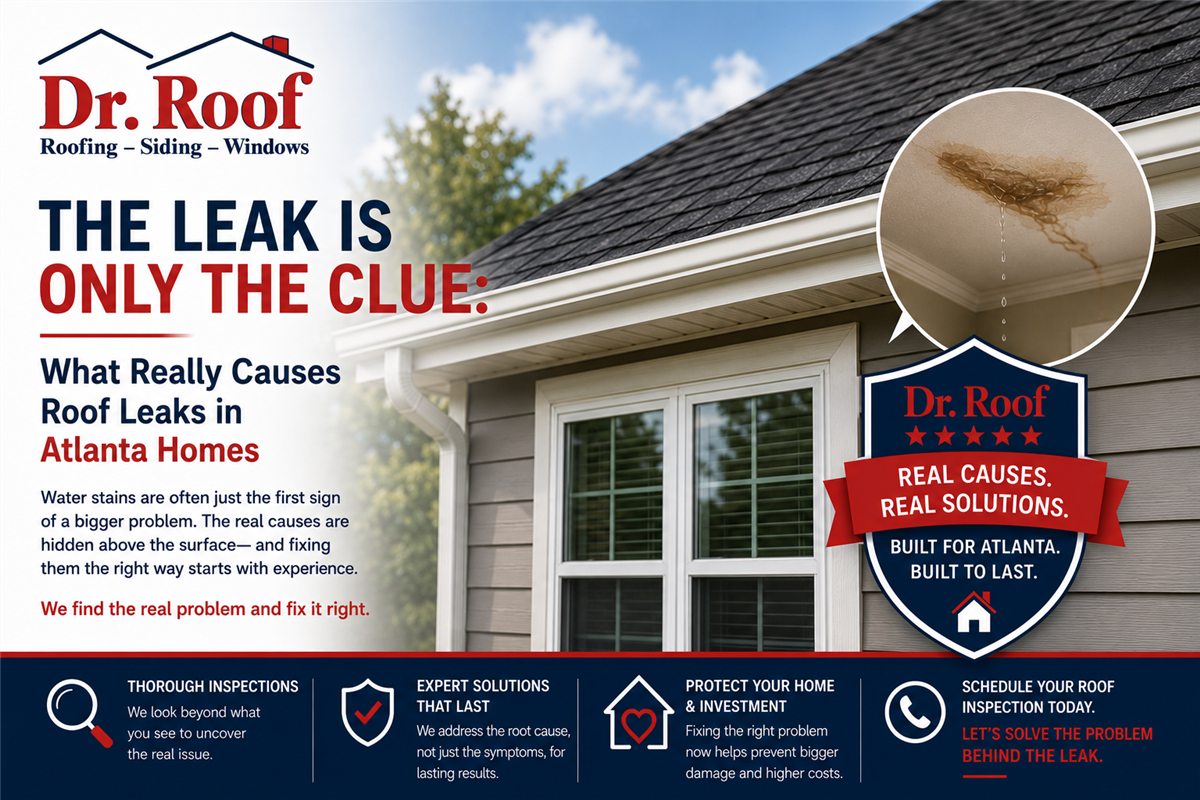
A roof leak rarely starts where homeowners expect.
You may notice a stain on the ceiling, a drip during heavy rain, or a damp spot in the attic and assume the problem is directly above it. Sometimes it is. But often, water enters through one area of the roof and travels along rafters, decking, insulation, or walls before finally showing up inside the home.
That is what makes residential roof leaks so frustrating.
The visible leak is usually only the clue. The real issue may be damaged flashing, worn pipe boots, clogged gutters, storm damage, poor ventilation, aging shingles, or a small gap that is nearly impossible to spot from the ground.
For Atlanta homeowners, understanding the most common causes of roof leaks can help you act quickly and avoid turning a small repair into a larger problem.
Why Roof Leaks Are Not Always Obvious
A missing shingle is easy to notice. A hole in the roof is hard to ignore. But many roof leaks come from less dramatic problems.
Water looks for the easiest path inside. Once it gets under the roofing materials, it may travel before it appears indoors. That means the source of the leak could be several feet away from the stain you see on the ceiling.
This is why guessing can be risky. A patch in the wrong spot may not solve the problem, and the leak may continue causing damage behind the scenes.
Flashing Failure
Flashing is one of the most common sources of residential roof leaks.
Flashing is installed around vulnerable roof areas such as chimneys, skylights, vents, valleys, and wall transitions. Its job is to help direct water away from openings and seams.
When flashing is cracked, loose, rusted, poorly sealed, or improperly installed, water can slip beneath the roofing system.
Common flashing-related leak areas include:
Chimneys
Skylights
Roof valleys
Vent pipes
Dormers
Walls that meet the roof
Step flashing along siding
Flashing problems can be small, but they can cause significant water intrusion if ignored.
Worn Pipe Boots and Roof Penetrations
Any place where something passes through the roof is a potential leak point.
Plumbing vents, exhaust vents, attic vents, and other roof penetrations rely on seals, collars, and flashing to keep water out. Over time, rubber boots and sealants can crack, dry out, or pull away from the pipe.
This can create a small opening that allows water to enter during rain.
Pipe boot leaks are common because they may not be visible from the ground, but they can lead to stains, attic moisture, and interior damage over time.
Damaged or Missing Shingles
Shingles protect the roof surface from rain, wind, sun, and impact. When shingles are missing, cracked, curled, lifted, or damaged by hail, the layers beneath them become more vulnerable.
Shingle damage may come from:
Wind
Hail
Falling branches
Aging
Heat exposure
Improper installation
Foot traffic
Granule loss
A few damaged shingles may be repairable if the rest of the roof is in good condition. But widespread shingle damage may indicate a larger roofing issue that needs a more complete evaluation.
Clogged or Damaged Gutters
Gutters are not just an accessory. They play an important role in protecting the roofline.
When gutters are clogged with leaves, pine needles, twigs, or debris, water cannot drain properly. Instead, it may overflow, back up under the roof edge, or soak into fascia and soffit areas.
Over time, poor drainage can contribute to:
Roof edge leaks
Fascia damage
Soffit damage
Siding stains
Foundation moisture concerns
Landscape erosion
For Atlanta homes surrounded by trees, gutter maintenance is an important part of roof leak prevention.
Storm Damage
Storm damage is one of the most common reasons homeowners discover roof leaks.
Wind can lift shingles, loosen flashing, or expose vulnerable areas. Hail can bruise shingles, knock away protective granules, and damage vents or soft metal components. Heavy rain can reveal weak spots that were already developing.
After severe weather, your roof may look fine from the ground while still having damage that needs attention.
Signs of storm-related roof concerns may include:
Missing shingles
Lifted shingles
Granules in gutters
Dented gutters or vents
Loose flashing
Debris on the roof
Water stains after a storm
New attic moisture
If storm damage is suspected, Dr. Roof can provide a professional inspection, photos, written findings, and repair recommendations to help support the insurance claim process. Every policy and claim is different, but clear documentation can help homeowners understand what happened and what steps may be needed.
Poor Attic Ventilation
Not every moisture problem is caused by rain entering through the roof.
Poor attic ventilation can trap heat and moisture inside the attic. Over time, condensation may form on roof decking, insulation, or framing. This can mimic a roof leak and may contribute to mold concerns, wood deterioration, or premature roof aging.
Ventilation issues are often overlooked because the roof surface may look normal.
A professional inspection can help determine whether moisture is coming from an exterior leak or from ventilation and condensation problems inside the attic.
Aging Roofing Materials
Even a well-installed roof will eventually wear down.
Asphalt shingles lose granules over time. Sealants crack. Flashing ages. Pipe collars deteriorate. Repeated exposure to sun, humidity, rain, wind, and temperature changes can gradually weaken the roof system.
Older roofs are more likely to develop leaks because multiple components may begin failing at once.
If your roof is older and leaks are becoming more frequent, it may be time to evaluate whether continued roof repair is still the best option or whether roof replacement should be considered.
Previous Repairs That Did Not Fix the Source
Sometimes a roof leak continues because a previous repair addressed the symptom, not the cause.
A patch may cover a visible damaged area while the actual leak source remains untouched. This can happen when the roof is not fully inspected or when water has traveled from another location.
A lasting roof repair should identify where the water is entering, why it is entering, and what needs to be corrected to stop it.
What Homeowners Should Do When They Notice a Leak
If you notice a roof leak, act quickly but safely.
Start by documenting what you see. Take photos of ceiling stains, drips, attic moisture, or exterior damage if visible from the ground.
Avoid climbing on the roof. Wet or damaged roofing surfaces can be dangerous.
If water is actively entering the home, protect furniture, flooring, and belongings as much as possible. Then schedule a professional roof inspection.
A roofing professional can help determine whether the issue is a simple repair, a more involved repair, storm-related damage, or a sign of a larger roofing problem.
Why Atlanta Homeowners Choose Dr. Roof
Dr. Roof has served the Atlanta area since 1988, helping homeowners identify and repair roof leaks caused by storms, aging materials, flashing issues, ventilation concerns, and everyday wear.
Homeowners choose Dr. Roof because we offer:
Professional roof leak inspections
Decades of Atlanta-area roofing experience
GAF Master Elite certification
Clear roof repair recommendations
Storm damage documentation support
Quality asphalt shingle roof repair
Strong warranty options
Honest communication
A customer-first approach
Our goal is to find the real source of the leak and recommend the right solution, not just cover up the most visible sign of damage.
Do Not Wait for a Small Leak to Spread
A roof leak may start small, but water damage can move quickly once moisture reaches the wrong areas.
If you notice a stain, drip, musty smell, missing shingles, storm damage, or attic moisture, schedule a professional inspection before the problem grows.
Dr. Roof can help Atlanta homeowners identify residential roof leak causes, understand repair options, and protect their homes with quality roof repair solutions.
Contact Dr. Roof to schedule a roof leak inspection for your Atlanta-area home.
Frequently Asked Questions
Are all residential roof leak causes easy to spot?
No, a common myth suggests that all roof leaks are obvious, but many originate from subtle sources like damaged flashing, faulty pipe boots, or hidden wind damage. These issues can allow water to travel unseen before manifesting far from the actual entry point, making expert diagnosis crucial.
Can clogged gutters really lead to significant roof leaks?
Absolutely. Clogged gutters prevent proper water drainage, causing water to back up onto your roof and potentially seep under shingles or into fascia boards. This can lead to serious water damage to the roof decking and interior of your home, especially during heavy rains or winter freezes.
Why is professional inspection so important for roof repair?
Professional inspectors possess the experience and tools to identify the less obvious residential roof leak causes that homeowners often miss. They can pinpoint issues like subtle flashing deterioration or ventilation problems, ensuring that roof repair addresses the true source of the leak for a lasting solution.
How quickly should I address a suspected roof leak?
Any suspected roof leak should be addressed immediately, even if the visible damage seems minor. Water intrusion can quickly lead to widespread mold growth, structural damage, and costly interior repairs. Prompt inspection and roof repair prevent escalating problems.
Does Dr. Roof assist with storm damage claims related to leaks?
Yes, Dr. Roof offers comprehensive storm damage assistance. Our experienced team can assess the damage, provide detailed documentation, and work with your insurance company to help streamline the claims process, ensuring you receive the necessary roof repair for your home.
Subscribe to Dr. Roof's Blog








Comments