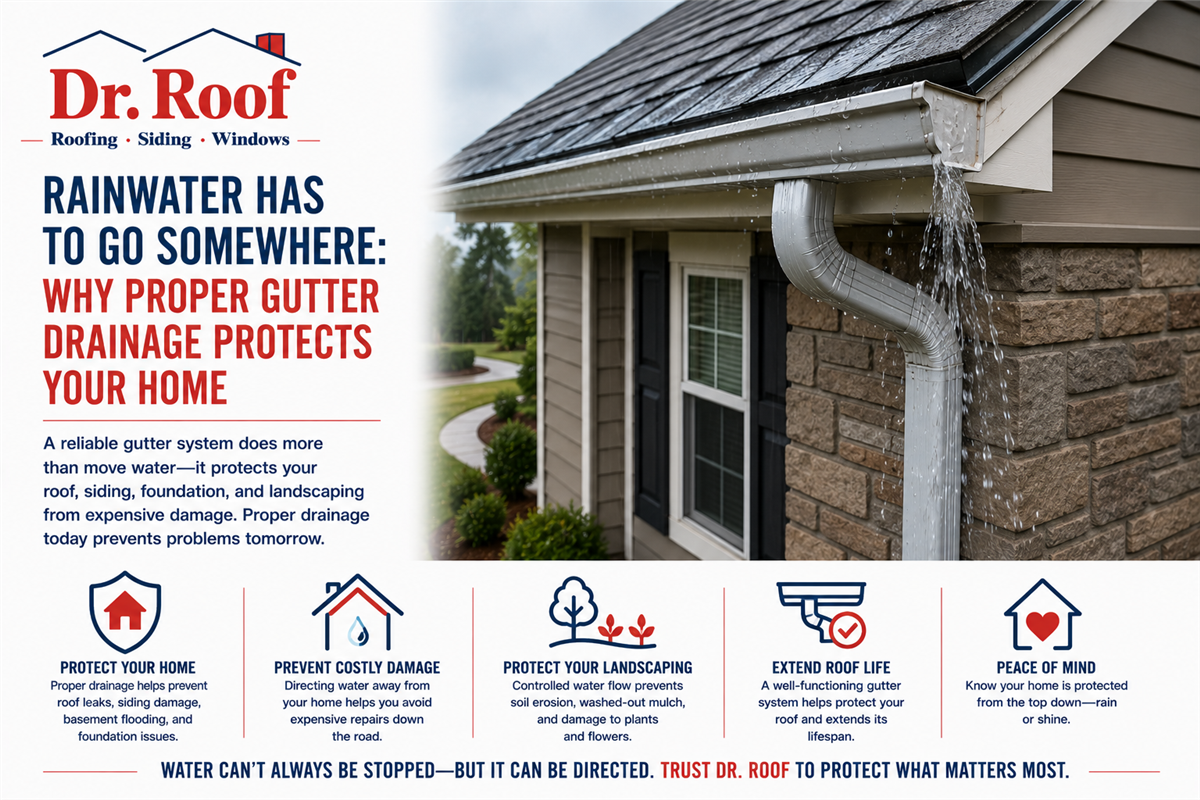
Gutters do more than move rainwater off your roof. A properly designed gutter system directs water away from your home’s foundation, siding, fascia, landscaping, and walkways.
Many homeowners assume their gutters are working as long as water is not visibly pouring over the edges. But even if your gutters appear to be functioning, poor drainage can still create serious problems over time.
If water is not being carried far enough away from the home, it can collect around the foundation, soak into the soil, damage exterior materials, and create costly issues that may not be obvious right away.
For Atlanta homeowners, where heavy rain, humidity, storms, and falling debris are common, proper gutter drainage is an essential part of protecting the home.
The Myth: If Water Leaves the Roof, the Gutters Are Doing Their Job
One common misconception is that gutters are only responsible for catching roof runoff. In reality, the system must also move that water safely away from the home.
If downspouts release water too close to the foundation, or if gutters are clogged, leaking, sagging, or improperly pitched, water can end up exactly where it should not be.
Proper gutter drainage depends on the full system working together, including:
Gutters
Downspouts
Gutter pitch
Seams and fasteners
Extensions
Drainage paths
Gutter guards when needed
Regular cleaning and maintenance
When one part of the system fails, your home may become vulnerable to water damage.
How Poor Gutter Drainage Can Damage Your Home
Improper drainage can affect several areas of your property.
Foundation Problems
When water pools near the foundation, it can saturate the soil around your home. Over time, this can contribute to soil movement, pressure against foundation walls, cracks, and moisture concerns.
Foundation repairs can be expensive, which is why moving water away from the home is so important.
Siding and Exterior Damage
Overflowing or leaking gutters can send water down your siding. This may lead to staining, moisture intrusion, rot, mold concerns, or premature wear on exterior materials.
Fascia and Soffit Damage
When gutters clog or overflow, water can back up into fascia boards and soffits. These areas are especially vulnerable to rot and deterioration when exposed to repeated moisture.
Roof Edge Issues
Clogged gutters can cause water to back up beneath shingles near the roofline. This may increase the risk of leaks, wood rot, and damage to the roof deck.
Landscaping Erosion
Uncontrolled water flow can wash away mulch, soil, plants, and hardscaping. It can also create puddles, muddy areas, and uneven drainage around the property.
Basement or Crawl Space Moisture
When water collects near the home, it may find its way into basements or crawl spaces. This can create dampness, odors, mold concerns, and long-term moisture issues.
Why Downspout Placement Is So Important
Downspouts are a critical part of proper gutter drainage. Their job is not simply to release water from the gutter. They must direct water far enough away from the home to prevent pooling near the foundation.
Short downspouts or splash blocks may not be enough in every situation. Depending on the slope of your yard, soil conditions, roof size, and rainfall volume, your home may need longer extensions or underground drainage solutions.
If you notice water pooling near the base of your home after rain, your downspouts may not be carrying water far enough away.
Signs Your Gutter Drainage May Not Be Working Properly
Your gutter system may need attention if you notice:
Water overflowing during rain
Pooling near the foundation
Soil erosion around the home
Sagging or pulling gutters
Leaking seams
Staining on siding
Rotting fascia or soffits
Water marks near the foundation
Mold or mildew near exterior walls
Gutters filled with leaves, pine needles, or shingle granules
Downspouts that drain too close to the home
These warning signs should not be ignored. Small drainage issues can lead to larger repair needs if left unaddressed.
Why Atlanta Homes Need Strong Gutter Drainage
Atlanta weather can put gutter systems to the test. Heavy rainfall, seasonal storms, humidity, falling leaves, pine needles, and roof debris can all affect how well gutters perform.
A gutter system that is too small, improperly pitched, clogged, or poorly installed may struggle to keep up during downpours. When water is not managed correctly, your roof, siding, foundation, and landscaping can all be affected.
Dr. Roof has served the Atlanta area since 1988, giving our team decades of experience with local homes and weather conditions. We understand how important proper drainage is for long-term home protection.
How to Check Your Gutter Drainage
You can look for basic warning signs from the ground, especially during or shortly after rainfall.
Watch Water Flow During Rain
During a moderate rain, look for overflowing gutters, water spilling over corners, or downspouts that appear overwhelmed.
Check for Pooling
After rain, walk around your home and look for standing water near the foundation, walkways, or landscaping.
Look for Clogs
Leaves, twigs, pine needles, and shingle granules can block gutters and downspouts. If water is not flowing freely, clogs may be part of the problem.
Inspect Downspout Discharge
Make sure downspouts are not releasing water directly beside the foundation. Water should be directed safely away from the home.
Look for Exterior Damage
Check for staining, rotted wood, sagging gutters, disconnected seams, or erosion around the base of the home.
If you see any of these signs, a professional gutter assessment can help identify the right solution.
Professional Gutter Solutions Can Help Prevent Costly Damage
Proper gutter drainage is not just about installing gutters. It requires the right system design, proper sizing, secure installation, correct pitch, effective downspout placement, and ongoing maintenance.
A professional assessment can determine whether your home needs:
Gutter repair
Gutter replacement
Downspout extensions
Underground drainage
Gutter guards
Seamless gutters
Improved water flow design
Better drainage away from the foundation
The goal is to move water safely and efficiently away from your home before it causes damage.
Why Homeowners Choose Dr. Roof
Dr. Roof provides exterior home improvement services designed to help Atlanta homeowners protect their homes from top to bottom.
Homeowners choose Dr. Roof for:
Decades of Atlanta-area experience
Professional gutter assessments
Gutter repair and replacement guidance
Seamless gutter options
Gutter protection solutions
Clear communication
Quality workmanship
Strong warranty options
A commitment to doing the job right
Our team understands that gutters are not just an accessory. They are an important part of your home’s water management system.
Protect Your Home With Better Drainage
Rainwater has to go somewhere. If your gutter system is not directing it away from your home properly, it may be putting your foundation, siding, roofline, and landscaping at risk.
Do not wait until you see major damage. If your gutters overflow, leak, sag, clog frequently, or drain too close to your foundation, Dr. Roof can help.
Contact Dr. Roof to schedule a gutter assessment and learn how proper gutter drainage can help protect your Atlanta home.
Frequently Asked Questions
Isn't regular roof runoff harmless if it just goes into the yard?
While roof runoff may seem harmless, allowing it to simply flow into your yard, especially near the foundation, is a common misconception. Without proper gutter drainage, this water can saturate the soil, leading to erosion, foundation cracks, and even basement flooding. Effective gutter systems are designed to safely channel water away from your home’s critical structural elements.
Can poorly installed gutter systems actually cause more harm than good?
Absolutely. A poorly installed gutter system can be more detrimental than having no gutters at all. Issues like incorrect pitch, inadequate sizing, or unsealed seams can lead to water pooling, overflowing, or leaking directly onto your home's siding and foundation. This accelerates damage rather than preventing it, making professional installation for proper gutter drainage paramount.
How far away should my downspouts direct water to ensure proper gutter drainage?
For optimal protection and effective proper gutter drainage, downspouts should ideally direct water at least ten feet away from your home’s foundation. This distance helps prevent water saturation around the base of your house, reducing the risk of foundation issues and landscape erosion. Extensions or underground drainage systems can help achieve this crucial distance.
What are the earliest signs that my home’s foundation is being damaged by inadequate proper gutter drainage?
Early signs of foundation damage from inadequate proper gutter drainage can be subtle. Look for cracks in your basement walls or exterior brickwork, pooling water near the foundation after rain, persistent dampness in your crawl space or basement, or even soil erosion around the perimeter of your house. These indicators suggest water is not being diverted effectively and requires immediate attention to your gutter systems.
Do seamless gutters offer superior proper gutter drainage compared to sectional systems?
Seamless gutters often provide superior proper gutter drainage due to their construction. With fewer seams, they inherently have fewer points where leaks can occur or debris can snag, leading to smoother water flow and reduced maintenance needs. While sectional gutters can be effective, seamless systems generally offer a more durable and efficient solution for long-term water management.
Subscribe to Dr. Roof's Blog







Comments