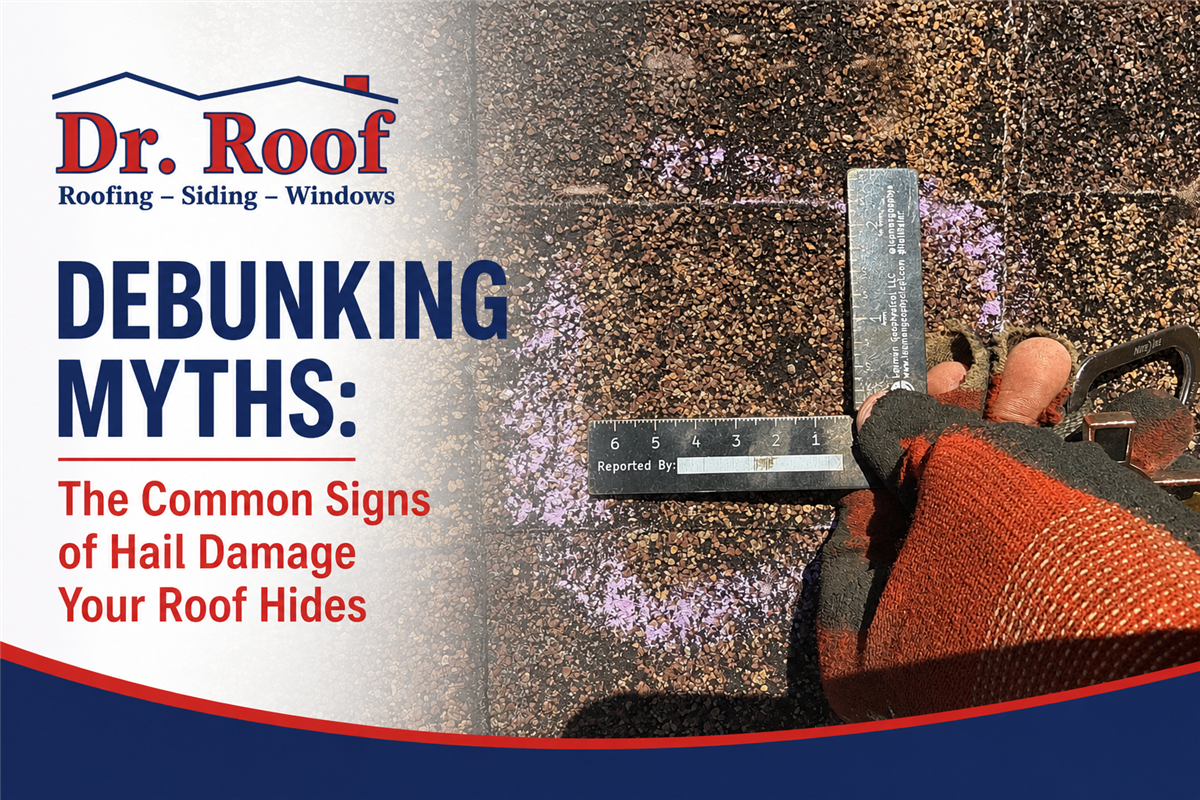
This article helps Atlanta homeowners understand and identify the common signs of hail damage on their roofs, especially the subtle indicators often missed. It provides expert insights on what to look for after a storm and offers actionable steps for initial assessment, guiding readers on protecting their most valuable asset and securing professional storm restoration assistance with Dr. Roof's GAF Master Elite expertise.
Understanding Subtle Roof Damage After a Storm
After a severe storm sweeps through the Atlanta metropolitan area, many homeowners instinctively glance at their roof, hoping to see no obvious damage. The common misconception is that if there are no gaping holes or massive dents, the roof is perfectly fine.
This belief, however, is a dangerous myth that often leaves properties vulnerable to long-term issues. In reality, the most critical damage, specifically the common signs of hail damage, can be incredibly subtle and easily overlooked, yet capable of compromising your roof's integrity significantly.
Understanding these often-hidden indicators is paramount for any homeowner. Ignoring subtle hail damage can lead to premature roof aging, leaks, and costly repairs down the line.
As your trusted, experienced roofing contractor in Atlanta since 1988, Dr. Roof emphasizes proactive inspection and timely storm restoration. Our GAF Master Elite certification means we know precisely what to look for, helping you navigate the aftermath of a storm with confidence.
Preparing for Your Initial Roof Check
Before attempting any inspection, always prioritize safety by ensuring the storm has completely passed and it is safe to be outside. Never climb onto a wet or unstable roof surface to avoid accidents and potential injury.
For a safer, elevated view, consider using a good pair of binoculars. This allows you to scan your roof from the ground or a sturdy ladder without direct roof access, protecting both you and your property.
Identifying Common Signs of Hail Impact
One of the primary common signs of hail damage is granular loss on asphalt shingles. Hailstones, even small ones, can dislodge the protective granules that shield your shingles from UV rays and moisture.
While a severe impact might leave a clear circular mark where granules are missing, lighter impacts can cause widespread, less obvious shedding. You might notice an accumulation of these granules in your gutters or downspouts, which is a significant indicator that your roof has taken a beating.
Another subtle yet critical indicator is shingle bruising or soft spots. When hail strikes an asphalt shingle, it can impact the mat beneath the granules without tearing through immediately.
This creates a soft spot, often appearing as a dark, irregular indentation that doesn't necessarily break the shingle's surface. These bruised areas weaken the shingle, making it more susceptible to future damage from wind, sun, and further storms.
Over time, these soft spots can crack, blister, and expose the underlying layers to moisture, leading to leaks. Early detection of such bruising is vital for preventing larger issues.
Moreover, damage to roof vents, skylights, and other accessories can also be a tell-tale sign. Hail doesn't just impact shingles; it affects anything exposed on your roof.
Inspecting metal vents for dents, looking for cracks in plastic skylight covers, or even examining the condition of chimney caps can provide clues. If these components show signs of impact, it is highly probable your shingles have also sustained damage.
A real-world example occurred in April 2025, during a routine post-storm inspection in Marietta. A homeowner was convinced their roof was fine because they saw no large, obvious dents, having only done a quick ground-level check.
However, when my team at Dr. Roof conducted a thorough, detailed assessment, we discovered widespread granular loss and subtle 'bruising' on numerous asphalt shingles. This subtle common sign of hail damage was enough to compromise the shingle's integrity.
If left unaddressed, this damage could have voided future manufacturer warranties. We documented our findings meticulously, providing clear photographic evidence for their insurance claim.
Within three weeks, we completed a full storm restoration project, replacing their roof and preventing potential leaks and future structural issues. Our expertise and detailed reporting helped secure their claim efficiently and completely, saving them thousands.
Beyond the roof itself, observe your gutters and downspouts. Dents, dings, or bent sections on metal gutters are undeniable proof of hail activity. Similarly, window frames and siding can also show impact marks.
While these are not directly roof damage, they serve as undeniable evidence of hail presence, prompting a more diligent inspection of your roofing system. These external indicators often correlate with less visible roof damage, highlighting the need for a comprehensive assessment.
Here’s a practical step-by-step process for homeowners to conduct an initial visual check for potential hail damage after a storm:
Start by inspecting ground-level areas around your home for signs of impact. Look for dents on outdoor features like mailboxes, garbage cans, cars, window screens, and air conditioner units.
Check for dings or marks on metal gutters and downspouts. These are often easily visible indicators of hail activity and can provide initial clues.
From a safe distance on the ground, or a sturdy ladder if comfortable, use binoculars to carefully examine your roof shingles. Look for areas where granules appear to be missing, creating dark spots.
Also, watch for circular indentations, often dark in color, which might indicate shingle bruising or soft spots without visible tears.
Extend your binocular scan to all metal components on the roof, including vents, pipe covers, and flashing. Search for dents, punctures, or crimped edges, and inspect plastic skylights for cracks or impact marks.
Take clear, well-lit photographs of any suspected damage you find, both on your roof and other exterior elements. These images will be crucial evidence when contacting professionals for further assessment.
Why Early Detection Matters
Detecting hail damage early is a critical step in effective storm restoration. Waiting until leaks appear means the problem has escalated significantly, potentially causing damage to your home's interior and structure.
Prompt action can save homeowners significant expense and stress. Identifying issues quickly allows for timely repairs, preventing minor damage from evolving into costly structural problems.
Avoiding Common Roof Inspection Errors
A significant mistake to avoid is assuming your roof is fine just because there are no obvious large dents. Subtle damage is easily missed by the untrained eye but can compromise your roof's integrity just as much.
Never climb on your roof yourself without proper safety equipment or experience. This practice is extremely dangerous and should always be left to certified professionals who have the necessary training and gear.
Avoid delaying a professional inspection, as waiting can exacerbate damage and complicate insurance claims. Timely assessment ensures you meet insurer deadlines and prevent further deterioration.
Do not attempt DIY repairs; always consult with a certified roofing contractor. Improper repairs can void warranties and lead to further damage, costing you more in the long run.
Expert Assessment: When to Call the Professionals
Even if you only spot a few subtle common signs of hail damage, or if you simply suspect your roof may have been impacted, it is always best to consult with a professional GAF Master Elite Certified contractor like Dr. Roof.
Our experienced team possesses the expertise and specialized training to identify damage that an untrained eye might miss. We offer thorough inspections and honest assessments, ensuring the integrity of your roof and the safety of your home.
Our comprehensive storm damage insurance assistance is designed to guide you through the claims process once damage is identified. We help ensure you receive the coverage you deserve for necessary and high-quality repairs.
Your Next Steps for Comprehensive Storm Restoration
After a storm, protecting your home begins with a proactive and informed approach to roof inspection. By understanding the subtle common signs of hail damage and promptly seeking professional assessment, you can safeguard your most valuable asset. Don't wait for leaks to appear; ensure timely storm restoration for lasting peace of mind and protection.
Frequently Asked Questions
What are common signs of hail damage on a roof?
The common signs of hail damage include granular loss on asphalt shingles, which looks like dark spots or missing texture, and soft spots or 'bruising' on shingles. Additionally, dents on metal vents, gutters, or flashing, and cracks in skylights are strong indicators. Often, these signs are subtle and not immediately obvious to the untrained eye.
How long does it typically take for hail damage to become noticeable?
While severe hail damage can be immediately apparent, subtle common signs of hail damage might not lead to immediate leaks or visible deterioration. It can take months, or even years, for these initial impacts to worsen, leading to cracks, blistering, and eventual leaks, especially as the roof ages or experiences further weathering.
What makes Dr. Roof effective in identifying and repairing hail damage?
Dr. Roof’s effectiveness in identifying and repairing hail damage stems from our over 30 years of local experience and GAF Master Elite certification. This expertise ensures our team is trained to spot even the most subtle damage, providing comprehensive assessments. Our 'Make-It-Right' guarantee and lifetime labor and material warranties underscore our commitment to quality storm restoration.
What mistakes should I avoid when dealing with potential roof hail damage?
A significant mistake to avoid is assuming your roof is fine just because there are no obvious large dents. Never climb on your roof yourself without proper safety equipment or experience. Avoid delaying a professional inspection, as waiting can exacerbate damage and complicate insurance claims. Do not attempt DIY repairs; always consult with a certified roofing contractor.
How quickly can our team assist with a storm restoration project after initial assessment?
Once initial assessments are complete and findings are documented, our team is equipped to move swiftly. In our experience, once an insurance claim is approved, we typically begin and complete storm restoration projects within 3-4 weeks, depending on the scope of work and material availability, ensuring your home is protected without undue delay.
Subscribe to Dr. Roof's Blog








Comments