This guide helps homeowners understand the true effects of storms on various roofing materials. It dispels common misconceptions and highlights why professional inspection is vital.
It's for anyone seeking reliable information on how to protect their roof and navigate the storm restoration process effectively, ensuring long-term home integrity and peace of mind through expert solutions and comprehensive warranties.
Understanding Storm Impact on Roofing Materials
When severe weather strikes the Atlanta metropolitan area, many homeowners assume all roofs react similarly. They often believe roofing materials storm damage is always obvious, perhaps a tree through the roof or widespread missing shingles.
However, this perspective frequently overlooks the nuanced and often hidden ways storms affect different roofing systems. This is a critical distinction for effective storm restoration.
Dr. Roof, with over 30 years of local industry experience, understands that each roofing material possesses unique strengths and vulnerabilities. Identifying subtle signs of damage requires an expert eye.
Our professionals have a deep understanding of how wind, hail, and heavy rain interact with asphalt and flat roofing systems.
Preparing Your Roof for Storm Season
Taking proactive steps, such as regular maintenance checks, can significantly mitigate the risk of severe storm damage. This ensures your roof is in optimal condition before a storm hits.
Ensuring your roof is in optimal condition before a storm hits can help it withstand the elements more effectively. Understanding your specific roofing materials vulnerabilities also allows for better preparation.
How Different Roofing Materials React to Storms
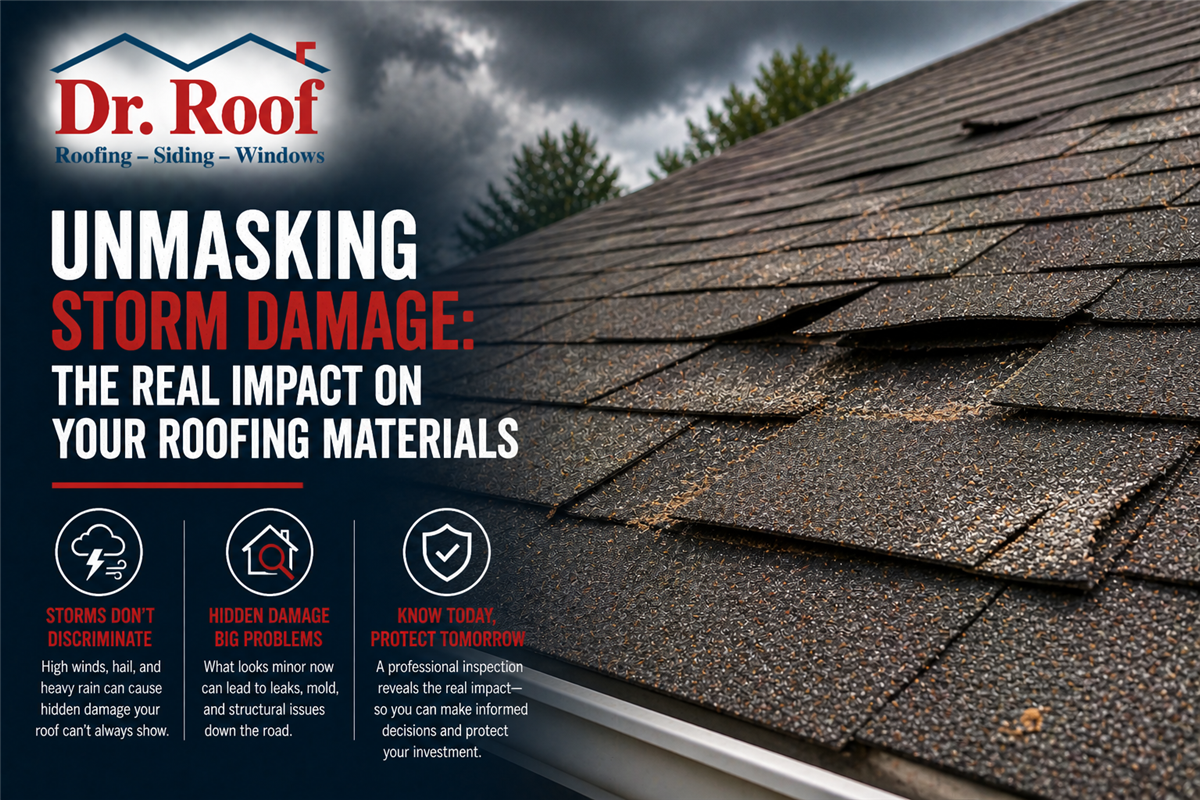
Asphalt shingles, a prevalent choice for many homes, are often the first line of defense against storms. High winds can lift and loosen shingle edges, compromising their seals and creating entry points for water.
Hail impacts often lead to granular loss. This diminishes the shingle's protective UV layer and can weaken the mat underneath.
These seemingly minor impacts accumulate over time, reducing the roof’s lifespan and increasing its susceptibility to future leaks. While visible cracks or missing pieces are obvious, hail damage can be subtle.
Hail damage often appears as dents or soft spots that are only detectable by a trained professional. This hidden damage can compromise the roof's integrity over time.
Flat or low-slope roofing systems are common on commercial buildings and some residential designs. They are built differently but still face significant storm threats.
Heavy rainfall can lead to ponding water, placing undue stress on the membrane. This increases the risk of leaks, especially if drainage systems are clogged by debris.
Hail and wind-borne objects can puncture the membrane (such as TPO, PVC, or EPDM). This creates direct entry points for water.
Wind uplift is particularly problematic for flat roofs, potentially tearing at edges and seams. This can lead to catastrophic failure. Detecting these issues promptly is vital for maintaining the building's envelope.
Crucial Takeaways for Homeowners
The key takeaway is that visual inspection by an untrained eye is insufficient to truly assess storm impact. What might appear as minor cosmetic damage could conceal significant underlying issues.
These issues can compromise structural integrity and lead to costly future repairs. This highlights why professional storm restoration is not just a service, but a necessity.
Our GAF Master Elite certification signifies our commitment to the highest standards of roofing craftsmanship. It also demonstrates our ability to properly identify, assess, and repair all forms of storm damage.
We understand the specific characteristics of various materials and how they perform under stress. This enables us to provide truly reliable solutions.
Avoiding Costly Storm Damage Missteps
A common mistake is assuming storm damage is purely cosmetic, or attempting DIY repairs without proper expertise. Such actions often lead to further complications and higher costs.
Another significant error is delaying a professional inspection. Hidden issues can worsen over time, escalating into more extensive and costly repairs.
Additionally, homeowners should be wary of contractors who pressure them into quick decisions. Promises of unrealistic insurance outcomes should also raise red flags.
Expert Strategies for Storm Restoration
In June 2025, a severe hailstorm swept through the Alpharetta area. Many homeowners focused on obvious shingle damage, yet less visible but critical damage often occurs.
For example, for one commercial client, initial assessments from other contractors focused solely on superficial granule loss. However, the true extent of the damage was much greater.
When our GAF Master Elite certified inspectors meticulously examined the roof, they discovered subtle micro-fractures in the asphalt shingles. They also found compromised decking underneath.
These issues would have led to significant leaks within a few months. Our prompt and comprehensive storm restoration plan included full roof replacement.
By working closely with their insurance adjuster, we helped expedite their claim process by approximately 3 weeks. This saved them considerable time and stress.
By uncovering the hidden damage, we saved the client an estimated $15,000 in potential structural repairs and business disruption. This would have been faced if the issue went unaddressed until later in 2026.
This experience reinforced our belief that thorough, expert inspection of roofing materials storm damage is paramount. Such detailed assessment is a cornerstone of effective restoration.
Should a storm unfortunately impact your home, our comprehensive storm damage assistance simplifies the often-complex insurance claims process. We work diligently on your behalf.
We provide detailed documentation and expert guidance to ensure a smooth and fair resolution. This support helps homeowners navigate challenging situations with confidence.
At Dr. Roof, our "Make-It-Right" guarantee stands as a testament to our dedication to customer satisfaction and quality craftsmanship. We believe in providing expert, trustworthy service.
This service gives homeowners peace of mind, knowing their roof is in the most capable hands. Navigating the aftermath of a storm can feel overwhelming, but with the right partnership, your home’s recovery can be seamless.
Here’s how Dr. Roof approaches effective storm restoration:
Immediate Damage Assessment: Our GAF Master Elite certified inspectors conduct a meticulous, multi-point evaluation. This uncovers both obvious and hidden storm damage, ensuring no issue is overlooked.
Documentation & Insurance Claim Assistance: We thoroughly document all damage with photos and detailed reports. Then, we assist you in filing and managing your insurance claim, streamlining communication.
Material Selection & Repair/Replacement Plan: Based on our assessment and your preferences, we recommend the best materials. We formulate a precise plan, adhering to industry best practices for durable storm restoration.
Expert Installation & Quality Control: Our skilled craftsmen execute the repair or replacement with superior quality. They adhere to manufacturer specifications and our stringent internal standards.
Final Review & Warranty Activation: We conduct a final walk-through to ensure complete satisfaction. We then activate your industry-leading labor and material warranties.
Your Next Steps After a Storm
Don't wait for visible leaks to indicate storm damage. A thorough inspection after any significant weather event is the only way to truly understand your roof's condition.
This allows you to address potential roofing materials storm damage before it escalates. Trust Dr. Roof for unparalleled expertise in storm restoration and protection.
Frequently Asked Questions
What is roofing materials storm damage?
Roofing materials storm damage refers to any degradation or compromise to a roof system caused by severe weather elements. These include wind, hail, heavy rain, or lightning.
This can range from obvious issues like missing shingles to subtle, hidden damage.
How long does a typical storm restoration process take?
The duration of a storm restoration project can vary significantly based on the extent of damage and material type. Minor repairs might be completed in a few days, while a full roof replacement can take 1-3 weeks.
In our experience, comprehensive projects, especially those involving insurance claims, often see accelerated timelines. This happens when they are handled by experienced professionals who prioritize efficiency and clear communication.
What makes Dr. Roof's storm restoration approach effective?
Dr. Roof's approach is effective due to our GAF Master Elite certification. This ensures adherence to the highest industry standards and access to superior materials.
Our over 30 years of local experience, meticulous inspection processes, and comprehensive insurance claim assistance are key. A "Make-It-Right" guarantee ensures quality craftsmanship and complete customer satisfaction for all roofing materials storm damage.
What mistakes should I avoid when dealing with roofing materials storm damage?
Avoid assuming damage is purely cosmetic or attempting DIY repairs without proper expertise. A significant mistake is delaying a professional inspection, as hidden issues can worsen over time.
This leads to more extensive and costly repairs. Also, be wary of contractors who pressure you into quick decisions or promise unrealistic insurance outcomes.
Are specific roofing materials more resilient to storm damage?
While all roofing materials have vulnerabilities, some offer greater resilience to specific types of storm damage.
However, even the most durable materials are susceptible to severe wind uplift if not installed correctly. Proper installation and regular maintenance are crucial for maximizing any material's storm resilience.
Subscribe to Dr. Roof's Blog






Comments