When your roof develops a leak, shingles become damaged, or flashing begins deteriorating, scheduling a professional repair is an important step toward protecting your home.
However, many homeowners are unfamiliar with what actually happens during the repair process.
Does the roofing contractor inspect the entire roof? Will damaged shingles need to be removed? What happens if the crew discovers damage beneath the roofing materials?
For Atlanta homeowners, understanding the professional roof repair process can help establish realistic expectations before work begins.
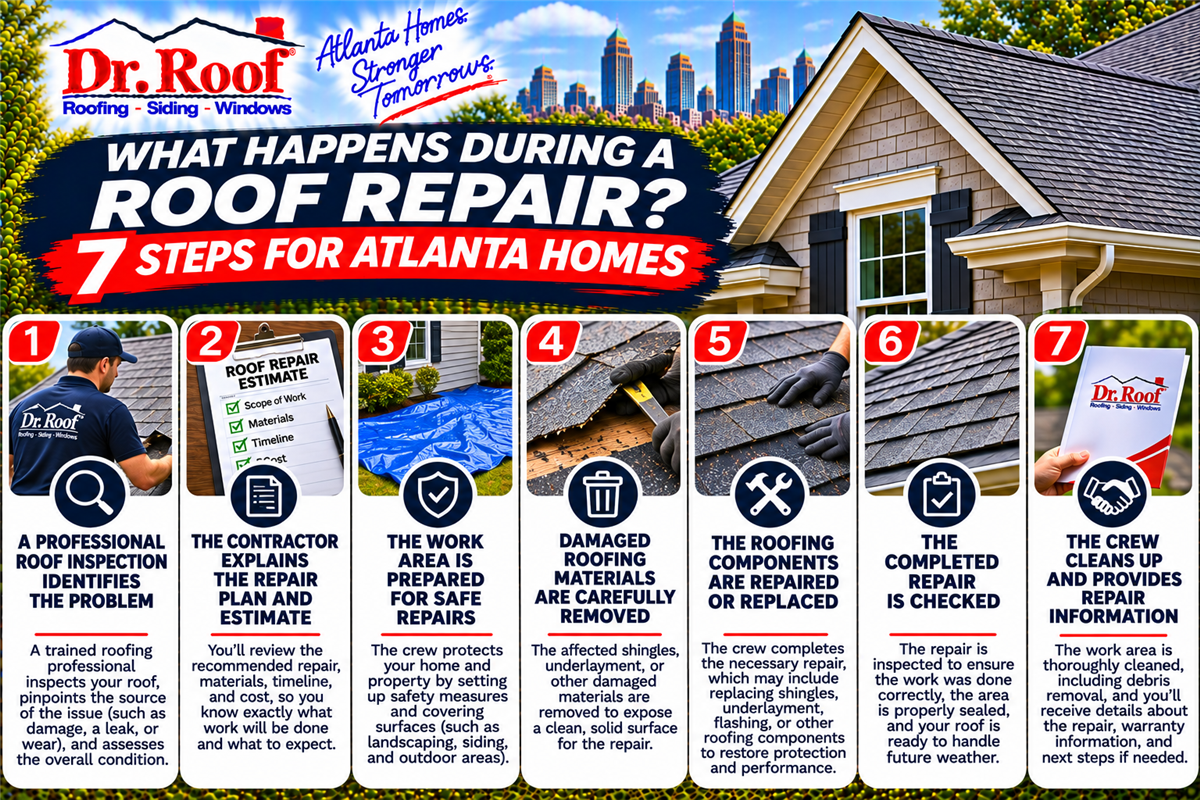
A typical professional roof repair involves inspecting and diagnosing the damage, explaining the recommended work, preparing the area, removing compromised materials, repairing the affected roofing components, checking the completed work, and documenting the results.
The exact process depends on the roofing material, damage severity, accessibility, and existing roof condition.
Here are seven important steps homeowners should understand.
1. A Professional Roof Inspection Identifies the Problem
The first step in a successful roof repair is determining what caused the damage.
Although some roofing problems are easy to recognize, others require a more detailed investigation.
For example, a missing asphalt shingle may be visible from the driveway. A roof leak near a chimney, however, may originate from deteriorated flashing that cannot be seen from the ground.
What Does a Roofing Contractor Inspect?
Depending on the problem, the evaluation may include:
Damaged or missing asphalt shingles
Roof flashing
Plumbing vent penetrations
Chimney transitions
Roof valleys
Ridge cap shingles
Previous repair areas
Visible decking concerns
Signs of water intrusion
The contractor should identify the damaged components and determine whether further evaluation is necessary.
Why Isn't a Ceiling Stain Enough to Diagnose a Leak?
Water does not always travel straight down from its entry point.
After entering the roofing system, moisture may move along roof decking, framing, or other materials before becoming visible inside the home.
A stain near a bedroom ceiling might originate from a flashing defect several feet away.
This is why professional diagnosis matters.
Repairing the wrong area may leave the original problem unresolved.
Can All Damage Be Identified During the First Inspection?
Not always.
Some conditions remain hidden beneath shingles, underlayment, or flashing.
A contractor should explain any limitations and identify which conditions may require further evaluation after materials are removed.
2. The Contractor Explains the Repair Plan and Estimate
Once the roofing problem has been evaluated, the next step is determining the appropriate repair method.
Not every damaged roof requires a complete replacement.
In many cases, localized problems can be corrected while the surrounding roofing system remains in place.
What Should a Roof Repair Plan Include?
Depending on the project, the contractor should explain:
What damage was identified
Where the damage is located
Which materials need replacement
Whether adjacent roofing components are affected
How the repair will be completed
Whether hidden damage is possible
What the estimated work will cost
What warranty terms may apply
A written proposal provides a clearer basis for understanding the work.
Can Individual Asphalt Shingles Be Repaired?
Yes, in many situations.
The Asphalt Roofing Manufacturers Association explains that asphalt-shingle roofing systems contain components that can often be repaired individually.
For example, a contractor may be able to replace a limited number of damaged shingles without removing the entire roof.
However, surrounding materials must remain suitable, and the repair must follow applicable installation requirements.
What if the Contractor Recommends Replacement Instead?
A complete roof replacement may deserve consideration when damage is widespread, materials are extensively deteriorated, or localized repairs cannot be completed reliably.
The contractor should explain the physical conditions supporting that recommendation.
Roof age alone should not automatically determine the outcome.
3. The Work Area Is Prepared for Safe Repairs
Once the homeowner approves the repair, the contractor prepares the work area.
The amount of preparation depends on the location and complexity of the project.
A minor shingle repair on an accessible roof section may require a different setup from repairing chimney flashing on a steep, multi-story home.
What Happens Before Roofing Work Begins?
Depending on the project, the crew may:
Establish appropriate roof access
Set up required safety equipment
Identify work areas
Protect nearby property where necessary
Organize materials and tools
Plan for collecting removed roofing materials
Roofing professionals should use appropriate fall protection and follow applicable safety requirements.
Do Homeowners Need to Prepare Their Property?
Sometimes.
The contractor may ask you to move vehicles, relocate outdoor furniture, or provide access to a particular area.
For smaller repairs, preparation may be limited.
Ask whether the crew anticipates needing driveway space or access to your attic.
Can You Stay Home During Roof Repairs?
Many homeowners remain inside during conventional residential roof repairs.
However, roofing work can create noise and vibration.
Children and pets should stay away from construction areas.
If the roof has suspected structural damage, additional safety precautions or professional evaluation may be necessary.
4. Damaged Roofing Materials Are Carefully Removed
After preparing the work area, the contractor may need to remove compromised materials to access the underlying problem.
The amount of removal depends on the repair method.
What Happens During Shingle Replacement?
Asphalt shingles are installed in overlapping courses.
Replacing a damaged shingle may require carefully separating adjacent shingles and accessing concealed fasteners.
The contractor removes the compromised material and evaluates the exposed area before installing the replacement.
Does Flashing Repair Require Removing Shingles?
Sometimes.
Flashing is integrated with surrounding roofing materials to direct water away from vulnerable transitions.
For example, correcting damaged step flashing near a chimney may require removing adjacent shingles to access the flashing assembly.
The contractor should determine which materials need removal and how the new components will be integrated.
What if Damaged Underlayment Is Found?
Underlayment provides secondary protection beneath many roofing systems.
If the exposed material is damaged or unsuitable, the contractor may need to replace the affected section.
The repair should restore the appropriate water-management layers beneath the roof covering.
What if the Roof Decking Is Damaged?
Roof decking provides the supporting surface beneath the roofing materials.
If deterioration, holes, or unsuitable structural conditions are discovered, additional work may be necessary.
Not every discolored decking panel requires replacement.
The decision should depend on the actual material condition.
If the repair scope changes, the contractor should document the finding and explain any additional work before proceeding under the applicable agreement.
5. The Roofing Components Are Repaired or Replaced
Once the affected area is accessible and suitable for repair, the contractor completes the necessary corrective work.
The exact method depends on the roofing defect.
What Are Common Professional Roof Repair Methods?
Damaged shingle replacement: Compromised shingles are removed and compatible replacement materials are installed.
Flashing repair: Damaged flashing components may be replaced or corrected to restore proper water management around roof transitions.
Plumbing vent boot replacement: A deteriorated pipe boot may be removed and replaced with a suitable component integrated into the surrounding shingles.
Underlayment repair: Damaged sections may be replaced as part of restoring the affected roofing assembly.
Localized decking repair: Unsuitable sections of roof decking may be replaced when necessary.
Not every project involves all these methods.
Why Does Material Compatibility Matter?
Replacement materials must be suitable for the existing roofing system.
For example, new shingles should be compatible with surrounding materials and installed according to the applicable manufacturer requirements.
An exact color match may not always be available because existing shingles can change appearance through weathering.
Is Applying Roof Sealant Considered a Complete Repair?
It depends on the roofing problem.
Sealants have appropriate uses, but they cannot correct every defect.
For example, applying sealant over improperly installed flashing may not restore the assembly's intended performance.
A professional repair should address the identified cause rather than simply cover the visible opening.
6. The Completed Repair Is Checked
After installing the replacement materials, the contractor should review the affected area.
The purpose is to check whether the agreed work was completed and whether the repaired materials were installed appropriately.
What Might the Final Repair Review Include?
Depending on the work, the contractor may check:
Placement of replacement shingles
Appropriate fastening
Flashing integration
Overlapping materials
Exposed fasteners
Relevant sealing details
The surrounding repaired area
The specific inspection method depends on the roofing materials and repair scope.
Does a Final Check Guarantee the Roof Will Never Leak Again?
No.
A completed repair should address the identified roofing problem, but other components can develop unrelated damage.
Future storms may also affect the roofing system.
A review helps evaluate the completed work; it is not a guarantee against every future roofing problem.
What if the Original Leak Was Intermittent?
Some roof leaks occur only during particular weather conditions.
The contractor may explain what was corrected and whether any additional monitoring is appropriate.
Homeowners should contact the contractor if water intrusion returns.
7. The Crew Cleans Up and Provides Repair Information
The final stage involves completing the work area cleanup and communicating what was done.
Even a relatively small roof repair can involve discarded shingles, fasteners, or other materials.
What Should Cleanup Include?
Depending on the project, cleanup may involve:
Collecting removed roofing materials
Removing construction debris
Checking relevant work areas for loose fasteners
Removing equipment
Restoring access to the affected area
The contractor should explain which cleanup responsibilities are included.
What Documentation Should You Keep?
Useful records include:
Original inspection findings
Photographs of identified damage
Written repair estimate
Approved changes
Final invoice
Material information
Applicable warranty documents
These records can be useful if questions arise later.
Should You Ask About Warranty Coverage?
Yes.
Roof repair warranties vary by contractor, materials, and project.
A localized repair may have different protection from a complete replacement.
Ask which specific work is covered, how long coverage applies, what exclusions exist, and how to report a concern.
How Long Does a Typical Roof Repair Take?
The time required depends on the extent and complexity of the damage.
Some localized repairs may be completed during a relatively short service visit.
Other projects may require additional time because of roofing material removal, flashing work, hidden damage, or difficult access.
What Can Delay Roof Repairs?
Potential factors include:
Rain or unsafe weather
Steep roof slopes
Specialty material availability
Complex roof transitions
Additional decking repairs
Structural concerns
The contractor should provide scheduling expectations based on the actual project.
An inspection appointment and the date of permanent repair may not be the same.
How Much Does Professional Roof Repair Cost in Atlanta?
Roof repair prices vary based on the problem and the work required.
A limited shingle replacement involves a different scope from rebuilding chimney flashing or correcting deteriorated roof decking.
Important pricing factors include:
Materials
Labor
Roof height and pitch
Accessibility
Extent of damage
Underlying roofing conditions
Cleanup
Additional repairs
A professional written estimate is the most reliable way to understand the proposed cost.
Homeowners should avoid assuming that every leak or damaged shingle requires the same repair.
What Happens if a Roof Repair Doesn't Solve the Leak?
If water intrusion continues or returns, contact the roofing contractor.
The contractor may need to determine whether the problem involves the repaired section, another roofing component, or an unrelated moisture source.
For example, a ceiling stain that reappears in the same room does not automatically prove that the original repair failed.
Water may enter through a different nearby location.
Retain your repair documentation and review the applicable warranty terms.
Why Professional Roof Repair Matters in Atlanta
Atlanta-area homes experience heavy rainfall, thunderstorms, strong winds, and occasional hail.
These conditions can affect asphalt shingles, flashing, roof penetrations, and other roofing components.
Homes with multiple roof valleys, dormers, chimneys, or steep slopes may also require specialized repair details.
A professional contractor should evaluate the property's actual roofing system rather than assume every roof has the same problem.
How Dr. Roof Helps Atlanta Homeowners With Roof Repairs
Dr. Roof has served Atlanta-area homeowners since 1988, providing professional roofing inspections, repairs, replacement, and storm-damage documentation support.
Dr. Roof is a GAF Master Elite Certified Contractor and CertainTeed SELECT ShingleMaster.
A professional roofing evaluation can help identify damage involving shingles, flashing, roof penetrations, underlayment, and roof decking.
Depending on the circumstances, Dr. Roof may provide photographs, written findings, and repair or replacement recommendations.
Homeowners can discuss the proposed repair, materials, and applicable warranty terms before approving work.
Know What to Expect Before Your Roof Repair Begins
Professional roof repair involves more than placing a patch over visible damage.
The process begins with identifying the problem and determining which roofing components require attention.
From inspection and planning through material removal, installation, final review, and cleanup, each stage helps clarify how the affected roof area will be restored.
For Atlanta homeowners, understanding these steps makes it easier to evaluate repair recommendations and ask informed questions.
If your roof has damaged shingles, flashing concerns, or a developing leak, contact Dr. Roof to schedule a professional roofing evaluation and discuss the repair process appropriate for your home.
What are the steps in a typical professional roof repair?
The process generally includes inspecting the damage, diagnosing the cause, preparing a repair plan, setting up the work area, removing damaged materials, completing the repair, and checking and cleaning the finished area. The exact steps depend on the roofing problem.
Does a roofing contractor inspect the roof before making repairs?
A professional inspection is generally important for identifying the damage and determining the appropriate repair. The contractor may evaluate shingles, flashing, roof penetrations, underlayment, and visible signs of water intrusion.
Do roof repairs require removing existing shingles?
Sometimes. Replacing damaged shingles or accessing flashing and underlayment may require removing surrounding roofing materials. The amount of removal depends on the damage and the selected repair method.
What happens if hidden decking damage is discovered during roof repair?
The contractor should document the condition and explain whether additional work is necessary. Damaged or unsuitable decking may require replacement. Homeowners should understand how changes to the repair scope and cost will be approved.
How long does a professional roof repair take?
The time depends on the extent of damage, roof accessibility, materials, weather, and any hidden problems. Localized repairs may require relatively limited work, while complex flashing or decking repairs can take longer.
What documentation should I receive after a roof repair?
Useful documentation includes the written repair scope, approved changes, final invoice, available photographs, material information, and applicable warranty terms. These records help establish what work was performed.
Subscribe to Dr. Roof's Blog






Comments