Old windows do not need to be replaced simply because they have reached a certain age.
Condition matters more.
Some older windows continue to operate properly, remain dry, close securely, and provide acceptable comfort. Others develop recurring problems that make replacement worth considering much sooner.
For Atlanta homeowners, the most useful signs include persistent drafts, fogging between panes, difficulty opening or locking the window, visible frame damage, water intrusion, repeated repairs, and performance problems that affect comfort.
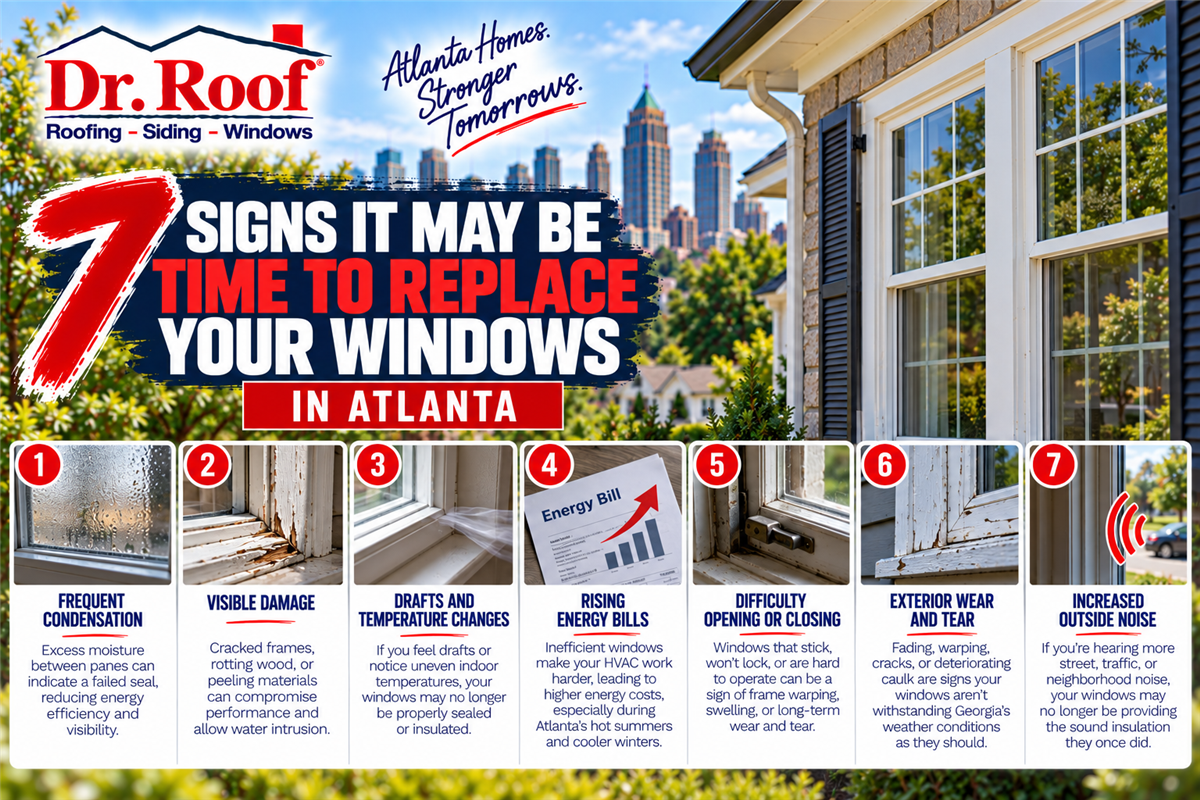
Here are seven signs that may indicate it is time to have your windows professionally evaluated.
When Should You Consider Replacing Old Windows?
Window replacement becomes worth considering when the existing windows are no longer performing one or more of their essential jobs.
A residential window should help:
Keep outside weather out
Open and close properly
Lock securely
Manage air leakage
Resist unwanted water intrusion
Support the home's comfort
Provide appropriate ventilation when opened
One isolated problem does not automatically mean the entire window needs replacement.
Weatherstripping, hardware, glass, screens, or other individual components may sometimes be repairable.
The important question is whether the problem is localized or part of broader window deterioration.
1. You Feel Persistent Drafts Around Closed Windows
One of the clearest signs of poor window performance is noticeable air movement when the window is fully closed.
Atlanta homeowners may notice this during both heating and cooling seasons.
Potential causes can include:
Worn weatherstripping
Gaps around the frame
Improper installation
Frame movement
Damaged seals
Deteriorated components around the opening
A minor weatherstripping issue may be repairable.
If drafts remain after basic maintenance or appear across several windows, a professional evaluation can determine whether the problem involves the window itself or the installation around it.
2. There Is Fog or Condensation Between the Glass Panes
Condensation on the room-side surface of glass does not automatically mean the window has failed.
Indoor humidity, outdoor temperatures, ventilation, and glass temperature can all influence surface condensation.
Fogging or moisture trapped between panes of insulated glass is different.
That condition can indicate failure of the insulated glass seal.
Signs may include:
Permanent cloudy areas
Moisture that cannot be wiped away
Hazy streaks between panes
Recurring fog inside the insulated glass unit
Depending on the window design and condition, replacement of the insulated glass unit may sometimes be possible.
If several windows are experiencing seal failures or other problems at the same time, complete window replacement may deserve consideration.
3. Windows Are Difficult to Open, Close, or Lock
A window should not require excessive force to operate.
Problems may include:
Sticking
Dragging
Windows that will not stay open
Sashes that no longer align
Locks that will not engage
Hardware that repeatedly fails
Frames that appear warped or distorted
Operational problems can come from several sources.
Hardware may be worn.
The frame may have moved.
Paint may interfere with older windows.
Moisture may have damaged surrounding materials.
The correct solution depends on the cause.
If operation cannot be restored reliably through a reasonable repair, replacement may be the better option.
4. Frames or Sills Show Visible Deterioration
The condition of the frame matters just as much as the glass.
Look around your windows for:
Soft wood
Rot
Cracking
Warping
Swelling
Corrosion
Separation at joints
Peeling associated with moisture
Deteriorated exterior trim
Atlanta's humidity and rain make moisture management particularly important around window openings.
Minor surface concerns may be repairable.
Extensive frame deterioration, however, can affect how well the window operates, seals, and manages water.
A professional inspection can determine whether the problem is limited to trim or extends into the window frame or surrounding wall system.
5. You See Water Stains or Signs of Leakage Around the Window
Water around a window deserves attention.
Signs can include:
Stains beneath the window
Peeling paint
Damp drywall
Soft trim
Discoloration
Musty odors
Visible water during rain
Damage around the sill
The window itself is not always the source.
Water may enter because of:
Failed flashing
Exterior sealant problems
Siding conditions
Improper installation
Roof-to-wall drainage
Window-frame deterioration
That is why diagnosis should come before replacement.
Installing a new window without correcting an exterior water-management problem may not solve the underlying concern.
6. Repairs Are Becoming Frequent or Affecting Multiple Windows
An occasional window repair does not necessarily justify replacement.
The calculation can change when several windows begin developing problems.
Examples include:
Multiple failed glass seals
Repeated hardware repairs
Several windows that stick
Recurring drafts
Deteriorating frames throughout the home
Repeated exterior caulking problems
Multiple water-intrusion concerns
At that point, homeowners should compare the cost and practicality of continued repairs with a broader replacement project.
The correct answer varies from home to home.
A professional window assessment can help identify which units are still serviceable and which ones may be better candidates for replacement.
7. Window Performance No Longer Meets Your Home's Needs
Sometimes a window can technically still function while no longer meeting the homeowner's goals.
Replacement may be considered when homeowners want to improve:
Comfort near windows
Air-leakage performance
Ease of operation
Locking and security
Noise control
Glass performance
Appearance
Ventilation
Cleaning access
Energy performance can also be evaluated using standardized window ratings.
For example, NFRC labels provide performance information such as U-factor and solar heat gain coefficient.
Rather than assuming one window is automatically "energy efficient," homeowners can compare measurable performance characteristics when selecting replacement products.
Does Window Age Alone Mean Replacement Is Necessary?
No.
Age can be useful context, but it should not be the deciding factor by itself.
An older window that:
Opens properly
Closes securely
Shows no meaningful water damage
Has serviceable frames
Does not have widespread seal failure
Continues to meet the homeowner's comfort needs
may not require immediate replacement simply because it is old.
Likewise, a newer window with significant installation problems, broken seals, water intrusion, or frame damage may need attention earlier than expected.
Condition should guide the decision.
Window Repair vs. Window Replacement
Homeowners often ask whether they should repair a problem or replace the entire window.
Repair May Make Sense When:
Weatherstripping is worn
Hardware needs replacement
One component has failed
Damage is limited
The frame remains sound
The window still operates properly after repair
Replacement May Make More Sense When:
Frames are significantly deteriorated
Water problems are recurring
Multiple components are failing
Several windows have similar problems
The window no longer closes or locks reliably
Repairs do not restore acceptable performance
The decision should be based on inspection rather than a blanket rule.
What Should You Look for When Choosing Replacement Windows?
If replacement is appropriate, compare more than appearance.
Useful factors include:
Frame material
Glass package
U-factor
Solar heat gain coefficient
Air-leakage performance
Operation
Hardware
Manufacturer warranty
Installation workmanship
Compatibility with the home's architecture
For Atlanta homes, solar heat gain and cooling-season performance can be particularly relevant considerations.
The complete window and its installation should be evaluated together.
Why Installation Matters
A high-performing window can still develop problems if the opening is not prepared and installed correctly.
Installation details may involve:
Level and square placement
Flashing
Air sealing
Water management
Insulation around the frame
Exterior finishing
Interior finishing
This is why homeowners should compare contractors along with window products.
Ask how the opening will be evaluated and how exterior water management will be handled during installation.
What About Outside Noise?
Increased outside noise does not automatically prove a window has failed.
However, poor seals, thin glass configurations, gaps, and older window designs can affect how much sound enters the home.
If noise reduction is an important goal, discuss it specifically during product selection.
Different glass packages and window assemblies can perform differently.
Do not assume every replacement window will provide the same acoustic improvement.
Should Every Window Be Replaced at the Same Time?
Not necessarily.
Some homeowners replace all windows as one project.
Others prioritize specific rooms or elevations.
A phased approach may make sense when:
Only certain windows are failing
One side of the home receives more weather exposure
A remodeling project affects specific openings
Budget priorities favor staged replacement
The important issue is understanding which windows have actual performance concerns and which remain serviceable.
How Dr. Roof Helps Atlanta Homeowners Evaluate Windows
Dr. Roof has served Atlanta-area homeowners since 1988 and provides professional window replacement as part of its exterior home services.
A professional evaluation can help homeowners distinguish between:
Normal cosmetic aging
Repairable window problems
Failed glass or seals
Frame deterioration
Installation concerns
Conditions that may justify replacement
That information makes it easier to decide whether one window, several windows, or a larger portion of the home should be addressed.
Knowing When Window Replacement Makes Sense
The best time to consider window replacement is not based on a universal age.
It is when the existing windows are showing meaningful problems that affect operation, weather protection, comfort, security, or overall performance.
Persistent drafts, fogging between panes, difficult operation, frame deterioration, water intrusion, repeated repairs, and changing performance needs are all useful reasons to schedule an evaluation.
For Atlanta homeowners, the goal should be simple:
Understand what is actually wrong with the existing windows first, then decide whether repair or replacement is the most appropriate solution.
When should you consider replacing your old windows?
Consider replacement when windows have persistent drafts, failed insulated-glass seals, difficult operation, deteriorated frames, recurring water intrusion, multiple repair needs, or performance problems that cannot be corrected reasonably through localized repairs.
Does the age of a window automatically mean it needs replacement?
No. Age alone should not determine replacement. An older window may remain serviceable if it operates properly, stays dry, closes securely, and continues to meet the homeowner's needs. Condition is more important than a universal age threshold.
Does fog between window panes mean the window has failed?
Fog or moisture trapped between panes of insulated glass can indicate a failed glass seal. Depending on the window design and overall condition, the insulated glass unit may sometimes be replaceable without replacing the entire window.
Can drafty windows be repaired?
Sometimes. Drafts may result from worn weatherstripping, gaps, hardware issues, or installation problems that can be corrected. Persistent drafts involving deteriorated frames or multiple windows may make replacement worth evaluating.
Should I replace every window in my home at once?
Not necessarily. Some homeowners replace all windows together, while others address only failing units or complete the project in phases. A professional assessment can help identify which windows remain serviceable.
What should Atlanta homeowners compare when selecting new windows?
Compare window style, frame material, glass package, NFRC performance ratings, operation, warranty terms, installation process, and compatibility with the home's architecture rather than choosing solely by appearance.
Subscribe to Dr. Roof's Blog





Comments