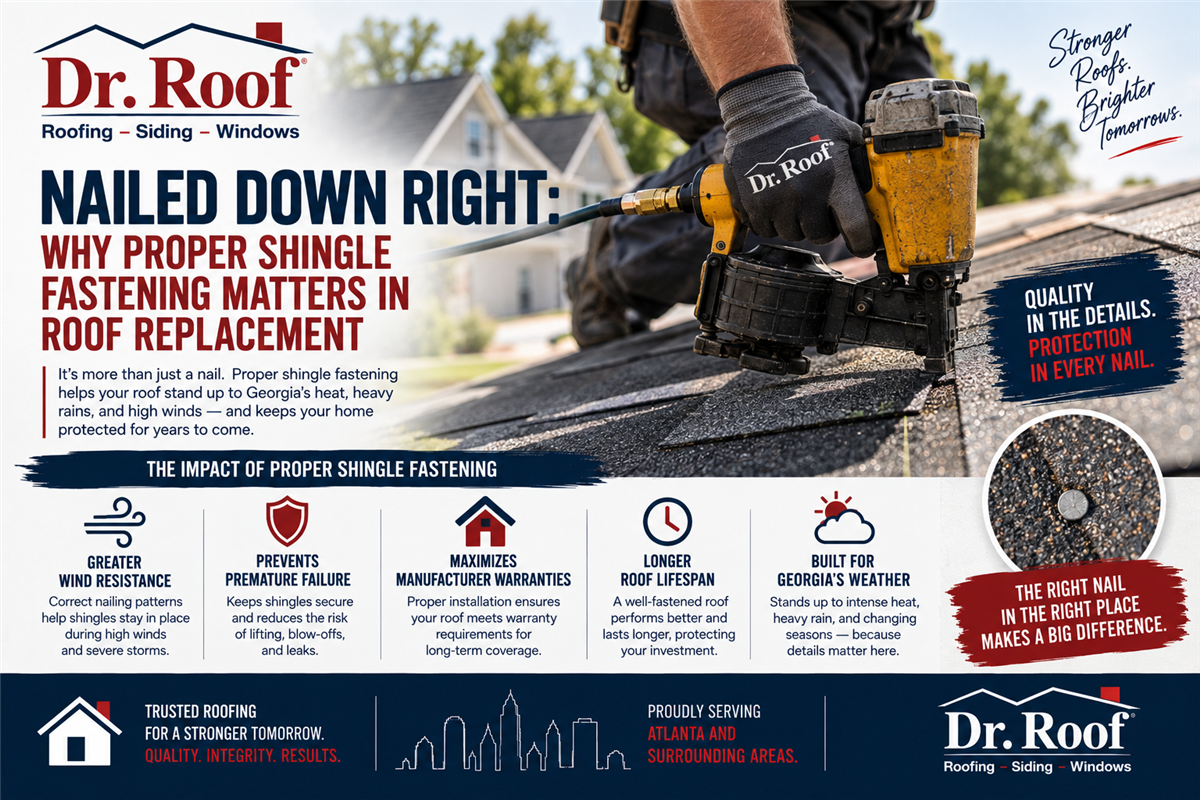
This guide explains why proper shingle fastening is one of the most important parts of a successful roof replacement. For Atlanta homeowners, it clarifies why nail placement, nail depth, fastener type, and installation technique directly affect roof performance, wind resistance, leak prevention, and long-term protection.
For homeowners planning an asphalt shingle roof replacement, working with an experienced Georgia roofing company like Dr. Roof can help ensure every layer of the roofing system is installed with care, precision, and attention to detail.
Beyond the Shingle: Unveiling a Common Roofing Myth
Many homeowners approaching a roof replacement naturally focus on what they can see.
They may think about asphalt shingle color, architectural style, brand, and how the finished roof will improve curb appeal.
Those details matter, but they are only part of the roofing system.
A common misconception is that if the shingles are new and look good, the roof must be properly installed. In reality, the way those shingles are fastened can have a major impact on how the roof performs over time.
Proper shingle fastening is not just about placing nails into the roof.
It requires the right fastener, correct placement, proper depth, and attention to manufacturer guidelines. If shingles are fastened incorrectly, the roof may be more vulnerable to wind damage, leaks, loose shingles, premature wear, and future roof repair needs.
A strong roof replacement depends on the details homeowners may never see from the ground.
The True Foundation: Why Precision Fastening Matters
The performance of an asphalt shingle roof depends heavily on proper installation.
Fastening is one of the most important parts of that installation.
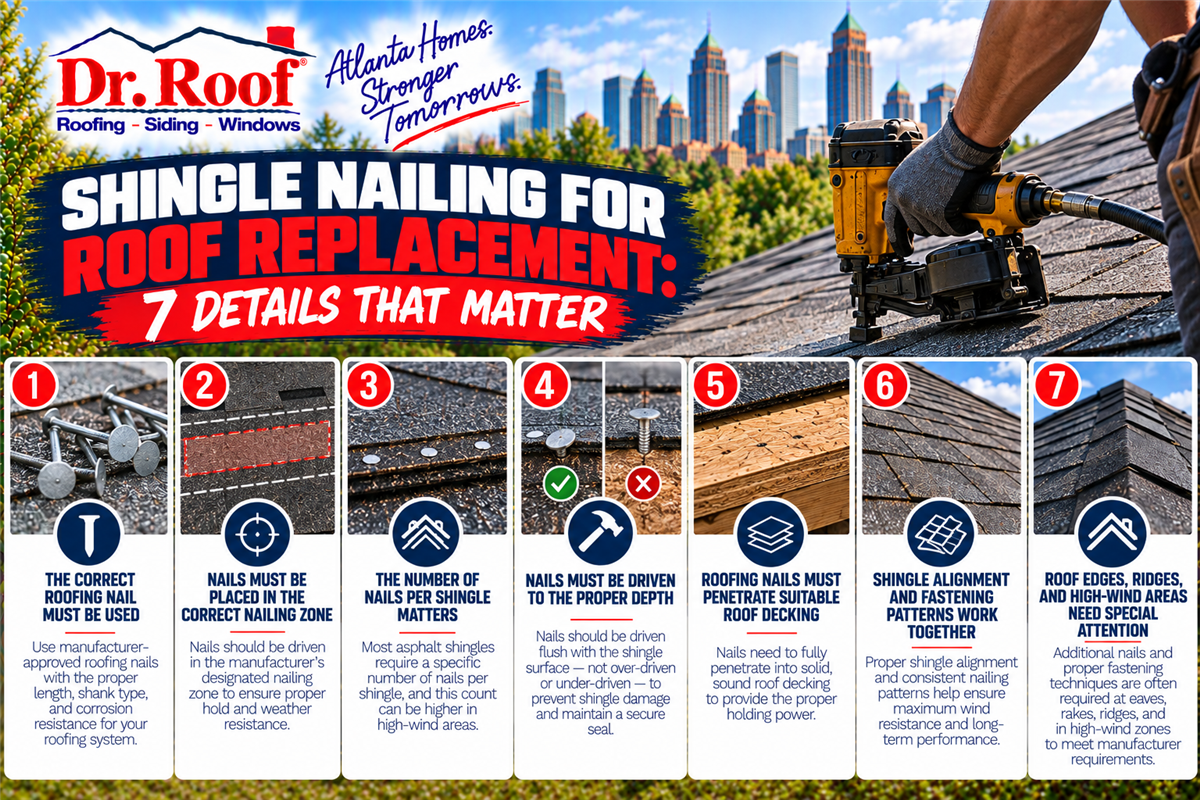
Each nail must be placed in the correct nailing zone so the shingle is secured properly and the roofing system can perform as intended. Nails must also be driven to the right depth. If they are too high, too low, angled, under-driven, or over-driven, the shingle may not hold correctly.
Improper shingle fastening can lead to:
Lifted asphalt shingles
Shingle blow-offs
Water intrusion
Poor sealing
Exposed nails
Premature shingle wear
Warranty concerns
Repeated roof repair needs
Reduced wind resistance
Dr. Roof has served Atlanta-area homeowners since 1988, giving our team decades of experience with asphalt shingles, roof repair, roof replacement, storm damage concerns, and complete roofing system performance.
As a GAF Master Elite Certified Contractor, Dr. Roof understands that a quality roof replacement is built one detail at a time.
A Marietta Homeowner's Costly Lesson in Roofing
Consider a homeowner in the Atlanta area who recently had a roof replacement completed by a less experienced contractor.
At first, the roof may look fine from the street. The asphalt shingles may appear new, clean, and properly aligned.
But after a period of wind and rain, problems may begin to show.
Shingles may lift. Some may loosen or slide. Water may begin entering around weak points. A professional inspection may reveal that the issue is not the shingle product itself, but how the shingles were fastened during installation.
Common fastening problems may include nails placed too high, nails driven too deeply, nails set at an angle, or nails missing the proper nailing zone.
These issues can reduce the strength of the roofing system and increase the chance of roof repair needs after storms.
This is why choosing the right roofing contractor matters.
A quality Georgia roofing company should understand that proper shingle fastening is not a small detail. It is one of the foundations of a durable asphalt shingle roof replacement.
Debunking Fastening Myths: What the Experts Know
One common myth is that any nail placement is acceptable as long as the shingle stays in place.
That is not true.
Asphalt shingles are designed with specific fastening areas. When nails are placed correctly, they help secure the shingle and support the full roofing system. When nails are placed incorrectly, the shingle may not seal or hold as intended.
Another misconception is that more nails always mean a better roof.
The number of nails matters, but placement and depth matter just as much. Adding more nails does not fix poor technique. Proper installation should follow manufacturer guidelines based on the shingle type, roof design, and local conditions.
Nail depth is also critical.
An under-driven nail can hold the shingle up and prevent the next shingle course from laying flat. This may interfere with sealing and create a point where wind or water can cause damage.
An over-driven nail can cut into the shingle and weaken the material. This can reduce holding power and create an area more likely to tear or fail under stress.
Angled nails can also be a problem. A nail that is not driven straight may not hold the shingle securely or may leave part of the nail head exposed.
Even the type of nail matters.
Roofing fasteners should be appropriate for the roofing system and should be selected to meet manufacturer requirements and local building expectations. The fastener must be long enough to secure the shingle properly into the roof decking.
For Atlanta homeowners, this level of detail matters because Georgia weather can be demanding. Heat, humidity, heavy rain, wind, hail, and seasonal storms can all test the quality of an asphalt shingle roof installation.
Achieving a Durable Roof: The Five Critical Steps
Proper shingle fastening requires a careful, consistent process during roof replacement.
Here are five important steps that help support a durable asphalt shingle roofing system:
Choose the Correct Fasteners. Roofing nails should be appropriate for the asphalt shingles being installed and should meet manufacturer guidelines. The fastener must be the right type and length to secure the shingle properly into the roof decking.
Use the Proper Nailing Zone. Each asphalt shingle has a designated area where nails should be placed. This nailing zone is designed to help the shingle hold properly and work with the surrounding shingle courses. Missing this zone can reduce wind resistance and affect performance.
Maintain Proper Nail Depth. Nails should be driven flush with the shingle surface. They should not stick up, cut into the shingle, or sit at an angle. Proper depth helps the shingle lay flat and seal as intended.
Follow Manufacturer Guidelines. The correct number of nails can vary based on the shingle type, roof slope, and installation requirements. A professional roofer should follow the manufacturer’s specifications for the roofing system being installed.
Inspect the Work as Installation Progresses. Quality control matters during installation, not just at the end. Checking fasteners as shingles are installed helps identify and correct issues before the next course covers them.
These steps help reduce the risk of loose shingles, leaks, premature wear, and roof repair needs after installation.
A roof replacement should never rely on speed alone. Precision matters.
Your Roof's True Foundation: Long-Term Protection
Proper shingle fastening is one of the hidden details that can determine how well a roof performs.
Homeowners may not see each nail after the roof replacement is complete, but those fasteners play an important role in holding the system together.
When asphalt shingles are fastened correctly, the roof is better prepared to handle wind, rain, heat, and everyday exposure. When fastening is rushed or incorrect, even high-quality shingles may not perform as intended.
Dr. Roof takes a full-system approach to roof replacement.
That means our team looks beyond the visible shingles and pays attention to the details that support long-term protection, including decking condition, underlayment, flashing, ventilation, roof penetrations, gutters, and proper shingle fastening.
As a trusted Georgia roofing company and GAF Master Elite Certified Contractor, Dr. Roof brings local experience, professional training, and quality workmanship to asphalt shingle roof replacement projects throughout the Atlanta area.
Our Make-It-Right mindset reflects our commitment to clear communication, dependable workmanship, and helping homeowners feel confident in their roofing decisions.
If your roof is aging, storm-damaged, missing shingles, or ready for replacement, contact Dr. Roof to schedule a professional inspection and learn how proper installation details can make a lasting difference.
Frequently Asked Questions
Is shingle fastening just about putting nails anywhere?
No, this is a common myth. Proper shingle fastening requires precise nail placement within a designated zone on the shingle, usually above the sealant strip. Incorrect placement, such as being too high or too low, can severely compromise the shingle's wind resistance and lifespan, leading to potential leaks and blow-offs.
How does improper shingle fastening affect my roof's lifespan?
Improper shingle fastening significantly shortens a roof's lifespan. Nails that are over-driven can cut through the shingle, while under-driven nails can prevent proper sealing and leave the shingle vulnerable to wind uplift. These errors lead to premature shingle damage, water infiltration, and the need for early roof replacement or extensive repairs.
What's the real difference between 4 and 6 nails for proper shingle fastening?
The difference lies in wind resistance. Four nails per shingle are standard for most applications, but in high-wind areas, six nails provide enhanced security against uplift and detachment. This increased fastening ensures greater stability and durability in extreme weather conditions, crucial for protecting your home.
Can I visually check if my roof replacement has proper shingle fastening?
While a full inspection requires professional expertise, you can look for obvious signs. Ensure shingles lie flat and are not buckling or lifting. Exposed nail heads or visible tears around fasteners are clear indicators of improper installation. These issues suggest that the proper shingle fastening techniques were not followed.
Does nail depth truly matter for a secure roof replacement?
Absolutely, nail depth is critical for a secure roof replacement. Nails must be driven flush with the shingle surface. If a nail is too deep, it can damage the shingle material; if it's too shallow, it won't properly hold the shingle down. Correct depth ensures maximum holding power without compromising the shingle's integrity.
Subscribe to Dr. Roof's Blog







Comments