A roof replacement is a major investment, and homeowners naturally want to know whether the installation was completed correctly.
Once the roofing crew finishes, the new shingles may look attractive from the driveway. However, the appearance of the roof is only one part of installation quality.
A complete roofing system also includes underlayment, flashing, roof penetrations, fastening details, ventilation, and other components that may not be visible from the ground.
To evaluate a newly replaced roof, homeowners should review the finished appearance, confirm important installation details with the contractor, inspect the surrounding property, and obtain the appropriate project and warranty documentation.
A professional inspection is necessary to assess roofing components that cannot be safely evaluated from the ground.
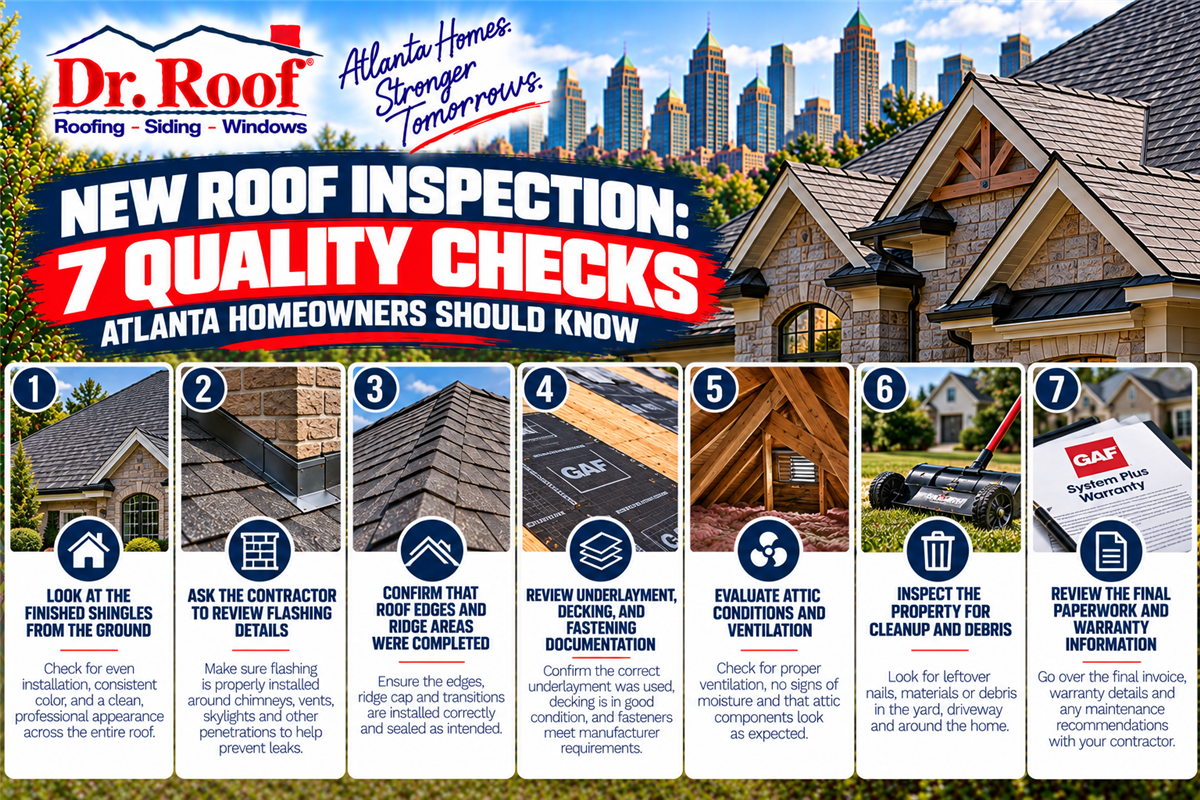
For Atlanta homeowners, the following seven checks can help make the final roof replacement review more useful.
1. Look at the Finished Shingles From the Ground
The visible appearance of the new roofing materials is a good place to begin.
From a safe ground-level location, look for obvious concerns such as:
Visibly loose materials
Unusual gaps
Damaged shingles
Sections that appear noticeably uneven
Loose ridge materials
Binoculars or a camera with zoom may help you see areas that are difficult to view from the driveway.
Should New Roof Shingles Look Perfectly Flat?
Not necessarily immediately.
Some asphalt shingles may need time and appropriate weather conditions to settle and seal.
However, visibly damaged, improperly positioned, or loose shingles should be brought to the contractor's attention.
Do not attempt to press down, reposition, or fasten shingles yourself.
What About Color Differences?
Lighting, viewing angle, and the product's natural color variation can influence appearance.
If a section looks significantly different from the selected roofing material, compare the installed product information with the approved proposal.
The contractor can explain whether the appearance is normal for the selected shingle.
2. Ask the Contractor to Review Flashing Details
Flashing is one of the most important parts of a roofing system.
It helps direct water away from vulnerable transitions where shingles meet other building components.
Important locations include:
Chimneys
Skylights
Sidewalls
Dormers
Roof valleys
Plumbing vents
Roof-to-wall intersections
Some flashing components are concealed beneath the shingles or adjacent building materials.
Because of this, appearance alone cannot confirm that the flashing was installed correctly.
How Can Homeowners Evaluate Flashing Without Climbing Onto the Roof?
Ask the contractor to explain which flashing components were installed, replaced, or reused.
Useful questions include:
Was chimney flashing replaced or repaired?
Were pipe boots evaluated?
How were roof-to-wall transitions addressed?
Were valley details installed according to the selected roofing system?
Can I review photographs of the completed flashing work?
Photographs can help document the work, although they do not replace a professional inspection.
Why Does Flashing Quality Matter?
A newly installed roof can still develop leaks if water enters through an improperly constructed transition.
Proper flashing installation is essential to the performance of the complete roofing system.
3. Confirm That Roof Edges and Ridge Areas Were Completed
Roof edges and ridge areas include important finishing details.
Depending on the roof design, these may involve:
Starter shingles
Drip edge
Ridge cap shingles
Hip cap shingles
Ridge ventilation
Other finishing components
The appropriate arrangement depends on the selected roofing products and roof design.
What Should Homeowners Check?
From the ground, look for obvious missing materials or unfinished areas.
Then ask the contractor to review the installed components.
For example:
Starter materials: Confirm that the specified starter products were included in the installation.
Drip edge: Ask how roof-edge protection was addressed.
Ridge materials: Confirm that the appropriate ridge or hip materials were installed.
Ventilation: Ask whether the project included changes to ridge ventilation.
These components may not all be visible from ground level.
A contractor's project documentation and final review can help explain the completed work.
4. Review Underlayment, Decking, and Fastening Documentation
Some of the most important roofing components become hidden as installation progresses.
Once shingles are installed, homeowners generally cannot see the condition of the decking or the underlayment beneath them.
Similarly, the fastening details securing the shingles may be concealed.
What Should You Ask About Roof Decking?
Ask whether the contractor discovered damaged or unsuitable decking during tear-off.
If additional decking work was necessary, request an explanation of:
The damaged areas
Materials replaced
Any changes to the approved scope
Photographs documenting the work
Not every roof replacement requires completely new decking.
The existing material may remain suitable when it meets applicable requirements.
Why Does Underlayment Matter?
Underlayment provides secondary protection beneath many roofing systems.
The correct product and installation method depend on the selected roof covering and manufacturer requirements.
Ask which underlayment was installed and whether any specialized leak-protection materials were included.
Can Homeowners See Whether Shingles Were Nailed Correctly?
Usually not after installation.
Roofing fasteners are generally concealed by overlapping shingles.
Correct fastening involves factors such as:
Fastener type
Nail placement
Nail depth
Number of fasteners
Roof decking suitability
Manufacturer requirements
Ask whether installation followed the selected shingle manufacturer's fastening instructions.
A professional installation review is more reliable than attempting to judge concealed fastening from the ground.
5. Evaluate Attic Conditions and Ventilation
Roof replacement provides an opportunity to evaluate roof ventilation and certain attic conditions.
However, not every attic is designed the same way.
Some homes use a traditionally vented attic.
Others may have a conditioned or unvented attic assembly.
The appropriate ventilation approach depends on the building design.
What Should Homeowners Ask About Ventilation?
If your home has a vented attic, consider asking:
Were existing ventilation components evaluated?
Were ridge vents installed or replaced?
Are intended ventilation openings unobstructed?
Were any ventilation concerns identified?
Did the replacement change the previous ventilation arrangement?
A roofing contractor should explain changes made during the project.
Can You Check the Attic Yourself?
If your attic is safely accessible, you may be able to observe conditions from an appropriate walking or access area.
Look for:
New moisture stains
Water intrusion
Visible damaged materials
Debris left during construction
Changes around accessible roof penetrations
Do not walk on exposed ceiling framing or enter unsafe attic spaces.
If the attic does not have safe access, leave the evaluation to a qualified professional.
Does Moisture Always Mean the New Roof Is Leaking?
No.
Attic moisture can also result from condensation, plumbing issues, HVAC equipment, or other building conditions.
A professional evaluation can help determine the source.
6. Inspect the Property for Cleanup and Debris
Roof replacement generates construction debris.
This may include old shingles, underlayment, nails, flashing pieces, and packaging materials.
A final cleanup is an important part of the completed project.
Where Should You Look?
Walk around the property and check:
Driveways
Walkways
Landscaping
Patios
Decks
Areas near the foundation
Accessible exterior work areas
Locations where materials were stored
Look for obvious debris, loose nails, or remaining construction materials.
What If You Find Roofing Nails?
Contact the contractor and request additional cleanup.
Roofing crews commonly use magnetic tools to help collect metal fasteners, but those tools may not retrieve every item.
Keep children and pets away from areas where sharp debris remains.
Do not attempt to inspect elevated gutters or roof surfaces yourself.
What About Landscaping Damage?
Review areas where equipment, material deliveries, or debris removal occurred.
If you notice new property damage, photograph the condition and discuss it with the contractor.
Before-and-after photographs may help clarify concerns.
7. Review the Final Paperwork and Warranty Information
The final roof inspection should include more than looking at the finished roof.
Homeowners should also understand the documentation associated with the project.
Important records may include:
The signed roofing contract
Final project invoice
Material information
Approved change orders
Applicable permit records
Manufacturer warranty documents
Contractor workmanship warranty information
Available installation photographs
Why Should You Keep These Documents?
Written records can help homeowners understand what was installed and what work was completed.
They may also be useful if questions develop later.
For example, the product name and color can be helpful when discussing a future repair.
Are All Roofing Warranties the Same?
No.
Manufacturer warranties and contractor workmanship coverage vary.
Coverage may depend on:
The selected product
The installed roofing system
Contractor qualifications
Registration requirements
Installation conditions
Written warranty terms
Homeowners should review the actual documents rather than assuming every new roof qualifies for the same coverage.
Should You Register Your Roof Warranty?
Follow the manufacturer's and contractor's instructions for any registration requirements associated with your specific warranty.
Do not assume that all products or warranty programs use the same process.
Ask the contractor which documents you should retain.
What Should a Final Roof Replacement Walkthrough Include?
A final walkthrough is an opportunity to ask questions about the completed roofing project.
The contractor may review:
Roofing materials installed
Flashing
Roof edges
Ridge components
Ventilation
Decking repairs
Cleanup
Warranty documentation
Homeowners should have an opportunity to discuss any visible concerns.
A useful walkthrough focuses on understanding the finished work rather than simply confirming that the project looks complete.
What Are Warning Signs of a Poorly Installed New Roof?
Some concerns may be visible from the ground.
Potential warning signs include:
Missing or damaged shingles
Visibly loose roofing materials
Exposed fasteners in inappropriate locations
Unfinished roof sections
Loose ridge components
Obvious flashing defects
Unexpected water intrusion
However, not every unusual appearance indicates defective installation.
Some product variations and temporary settling conditions may be normal.
A roofing professional should distinguish between cosmetic concerns and actual installation defects.
What Problems Cannot Be Identified From the Ground?
A ground-level inspection has limitations.
It generally cannot verify:
Concealed shingle fastening
Underlayment installation
Hidden flashing details
Full decking condition
All ventilation components
Every roof penetration
These details may require professional inspection, installation photographs, or other documentation.
Homeowners should avoid assuming that a roof is properly installed solely because the shingles look attractive from the street.
Should You Hire an Independent Roof Inspector?
An independent inspection may be useful when:
You have unresolved installation concerns
The contractor's findings are disputed
A significant defect is suspected
You need another professional assessment
Documentation is incomplete
A qualified inspector can evaluate the roofing system and provide findings within the scope of the inspection.
However, not every completed roof replacement automatically requires a separate independent inspection.
The decision depends on the circumstances and the homeowner's concerns.
What Should You Do If You Find a Problem After Roof Replacement?
Start by documenting the concern.
Take photographs from safe locations and record when the issue was noticed.
Then contact the original roofing contractor.
Provide a clear explanation and request an evaluation.
Depending on the problem, the contractor may need to inspect the roof and determine whether corrective work is necessary.
Review the contract and applicable warranty documents to understand the process for reporting concerns.
If the issue remains unresolved, additional professional evaluation may help clarify the condition.
Does a New Roof Need Maintenance?
Yes.
A new roofing system should still be monitored for damage and maintained according to the applicable product and contractor recommendations.
Homeowners can periodically look for visible changes from the ground.
After significant weather events, pay attention to missing shingles, damaged roof components, or interior signs of moisture.
Professional evaluation may be appropriate when concerns appear.
Avoid walking on the roof to perform your own inspections.
How Does Atlanta Weather Affect a Newly Installed Roof?
Atlanta-area homes experience periods of heavy rain, wind, humidity, and occasional hail.
These conditions make correct roofing installation and ongoing observation important.
A newly replaced roof should be constructed using materials and installation methods appropriate for its design and applicable requirements.
Homeowners should also understand that no roofing system is immune to all forms of storm damage.
If significant weather affects the property after installation, document any visible concerns and arrange a professional evaluation when appropriate.
How Dr. Roof Helps Atlanta Homeowners With Roof Replacement
Dr. Roof has served Atlanta-area homeowners since 1988, providing professional roof inspections, repairs, and replacements.
Dr. Roof is a GAF Master Elite Certified Contractor and CertainTeed SELECT ShingleMaster.
During a roof replacement project, homeowners can discuss the selected roofing materials, system components, installation details, and applicable warranty information.
A final project review can help clarify what was installed and whether additional concerns require attention.
Homeowners should keep their roofing documents and understand how to contact the company if questions arise after installation.
Know What to Check After Your Roof Replacement
A completed roof should be evaluated as more than a finished layer of shingles.
The visible roofing materials, flashing, roof edges, concealed components, ventilation, cleanup, and documentation all contribute to understanding the quality of the project.
For Atlanta homeowners, the safest approach is to observe what you can from the ground and ask the roofing contractor to explain the details that cannot be seen.
If you have questions about a recently replaced roof or are planning a new roofing project, contact Dr. Roof to discuss a professional evaluation and your roof replacement options.
How can I inspect a newly replaced roof for quality?
Begin with a safe ground-level visual review of the shingles, roof edges, and visible flashing. Ask the contractor to explain concealed installation details, review cleanup, and provide relevant project and warranty documentation. A professional inspection is needed to evaluate components that cannot be safely checked from the ground.
Should new roof shingles look perfectly flat immediately after installation?
Not always. Some asphalt shingles may require suitable weather conditions and time to settle and seal. However, visibly damaged, loose, or improperly positioned shingles should be discussed with the roofing contractor.
How can I tell if my new roof was nailed correctly?
Shingle fasteners are generally concealed after installation, making correct placement difficult to verify from the ground. Ask the contractor about the fastening requirements for the selected product and request available installation documentation or a professional review.
What should I check during a final roof replacement walkthrough?
Review the finished roofing materials, flashing, roof edges, ridge components, ventilation, any decking repairs, property cleanup, and project documentation. Ask questions about any visible concerns before concluding the review.
What should I do if my new roof develops a leak?
Document the problem from safe locations and contact the roofing contractor promptly. Review your contract and warranty terms, and request an inspection to determine the source and appropriate corrective work.
Should I receive warranty paperwork after roof replacement?
Yes. Homeowners should obtain applicable manufacturer and contractor warranty documents, along with the project contract, final invoice, and available material information. Review the terms and complete any registration requirements that apply.
Subscribe to Dr. Roof's Blog







Comments