When your roof develops a leak, shingles go missing, or storm damage becomes visible, finding a reliable roofing contractor becomes an important priority.
However, choosing a roof repair company involves more than searching for the closest contractor or comparing online star ratings.
The right roofing professional should be able to identify the source of the damage, explain the recommended repair, provide clear documentation, and demonstrate the qualifications necessary to complete the work.
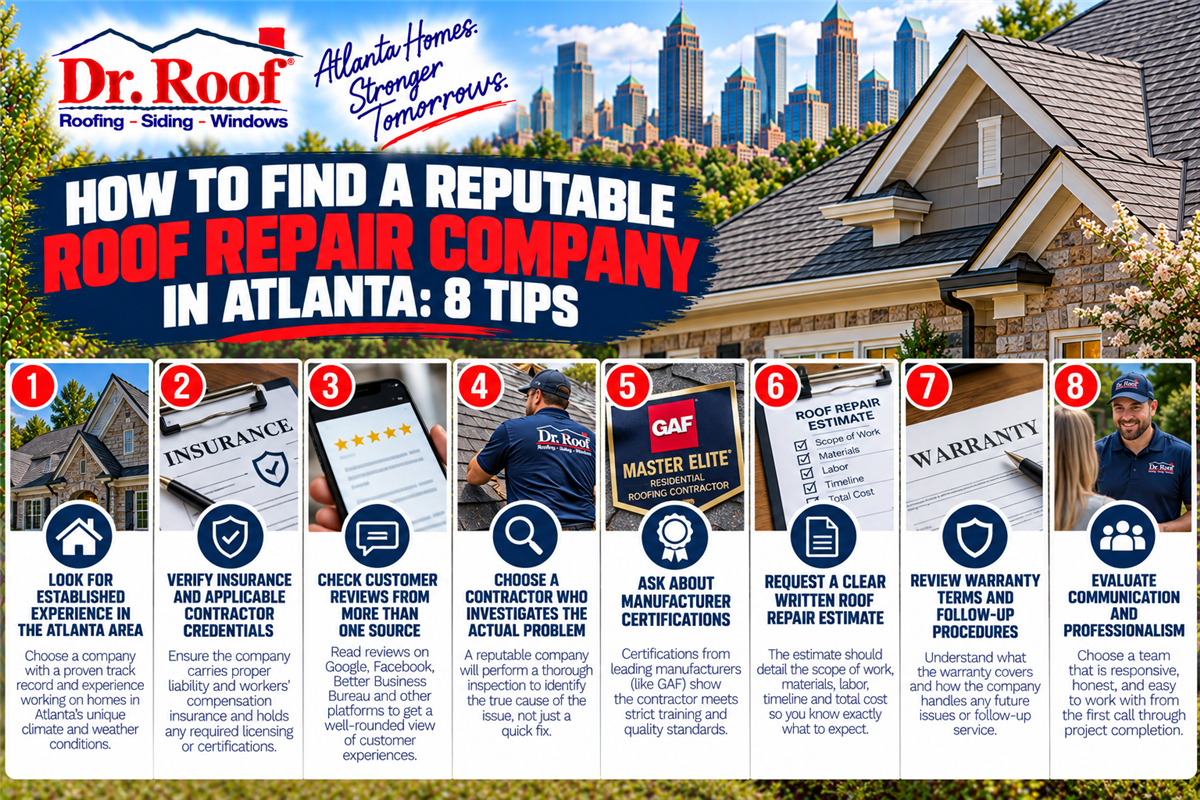
To find a reputable roof repair company in Atlanta, homeowners should verify local experience, insurance, applicable credentials, customer reviews, inspection practices, written estimates, warranties, and communication standards.
These eight considerations can help you evaluate roofing contractors before approving repairs.
1. Look for Established Experience in the Atlanta Area
Local experience is an important factor when researching roofing companies.
Atlanta-area homes experience heavy rainfall, thunderstorms, strong winds, periods of high humidity, and occasional hail.
Roofing professionals who regularly work throughout the region are familiar with common residential roofing systems and the types of damage homeowners may encounter.
When comparing companies, consider asking:
How long have you served the Atlanta area?
Do you regularly perform residential roof repairs?
Have you worked on roofing systems similar to mine?
Do you handle flashing repairs and roof leaks?
Can you provide examples of completed local projects?
A company with an established history may also be easier to contact if questions arise after the repair.
Why Does Local Experience Matter?
Roof repair is not always straightforward.
A ceiling stain may come from damaged flashing rather than the shingles directly above it.
A contractor familiar with common residential roofing systems can evaluate the affected components and recommend an appropriate solution.
Experience alone does not guarantee quality, but it is a useful consideration when comparing contractors.
2. Verify Insurance and Applicable Contractor Credentials
Before hiring a roofing company, ask about its insurance coverage and qualifications.
Depending on the work, contractors may need to satisfy different state or local requirements.
Georgia distinguishes certain specialty contracting activities from work requiring a residential or general contractor license.
For that reason, homeowners should verify which requirements apply to the actual project rather than assuming every roofing job has identical licensing rules.
What Should You Ask?
Consider requesting:
The company's legal business name
Proof of general liability insurance
Information about workers' compensation coverage, where applicable
Relevant contractor license information
Confirmation of any permits or approvals required for the work
If the project involves structural repairs or work beyond ordinary roofing services, additional requirements may apply.
A reputable contractor should be willing to explain its qualifications and provide appropriate documentation.
3. Check Customer Reviews From More Than One Source
Online reviews can help homeowners understand how a roofing company treats its customers.
However, one review platform should not determine your entire decision.
Consider checking:
Google reviews
Better Business Bureau information
Local homeowner recommendations
Neighborhood groups
Recent customer testimonials
Available project references
Look beyond the average star rating.
What Should You Look for in Roofing Reviews?
Pay attention to comments about:
Communication
Professionalism
Inspection thoroughness
Repair recommendations
Scheduling
Cleanup
Handling of customer concerns
Follow-up service
A detailed review describing a completed roof repair may be more useful than a short comment containing only a rating.
Also consider how the company responds when a customer raises a concern.
No business can guarantee that every customer experience will be identical, but consistent patterns can provide useful information.
4. Choose a Contractor Who Investigates the Actual Problem
A professional roof repair should begin with understanding what caused the damage.
For example, an interior ceiling stain does not automatically mean the shingles directly above that location are defective.
Water can travel along roof decking, framing, or other materials before becoming visible inside the home.
A roofing contractor may need to evaluate several areas before identifying the source.
What Should a Roof Repair Inspection Include?
Depending on the reported problem, an inspection may consider:
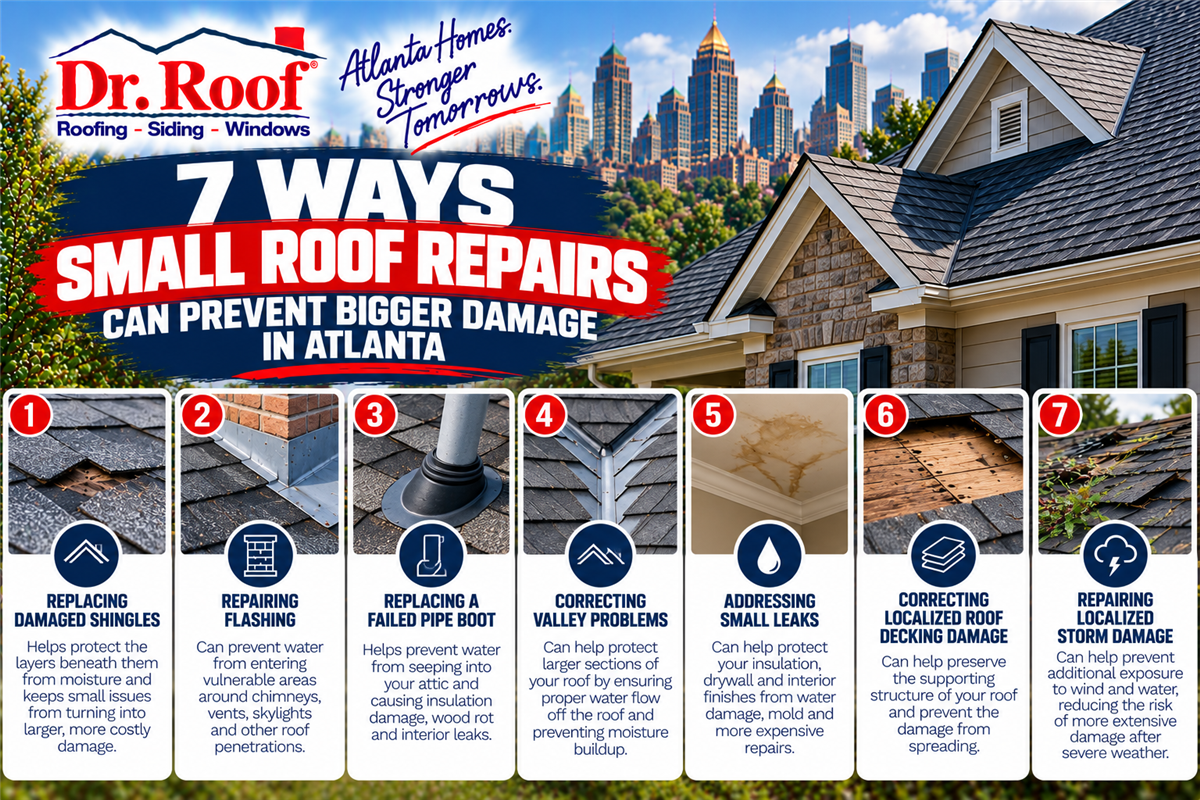
Missing or damaged shingles
Roof flashing
Pipe boots
Chimneys
Roof valleys
Skylights
Roof penetrations
Previous repair areas
Accessible attic conditions
Visible decking damage
The purpose is to identify both the visible symptom and the likely cause.
Why Is Diagnosis Important?
A temporary patch may conceal a problem without correcting it.
For example, applying sealant around a chimney may not resolve a leak caused by improperly integrated flashing.
A reputable contractor should explain why the proposed repair is appropriate.
If the problem cannot be diagnosed conclusively during the initial visit, the contractor should communicate that uncertainty rather than make unsupported promises.
5. Ask About Manufacturer Certifications
Some roofing contractors participate in certification programs offered by roofing manufacturers.
These programs may establish requirements involving experience, insurance, training, and other business qualifications.
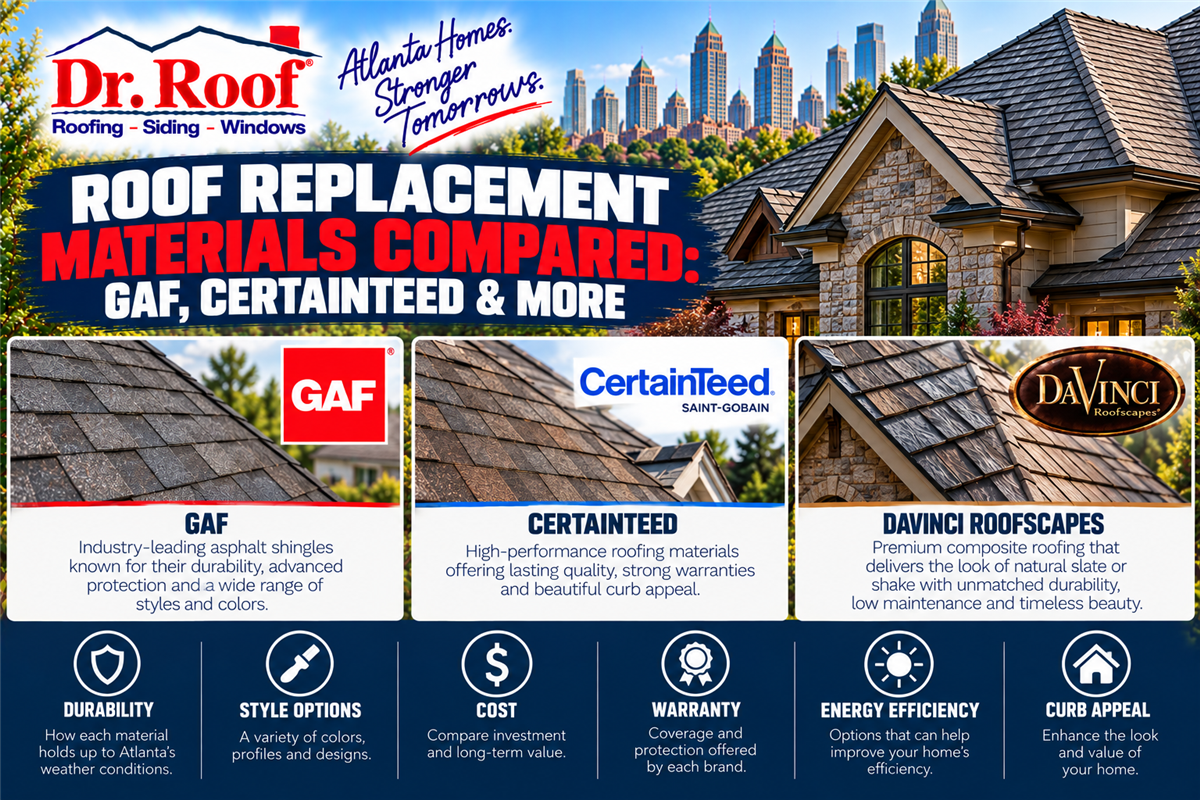
For example, GAF offers several contractor certification categories, including GAF Master Elite.
CertainTeed also maintains contractor credential programs.
Why Do Certifications Matter?
Manufacturer credentials can help homeowners evaluate a contractor's familiarity with particular roofing products.
Depending on the program and project, certain certifications may also allow contractors to offer enhanced warranty options on qualifying installations.
However, certification does not mean that every repair automatically qualifies for the same warranty.
Homeowners should verify the contractor's current certification and review the actual terms of any proposed coverage.
Does Certification Replace the Need for an Inspection?
No.
Even a credentialed contractor must evaluate the roof and determine the appropriate repair.
Certification is one consideration among several, including experience, documentation, communication, and the proposed work.
6. Request a Clear Written Roof Repair Estimate
Once the contractor has evaluated the problem, request a written explanation of the proposed repair.
A useful estimate should identify:
The location of the damage
The recommended work
Roofing materials being replaced
Flashing or underlayment work
Known decking concerns
Labor and cleanup
Total proposed pricing
Potential additional work
Warranty information
Expected scheduling
Why Should You Compare More Than Price?
Two roofing estimates may describe different scopes.
One contractor might propose replacing damaged flashing.
Another might recommend applying temporary sealant.
Although both proposals address the same visible concern, they may not provide equivalent solutions.
Before comparing prices, determine whether the estimates include the same materials and repairs.
Is the Lowest Quote Always the Best?
Not necessarily.
The lowest estimate may exclude necessary components or describe a more limited repair.
A higher estimate is not automatically better, either.
The important question is whether the proposed scope adequately addresses the roofing problem.
7. Review Warranty Terms and Follow-Up Procedures
Roof repair warranties can vary.
Some contractors provide written workmanship coverage for qualifying repairs.
Material warranties may also apply, depending on the products and circumstances.
Homeowners should ask:
Does this repair include a workmanship warranty?
What exactly is covered?
How long does coverage last?
Are there exclusions?
What happens if the same area leaks again?
How should concerns be reported?
Will warranty information be provided in writing?
Does a Roof Repair Warranty Cover the Entire Roof?
Not necessarily.
A warranty on one repaired area may not cover unrelated damage elsewhere.
It may also exclude certain types of weather damage, maintenance problems, or other circumstances.
Read the actual warranty terms to understand the coverage.
A reputable contractor should explain the limitations as clearly as the benefits.
8. Evaluate Communication and Professionalism
Communication can reveal a great deal about how a roofing company operates.
Pay attention to whether the contractor:
Responds to reasonable questions
Explains the inspection findings
Provides written information
Describes material options clearly
Communicates scheduling expectations
Explains possible changes to the repair scope
Avoids unrealistic guarantees
Gives you an opportunity to review the agreement
What Are Some Warning Signs?
Be cautious when a contractor:
Pressures you to sign immediately
Refuses to provide a written estimate
Cannot explain the recommended repair
Makes unsupported promises
Demands full payment before work begins
Provides unclear business information
Discourages you from reviewing the contract
Guarantees an insurance claim outcome
After major storms, homeowners may encounter increased roofing sales activity.
Take the time necessary to understand who will perform the work and what the proposed agreement includes.
Roof Repair Company vs. General Handyman: Who Should You Hire?
Some homeowners consider hiring a general handyman for a small roofing problem.
However, roof repairs often involve specialized installation details.
These may include:
Shingle fastening
Flashing integration
Underlayment
Pipe boots
Valleys
Roof penetrations
Manufacturer installation requirements
A professional roofing contractor experienced with the relevant roofing system is generally better positioned to evaluate these issues.
The appropriate contractor depends on the work required.
For roof leaks, flashing defects, damaged shingles, or concealed roofing problems, specialized roofing experience is particularly valuable.
What Questions Should You Ask Before Hiring a Roof Repair Company?
Before selecting a contractor, ask the following questions:
What experience do you have with my roofing material?
What caused the damage?
Is the problem localized or widespread?
Can the existing roof be repaired effectively?
What materials will be replaced?
Will I receive photographs or written findings?
How are unexpected problems handled?
What warranty applies to the repair?
What does the estimate include?
Who should I contact if a concern develops afterward?
Clear answers can help you compare roofing contractors more confidently.
How Can You Tell Whether a Contractor Recommends Necessary Work?
The contractor should be able to connect the proposed repair to documented roofing conditions.
For example, if a pipe boot is damaged, the contractor should explain the defect and the appropriate replacement method.
If flashing needs to be reconstructed, the contractor should explain why a localized sealant repair is insufficient.
For more extensive recommendations, ask what conditions make replacement preferable to another repair.
Homeowners should not have to rely solely on a verbal statement that an entirely new roof is necessary.
An explanation supported by the roof's actual condition is more useful.
Should You Get Multiple Roof Repair Estimates?
Obtaining multiple estimates can help homeowners compare available repair options.
This is particularly useful when the repair is substantial or contractors recommend different approaches.
However, active water intrusion may require prompt professional attention.
If your home is currently leaking, prioritize safety and limiting additional exposure.
You can still ask for a clear explanation of temporary protection and permanent repair options.
How Do You Find Local Roofing Contractors in Atlanta?
Start by identifying roofing businesses that serve your specific community.
Useful resources include:
Recommendations from neighbors
Established local roofing companies
Manufacturer contractor directories
Online customer reviews
Professional referrals
Local business information
Homeowners in Atlanta, Marietta, Alpharetta, Roswell, Smyrna, and surrounding communities should verify that the contractor serves their area.
Then compare experience, credentials, insurance information, inspection practices, and written proposals.
A company's proximity is useful, but its qualifications and proposed work deserve equal consideration.
How Dr. Roof Helps Atlanta Homeowners With Roof Repairs
Dr. Roof has served Atlanta-area homeowners since 1988, providing professional roof inspections, repairs, replacement, and storm-damage documentation support.
Dr. Roof is a GAF Master Elite Certified Contractor and CertainTeed SELECT ShingleMaster.
A professional roofing evaluation can help determine whether a problem involves:
Damaged asphalt shingles
Roof flashing
Plumbing vent penetrations
Roof valleys
Decking
Water intrusion
Storm-related damage
For storm-related concerns, Dr. Roof may provide photographs, written findings, and repair or replacement recommendations.
Homeowners can discuss the findings and request a repair estimate based on the actual condition of the roof.
Choose a Roof Repair Company Based on More Than Reviews
Finding a reputable roof repair company requires looking beyond advertising, pricing, and star ratings.
Local experience, appropriate credentials, insurance, diagnostic practices, clear estimates, warranty information, and communication all matter.
For Atlanta homeowners, the goal is to hire a contractor who can explain the roofing problem and recommend an appropriate solution.
If your roof is leaking, shingles are damaged, or you have concerns after a storm, contact Dr. Roof to schedule a professional roof evaluation and discuss your repair options.
How do I find a reputable roof repair company in Atlanta?
Look for established local experience, appropriate insurance and credentials, detailed customer reviews, professional inspection practices, written estimates, and clear warranty information. Compare the contractor's recommendations and communication rather than relying only on price or star ratings.
Should a roofing contractor be licensed and insured in Georgia?
Roofing contractors should carry appropriate insurance and satisfy the licensing requirements applicable to their work. Georgia distinguishes certain specialty contracting activities from work requiring a residential or general contractor license. Homeowners should verify the requirements relevant to their project.
How can I tell if a roofing contractor is trustworthy?
A trustworthy contractor should explain the damage, provide clear documentation, answer questions, and offer a written repair proposal. Be cautious of high-pressure sales tactics, unclear pricing, unsupported promises, or demands for full payment before work begins.
Are manufacturer certifications important when choosing a roofer?
Manufacturer certifications can indicate that a contractor meets certain training, experience, or business requirements. However, certification does not guarantee a particular outcome, and homeowners should verify credentials and review any applicable warranty terms.
Should I get multiple quotes for roof repairs?
Comparing multiple written estimates can help you evaluate different repair methods, materials, prices, and warranties. For active leaks or urgent damage, arrange a prompt professional assessment to determine whether temporary protection is necessary.
What should I ask a roof repair company before hiring them?
Ask what caused the damage, whether the roof can be repaired, which materials will be used, what the written estimate includes, how unexpected damage will be handled, and what warranty applies to the completed work.
Subscribe to Dr. Roof's Blog



Comments